


Expert Guidelines for a Safe Ibogaine Procedure in Mexico: Managing Cardiac Risks
Seeking a highly supervised and medically sound Ibogaine procedure in Mexico has become a vital lifeline for individuals struggling with severe mental health conditions and treatment-resistant addiction. As awareness grows around this powerful ancestral medicine, so does the urgent need to understand the precise medical frameworks required to administer it safely. This powerful alkaloid is not a typical wellness supplement; it is a profound therapeutic agent that demands rigorous cardiovascular monitoring.
Recent media coverage, including prominent discussions by public figures, has brought significant attention to the potential cardiac risks of Ibogaine treatment. While the life-changing benefits for neurodegenerative diseases and trauma are heavily documented, patients must be fully educated on the physiological impacts. Understanding cardiac concepts like QT prolongation, bradycardia, and the necessity of Advanced Cardiovascular Life Support (ACLS) is the first step toward making an informed decision about clinical care.
Video Chapters
The Therapeutic Potential of Ibogaine for Mental Health
The conversation surrounding psychedelic medicine has shifted dramatically, moving from counterculture fringes to highly specialized medical clinics. At the forefront of this shift is Ibogaine, an ancestral plant medicine that demonstrates remarkable neuroplasticity benefits. Clinical observations highlight its extraordinary capacity to interrupt severe substance use disorders, offering a critical window for physical and psychological reset.
Beyond addiction interruption, there is a growing body of evidence supporting its efficacy for complex neurological conditions. As noted around [00:10], medical teams have witnessed firsthand the promising therapeutic applications for Parkinson's disease. The alkaloid interacts uniquely with the central nervous system, prompting cellular repair mechanisms that are rarely seen with conventional pharmaceutical interventions.
The medicine's scope extends heavily into trauma recovery as well. Patients suffering from Traumatic Brain Injuries (TBI), severe Post-Traumatic Stress Disorder (PTSD), chronic depression, and generalized anxiety are increasingly seeking alternative therapies. Advocacy from public figures has rapidly accelerated public awareness, driving patients to explore specialized clinics abroad for relief from treatment-resistant conditions.
Understanding the Cardiac Risks of Ibogaine Treatment
While the psychological and neurological benefits are profound, the administration of this medicine is not without significant physiological complexities. The primary concern during any administration revolves around its direct impact on the cardiovascular system. Specifically, the medicine can interfere with the electrical signaling that regulates the human heartbeat.
The most documented cardiovascular interaction is known as QT prolongation. At [01:29], it is explained that a prolonged QT interval represents a slowing down of the repolarization of the heart's ventricles. In straightforward terms, it takes the heart muscle slightly longer to electronically recharge itself between individual beats.
This prolonged recharge period creates an electrical vulnerability within the heart muscle. A long QT interval can be a congenital condition that a person is born with, or it can be acquired throughout life. Acquired prolonged QT is frequently caused by other underlying health conditions, daily prescription medications, or critical body mineral abnormalities.
Mineral Deficiencies and Electrical Heart Health
The heart relies on a delicate balance of electrolytes to maintain a steady, predictable rhythm. When crucial minerals are depleted, the risk of an adverse cardiac event during treatment increases exponentially. A minor deficiency might not affect daily life, but under the influence of strong alkaloids, it becomes a dangerous variable.
- Magnesium: Essential for stabilizing the cellular membrane and preventing erratic electrical firing.
- Potassium: Directly responsible for facilitating the heart's repolarization phase.
- Calcium: Vital for the mechanical contraction of the heart muscle fibers.
The Mechanics of Torsades de Pointes
When a prolonged QT interval goes unmanaged during clinical therapy, it can degenerate into a highly dangerous cardiac arrhythmia. This specific type of irregular heartbeat is medically classified as Torsades de Pointes. Understanding this condition is critical for anyone researching a safe Ibogaine procedure in Mexico.
There is common misinformation regarding the nature of this arrhythmia. As clarified around [02:46], Torsades is a polymorphic ventricular tachycardia. This means it is a rapid, chaotic, and irregular heartbeat originating in the lower chambers of the heart, characterized by different electrical shapes on an EKG monitor.
It is crucial to differentiate this from bradycardia, which is a dangerously slow heart rate. Torsades is not a slow heartbeat; it is a fast, erratic electrical storm. If a patient enters this state, their heart cannot effectively pump oxygenated blood to the brain and vital organs, creating an immediate medical emergency.
Medical Professional Requirements for Ibogaine Safety
Due to the complex pharmacological profile of this medicine, amateur administration or underground settings pose a severe threat to human life. Improper dosing without real-time cardiac monitoring can lead to fatal outcomes. The medicine must only be administered by highly trained, board-certified medical professionals.
While some commentary suggests that an interventional cardiologist must be present, medical consensus allows for a broader range of expertise. As noted near [04:03], any thoroughly trained internal medicine specialist or emergency medicine doctor with specific experience in psychedelic administration is highly capable. The critical factor is their ability to instantly read an EKG and identify subtle shifts in the heart's rhythm.
Furthermore, the entire clinical support staff must operate under strict emergency protocols. Every nurse and attending physician must hold active Advanced Cardiovascular Life Support (ACLS) certification. This guarantees the team can seamlessly execute life-saving interventions, manage intravenous medications, and stabilize a patient instantly if an arrhythmia occurs.
Atropine vs. Magnesium Sulfate: Clearing Up Treatment Myths
There is significant confusion in public discourse regarding the specific emergency medications used during psychedelic therapies. Misinformation can cause unnecessary panic or lead prospective patients to ask the wrong questions when vetting clinical facilities. Two primary medications are utilized for entirely different cardiac events: Atropine and Magnesium Sulfate.
Ibogaine has a known propensity to slow down the resting heart rate, inducing a state called bradycardia. At [05:08], it is detailed that Atropine is the standard medical intervention for extreme bradycardia. It is administered strictly to accelerate a dangerously slow heart rate, particularly when low blood perfusion threatens oxygen delivery to the brain.
Conversely, administering Atropine to a patient experiencing Torsades de Pointes would be a critical medical error. Because Atropine forces the heart to beat faster, giving it to a patient already suffering from rapid ventricular tachycardia would exacerbate the crisis. This highlights why an experienced physician must be the one interpreting the real-time EKG data.
The Protocol for Treating Torsades de Pointes
If a patient's prolonged QT interval degrades into Torsades, the frontline chemical intervention is an intravenous infusion of Magnesium Sulfate. Standard oral magnesium supplements or generic IV drips are entirely insufficient for a cardiac emergency. The clinic must administer a highly specific, standardized dosage directly into the bloodstream to stabilize the cellular electrical gradient.
In rare instances where an IV magnesium push fails to resolve the polymorphic ventricular tachycardia, the medical team must escalate their response immediately. As outlined around [07:54], the patient will require cardiac cardioversion. This means utilizing a defibrillator to deliver a controlled electrical shock to the heart, forcefully resetting the sinus rhythm.
Comprehensive Pre-Screening Protocols
The foundation of safe healing begins long before the medicine is ever administered. Any reputable clinic facilitating an Ibogaine procedure in Mexico will enforce a non-negotiable, rigorous medical pre-screening process. Treating this alkaloid with the respect it commands means refusing treatment to individuals who cannot pass stringent cardiovascular benchmarks.
A complete, comprehensive blood workup is the first mandatory step. As mentioned at [09:24], clinicians must evaluate precise levels of body minerals, focusing heavily on magnesium, potassium, and calcium. If a patient presents with depleted electrolytes, the clinic must institute an aggressive supplementation protocol to correct the imbalance prior to scheduling the treatment.
Equally critical is a baseline 12-lead Electrocardiogram (EKG). This diagnostic test allows the medical team to evaluate the structural and electrical integrity of the heart. The physician will measure the exact millisecond duration of the QT interval to ensure the patient does not have an underlying, undiagnosed congenital heart condition that would contraindicate treatment.
Medication Tapering and Clinic Selection Guidelines
A major risk factor for acquired QT prolongation is the presence of other pharmaceutical medications in the bloodstream. Many common prescriptions inherently alter the heart's electrical pathways. When combined with a potent psychedelic alkaloid, the compounding effect can push the heart into a lethal arrhythmic state.
Patients frequently seek out this therapy to break free from severe depression or mental health disorders, meaning they are often prescribed antidepressants, SSRIs, or antipsychotics. As stated near [10:18], these specific drug classes are notorious for prolonging the QT interval. A safe clinical protocol requires these medications to be carefully suspended and slowly tapered off weeks before the patient arrives at the facility.
Abruptly stopping psychiatric medications can trigger severe withdrawal syndromes, making medical oversight during the tapering phase absolutely essential. Patients must never attempt to self-manage this process. Thorough communication with the treating physician ensures that the patient's system is clean and chemically stable before the primary therapy begins.
Ultimately, patient safety relies entirely on clinic transparency and medical rigor. Prospective patients must demand direct conversations with the attending physicians. It is vital to verify the credentials of the entire clinical staff, ensuring they operate within an ACLS-certified environment capable of handling complex emergency interventions.
Ready to Explore Safe Medical Treatment?
Connect with certified medical professionals to discuss rigorous pre-screening, safe clinical environments, and expertly supervised treatment protocols tailored to your specific health needs.
Get Free QuoteView Full Video Transcript
[00:00]
New Path Specialized Clinic logo.
[00:02]
Hello, I'm Dr Carlos Silva, Internal Medicine Specialist and Medical Director at New Path Specialized Clinic.
[00:08]
Today I would like to discuss the critical aspects of Ibogaine treatment. A promising therapy with remarkable potential that I witnessed firsthand in patients struggling with Parkinson's disease, also traumatic brain injuries, addiction, PTSD, depression, anxiety and other mental health conditions.
[00:23]
Since 2010 I've led medical teams with an unwavering commitment to safety, ethics and evidence based care. Our pledge is to respect the hard-won scientific gains of those who have come before us, to share the knowledge of those who will follow, to uphold ethics respectations, prioritize their well being and emphasize compassion and high standards of care.
[00:43]
I am grateful to public figures like Joe Rogan, Rick Perry and Brian Hubbard for using their platforms to raise awareness about Ibogaine's life changing potential. Through their advocacy, more people are learning about this ancestral medicine and the results I've seen in clinical practice have been extraordinary.
[00:59]
Now, I would like to talk to you through key considerations about Ibogaine treatment, ensuring you have the accurate responsible information that you need to make an informed decision.
[01:08]
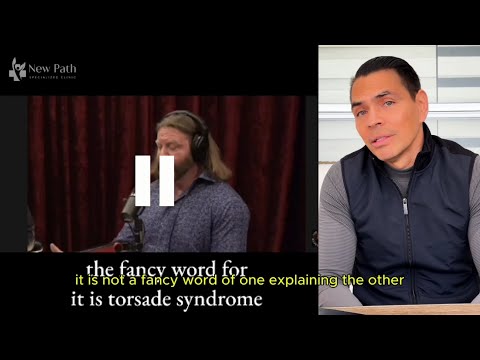
(Video clip plays) With misadministration there is a significant cardiac risk which accompanies ibogaine. It has the propensity to prolong the beats between the heart or what is called prolonged qt interval. The fancy word for it is torsade syndrome.
[01:29]
Okay. To explain a little bit of what he just mentioned, a QT prolongation is something that we can either be born with, which is congenital long QT, or is something that can be acquired, which is an acquired long QT.
[01:46]
Now this for example usually happens throughout life, is accompanied or usually caused by other either health conditions, body mineral abnormalities, mainly magnesium, potassium, calcium or by medications that we might be taking that can prolong the QT.
[02:06]
Now, to explain what the QT is, a QT prolongation or a long QT syndrome is a slowing down of the repolarization of the ventricles, which basically means that the heart takes a little bit longer to recharge between one beat and the next.
[02:26]
Now that can lead to different type of irregular heartbeats, arrhythmias, one of them being torsades. So it is not the same thing, it is not a fancy word of one explaining the other. Rather a QT prolongation can lead to torsades.
[02:46]
Now, torsades is a polymorphic, which means that it has different shapes and it's a ventricular tachycardia.
[02:58]
(Video clip plays) If an individual is given ibogaine improperly, it will slow and stop their heart and they will die. This is a very serious medication.
[03:10]
Okay so what he's trying to say here with Ibogaine slowing your heart. Ibogaine has the propensity to either slow down your heart, which called bradycardia and in itself can also prolong the QT.
[03:25]
Now somebody with a prolonged QT that their heart rate goes to an extremely low rate that can turn QT prolongation into torsades. But torsades is not a slow heart rate. Torsades is a ventricular tachycardia, it's a fast irregular heart rate.
[03:47]
(Video clip plays) And it must at all times be administered by a medical professional with a background in interventional cardiology supported by a nursing team that can deliver the administration of atropine to stabilize the heart's rhythm if it goes out of whack.
[04:03]
Okay um, yes. I completely agree that it Ibogaine must always be administered by medical professionals with experience using the medicine. But it does not necessarily have to be an interventionist cardiologist.
[04:17]
Within the field of cardiology. There are sub specialties, intervention is being one of them. But any trained cardiologist, internal medicine specialist, like myself, emergency medicine specialist that have experience using Ibogaine that know and can identify all the different type of irregular heartbeats and know how to treat them can basically do ibogaine treatments.
[04:42]
It doesn't necessarily have to be an interventionist cardiologist, but yes. They all must know how the medicine works, how to identify irregular heartbeats and how to treat them. Ideally, as we've mentioned, the medical team must all be ACLS certified.
[04:58]
(Video clip plays) During the course of treatment, the other important thing to know is though that risk exists, it can be fully and completely mitigated by the co administration of magnesium.
[05:08]
Now, what is mentioned here about using atropine. Atropine is always is used in patients that have a slow heart rate, which is basically called bradycardia.
[05:20]
Now, not every patient that has a slow heart rate needs the administration of atropine. Some patients especially for example, healthy individuals that exercise a lot might have a slow heart rate to begin with. Low to mid 50s high 40s. That does not mean that these patients or these people because they have a slow heart rate need the administration of atropine.
[05:41]
Atropine is administered to patients with an extreme bradycardia where we also see that there is a low blood perfusion or their cardiac output is less than what it should be. Basically meaning that your heart is beating so slow that not enough blood and oxygen is moving around.
[06:00]
That generating your heart rate to be very slow, making your blood pressure to drop down, those are the patients that do need the administration of atropine to try to get your heart rate back up to start circulating stabilizing your blood pressure and getting enough oxygen and nutrients to your brain and to the rest of your tissues.
[06:21]
So yes some patients may need atropine but not all of them. Now, if right now we're talking about torsades and QT prolongation. And as I've mentioned this is a tachycardia so you do not administer atropine to a patient that has already a fast heart rate because atropine is designed to make your heart beat faster.
[06:45]
So a little bit of confusion here on what he's trying to explain. But in a way yes atropine is administered to patients with bradycardia, but not every patient. Bradycardic needs the administration of atropine and no you do not administer atropine to a patient that has QT prolongation or who has Torsades.
[07:06]
Torsades is treated by a magnesium IV infusion, which is also not a standard magnesium IV infusion. A lot of the clinics around the world think that just by administering an IV drip with magnesium is enough to prevent or treat torsades. No, there's a specific dosage that is used when treating torsades with magnesium sulfate.
[07:31]
The other thing that always the clinician should know is that whenever magnesium does not control torsades or when we have a patient that torsades has been prolonged and he's becoming unstable basically meaning their blood pressure is dropping, um you're starting to lose pulse, those patients that do not respond to magnesium, those patients need to have cardiac cardioversion, which is basically the electrical shock you give a heart.
[08:00]
So the doctor or the clinic that you're going to must know how to identify torsades must know the correct dosage of magnesium and should also know that if this does not revert with magnesium that cardioversion must be administered.
[08:18]
(Video clip plays) In order to prevent the development of torsades, i explain all this to say to your audience do not under any circumstances try to order ibogaine online for self administration, do not free venture out into the world looking for any old clinic be very careful and selective. there are informational websites one is maintained by ladied by the name of juliana mulligan called intervention ibogaine operation.
[08:40]
Yes definitely I completely agree with what he's saying. You should always do your adequate research as far as which Ibogaine clinic you are choosing to go get treatment. Always make sure that they have qualified doctors with experience using the medicine that have ACLS certification that know how to identify irregular heartbeats and how to treat them and as we've mentioned before.
[09:04]
But just to give you a little bit of more information about the QT prolongation and torsades which one of the most common arrhythmias and potentially lethal arrhythmias that Ibogaine administration can generate is patients must always be pre screened before doing the Ibogaine treatment.
[09:23]
So by this we mean that we needed a complete blood work up where we're basically measuring your magnesium your calcium, your potassium levels. And if they are low we need to correct them because those imbalances can lead to prolong QT and Torsades.
[09:40]
A 12 lead EKG must always be done before treatment to identify if there is in itself already a QT prolongation that we need to correct or an extreme bradycardia that we also must try to identify the cause and treat.
[09:56]
We must always know what medications patients are taking before they even arrive at the clinic because a lot of medications can lead to prolonged QT. And that's another thing that we must always do to prevent QT and torsades identify any medication that needs to be suspended and some of them even tapered off.
[10:15]
We cannot just suspend them abruptly. A lot of these medications for example, antidepressants anti psychotics, a lot of patients might be taking those. A lot of them can prolong the QT so we must always before patients come down know what they're taking to give the most accurate and safe recommendations as to which medication they can just stop or which medication they need to taper down slowly but be off before they get here.
[10:39]
If you're seeking that beginning treatment here are my strongest recommendations. Always ask to speak directly with the treating physician. Ask every question that concerns you. Verify that the medical credentials and experience are not only for the doctors but also for the entire staff because they need to identify and manage complex and delicate procedures. Always prioritize your safety that is a non negotiable.
[11:03]
If you're a patient seeking treatment or if you're a practitioner looking to integrate Ibogaine responsibly we are available for consultations training and guidance to ensure that this powerful medicine is used safely and effectively. Thanks for watching and remember knowledge is the foundation of safe healing. Always stay informed, and stay safe.





.png)
.png)
.png)












Share this listing