
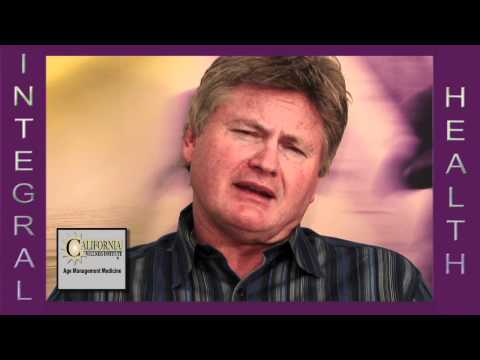
In the evolving field of age management medicine, addressing underlying "silent" inflammation is often considered a primary clinical objective. Dr. Graham Simpson details a seven-part methodology designed to optimize vascular health and manage inflammatory markers through lifestyle, nutritional, and clinical interventions.
Quick Takeaway: The INTEGRAL health protocol targets systemic inflammation through seven specific pillars: paleo nutrition, toxin reduction, exercise, aesthetic enhancement, hormone restoration, advanced supplementation, and lifelong learning. This multifaceted approach requires careful clinical monitoring, particularly when integrating hormone replacement or intensive detoxification strategies.
- 0:00 - The "N" Pillar: Paleo Nutrition Fundamentals
- 2:17 - The "T" Pillar: Toxin Reduction and Retreats
- 3:24 - The "E" Pillar: Exercise for Insulin Control
- 4:12 - The "G" Pillar: Graded Aesthetic Enhancement
- 4:48 - The "R" Pillar: Hormone Restoration and Thyroflex Testing
- 5:58 - The "A" Pillar: Advanced Supplementation and Omega Ratios
- 10:02 - The "L" Pillar: Lifelong Learning and the Four-Quadrant Model
Decoding the INTEGRAL Health Framework
Dr. Graham Simpson outlines the "INTEGRAL" acronym as a structural guide for patients undergoing age management protocols. The primary goal of this framework is to mitigate chronic, smoldering inflammation, which is closely associated with vascular disease and cellular aging.
The Evolutionary Rationale for Paleo Nutrition
The foundation of the protocol begins with nutrition. According to the video, human genetics have evolved over millions of years, yet the introduction of grains and dairy into the human diet occurred relatively recently (approximately 10,000 and 7,000 years ago, respectively). Dr. Simpson attributes many modern autoimmune and inflammatory issues—such as lactose intolerance and gluten sensitivity—to this genetic mismatch. By eliminating grains and dairy, the protocol aims to shift the body out of a catabolic (breaking down) state and into an anabolic (building up) state, utilizing marine plasma and alkaline water to balance the body's internal environment.
"Many of the food problems that we see today... are a result of this genetic mismatch with these more recent foods."
Managing Environmental Toxicity and Insulin Sensitivity
The protocol identifies modern environmental pollutants as a significant source of cellular interference that can inhibit weight loss and maintain a state of silent inflammation. To combat this, the clinic suggests targeted detoxification strategies, including intensive retreats lasting up to 21 days.
Alongside detoxification, regular exercise is emphasized not merely for calorie burning, but for its role in reducing insulin resistance. Improved insulin sensitivity directly correlates with reduced systemic inflammation and enhances the peripheral utilization of glucose.
Clinical Controversies in Hormone Restoration
A critical and more medically complex pillar of the protocol involves the restoration of hormones, including testosterone, DHEA, and thyroid hormones. Dr. Simpson states that weight loss is nearly impossible without balanced hormones.
Notably, the video critiques standard endocrinological blood panels (T3, T4, TSH) as poor reflections of true thyroid status. Instead, the clinic advocates for "Thyroflex" testing—a device that measures the speed of reflex responses to assess cellular thyroid function. It is important to note that while some integrative practitioners favor this approach, standard medical guidelines predominantly rely on serological blood testing to diagnose and manage thyroid disorders.
The Critical Balance of Omega Fatty Acids
Advanced supplementation forms the "A" in the acronym, with a heavy emphasis on Omega-3 fatty acids. The presentation highlights a historical shift in human diets. Ancestral diets supposedly maintained a 1:1 ratio of anti-inflammatory Omega-3s to pro-inflammatory Omega-6s. In contrast, modern diets often feature a severely skewed ratio, sometimes reaching 1:20 in favor of Omega-6s, primarily due to the consumption of processed seed oils and arachidonic acid.
| Fatty Acid Type | Inflammatory Profile | Clinical Objective in the Protocol |
|---|---|---|
| Omega-3 (Fish Oils) | Anti-inflammatory | Increase intake to support cardiovascular health, stimulate nitric oxide, and lower triglycerides. |
| Omega-6 (Arachidonic Acid) | Pro-inflammatory | Strictly minimize intake; avoid supplementation due to high prevalence in modern diets. |
The video strongly advises using only pharmaceutical-grade fish oil supplements to avoid contamination from heavy metals (like mercury) and PCBs common in commercial fish supplies. Furthermore, the use of targeted antioxidants—specifically mentioning a product called Protandim—is recommended to scavenge free radicals and reduce oxidative stress.
The Mind-Body Connection in Vascular Health
The final component, Lifelong Learning, incorporates an "Integral Health Model" divided into four quadrants (Biological, Psycho-Spiritual, Cultural, and Social). The clinical rationale presented is that psychological stress physically oxidizes LDL cholesterol just as effectively as trans fats do. Therefore, meditative and contemplative practices are positioned not merely as wellness suggestions, but as physiological necessities for vascular preservation.
Clinical Evidence & Patient Safety Overlay
Because age management protocols often incorporate systemic hormone replacement therapy (HRT) and intensive, non-standard diagnostic methods (such as reflex testing for thyroid function), this topic is evaluated as a complex medical treatment requiring careful patient consideration.
| Claimed Application | Evidence Strength | What Clinical Evidence Shows |
|---|---|---|
| Bioidentical Hormone Replacement for Anti-Aging | Mixed / Controversial | While HRT is standard for diagnosed deficiencies, broad use for "anti-aging" carries FDA warnings regarding cardiovascular risks and is not universally endorsed by endocrinology associations. |
| Omega-3 Supplementation for Vascular Health | Strong | Extensive peer-reviewed literature supports pharmaceutical-grade Omega-3s for reducing triglycerides and supporting endothelial function. |
| Thyroflex Reflex Testing for Thyroid Diagnosis | Uncertain | Standard clinical guidelines rely on TSH and Free T4 blood panels. Reflex testing is considered an alternative or supplementary method, not a replacement for standard serology. |
Patients seeking age management protocols must weigh the benefits of lifestyle and nutritional optimization against the potential risks of off-label hormone replacement. Exogenous hormones require strict blood monitoring to prevent polycythemia (thickening of the blood), prostate issues in men, and cardiovascular complications.
Protocol Specific FAQs
- Is Thyroflex testing a recognized standard of care? While utilized by some integrative practitioners to gauge cellular metabolic speed, the American Thyroid Association continues to recommend TSH and Free T4 blood tests as the gold standard for diagnosis.
- What are the risks of testosterone or DHEA restoration? Unmonitored hormone use can alter lipid profiles, increase the risk of blood clots, and stimulate the growth of hormone-sensitive tissues. Consistent clinical monitoring is mandatory.
- Why is pharmaceutical-grade fish oil emphasized? Commercial fish oils can concentrate heavy metals and environmental toxins. Pharmaceutical-grade processing ensures molecular distillation to remove these contaminants, which is critical when taking high doses for inflammation.
- Are anti-aging protocols FDA-approved? The FDA does not recognize "anti-aging" as a disease state. While individual components (like diet or FDA-approved hormones for specific deficiencies) are regulated, comprehensive "age management" protocols are considered elective, integrative medicine.
Questions to Ask Your Doctor or Provider:
- Will you monitor my hormone levels using standard blood serology in addition to alternative testing methods?
- What are the specific contraindications for hormone replacement therapy based on my personal and family medical history?
- How frequently will my lipid panels, liver function, and hematocrit be tested while on this protocol?
- Can you provide third-party purity testing certificates for the specific supplements (like Omega-3s) prescribed by the clinic?
- If I experience adverse effects, what is the protocol for safely tapering off hormone treatments?
This content is prepared for educational purposes only and does not constitute formal medical advice, diagnosis, or treatment recommendations. The procedures discussed involve integrative applications and variable clinical outcomes. Always consult a licensed, board-certified endocrinologist or healthcare professional before pursuing systemic hormone therapies or intensive age management protocols.
Explore Personalized Age Management Protocols
Navigating integrative medicine, hormone restoration, and specialized health retreats requires careful planning. PlacidWay helps coordinate your medical inquiries, securely gathers your diagnostic records, and connects you with verified wellness institutes globally for neutral, objective clinical consultations.
Request Treatment ConsultationView English-Translated Video Transcript
0:00 — So, looking at the acronym, the N in the upper right quadrant is the paleo nutrition. We feel that this is probably the single best diet. It's really the original human diet. As you will see, you will be eating from two rather than four of the food groups.
0:26 — The milk and dairy and grains are largely excluded from the paleo diet. Why? Mostly because we have been evolving as humans for probably more than five million years, and grains only were planted in the Nile Valley approximately ten thousand years ago, and animal husbandry and cows even more recently, probably about seven or eight thousand years ago.
0:57 — In other words, our genes are not used to processing dairy and grains. Many of the food problems that we see today, lactose intolerance, gluten sensitivities, etc., are a result of this genetic mismatch with these more recent foods.
1:29 — The paleo diet is also an anabolic diet; it builds you up. As you know, once you get into your 20s, you are essentially entering catabolism where your body is breaking down. So the paleo diet is an anabolic diet. We also encourage certain nutrients and supplements, particularly marine plasma, alkaline water, as the interior milieu of the body is as important as the exterior milieu.
2:01 — That is an excellent way, with the paleo diet and weight loss, this will rapidly decrease insulin and therefore inflammation.
2:17 — The next letter, the T, is for toxin reduction. We are all living in an increasingly polluted world. The air we breathe, the water we drink, the food we eat, many contaminants which again interfere in the cellular functioning and inhibits weight loss and therefore maintains a smoldering, silent inflammatory state throughout the body.
2:48 — Part of what we do at the institute is to give you certain tools and techniques and supplements to reduce this toxic burden in the body.
3:00 — In addition, we do have the two retreats, one at Turnberry in Las Vegas and the other in Martha's Vineyard, where if the toxicity of the individual is such that it warrants either a 7, or 14, or 21 day more intensive detoxification, we can certainly help you arrange that in either place.
3:24 — The exercise, the E, is also important. We now know that exercise helps reduce inflammation in a number of ways. Firstly, exercise usually helps reduce weight and therefore inflammation, but it also increases insulin sensitivity so that you are more easily able to reduce your blood sugar and therefore insulin and inflammation.
3:55 — In addition, exercise enhances certain hormones, testosterone and others, that can also help increase the peripheral utilization of glucose, again lowering your insulin and inflammatory processes throughout the body.
4:12 — The G, the graded aesthetic enhancement. We encourage you to use the Nick Perricone products, which are very much related again to supplements as well as different cosmeceuticals that again very much focused on increasing blood flow in the skin, our largest organ, as well as the nutrients that will again decrease the inflammation in the endothelial lining of our blood vessels.
4:48 — R is for the restoration of hormones. Clearly, testosterone, DHEA, as well as a number of the other hormones including thyroid. Without which it is nearly impossible for a person to lose weight.
5:06 — As we have pointed out to you, and you have had done at the institute, we use a Thyroflex machine to measure a person's thyroid activity. We know now after many years, and after Dr. Broda Barnes, that the T3, T4 and TSH that are usually measured in most physicians' offices are very poor reflections of the thyroid status of the individual.
5:36 — We encourage physicians to use the Thyroflex and particularly the relationship as well between the adrenal gland, the iodine, and also the thyroid hormone, an interesting but fairly complex relationship.
5:58 — Finally, the two remaining letters of the acronym, advanced supplementation. Omega-3s are probably the second most important way of lowering a person's inflammation.
6:11 — Fish oil, as many of you know, was really discovered I suppose in about the late 70s when Danish researchers went to Greenland to the Inuit Eskimos since they had a very, very low incidence of, in fact no heart disease for more than 20 years. And researchers found that this was primarily due to the Eskimos eating a very high Omega-3 fish-laden diet.
6:43 — It's important to point out that in our paleolithic diet of our ancestors, it's interesting that the ratio of Omega-3s to Omega-6s was approximately one to one.
6:58 — And as you may remember, the Omega-3s are anti-inflammatory, whereas the Omega-6s are pro-inflammatory. What happens today is that we have nearly 20 times as much Omega-6s as Omega-3s. Therefore, there is no reason for you to be taking Omega-6s. You can certainly take Omega-9s, Omega-5s, but no Omega-6s because Omega-6s, particularly arachidonic acid, is pro-inflammatory.
7:29 — From the sheet, you can see the tremendous benefits of Omega-3s. In fact, if you go to PubMed, there are now more than 20,000 articles alone on Omega-3 fish oils. As you can see from the diagram, Omega-3s prevent arrhythmias, they prevent rupturing of plaques in the arteries. There is a large decrease risk of heart disease as well as Alzheimer's disease.
7:59 — It prevents Crohn's disease, colon, prostate cancer. It lowers triglycerides and VLDL. It inhibits markedly development or spread of breast cancer. Helps autoimmune disease in large enough doses, it's tremendously effective as an anti-inflammatory for certain arthritides, and can also help reduce blood pressure as well as helping to stimulate the nitric oxide from the endothelium.
8:29 — Nitric oxide helps the arteries and coronary arteries as well as others vasodilate so that there is more healthy rich oxygen blood flow to the tissues.
8:41 — We really encourage the use of adequate concentrations of clean fish oil. We like to use products which are pharmaceutical grade products, which means that pesticides and dioxins and PCBs have been removed, but even more importantly there is usually less than 10 parts per billion of mercury.
9:06 — The last thing you want to do is to take fish oil that you're putting in large amounts of mercury. As you know most fish in the world now are contaminated, and it is important to use pharmaceutical grade fish oil.
9:22 — In addition, the other supplements, certain herbs such as turmeric, boswellia, there are a number of other supplements including probiotics and enzymes, and certain antioxidants that are all very valuable in reducing inflammation.
9:43 — One antioxidant product, Protandim, has been shown in several clinical studies to be a very effective antioxidant and free radical scavenger, often scavenging more than a million free radicals per minute.
10:02 — Finally, the lifelong learning section, mind-body connection has been increasingly recognized as being vital for our health and wellbeing. A stressful state can oxidize LDL just as easily as trans fats can. And it's essential that certain techniques, meditative, contemplative techniques can be utilized to again help control silent inflammation.
10:37 — The lifelong mind-body section really also opens up the other three quadrants. As you can see from the therapeutic integral health approach, the upper left quadrant individuation, the lower left quadrant the integration of the structures of consciousness, as well as the lower right quadrant which is the information systems mastery.
11:09 — All three other quadrants are also important in the overall treatment of silent inflammation. So that we can optimize the health and wellbeing of the individual through the integration of all four quadrants.
11:29 — Unfortunately, as we pointed out in the introduction to the integral health model, most modern medicine only looks at the upper right quadrant and leaves out the other three important quadrants.
11:43 — I hope this little segment has reinforced some of the aspects of how important it is to understand the silent inflammation and more importantly how to recognize it and reduce it. We will, as part of step three of the integral approach, we will be monitoring these inflammatory markers over the years to be sure that we can bring all of these inflammatory markers to the lowest possible levels.
12:20 — We know by doing that, that we are preventing and reversing vascular disease, which again is our core competency. Together with the EBCT studies at our heart check centers with our partners, these continue to really provide you the state of the art markers for silent inflammation. Thanks very much.


























Share this listing