
Complete Guide to the Dental Implant Procedure in Seoul, South Korea
The decision to undergo a dental implant procedure in Seoul, South Korea, represents a major step toward restoring full oral functionality and aesthetic confidence. For years, South Korea has steadily climbed the ranks as a premier global destination for advanced medical treatments. Patients seeking affordable dental implants in South Korea discover that clinics offer uncompromising quality alongside highly competitive pricing.
Addressing missing dentition is not just about cosmetic improvement; it is a critical necessity for maintaining long-term structural oral health. When gaps are left untreated, surrounding healthy teeth can shift out of alignment, causing severe bite issues and jaw pain. Additionally, the underlying bone begins to deteriorate rapidly without the daily mechanical stimulation of a natural tooth root.
This extensive guide dives deep into the clinical facts surrounding restorative dentistry at leading facilities like Le Dental Clinic Seoul South Korea. We will dissect the primary advantages, potential drawbacks, and a critical comparison between modern implants and conventional dentures. Equipping yourself with detailed knowledge ensures you can make the safest and most effective choice for your personal dental care journey.
Video Chapters
Top Advantages of Getting Dental Implants in South Korea
As detailed at in the instructional video, the foremost advantage of an implant is its incredible structural stability. A dental implant is surgically embedded directly into the jawbone, acting as a highly durable synthetic root system. This process leverages osseointegration, a biological phenomenon where the bone naturally fuses with the titanium post.
Because the fixture integrates completely with the skeletal structure, the artificial tooth is anchored securely in place permanently. Patients do not have to worry about the prosthetic shifting, clicking, or falling out during daily activities. The exceptional durability means that, with rigorous oral hygiene, the implant can easily last for several decades without needing replacement.
Furthermore, this stability restores natural chewing capacity and speech clarity for the patient. Unlike removable solutions that require soft dietary restrictions, implants allow individuals to enjoy tough, crunchy foods without hesitation. There is relatively minimal discomfort when eating and speaking compared to the daily challenges often associated with traditional dentures.
The Science Behind Osseointegration for Dental Implants
Osseointegration is the critical biological mechanism that guarantees the success of affordable dental implants in South Korea. Titanium is uniquely biocompatible, meaning the body's immune system recognizes it as safe rather than a dangerous foreign invader. Over the course of three to six months, osteoblasts—bone-forming cells—grow directly onto the microscopic surface of the titanium fixture.
This firm cellular grip prevents the alveolar bone from resorbing over time after a tooth extraction. Natural tooth roots provide essential mechanical stress to the jawbone, signaling the body to maintain optimal bone density in that specific area. An integrated implant mimics this mechanical stress perfectly, preserving the natural facial contours and preventing the sunken appearance associated with prolonged tooth loss.
- Preserves Jawbone Density: Actively stimulates the alveolar bone to prevent age-related skeletal deterioration.
- Protects Healthy Teeth: Eliminates the necessity to grind down adjacent healthy teeth for bridge placement.
- Permanent Stability: Delivers a permanent, highly secure fit that mimics natural human dentition flawlessly.
- Uncompromised Functionality: Restores one hundred percent of chewing capacity and ensures distinct speech articulation.
Exploring the Potential Disadvantages of Dental Implants
While the benefits are profound, it is equally important to acknowledge the limitations, as explained at . The most significant functional difference is the total absence of sensory receptors within the artificial tooth. Natural human teeth are suspended in the jawbone by a highly complex biological structure called the periodontal ligament.
This ligament is incredibly rich in nerve endings that detect micro-changes in pressure, texture, and bite force during mastication. Because a dental implant is fused solidly to the bone without this ligament, it cannot transmit these subtle sensory details to the brain. Consequently, a patient's perception of food texture and chewing pressure may be slightly inferior compared to their original natural teeth.
Another critical vulnerability arises from the lack of this protective periodontal barrier against dangerous bacterial invasion. Without the ligament, the gum tissue forms a different type of biological seal around the smooth titanium post. Food particles and mineralized tartar can easily become trapped in the surrounding gingival pockets if daily oral hygiene routines falter.
When plaque accumulates near the implant base, it triggers an aggressive inflammatory response clinically known as peri-implantitis. Because there is no natural ligament to impede the bacteria, the infection can travel rapidly down to the bone level. If left untreated, peri-implantitis destroys the supporting bone and inevitably leads to the complete structural failure of the implant.
Effective Maintenance for Your Dental Implants in Seoul
Preventing bacterial complications requires a meticulous and disciplined daily oral hygiene regimen at home. Patients must brush at least twice a day using a non-abrasive toothpaste to avoid scratching the surface of the delicate artificial crown. Scratches on the crown material can create microscopic havens for dangerous plaque and calculus accumulation.
Flossing around the implant base is absolutely mandatory to remove trapped food debris that a standard manual toothbrush cannot reach. Dental specialists frequently advise using mechanical water flossers or specialized interdental brushes to ensure the surrounding tissue remains pristine. Attending regular professional cleanings at the best dental clinic in Seoul for implants ensures any early signs of inflammation are managed promptly.
Dentures vs Dental Implants in Seoul: Which is Better?
The functional differences between modern implants and removable prosthetics are starkly contrasted at in the video. The primary divergence is how each solution interacts internally with the jawbone and manages daily mastication forces. Implants are rigidly anchored via osseointegration, granting the user a chewing force practically identical to pristine natural teeth.
Conversely, traditional dentures simply rest upon the surface of the sensitive gum tissue without any internal skeletal support. This superficial placement severely limits the biting force, making it incredibly difficult to process firm, sticky, or fibrous foods. Denture wearers often have to alter their diets significantly, which can negatively impact their long-term systemic nutritional intake.
Because dentures do not integrate directly with the skeletal structure, the underlying alveolar bone inevitably begins to resorb over time. As the jawbone shrinks and flattens over the years, the customized acrylic dentures lose their secure anatomical fit. This creates excessive, damaging friction between the hard acrylic base and the sensitive soft tissues of the human mouth.
Ill-fitting dentures frequently cause painful gum ulcers, chronic tissue inflammation, and generalized daily oral discomfort. Patients are forced to rely on messy chemical adhesives or undergo frequent clinical relining procedures to compensate for the changing jaw shape. The ongoing physical maintenance and discomfort can be a heavy emotional burden for older patients seeking peace of mind.
Despite these significant functional drawbacks, dentures do hold a specific financial advantage for some demographics. Removable appliances are characterized by a much lower initial production cost compared to surgical dental implant alternatives. They provide an immediate aesthetic fix for individuals who may not have the budget for affordable dental implants in South Korea right away.
Cost Comparison: Affordable Dental Implants in South Korea
Evaluating the true long-term value requires looking well beyond the initial price tag of the required clinical procedure. While dentures are notably cheaper upfront, they require continuous financial investment for acrylic relining, daily adhesives, and eventual total replacement. Implants represent a one-time surgical investment that pays massive dividends through permanent functionality and vital bone preservation.
| Functional Feature | Modern Dental Implants | Traditional Dentures |
|---|---|---|
| Mastication (Biting) Force | Nearly 100% of natural teeth capability | Significantly weaker and highly restricted |
| Jawbone Preservation | Actively prevents harmful bone resorption | Accelerates natural skeletal bone loss |
| Clinical Lifespan | Potentially a lifetime with proper care | Typically requires replacement every 5 to 7 years |
| Upfront Financial Cost | Higher initial surgical investment required | Relatively cheaper immediate production cost |
Understanding the Dental Implant Procedure in Seoul South Korea
Embarking on this restorative clinical process involves a meticulous sequence of steps designed for absolute optimal safety. The procedure begins with a highly detailed three-dimensional scan of the cranial structure using advanced cone beam computed tomography. This cutting-edge imaging allows the oral surgeon to pinpoint the exact location, angle, and depth for embedding the titanium fixture.
If a patient has suffered from prolonged tooth loss, their natural jawbone density might be insufficient to firmly support an implant. In such complex cases, a preliminary bone grafting surgery is expertly performed to fortify the skeletal foundation. Once the grafted material has solidified safely over several months, the main surgical phase can proceed without structural risk.
During the primary precision surgery, the titanium post is carefully embedded into the alveolar ridge under local anesthesia or deep sedation. Following this placement, a critical biological healing period of osseointegration occurs over the subsequent three to six months. Finally, a custom-milled, aesthetically flawless ceramic crown is securely fastened to the fully integrated post.
Why Choose Le Dental Clinic Seoul South Korea for Your Care
Selecting the right clinical environment is absolutely paramount when traveling abroad for specialized surgical healthcare services. Le Dental Clinic Seoul South Korea has built a stellar international reputation based on profound clinical precision, pricing transparency, and uncompromising patient safety. The modern facility utilizes cutting-edge digital dentistry tools to ensure every surgical intervention is entirely predictable and successful.
The clinic is staffed by highly credentialed dental specialists who continuously update their advanced methodologies through global academic dental conferences. Their extensive hands-on experience minimizes surgical trauma, thereby dramatically accelerating the international patient's postoperative healing timeline. A collaborative multidisciplinary approach ensures that complex cases involving multiple tooth extractions and full-mouth restorations are handled seamlessly under one roof.
Participating in dental tourism in Seoul also means accessing a highly structured, empathetic patient support system tailored for foreigners. Dedicated international coordinators enthusiastically assist with everything from initial virtual clinical consultations to strict post-operative follow-up schedules. This profound level of comprehensive care transforms what could be a daunting medical trip into a smooth, deeply reassuring healing journey.
Preparing for Your Dental Tourism in Seoul Experience
Organizing a successful medical trip abroad requires proactive remote communication and diligent gathering of personal historical health records. Patients should obtain recent panoramic X-rays from their local domestic dentist to share with the Korean specialists prior to booking any travel. This vital step allows the clinical team in Seoul to accurately formulate a preliminary treatment strategy and transparent cost estimate.
Understanding the clinical timeline is crucially important for booking comfortable accommodations and arranging adequate time off from work obligations. A standard dental implant procedure often necessitates two separate international trips: one for the initial surgical placement and a subsequent visit for the final crown fitting. Patients must strategically plan for adequate resting days immediately following the initial invasive surgical intervention.
Arriving at the modern clinic well-rested and fully informed drastically reduces unnecessary pre-surgical anxiety for the traveling patient. The attentive clinical staff will conduct a final comprehensive physical examination and clearly review the procedural steps to ensure total operational transparency. Adhering strictly to all pre-operative fasting instructions and medication guidelines guarantees the safest possible surgical environment.
Post-Operative Recovery for Your Dental Implants
The ultimate long-term success of the surgery heavily depends on how diligently the patient manages their delicate recovery phase at home. Mild facial swelling and localized tissue tenderness are completely expected during the first forty-eight hours post-surgery. Applying cold ice packs externally to the jaw and faithfully taking prescribed anti-inflammatory medication effectively mitigates this early physical discomfort.
Strict dietary modifications are heavily enforced during the initial healing weeks to aggressively protect the vulnerable surgical site from trauma. Patients must consume only soft, nutrient-rich foods such as blended vegetable soups, plain yogurt, and specialized protein shakes. Consuming hard, crunchy, or extremely hot items can easily disrupt the delicate blood clot and severely impede the cellular healing process.
Maintaining rigorous oral hygiene without physically disturbing the healing gums is a delicate but absolutely necessary daily balance. Gentle rinsing with an alcohol-free antibacterial mouthwash effectively helps neutralize harmful bacteria while the soft tissues close protectively over the implant site. Attending all scheduled virtual or in-person follow-up evaluations allows the surgical team to verify that proper osseointegration is occurring smoothly.
Navigating the Costs of Dental Tourism in Seoul
Understanding the exact financial aspect is crucial for proactive patients traveling specifically for international medical and dental care. The dental implant procedure in Seoul, South Korea, is globally renowned for being highly cost-effective without compromising on premium titanium materials. European and North American patients often enthusiastically report that total expenses, including international travel and accommodation, remain significantly lower than domestic treatment prices.
Top-tier clinics frequently provide highly transparent, all-inclusive medical packages designed specifically for the convenience of international visitors. These comprehensive packages typically bundle the preliminary 3D diagnostics, expert surgical fees, premium titanium fixtures, and the final custom crowns into one clear price. Such reliable financial predictability empowers patients to plan their complex healthcare journey meticulously without fearing hidden last-minute clinical costs.
Additionally, the overarching economic value of affordable dental implants in South Korea extends well beyond the impressive initial savings. Patients are securely investing in world-class surgical expertise that substantially minimizes the clinical risk of future complications or premature implant failure. Uncompromised long-term reliability ultimately saves patients thousands of dollars in potential painful revision surgeries or ongoing frustrating denture maintenance.
Ready to Restore Your Smile in South Korea?
Connect with leading specialists to receive a highly personalized treatment plan. Secure your affordable, world-class dental implant procedure at Le Dental Clinic today.
Get Free Quote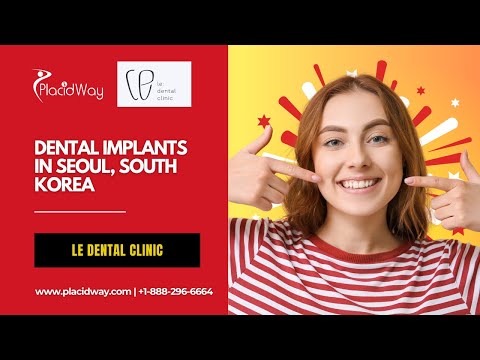

.png)
.png)

.png)
.png)
.png)
.png)

.png)
.jpg)
.jpg)








Share this listing