
Hair Transplant in Egypt: Exploring the No-Shave Hair Transplant Technique
Hair loss is frequently discussed as a predominantly male issue, yet millions of women around the globe face the emotional and physical impact of thinning hair, genetic female pattern hair loss, facial scarring, and alopecia. For many women, hair is intimately tied to self-image, confidence, and identity. When hair loss occurs, finding an effective, permanent, and discreet solution becomes a primary goal. Historically, women hesitated to consider surgical restoration due to the misconception that complete head shaving was required for donor harvest and recipient placement.
Today, advanced medical tourism destinations like Cairo, Egypt are changing the narrative. Clinics like Change Me offer specialized Women's Hair Restoration in Cairo Egypt utilizing state-of-the-art non-shave Follicular Unit Extraction (FUE) and Hair Transplant procedures. Through specialized harvesting strategies, modern surgeons can perform a complete Women's Hair Transplant in Cairo Egypt without sacrificing the length or appearance of the patient’s existing hair. In this detailed guide, we explore the nuances of female hair restoration, the groundbreaking No-Shave Hair Transplantation in Cairo Egypt, recipient indications ranging from genetic thinning to eyebrow creation, and what international patients can expect when traveling to Egypt for care.
Video Chapters & Quick Navigation
- Dispelling Hair Transplant Myths for Women
- Beyond Scalp Hair: Eyebrows, Scars & Alopecia
- The No-Shave Technique Explained
- Understanding Female Hair Loss Causes
- Technique Comparison: Shave vs. No-Shave
- Recovery Timeline and Expected Growth
- Why Choose Change Me Clinic in Cairo
- Preparing for Your Medical Journey
Dispelling Common Myths: Is Hair Transplantation Suitable for Women?
One of the most persistent misconceptions surrounding surgical hair restoration is that it is exclusively designed for male pattern baldness. Many female patients arrive at clinical consultations believing they are ineligible for surgical intervention or that hair transplants yield poor outcomes on female scalps. At [00:00], medical experts emphasize that hair transplantation is entirely suitable for women, with female consultations occurring as frequently as—and in some specialized clinics even exceeding—male consultations.
Unlike male hair loss, which typically manifests as a receding hairline or a distinct bald crown, female hair loss often presents as diffuse thinning across the mid-scalp and parting line. While this requires a refined surgical strategy to avoid damaging neighboring healthy follicles, modern micro-instruments and high-magnification optics allow surgeons to successfully transplant healthy grafts directly between existing strands. The result is increased density, enhanced hair volume, and natural scalp coverage without compromising existing hair follicles.
Key Takeaways Regarding Female Eligibility
- Hair transplants are fully effective for females with stable donor zones at the back and sides of the head.
- Women suffering from localized thinning, traction alopecia, androgenetic alopecia, and post-surgical scarring make ideal candidates.
- Modern non-shaving methods allow female patients to undergo treatment completely discreetly without interrupting their personal or professional lives.
Broad Applications: Eyebrows, Scar Tissue, and Alopecia Treatment
Hair transplantation techniques have advanced far beyond traditional scalp density restoration. As highlighted at [00:11], surgical restoration now addresses various aesthetic and reconstructive requirements across different facial and body areas:
- Eyebrow Restoration: Over-tweezing, trauma, or medical conditions can cause sparse or absent eyebrows. Single-hair follicular units harvested from the donor site are meticulously placed at precise angles to restore full, naturally shaped eyebrows.
- Scar Reconstruction: Trauma, burns, or prior cosmetic surgeries (such as facelifts) can leave hairless scar tissue along the hairline or scalp. Transplanting robust follicles into vascularized scar tissue restores natural hair growth over scarred areas.
- Alopecia Areata Management: Sudden, patchy hair loss driven by autoimmune or psychological stress conditions (alopecia) can be devastating. While medical management like cortisone injections remains a primary therapy, stable non-progressing patches can also benefit from hair transplantation at [00:21] to achieve immediate aesthetic restoration.
This versatility makes surgical hair restoration an inclusive solution for women seeking to rebuild lost density, alter facial symmetry, or conceal previous traumatic injuries.
The Technical Breakdown: How No-Shave Hair Transplantation Works
The primary barrier preventing women from seeking hair restoration has long been the prospect of shaving the head. In traditional male FUE procedures, the entire donor and recipient zones are clipped short to facilitate rapid extraction and insertion. For women with long hair, shaving the head requires years of regrowth and causes noticeable aesthetic disruption.
The development of No-Shave Hair Transplantation in Cairo Egypt at Change Me eliminates this issue entirely. At [00:46], the medical protocol is explained in detail:
-
Micro-Window Donor Preparation: Instead of shaving the back of the head, the medical team identifies a small, narrow section within the donor area, typically located between the ears. Only the small strands within this concealed strip are trimmed short for follicle extraction.
-
Natural Coverage: Long hair directly above, below, to the right, and to the left of the harvested strip is left untouched. As explained at [00:54], when the patient pulls her hair down or ties it back into a ponytail, the surrounding long hair completely covers the harvested donor site.
-
Unshaven Recipient Placement: Utilizing specialized Choi Implanter Pens or micro-slitting techniques, individual grafts are carefully inserted between long existing hairs in the thin recipient zones without cutting or shortening surrounding hair.
This stealth harvesting method allows patients to return to work and social activities almost immediately without anyone knowing they underwent a surgical procedure.
Understanding the Biological Roots of Female Hair Thinning
To ensure optimal long-term outcomes, every patient undergoing Women's Hair Transplant in Cairo Egypt must undergo a thorough diagnostic evaluation to determine the precise underlying cause of loss. Female hair loss is often multifactorial, requiring a tailored medical and surgical strategy.
Primary Causes of Female Hair Loss
- Androgenetic Alopecia (Female Pattern Hair Loss): Genetic sensitivity to dihydrotestosterone (DHT), causing progressive miniaturization of hair follicles along the crown and central part.
- Traction Alopecia: Chronic tension on hair roots caused by tight hairstyles, braids, or heavy extensions, leading to localized hairline recession.
- Telogen Effluvium: Widespread temporary shedding triggered by systemic stress, thyroid imbalances, hormonal shifts post-pregnancy, or severe nutritional deficiencies.
- Alopecia Areata & Trauma: Autoimmune responses or mechanical scarring from burns, accidents, or previous plastic surgery procedures.
By determining whether hair loss is active, localized, or stabilized, medical teams can design a surgical plan that complements existing native hair while protecting non-transplanted follicles from future thinning.
Comparing Restoration Techniques: Standard FUE vs. No-Shave FUE/DHI
Understanding the key structural and practical differences between traditional hair restoration and modern female-focused techniques helps patients make fully informed decisions:
| Feature / Parameter | Standard FUE Technique | No-Shave FUE / Technique |
|---|---|---|
| Donor Preparation | Entire donor zone is shaved down to 1-2mm. | Concealed horizontal strip is trimmed while surrounding long hair covers the area. |
| Recipient Area Preparation | Recipient zone shaved short for high-speed graft placement. | Zero shaving in recipient area; grafts placed carefully around long existing hair. |
| Post-Op Discretion | Low; procedure is immediately visible to others. | High; existing long hair hides donor extraction and recipient placement sites. |
| Surgical Complexity | Standard technical effort and procedure time. | High precision required; specialized team navigates around intact native strands. |
| Ideal Candidates | Male patients requiring extensive coverage or full head shaves. | Female candidates seeking subtle, completely undetectable density restoration. |
Post-Operative Recovery and Expected Growth Milestones
Patience is essential during recovery following Women's Hair Restoration in Cairo Egypt. While the no-shave approach offers instant concealment post-surgery, transplanted follicles go through a natural biological cycle before producing permanent, long-term density.
As noted at [01:01] and [01:06], patients can expect the following recovery timeline:
- Weeks 1 to 2 (Healing Phase): Minor crusting or tiny scabs form around individual recipient grafts. Gentle washing protocols eliminate scabs within 10 to 14 days. Mild redness gradually subsides.
- Month 1 (Donor Regrowth & Shock Loss): The trimmed hair in the donor window grows back to normal lengths at [01:01]. Transplanted shafts undergo a normal temporary shedding phase called "shock loss." The living hair bulb remains dormant beneath the scalp surface.
- Months 3 to 4 (Early Emergence): New hair growth begins as fine strands sprout from recipient sites.
- Month 6 (Visible Growth): Newly transplanted hair begins to grow thick and strong at [01:06]. Density noticeably improves across targeted areas.
- Months 12 to 18 (Full Maturation): Ultimate hair length, thickness, and natural texture are fully achieved. The transplanted hair can be styled, colored, cut, or washed just like native hair.
Why Choose Change Me Clinic in Cairo, Egypt for Female Restoration
Cairo has earned an international reputation as an exceptional hub for cosmetic surgery and hair restoration. Choosing Change Me in Cairo, Egypt for specialized female hair procedures offers several distinct advantages for international patients:
- Expert Surgical Talent: Highly trained surgeons specializing in delicate female aesthetic restoration, hairline design, and non-shave harvesting techniques.
- Advanced Medical Infrastructure: Modern facilities equipped with state-of-the-art surgical suites, HEPA sterilization systems, and precise Choi implanter tools.
- Cost-Effective Medical Packages: Premier medical care at competitive international pricing, making comprehensive multi-day treatment packages accessible.
- Tailored Medical Tourism Services: Dedicated support staff assisting international patients with airport transfers, hotel accommodations, bilingual patient coordinators, and post-operative follow-up.
Preparing for Your Medical Journey to Cairo
Planning a medical journey for surgical restoration involves straightforward preparation. Patients preparing for treatment at Change Me in Cairo should keep the following recommendations in mind:
- Virtual Trichological Assessment: Provide detailed high-resolution photos of your scalp (top, sides, and back) along with your medical history for remote evaluation.
- Pre-Operative Care: Avoid blood-thinning medications, alcohol, and nicotine for two weeks prior to your appointment to optimize tissue healing and graft uptake.
- Post-Operative Planning: Plan to remain in Cairo for 3 to 4 days post-procedure to complete professional scalp washes and receive final surgical clearance before flying home.
With proper planning and expert surgical care, women can reclaim their natural hair density, youthful hairline contour, and personal confidence discreetly and permanently.
Ready to Restore Your Hair and Confidence in Cairo?
PlacidWay Medical Tourism connects you with top-rated specialists for Women's Hair Restoration in Cairo Egypt at Change Me. Explore advanced, discreet non-shave hair transplantation tailored specifically for women.
GET A FREE QUOTEView Full Video Transcript
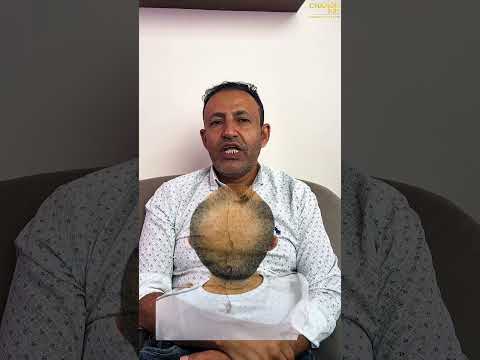
[00:00] Hair transplantation is not just for men. Can you imagine that many women actually do not know that hair transplantation is also suitable for women?
[00:06] In my cases, I see women very frequently, sometimes even more than men.
[00:11] Nowadays, hair transplantation is not limited to the scalp and head hair.
[00:14] No, we also perform eyebrow hair transplantation. We perform hair transplantation for scars caused by trauma to the scalp that has resulted in hair loss.
[00:21] There are also areas of hair that we lose due to psychological conditions, which is something called alopecia.
[00:24] With alopecia, you can wake up one morning and suddenly find an area of your hair with no hair at all due to your psychological condition.
[00:31] This can also be treated with hair transplantation. Many people do not know that transplantation is an option. It can be treated with cortisone, and we can also perform hair transplantation.
[00:35] Many women also experience genetic hair loss, and we perform hair transplant procedures for them.
[00:39] Many people do not know this.
[00:41] Of course, the main concern women have about hair transplantation is that they think we might shave or remove all of their hair like we do with men.
[00:46] No. We use a kind of technique where we take only a small section from the donor area at the back and trim it so that we can extract the hair follicles.
[00:54] We leave hair on the right, left, above, and below the donor area, so when she ties all her hair back in a ponytail,
[00:59] it will cover the donor area where we took the hair from.
[01:01] After a month, the hair will grow back to a normal length, and no one will notice that you have had a hair transplant.
[01:06] Within six months, the transplanted hair begins to grow naturally.
[01:10] You can achieve excellent results and a natural appearance, restoring the area you have lost due to genetic hair loss, weakened hair, or alopecia.
[01:17] Whatever the problem you have, we can address it.






















Share this listing