
The two-calendar planner
Non-Surgical Facelift in Seoul, South Korea: Which Month Fits Your Life
Your American calendar on one side. Seoul's calendar on the other. This guide lines them up month by month so your HIFU, thread lift and filler visit lands in kind weather, around the right holidays, and with enough healing time before the day that matters.
Day three, Sinsa-dong
Sleet, a wool scarf, and a wedding fourteen weeks away
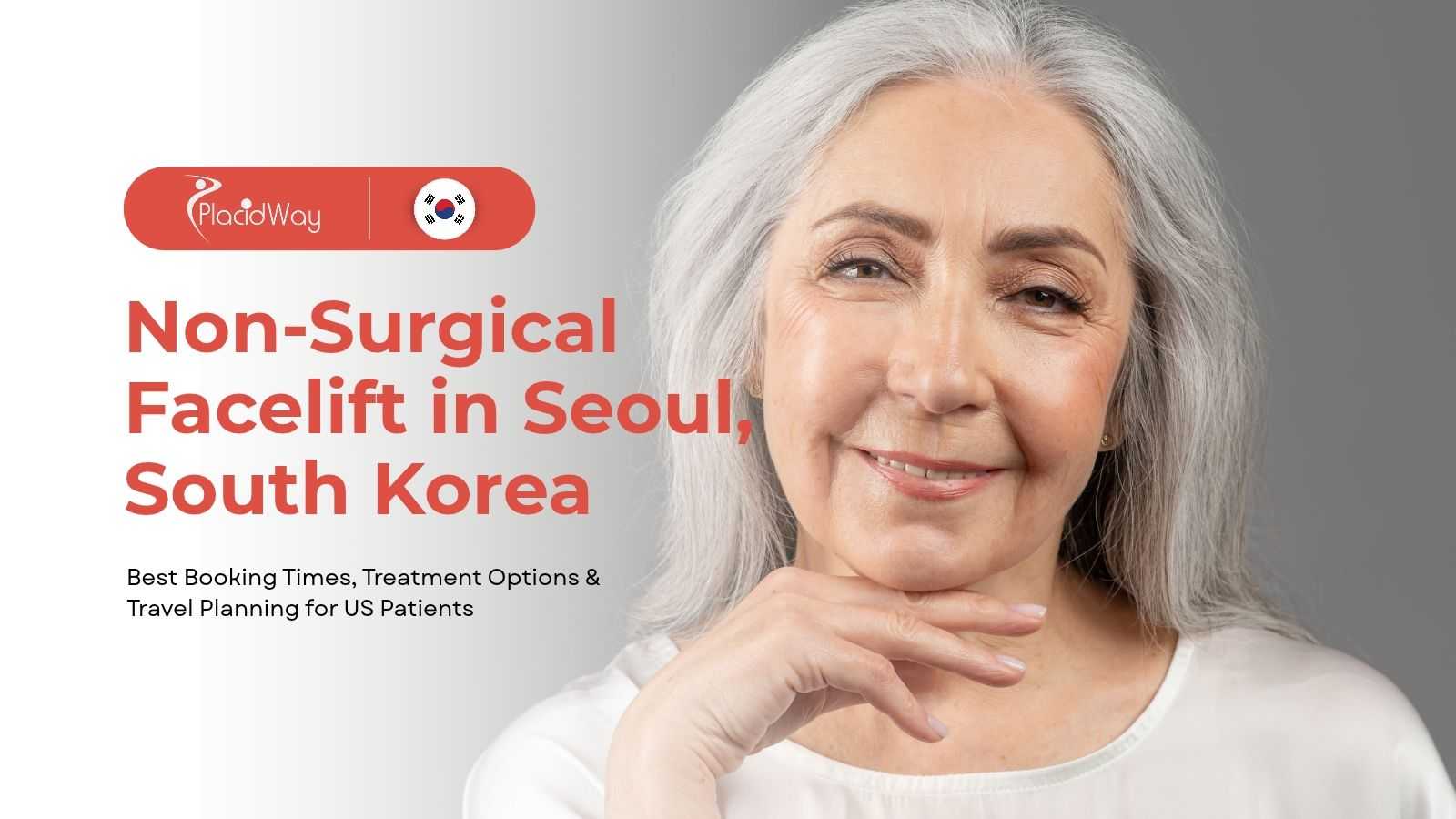
The sleet started as Grace stepped out of a pharmacy near Sinsa Station, a bag of hydrating sheet masks in one hand. Wind came down the street hard enough to sting the tender skin along her jaw, where the thread lift entry points were still pink. She pulled her scarf up over her cheeks, joined the stream of commuters doing exactly the same thing, and laughed. In February, nobody in Seoul looks twice at a woman wrapped to the eyes.
Grace is a composite, built from the kinds of patients PlacidWay coordinators hear from often. She is 59, lives outside Atlanta, and has a granddaughter getting married in early June. Her mother grew up in Daegu, so Korea was never foreign to her, but she had never been treated there. A US quote for Ultherapy, a PDO thread lift and filler touch-ups came in well above what she wanted to spend on one wedding.
Her timing was not luck. She worked backward from the wedding date. HIFU-type tightening tends to show gradually over two to three months. Thread lift bruising usually settles within a couple of weeks, but she wanted extra margin. She also checked that Seollal, the Lunar New Year, would be over before she landed, because many Seoul clinics close for several days around it. Cold weather was the trade-off she accepted, and the scarf turned out to be the best concealer she packed.
Pick the event first. Count back. Then choose the season that is kindest to a healing face.
The real timeline
The clock your face keeps
A "non-surgical facelift" in Seoul usually means a combination plan rather than one treatment. The pieces heal on different schedules, which is why the calendar matters so much.
- HIFU or Ultherapy. Focused ultrasound heats deeper layers to prompt collagen remodeling. Expect temporary redness, mild swelling and tenderness, sometimes for a few weeks along the jawline. The firming effect builds slowly, often becoming noticeable after two to three months, with fuller change around three to six months. Many clinics suggest maintenance roughly once a year.
- PDO thread lift. Done under local anesthesia. The lift is visible right away and refines as swelling settles. Bruising, swelling and a tight feeling commonly last one to two weeks. Clinicians typically advise no wide yawning, dental work, facial massage, saunas or hard workouts for several weeks.
- Filler touch-ups. Swelling usually eases within days, while a bruise can take up to two weeks to fade. Clinics often like a review about two weeks later in case a small adjustment is needed.
Pain is usually manageable but not nothing. HIFU can feel sharp and hot over bony areas, and clinics generally apply numbing cream. Thread placement feels like pressure and pinches, with soreness for a few days afterward. Your treating doctor sets the real schedule for you, and every number here is a typical range, not a promise.
Visit-spacing diagram: one trip, paired dates
A seven to ten night stay is a sensible minimum when threads are part of the plan, so the check visit happens in Seoul rather than over email.
Before the seasons
How to read two calendars at once
Each season below is split in two. The left column is your life in the United States: federal holidays, school breaks, paid time off and airfare swings on transpacific routes. The right column is Seoul: the weather your healing skin will meet, Korean holidays that close clinics, and the weeks when local demand rises.
One quirk worth knowing. Korea does not observe daylight saving time, so Seoul sits 13 hours ahead of US Eastern time from spring to fall and 14 hours ahead in winter. That shift changes when you can comfortably video-call the clinic after you return, and it nudges how many hours of jet lag you carry on day one.
Best move: the countback
Write your event date on a calendar. Mark three months earlier in one color and six months earlier in another. Your treatment week belongs between those marks if HIFU or Ultherapy is the main event. If you are only having threads or filler, ask your doctor for their minimum gap, then add a few weeks of cushion. Never squeeze healing time to fit a date. If the window is already too short, a smaller plan or a later trip is the safer answer.
Winter
December · January · February
Your US calendar
Christmas and New Year push transpacific fares to their high point, and family obligations fill those weeks anyway. Martin Luther King Jr. Day and Presidents' Day give long weekends that stretch a week of leave. Many employers reset paid time off on January 1, so a fresh bank of days arrives just as fares often ease.
Winter treatment lines up well for spring and early summer events: Mother's Day brunches, graduations, and the June weddings that so many families plan around.
Seoul's calendar
Cold, dry and often below freezing, with wind that bites. Ultraviolet levels are low, which suits newly treated skin, and scarves, hats and face masks are everyday wear, so bruising hides easily. Indoor floor heating dries skin, so pack a rich moisturizer.
Winter is a busy local season for Gangnam and Apgujeong skin clinics, as students on break and office workers book treatments under cover of winter clothing. Seollal can fall in late January or February and closes many clinics for several days. Christmas and New Year's Day are public holidays too.
- December. Good for spring events if you fly before the holiday fare surge. Leave a buffer so the check visit happens before you rush home for Christmas.
- January. New PTO, quieter flights after the first week. Confirm whether Seollal lands late in the month before you book.
- February. Grace's month. Strong for late spring weddings, as long as your dates sit clear of Seollal.
Holiday radar
The holidays that move clinic schedules and fares
Lunar holidays shift each year, so check the current calendar before you commit. Korea also adds substitute holidays when a holiday falls on a weekend, which can extend a closure by a day.
- Seollal (Lunar New Year), Korea. Clinic impact high. Multi-day closures are common and domestic travel is heavy. Book around it.
- Chuseok (harvest festival), Korea. Clinic impact high. Falls in September or early October. Flights from the US fill with Korean American families heading home.
- National Foundation Day and Hangeul Day, Korea. Medium. Both in October, sometimes forming a long stretch with Chuseok.
- Buddha's Birthday and Children's Day, Korea. Medium. Spring days off that can cluster in May, busy for family outings.
- Independence Movement Day, Memorial Day and Liberation Day, Korea. Low. Single days in March, June and August. Some clinics close, many keep weekend-style hours.
- Christmas and New Year's Day, Korea. Low to medium. Public holidays in Korea as well as at home.
- China's National Day week and Japan's Golden Week. Not Korean holidays, but visitor surges in early October and late April into May can fill Myeongdong and Gangnam hotels.
- Thanksgiving and Christmas to New Year, US. Fare impact high. Avoid flying home during these weeks unless you have booked well ahead.
- Spring break, July Fourth, Memorial Day and Labor Day weekends, US. Medium. Long weekends help your leave, but fares and airports get busier.
Spring
March · April · May
Your US calendar
Spring break and Easter lift fares in March and April, especially if you are flying from a hub full of families. Mother's Day and graduation season crowd May weekends. Memorial Day adds a free day at month's end.
Spring treatment points toward late summer and fall: September and October weddings, a fortieth anniversary, or the photos at a Thanksgiving table.
Seoul's calendar
Mild and warming, with cherry blossoms along Yeouido and Seokchon Lake usually in early April. Spring also brings yellow dust and fine dust days. Locals check air quality apps and wear KF94 masks, which also shield a healing face. Sun strength climbs quickly, so daily broad-spectrum sunscreen matters.
Blossom weeks and Japan's Golden Week fill hotels. After the winter rush, some clinics run seasonal promotions, but treat any discount as something to ask about rather than expect.
- March. Comfortable, between the winter clinic rush and blossom crowds. Independence Movement Day early in the month is a single closure.
- April. Beautiful and busy. Book hotels early, and check whether Buddha's Birthday falls in late April.
- May. Warm and green, with Korean holidays that may cluster. Pair Memorial Day weekend at home with a week of leave.
Climate by region
Seoul, Busan and Jeju are not the same trip
Most patients are treated in Seoul's Gangnam, Sinsa, Apgujeong or Cheongdam areas. Some add a few quiet recovery days elsewhere, often to visit relatives. These are typical seasonal patterns, never a forecast.
| Season | Seoul | Busan | Jeju |
|---|---|---|---|
| Winter | Freezing, dry, windy. Low UV. | Milder and sunny, still chilly by the sea. | Mildest of the three, often windy. |
| Spring | Mild, blossoms, fine dust days. | Warm earlier, coastal breeze. | Pleasant, canola flowers, changeable. |
| Summer | Monsoon then hot and humid. | Humid, beach crowds, typhoon exposure. | Humid, rainy spells, typhoon exposure. |
| Autumn | Clear, dry, comfortable. Foliage. | Warm into October, early typhoon risk. | Mild, windy, early typhoon risk. |
Weather-risk note: if a typhoon or heavy monsoon rain disrupts flights, your check visit may need to move. Leave one spare day before your flight home in summer and early autumn, and buy travel insurance that covers weather delays.
Have an event date but not a travel window yet?
Share the occasion, your available leave and the treatments you are curious about. A PlacidWay coordinator can help compare Seoul clinic schedules against Korean holidays and suggest a few windows to discuss with a doctor.
Map My Seoul Treatment WindowSummer
June · July · August
Your US calendar
School is out, family reunions stack up, and transpacific fares are commonly at seasonal highs. Juneteenth and July Fourth add days off. If grandchildren visit you in summer, a trip abroad may compete with babysitting duty, so settle that conversation early.
Summer treatment looks ahead to holiday gatherings: Thanksgiving, Christmas photos, a New Year's Eve party.
Seoul's calendar
The monsoon season, called jangma, usually arrives in late June and runs through much of July with heavy downpours. August turns hot and humid. Heat can make swelling feel more noticeable, and sweating is uncomfortable around thread entry points. Skip the jjimjilbang bathhouses and saunas until your doctor clears you.
Korean school vacation peaks in late July and early August. Some locals avoid procedures in deep summer, so certain clinics may have more open slots. Memorial Day in June and Liberation Day in August are single-day holidays.
- June. Early June often stays pleasant before the rains. Good for a November event.
- July. Wet. Workable if you plan indoor recovery, such as cafés, museums and the Starfield COEX Library.
- August. Hot. Practical if your leave only opens up now and your event is in December.
Packing by season
What goes in the suitcase for a healing face
The basics stay the same all year: a travel pillow so you can sleep upright on the long flight home, soft snacks, lip balm, gentle cleanser, a broad-brimmed hat, and a printed list of your medications. Seoul pharmacies sell excellent sheet masks and sunscreens, so there is no need to overpack skin care.
Then adjust for the season:
- Winter: a long scarf, thermal layers, a heavy moisturizer, a small humidifier stick for the hotel room.
- Spring: KF94 masks for dust days and a mineral sunscreen you already tolerate.
- Summer: a compact umbrella, quick-dry clothing, a cooling gel pack approved by your clinic.
- Autumn: a light jacket for crisp evenings and comfortable shoes for palace and foliage walks once you feel up to it.
Autumn
September · October · November
Your US calendar
Labor Day, Columbus Day or Indigenous Peoples' Day, and Veterans Day each offer a long weekend. Late in the year, many workers face use-it-or-lose-it PTO, which makes a fall trip feel almost free in leave terms. Fares tend to climb as Thanksgiving approaches.
Autumn treatment suits winter and early spring events, and it gives you time for a follow-up visit at home before the holidays.
Seoul's calendar
Many visitors find this the most comfortable season, with clear skies and low humidity. Foliage on Namsan and Bukhansan usually peaks in late October and November. Early September can still feel like summer.
Chuseok brings major clinic closures and full flights. October adds National Foundation Day, Hangeul Day and China's National Day visitors. In November, after the national college entrance exam, students start booking skin treatments, and the busy winter season begins.
- September. Pleasant once the heat fades. Check for Chuseok first.
- October. Lovely weather, busy calendar. Aim for the weeks between the holidays.
- November. Crisp and colorful. Fly home before the Thanksgiving fare spike.
Best move for Korean American families
If you are flying in for Chuseok with relatives, book treatment for after the holiday rather than before it. Clinics will be open again, you will not be healing through a crowded family gathering, and the long trip does double duty without rushing either part.
Benefit-year tips box
Timing your money, US style
- HSA and FSA funds. IRS rules generally treat cosmetic procedures as ineligible, so do not plan to pay for the treatment itself with these accounts. If you have a year-end FSA balance to use, some administrators list broad-spectrum sunscreen and basic first-aid supplies as eligible. Check your own plan.
- Your annual wellness visit. Most US health plans cover preventive visits without cost-sharing. Schedule yours before the trip and ask your doctor about blood thinners and supplements such as fish oil or vitamin E that can increase bruising. Only your clinician should decide whether to pause anything.
- PTO resets. If your leave resets on January 1 or on your work anniversary, a trip just before the reset uses days you might lose, and one just after starts a fresh bank.
- Insurance abroad. Many US health plans offer limited coverage overseas, and standard travel insurance often excludes elective cosmetic treatment. Ask insurers about policies designed for medical travelers, and read the complication clauses closely.
- Korean tax refunds. Korea has offered VAT refunds to foreign patients on certain cosmetic treatments at registered clinics in some periods. Ask your clinic whether any program applies when you book.
Checking from overseas
Verifying credentials and planning follow-up before you fly
Good timing means little without the right clinic, and much of the checking can be done months ahead from your kitchen table.
Start with the clinic's name. In Korea, a clinic whose name itself includes ??? (dermatology) or ???? (plastic surgery) is typically run by a board-certified specialist in that field. A general clinic offering skin treatments usually lists the specialty as a treatment area instead. Both can be legitimate, but you deserve to know which one you are booking. Ask for the treating doctor's name and specialist certificate, and ask who performs each step on the day.
Clinics that market to international patients are expected to register with the Korea Health Industry Development Institute. The Medical Korea portal is a useful place to begin. For devices, ask which brand you will receive. Genuine Ultherapy is sold by Merz, and Korean-made HIFU systems such as Shurink, sold abroad as Ultraformer, are widely used in Seoul. Many clinics will show you the unopened cartridge or tip before treatment.
Follow-up is easier than many patients expect, if you prepare. Before leaving Seoul, request a written record listing the device, number of lines and treated areas, thread type and count, and each filler product with its lot number. Some Korean filler brands are not FDA-approved, so a US dermatologist may be unfamiliar with them, and the lot details help. Book that home appointment before you leave, about two to three weeks after your return.
For video check-ins with the clinic, remember the time gap. A morning call in Seoul is the previous evening on the East Coast and late afternoon in California.
Price seasons in context
How Seoul sits among five popular destinations
Women comparing options often look at Bangkok, Istanbul, Mexico City and Dubai alongside Seoul. When we weigh clinic qualifications, device variety, cost, US travel access, aftercare and reputation, Seoul stands out for its deep bench of dermatology specialists and the sheer range of combination protocols available in one district. These recent estimates are approximate. Clinic tier, treated areas and season all move the number, so confirm everything in a written quote.
| Destination | Approx. package (USD) | Typical package notes |
|---|---|---|
| Seoul, South Korea | $1,000–$3,500 | HIFU or Ultherapy, PDO threads and filler touch-ups per session |
| Bangkok, Thailand | $700–$2,500 | Similar combinations, often with hotel pickup |
| Istanbul, Turkey | $600–$2,000 | Thread lift and HIFU, sometimes with add-ons |
| Mexico City, Mexico | $800–$2,500 | HIFU and thread combinations, package pricing |
| Dubai, UAE | $1,500–$4,000 | Premium positioning and VIP packages |
| United States (baseline) | $3,000–$8,000 | Staged Ultherapy, threads and injectables at premium practices |
On travel access, US passport holders can generally visit South Korea visa-free for short tourist stays. The K-ETA travel authorization has been temporarily waived for US citizens during recent periods, so check the official K-ETA site before you fly. Nonstop flights to Incheon run from cities including Los Angeles, San Francisco, Seattle, Dallas, Chicago, Atlanta, Washington Dulles and New York, usually in the range of 11 to 15 hours. Airfare and hotel costs often matter more to your total than any seasonal clinic discount, which is why the calendar is worth this much attention.
Your event date is set. Let's fit Seoul around it.
Send PlacidWay your event, your home airport and the weeks you can take off. We will help you request quotes from Seoul clinics, compare doctor credentials and device brands, and line up treatment and check-visit dates that respect both calendars and your full healing time.
Request My Seoul Facelift Timing PlanA note on Grace: she is a composite character drawn from common patient situations, not a real individual. This page offers general planning information only. Please talk with your own doctor and your treating clinician in Seoul about whether these treatments suit you and how long your healing will take. Prices and seasonal patterns are approximate and can change.
Sources and further reading
- IRS Publication 502: Medical and Dental Expenses
- Korea Electronic Travel Authorization (K-ETA) official site
- US Department of State: South Korea International Travel Information
- Medical Korea, Korea Health Industry Development Institute
- VisitKorea, Korea Tourism Organization
- CDC Travelers' Health: Medical Tourism











Share this listing