
All-Inclusive Hip Surgery Packages: Recover in Paradise in Cancun

Many patients dealing with chronic joint pain or advanced arthritis look across borders for accessible orthopedic care. Exploring hip surgery in Cancun Mexico has become increasingly common for North American patients seeking timely interventions without the extended wait times or high out-of-pocket expenses frequently encountered at home. By bundling various medical services together, clinics in this region aim to streamline the process for international visitors.
However, undergoing major orthopedic surgery abroad requires thorough research and careful planning. Traveling for a joint replacement involves much more than booking a flight; it requires a deep understanding of the medical risks, the necessity of pre-operative clearance, and the complexities of coordinating aftercare once you return home. In this guide, we will explore how these medical packages work, what they typically include, and how to navigate the process safely.
Key Takeaways
- Medical tourism packages typically bundle surgical fees, anesthesia, standard implants, and hospital accommodation.
- Post-operative recovery in the destination country usually requires a 10 to 14-day stay to minimize the risks of flying.
- Patients must arrange their own long-term physical therapy in their home country for successful rehabilitation.
- Medical clearance from a local physician is a mandatory step before traveling abroad for major orthopedic procedures.
- Outcomes, risks, and recovery times vary significantly depending on the patient's overall health and the specific procedure.
1. What types of hip surgeries are available in Cancun?
The specific procedure recommended will depend entirely on the patient's diagnosis, the extent of joint deterioration, and an evaluation by a qualified orthopedic specialist. Total hip replacement involves removing the damaged bone and cartilage and replacing it with prosthetic components. This is typically indicated for patients with severe osteoarthritis or rheumatoid arthritis that has not responded to conservative treatments like medication or physical therapy.
For individuals with isolated damage—often resulting from a specific type of fracture rather than widespread arthritis—a partial hip replacement might be considered. In this procedure, only the femoral head (the ball of the joint) is replaced, leaving the natural socket intact. Minimally invasive techniques, such as hip arthroscopy, may also be available for diagnosing or treating early-stage impingements, though this is less common in typical joint replacement packages.
2. How much does a hip procedure cost compared to the US or Canada?
Pricing for complex orthopedic procedures varies significantly based on several factors. The exact cost will depend on the chosen hospital, the experience level of the surgeon, the number of days required for inpatient recovery, and the specific brand or material of the prosthetic implant used. Advanced materials like ceramic-on-ceramic may carry a different price point than traditional metal-on-polyethylene components.
While the initial price tag is lower, patients must budget for comprehensive costs. These estimated figures rarely include airfare, extended hotel stays for the required recovery period, companion travel expenses, or the crucial physical therapy sessions needed upon returning home. It is important to request a detailed breakdown of all inclusions and exclusions before committing to any treatment plan.
3. What is typically included in an orthopedic medical tourism package?
Medical packages are designed to give international patients a clear idea of their financial commitment upfront. Common inclusions feature pre-operative consultations with the surgeon (often done initially via video call and finalized in person), routine pre-surgical blood tests and X-rays performed upon arrival, the surgical procedure itself, and initial post-operative medications administered during the hospital stay.
However, patients should carefully review what is excluded. Packages typically do not cover treatment for unforeseen complications, extended ICU stays if required, specialized medications for pre-existing conditions, or the cost of medical evacuation if a severe emergency arises. Understanding the financial boundaries of your package is vital for safe and stress-free planning.
4. How do I select a qualified facility for my procedure?
Safety and medical accuracy should be the primary drivers of your decision. Start by looking for hospitals that hold recognized accreditations. The Joint Commission International (JCI) or the Mexican General Health Council (Consejo de Salubridad General - CSG) are two notable accrediting bodies that evaluate hospitals based on strict international standards for patient safety and care quality.
Furthermore, investigate the specific surgeon who will perform the operation. Look for board certification from recognized medical boards, such as the Mexican Council of Orthopedics and Traumatology. It can also be beneficial to inquire about the surgeon's specific volume of hip replacement procedures, as higher volume is often associated with more consistent surgical outcomes.
5. How long should I plan to stay in Cancun for recovery?
After a joint replacement, patients usually spend 2 to 4 nights in the hospital for close monitoring, pain management, and early mobilization. Once discharged from the hospital, you are not immediately ready to board an airplane. The remaining days are typically spent in a nearby hotel or recovery facility that can accommodate patients with limited mobility.
This extended stay is a critical safety measure. Flying too soon after major lower-extremity surgery significantly increases the risk of deep vein thrombosis (DVT) and pulmonary embolism. The surgical team will need to evaluate your incision site, monitor your early physical therapy progress, and ensure you are medically stable to endure the physical stress of air travel.
6. What are the potential risks and complications?
Like any major operation, a hip replacement is not without risk. Potential complications include dislocation of the new joint, differences in leg length, and adverse reactions to anesthesia. While medical facilities use stringent protocols to minimize these risks, they cannot be entirely eliminated. Your personal medical history, weight, and existing health conditions (such as diabetes or heart disease) can influence your individual risk profile.
Traveling adds another layer of complexity. The long period of immobility associated with flying increases the risk of blood clots. Additionally, if an infection develops weeks after returning home, local doctors may face challenges determining the exact surgical techniques or implant specifics used abroad, which makes comprehensive medical record keeping essential.
7. How does medical tourism work for orthopedic procedures?
The process generally begins with remote consultations. Patients send their medical history, recent X-rays, and MRI reports to the clinic in Cancun via secure channels. The orthopedic team reviews these documents to determine if the patient is a suitable candidate for the procedure. Not everyone is an ideal candidate for surgery abroad; individuals with severe comorbidities may be advised to seek treatment locally.
If accepted, the patient coordinates their travel schedule with the clinic's availability. Upon arrival, the initial days are usually dedicated to in-person consultations, extensive pre-operative testing, and final surgical planning. Patients must approach this process acknowledging that the final decision to proceed with surgery only happens after the in-person medical evaluation confirms it is safe to do so.
8. How should I prepare for my surgery and travel?
- Local Consultation: Discuss your plans with your primary care physician to assess your fitness for travel and major surgery.
- Medication Management: You may need to stop taking certain medications, such as blood thinners or specific anti-inflammatory drugs, weeks before the procedure.
- Home Preparation: Before leaving, arrange your home to avoid stairs, secure loose rugs, and set up a comfortable recovery space on the ground floor.
- Documentation: Ensure your passport is valid and carry physical and digital copies of all your medical records and imaging.
- Support System: Arrange for someone to travel with you if possible, and ensure you have support at home for daily tasks during the first few weeks of recovery.
9. How do I prepare for traveling home after a hip replacement?
Navigating an airport soon after a joint replacement is physically demanding. You must contact your airline in advance to arrange for wheelchair assistance from the check-in counter directly to the boarding gate. Depending on the length of your flight, you should request an aisle seat to allow you to stretch your leg and stand up periodically, which is vital for maintaining blood circulation.
Your surgical team may prescribe specific blood-thinning medications or require you to wear medical-grade compression stockings during your journey. Follow these instructions precisely. Ensure you carry all your medications in your carry-on luggage, along with a doctor’s note explaining that you have a new metal implant, which will likely set off airport security scanners.
10. Will I need physical therapy after returning home?
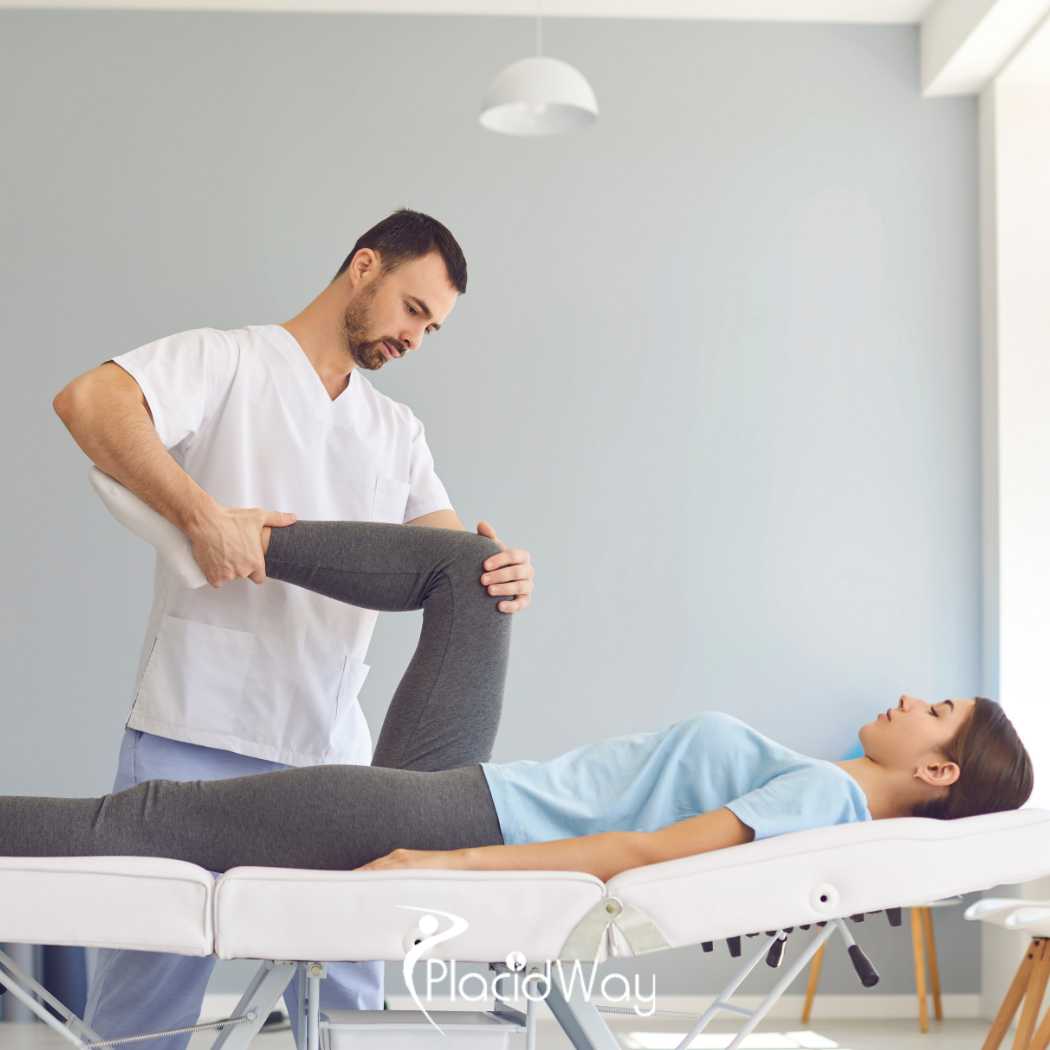
The surgery itself is only the first step in the treatment process. While the clinic in Cancun will initiate basic mobilization and show you initial exercises, the bulk of your rehabilitation will happen over the following months at home. Failure to commit to a structured physical therapy regimen can result in stiffness, reduced range of motion, and a longer overall recovery time.
Before you travel for surgery, it is highly recommended to secure appointments with a local physical therapist. This ensures that once you return, you can transition smoothly into outpatient care without long waiting periods. Make sure your local therapist understands the specifics of your procedure, as different surgical approaches (such as anterior versus posterior hip replacement) require different post-operative precautions.
Why Choose PlacidWay for Medical Tourism Information?
Navigating international healthcare options can be complex. PlacidWay serves as an informational resource for patients exploring treatments abroad. Here is how PlacidWay assists in the research process:
Frequently Asked Questions
Is it safe to fly after having hip surgery in Cancun?
Flying shortly after hip surgery increases the risk of deep vein thrombosis (DVT) or blood clots. Surgeons typically require patients to wait 10 to 14 days and receive medical clearance before boarding a flight. You may also be advised to take blood thinners or wear compression stockings during your journey home.
What type of implants are used for hip replacements in Mexico?
Reputable orthopedic facilities in Cancun typically use FDA-approved or internationally recognized implants from major global medical manufacturers. Materials often include titanium, ceramic, or advanced medical-grade plastics, selected based on the patient's specific anatomy and lifestyle.
Can I get a partial hip replacement instead of a total one?
Partial hip replacements are an option for some patients, particularly if the damage is isolated to the femoral head rather than the socket. However, this is a medical decision that an orthopedic surgeon must make after reviewing your X-rays and MRI scans.
Will my local health insurance cover complications from surgery abroad?
Standard domestic health insurance plans rarely cover complications arising from elective medical tourism procedures. Patients are encouraged to consider specialized medical tourism insurance that specifically covers unforeseen complications or extended stays abroad.
Do hospitals in Cancun have English-speaking medical staff?
Yes, facilities that regularly cater to international patients usually employ English-speaking surgeons, patient coordinators, and nurses to ensure clear communication regarding medical consents, treatment plans, and recovery instructions.
What medical tests are required before traveling for hip surgery?
Patients generally need a comprehensive medical clearance from their local doctor. This usually includes recent blood panels, an EKG, chest X-rays, and specific imaging of the hip joint. These results must be sent to the surgical team in Cancun well before your travel date.
How soon after surgery will I begin walking?
Under modern orthopedic protocols, physical therapists often help patients stand and take a few steps with a walker within 24 hours after surgery. Early mobilization is a key strategy for preventing blood clots and improving joint function.
What happens if I experience pain or swelling after returning home?
If you experience sudden pain, severe swelling, redness, or fever after returning home, you should immediately seek care at a local emergency room or from your primary care provider, as these can be signs of infection or a blood clot.
Can a companion stay with me in the hospital?
Many private hospitals in Cancun offer private patient suites equipped with a sleeper sofa or extra bed to accommodate one companion. Policies vary by facility, so it is important to confirm this when reviewing your package.
How long do modern hip implants typically last?
While individual results vary based on age, activity level, and weight, studies suggest that most modern hip implants can function well for 15 to 20 years, and sometimes longer, before potentially requiring revision surgery.
Compare Treatment Options
Explore detailed facility profiles, review potential estimated costs, and gather the information you need to discuss your orthopedic options with your local healthcare provider.
Request Treatment InformationReferences
- Medical Tourism Guidelines – Centers for Disease Control and Prevention (CDC)
- Total Hip Replacement Information – American Academy of Orthopaedic Surgeons (AAOS)
- JCI-Accredited Organizations Directory – Joint Commission International
- Surgical Safety and Care – World Health Organization (WHO)
- Deep Vein Thrombosis (DVT) and Travel – Centers for Disease Control and Prevention (CDC)
- Board Certification Standards – Mexican Council of Orthopedics and Traumatology (Consejo Mexicano de Ortopedia y Traumatología)
























Share this listing