
Laser Eye Surgery Recovery Timeline in Thailand
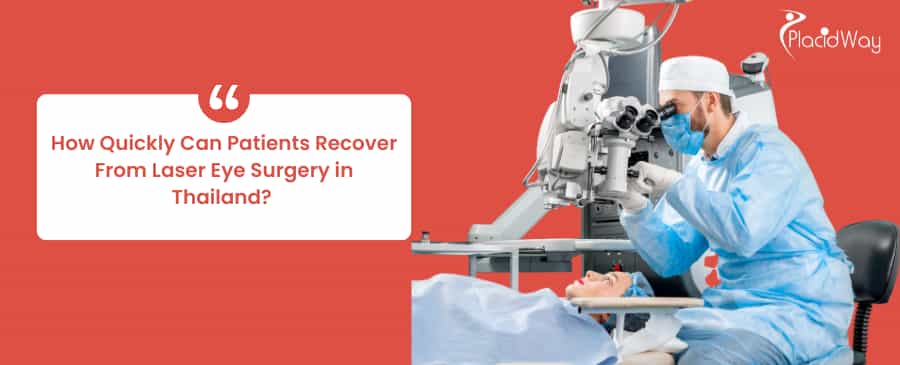
Thailand has become a global hotspot for medical tourism, and for good reason. Between the world-class hospitals in Bangkok and the serene recovery environments in Phuket or Chiang Mai, many people are flocking here to fix their vision while enjoying a holiday. But a big question looms for anyone planning this trip: How quickly can patients recover from laser eye surgery in Thailand?
The short answer is that recovery is generally very fast, especially with modern techniques like ReLEx SMILE and Femto-LASIK, which are widely available in Thai clinics. Most travelers find they can enjoy the sights (with sunglasses!) just a day or two after their procedure. However, the tropical climate, the air conditioning in hotels, and the temptation of beach swimming do add a few unique layers to the healing process that you need to be aware of.
In this guide, we will walk you through exactly what to expect regarding recovery timelines, costs, and safety tips so you can plan your medical vacation perfectly.
How long does it take to recover from LASIK in Thailand?
LASIK recovery is famous for being quick, which is why it fits so well into a travel itinerary. In Thailand, surgeons use advanced technology that minimizes trauma to the eye. Immediately after the surgery, your vision might be a bit foggy, like you are looking through a dirty window, and your eyes may feel scratchy. However, this sensation usually disappears after a good night's sleep.
By the next morning, the majority of patients wake up with functional vision—often 20/20 or close to it. You will likely have a follow-up appointment the day after surgery to check the flap healing. While you can go out for dinner or a gentle walk, you must avoid dusty streets or smoky night markets for the first few days to prevent infection.
What is the recovery time for ReLEx SMILE in Thailand?
ReLEx SMILE is increasingly popular in Thailand because it is "flapless" and minimally invasive. Because there is no corneal flap created, the structural integrity of the eye remains stronger, and the surface heals faster. You might notice your vision is slightly blurrier on day one compared to LASIK, but this clears up very quickly, usually within 48 to 72 hours.
One huge advantage of SMILE for tourists in Thailand is that it often allows for a quicker return to active pursuits. While you still can't jump into a Muay Thai boxing ring immediately, the risk of flap dislocation is non-existent, making it a preferred choice for active travelers.
Is PRK recovery slower than LASIK in Thailand?
If you have thin corneas, your Thai ophthalmologist might recommend PRK (Photorefractive Keratectomy). It is crucial to know that this recovery is different. Because the top layer of the cornea is removed rather than flapped, it has to grow back. This takes time. You will likely need to stay in your hotel room with the curtains drawn for about 3 to 5 days due to light sensitivity and discomfort.
If you choose PRK, do not plan any sightseeing for at least a week. Your vision will fluctuate significantly, and you won't experience that "wow" moment of clear sight until the surface heals, which takes about a week, followed by weeks of gradual sharpening.
How soon can I fly home after laser eye surgery in Thailand?
Technically, the cabin pressure of an airplane does not damage your eyes after surgery. However, the air quality inside a plane is incredibly dry. For a long-haul flight home from Bangkok or Phuket, this dryness can be very uncomfortable and hinder healing. If you must fly soon after surgery, you need to be prepared.
We strongly advise carrying preservative-free artificial tears and using them every 30 minutes during your flight. Avoid sleeping with your eyes slightly open (using a sleep mask can help, provided it doesn't put pressure on the eyes). If possible, stay in Thailand for a week post-op for your final check-up before boarding a plane.
What is the cost of Laser Eye Surgery in Thailand compared to other countries?
One of the main drivers for surgery in Thailand is the cost-benefit ratio. You get access to JCI-accredited hospitals and top-tier surgeons for a fraction of the price you would pay in Western countries. Below is a comparison to help you budget.
| Country | Average Cost Per Eye (USD) | Average Cost Per Eye (AUD) | Notes |
|---|---|---|---|
| Thailand | $1,200 - $2,200 | $1,800 - $3,300 | Includes pre-op & follow-ups |
| USA | $2,200 - $4,500 | $3,300 - $6,800 | High variance by state |
| Australia | $2,000 - $3,400 | $3,000 - $5,000 | High labor costs |
| United Kingdom | $1,900 - $3,800 | $2,800 - $5,700 | Prices vary for Harley St clinics |
| Turkey | $950 - $1,500 | $1,400 - $2,200 | Highly competitive market |
Note: Prices are estimates and can vary based on clinic reputation, specific technology (e.g., Femto vs. Standard), and exchange rates.
When can I swim in Thai beaches after laser eye surgery?
This is the hardest rule for tourists to follow! The crystal-clear waters of Krabi or Phuket look inviting, but swimming is a major risk during recovery. Natural bodies of water contain bacteria and amoebas that can cause devastating infections in healing corneas. Chlorinated pools are also irritants.
Ideally, keep your head above water for the first month. If you absolutely must swim after 2 weeks, high-quality, watertight swimming goggles are non-negotiable. But really, it is safer to stick to lounging on the sand with a big hat and sunglasses.
Do I need follow-up appointments in Thailand before leaving?
Do not book your flight home for the day after surgery. A standard medical tourism itinerary for eye surgery involves arriving a day before for the consultation, having the surgery, and then staying for at least 5 to 7 days. The one-day post-op check is critical to ensure the flap is smooth and there is no infection.
The one-week check is usually the "all-clear" signal for flying and resuming more normal activities. If you leave too early and develop a complication back home, it can be difficult (and expensive) to find a local doctor who knows your specific surgical case details.
How does the tropical climate in Thailand affect eye healing?
Thailand's natural humidity is actually a friend to your eyes, as it prevents the tear film from evaporating as quickly as it does in dry climates. However, the UV radiation is intense. You absolutely must wear high-quality UV400 sunglasses whenever you are outside, even if it looks cloudy. UV damage can cause corneal haze during healing.
Conversely, because it is hot outside, indoor spaces like malls and hotels blast air conditioning. This artificial dry air is the enemy. Be mindful of fans blowing directly on your face while you sleep, and keep your lubricating drops handy whenever you go indoors.
Are there restrictions on Thai food after eye surgery?
You can enjoy all the Pad Thai and Green Curry you want! There are no specific dietary restrictions for eye recovery. However, be careful with steam and sweat. Eating very spicy food that makes you sweat on your forehead creates a risk of salty sweat dripping into your healing eyes.
Also, stay away from smoky street food grills. Smoke is a particulate irritant that can cause you to rub your eyes unconsciously—a big no-no during recovery.
When can I wear makeup after surgery in Thailand?
For the first week, go for the natural look. Eye makeup (mascara, eyeliner, shadow) can harbor bacteria and tiny flakes can fall into the eye, causing irritation or infection. When you do start wearing makeup again after 7 days, it is highly recommended to buy a brand new mascara tube to ensure it is sterile.
Face makeup like foundation or lipstick is fine immediately, provided you apply it carefully and avoid the orbital area around the eyes.
How long should I stay in Thailand for medical tourism eye surgery?
Planning your trip length is crucial. A 7 to 10-day stay is the "sweet spot." This gives you one day to settle in and have your consultation, one day for surgery, a couple of days of strict rest, and a few days to enjoy light activities before your final check-up.
Rushing the process adds stress, which isn't good for healing. Plus, staying a bit longer allows you to deal with any immediate side effects like light sensitivity while you are still close to your surgeon.
Will I experience dry eyes after surgery in Thailand's air conditioning?
Dry eye syndrome is the most common temporary side effect of LASIK and SMILE. While the humidity outside helps, the AC inside Thai buildings is often set to "freeze." This dry air can make your eyes feel gritty or sandy.
To combat this, use preservative-free artificial tears liberally—even if your eyes don't feel dry yet. It is better to prevent the dryness than to treat it once it hurts. Drink plenty of water (bottled, of course!) to stay hydrated from the inside out.
Is it safe to undergo laser eye surgery in Thailand?
Safety is a top priority. Thailand is home to many JCI (Joint Commission International) accredited hospitals, which means they meet rigorous global standards for healthcare quality and patient safety. The equipment used in top Bangkok hospitals is often the exact same technology (like Zeiss VisuMax lasers) found in London or New York.
However, safety also depends on you. Choosing a reputable clinic rather than the cheapest one, and strictly following post-op instructions, ensures your safety just as much as the surgeon's skill does.
How soon can I return to work after surgery in Thailand?
If you are a digital nomad or planning to work remotely from a Thai café, you'll be pleased to know you can get back to screens relatively quickly. Most people can look at a computer 2 to 3 days after surgery. However, your blinking rate decreases when looking at screens, leading to dryness.
Follow the 20-20-20 rule: Every 20 minutes, look at something 20 feet away for 20 seconds. This is a great excuse to look out the window at the Thai scenery!
Can I get a Thai massage after laser eye surgery?
A trip to Thailand feels incomplete without a massage, but you must be careful. Avoid face and head massages completely for a month. You do not want any pressure near your eyes. A gentle foot massage or leg massage is generally fine 3-4 days after surgery, provided you are lying face up.
Avoid lying face down in the massage bed doughnut hole for the first two weeks, as this can increase pressure in the eyes or cause the face rest to touch the eye area.
What should I pack for my laser eye surgery trip to Thailand?
Preparation is key. Bring a pair of dark, high-quality sunglasses—you will be living in them. A wide-brimmed hat offers extra protection from the tropical sun. It is also smart to pack button-up shirts or zip-up hoodies. Pulling tight t-shirts over your head carries a risk of brushing against your healing eyes.
Also, download audiobooks or podcasts for the flight and the first day of recovery when you should be resting your eyes from screens.
Can I go sightseeing in Bangkok immediately after surgery?
Bangkok is bustling, dusty, and polluted in certain areas. While you *can* see clearly enough to walk around after 24 hours, it is best to avoid the chaotic streets for a few days. The pollution and dust can irritate healing eyes.
Stick to indoor, clean environments like luxury malls (e.g., Siam Paragon or ICONSIAM) for the first few days. Save the Tuk-Tuk rides and outdoor markets for after your one-week check-up when your eyes are less vulnerable.
What are the risks of laser eye surgery in Thailand?
Like any surgery, there are risks, though they are statistically low. Infection is the biggest concern for travelers, often due to swimming or touching eyes with unwashed hands. Flap complications (for LASIK) can occur if you rub your eyes vigorously.
There is also a small chance of needing an enhancement (touch-up) surgery if the correction wasn't perfect. This can be logistically tricky if you live overseas, so discuss the clinic's policy on enhancements before you commit.
Looking for the best clinics for Laser Eye Surgery in Thailand?
Explore top-rated hospitals, compare prices, and read patient reviews to find the perfect solution for your vision.
Check out PlacidWay for comprehensive medical tourism options today.






.png)
.png)







.jpg)










Share this listing