


Stem Cell Therapy for Degenerative Disc Disease in Thailand: Non-Surgical Spine Repair
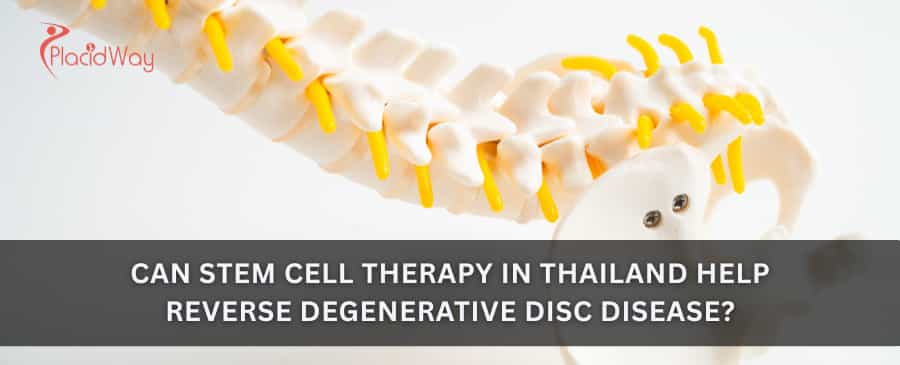
Living with chronic back pain can feel like an endless battle. If you have been diagnosed with degenerative disc disease (DDD), you know the struggle of waking up stiff, limiting your movements, and constantly worrying about whether your back will "give out." For years, the only "real" solutions seemed to be endless painkillers or invasive spinal fusion surgery, which comes with long recovery times and scary risks. But what if there was a way to actually repair the damage instead of just masking it?
This is where stem cell therapy for degenerative disc disease in Thailand is changing the game. Thailand has emerged as a global hub for regenerative medicine, offering cutting-edge treatments that are often unavailable or prohibitively expensive in the West. We are talking about state-of-the-art facilities, board-certified specialists, and advanced protocols that use the body's natural healing mechanisms to restore spine health.
In this guide, we will dive deep into everything you need to know. We will cover the cost of stem cell therapy in Thailand, the success rates you can expect, and walk you through the procedure step-by-step. Whether you are tired of chronic pain or looking for an alternative to surgery, this post will give you the clear, honest answers you need to make an informed decision about your spine health.
What is stem cell therapy for degenerative disc disease?
Think of your spinal discs as the shock absorbers of your back. Over time, due to age or injury, these discs lose water and wear down—this is degenerative disc disease. Traditional treatments usually focus on managing symptoms. Stem cell therapy, however, aims to treat the root cause. By injecting high concentrations of Mesenchymal Stem Cells (MSCs) directly into the affected disc (intradiscal injection) or the surrounding area, doctors aim to kickstart a regeneration process.
These powerful cells have the unique ability to differentiate into cartilage and connective tissue. Once inside the disc space, they work to decrease the chronic inflammation that causes pain and help rebuild the disc's structural integrity. The goal is to rehydrate the disc, improve its height, and restore its function as a cushion between your vertebrae.
It is important to understand that this is a biological treatment, not a mechanical one. Unlike surgery, which fuses bones together with metal screws, regenerative medicine uses biological building blocks to heal the tissue naturally. This means you maintain your spinal mobility and avoid the permanent stiffness often associated with surgical fixation.
How much does stem cell therapy for DDD cost in Thailand?
One of the biggest drivers for medical tourism is affordability, and Thailand delivers on this front without compromising quality. A comprehensive stem cell therapy package in Thailand for spine conditions typically falls between $4,500 and $10,500. This price variation depends largely on the source of the stem cells (umbilical cord vs. bone marrow), the total cell count (e.g., 50 million vs. 100 million cells), and whether additional therapies like physiotherapy or hyperbaric oxygen chambers are included.
In comparison, similar treatments in the United States—if you can find them, as FDA regulations are strict—can cost upwards of $20,000 to $50,000. In Thailand, the package price usually covers not just the procedure itself, but also airport transfers, doctor consultations, pre-op testing, and sometimes even accommodation for a few nights.
It is crucial to look at the "price per million cells" when comparing clinics. Some clinics might offer a lower upfront price but provide a lower concentration of cells, which might be less effective for severe degenerative disc disease. Always ask for a detailed breakdown of what is included in the quote so there are no surprises later.
Comparison of Stem Cell Therapy Cost: Thailand vs USA vs UK
To give you a clearer picture of the financial difference, here is a comparison of estimated costs for spine stem cell treatments across major medical destinations:
| Country | Estimated Cost (USD) | What's Typically Included |
|---|---|---|
| Thailand | $4,500 - $10,500 | High-dose stem cells (UC-MSC), MRI review, airport transfer, follow-up care. |
| United States | $15,000 - $50,000+ | Procedure only (often lower cell counts due to regulations). |
| United Kingdom | $12,000 - $25,000 | Procedure and consultation only. |
| Australia | $10,000 - $18,000 | Procedure only. |
| Mexico | $5,000 - $12,000 | Procedure and local transport. |
As you can see, Thailand provides immense value. The lower cost is not due to lower quality but rather lower overhead costs, labor costs, and malpractice insurance premiums in Asia. This allows Thai clinics to invest in state-of-the-art laboratories and offer higher cell counts for a lower price than their Western counterparts.
What is the success rate of stem cell therapy for back pain in Thailand?
While no medical procedure can guarantee a 100% cure, the success rate of stem cell therapy for DDD is encouraging. Clinical data and patient reports from top Thai clinics suggest that about 70% to 80% of suitable candidates experience significant relief. "Success" in this context is usually defined as a measurable reduction in pain scores (e.g., dropping from an 8/10 pain level to a 2/10), reduced reliance on pain medication, and improved functional mobility.
Factors influencing success include the patient's age, the severity of the degeneration, and the type of stem cells used. Patients with mild to moderate disc degeneration tend to see better results than those with discs that have completely collapsed (bone-on-bone). Additionally, lifestyle factors play a role; patients who follow post-procedure rehabilitation protocols and maintain a healthy weight often report more durable results.
It is important to have realistic expectations. Stem cell therapy is a process of biological repair. Unlike a corticosteroid injection that might numb pain instantly, stem cells take time to work. Most patients report noticing initial improvements within 3 to 6 weeks, with continued healing peaking around the 6-month mark.
How does the stem cell procedure for DDD work?
The stem cell procedure for degenerative disc disease in Thailand is designed to be as minimally invasive as possible. It is an outpatient procedure, meaning you do not need to stay in the hospital overnight for the surgery itself. First, you will undergo a comprehensive evaluation, including an MRI review, to pinpoint the exact discs causing your pain.
On the day of the treatment, you will be given a local anesthetic to numb the area. Some clinics also offer mild sedation to keep you relaxed. Using fluoroscopic guidance (a live X-ray video), the specialist guides a thin needle precisely into the center of the damaged disc (the nucleus pulposus). This ensures the cells are delivered exactly where they are needed most.
Once the needle is in place, the concentrated stem cell solution is injected. The entire process usually takes 45 to 60 minutes. After the injection, you will rest in a recovery room for an hour or two for observation before being discharged to your hotel. The simplicity of the procedure stands in stark contrast to spinal fusion surgery, which involves cutting muscle, bone grafts, and lengthy hospital stays.
What types of stem cells are used for spine treatment in Thailand?
The type of cell used is a critical factor in the treatment's effectiveness. In Thailand, the most common and recommended type for degenerative disc disease is Umbilical Cord-derived Mesenchymal Stem Cells (UC-MSCs). These are "allogeneic" cells, meaning they come from a donor (healthy, screened umbilical cords after C-sections). UC-MSCs are preferred because they are "young," meaning they replicate faster and release more potent healing factors than the older stem cells found in an adult patient's own body.
Alternatively, some patients prefer Autologous Stem Cells, which come from their own body. This can be harvested from bone marrow (usually the hip bone) or adipose tissue (belly fat). While using your own cells eliminates any fear of disease transmission, the downside is that the quality of these cells declines with age. If you are over 50, your own stem cells may not be as vigorous as newborn donor cells.
Top Thai clinics often have their own advanced laboratories or partner with certified labs to culture these cells, expanding them into the millions (e.g., 100 million cells) to ensure a therapeutic dose that is significantly higher than what can be achieved with bedside centrifugation used in some other countries.
Is stem cell therapy for degenerative disc disease painful?
Fear of pain is natural, but you can rest assured that stem cell injections are generally well-tolerated. The procedure is not considered painful by most standards. The initial numbing shot (local anesthetic) feels like a small pinch or bee sting. Once the area is numb, you should feel pressure but not sharp pain as the needle is guided into the disc.
Some patients report a sensation of "fullness" or pressure in the back when the fluid is injected into the disc space. This is temporary and subsides quickly. If you are particularly anxious or have a low pain threshold, discuss sedation options with your doctor beforehand. Thai medical teams are renowned for their gentle care and hospitality, ensuring you are comfortable throughout the process.
Post-procedure soreness is common but mild. It typically feels like a bruise or muscle ache at the injection site and can be managed easily with over-the-counter pain relievers and ice packs. It is far less painful than the post-operative recovery associated with surgical spinal interventions.
How long is the recovery time after stem cell injection?
One of the massive advantages of stem cell therapy is the minimal downtime. Unlike spinal surgery, which can lay you up for months, most patients walk out of the clinic the same day. You will be advised to rest for the first 24 to 48 hours to allow the injection site to settle. Most people can return to light, non-strenuous work (like desk jobs) within 3 to 5 days.
However, "recovery" doesn't mean you can run a marathon next week. The stem cells need a stable environment to attach and begin repairing the tissue. You will likely be instructed to avoid:
- Heavy lifting (anything over 10-15 lbs).
- High-impact activities (running, jumping).
- Deep twisting or bending of the spine.
This "relative rest" period usually lasts for about 4 to 6 weeks. During this time, gentle walking is encouraged to keep blood flowing. Many clinics will provide a specific physical therapy protocol to gradually reintroduce movement and strengthen the core muscles supporting your spine.
Are there any risks or side effects of stem cell therapy for the spine?
Safety is a top priority, and stem cell therapy in Thailand is regulated to ensure high standards. Serious complications are very rare, occurring in less than 1% of cases. The most common side effects are minor and temporary, such as swelling at the injection site, mild fever (a sign the immune system is active), or a temporary increase in pain for a few days (known as a "flare-up").
Because the procedure involves a needle, there is a theoretical risk of infection, bleeding, or nerve injury. However, using fluoroscopic guidance drastically minimizes these risks by ensuring the needle avoids nerves and blood vessels. Using reputable clinics that follow international sterility standards further reduces infection risk.
Regarding tumors or cancer: Extensive research on Mesenchymal Stem Cells (MSCs) has shown they are safe and do not form tumors. This is a risk associated with embryonic stem cells, which are NOT used for these orthopedic treatments. Reputable Thai clinics use adult MSCs (from cord, fat, or bone marrow) which have an excellent safety profile.
Am I a good candidate for stem cell therapy for DDD?
Not everyone with back pain is a candidate for stem cell therapy. The treatment relies on having some existing tissue structure to build upon. You are likely a good candidate if:
- You have chronic back pain confirmed by MRI to be caused by disc degeneration.
- You have "failed conservative treatment" (physio, meds, rest) for at least 3-6 months.
- You still have some disc height remaining (not completely bone-on-bone).
- You do not have significant spinal instability or severe spinal stenosis that requires mechanical decompression.
If your spine has completely collapsed or if you have severe nerve compression that requires surgically removing bone, stem cells alone may not be enough. However, some surgeons use stem cells in conjunction with surgery to speed up healing. A preliminary review of your MRI scans by the Thai medical team is the only way to know for sure if you qualify.
How does Thailand regulate stem cell clinics?
You might worry about the "Wild West" of medical tourism, but Thailand is a leader in strictly regulated healthcare. The Thai Food and Drug Administration (FDA) and the Medical Council of Thailand oversee regenerative medicine practices. Clinics must adhere to Good Manufacturing Practice (GMP) standards for their laboratories where cells are processed.
This regulation ensures that the stem cells you receive are free from contamination, viable (alive), and safe for human use. Many top hospitals in Thailand also hold JCI (Joint Commission International) accreditation, which is the gold standard for global healthcare quality. When choosing a clinic, always look for these certifications to ensure you are receiving legal, safe, and high-quality care.
Can I fly home immediately after the procedure?
While you physically could fly shortly after the procedure, it is not recommended to jump on a long-haul flight immediately. Sitting in a cramped airplane seat for 10+ hours can be uncomfortable and might aggravate your back right after the injection. Most doctors recommend staying in Thailand for at least 3 to 5 days post-treatment.
This buffer period serves two purposes: it allows the immediate post-injection soreness to fade, and it gives the doctor a chance to perform a follow-up check to ensure the injection site is healing cleanly. Plus, it gives you a few days to relax in a hotel, enjoy some Thai food, and recover in comfort before dealing with the stress of travel. Thailand is a beautiful place to recover, so take advantage of it!
How many stem cell sessions are needed for degenerative disc disease?
Unlike physical therapy which requires visits every week, stem cell therapy for DDD is typically a "one-and-done" procedure for the majority of patients. A single, high-dose injection of millions of cells is usually sufficient to kickstart the repair process that continues for months.
However, degenerative disc disease is a progressive condition. While the stem cells can reverse damage and turn back the clock, they cannot stop the aging process forever. Some patients with severe degeneration or high activity levels might choose to return for a "booster" injection 1 to 2 years later to maintain the benefits. Your doctor will create a personalized long-term plan for you based on how your body responds to the first treatment.
What is the difference between stem cell therapy and spinal fusion surgery?
The difference between these two approaches is night and day. Spinal fusion surgery is a mechanical fix: it removes the damaged disc and uses metal hardware to fuse two vertebrae into one solid bone. This stops the pain by stopping the movement. The downside? You lose flexibility in that segment, and the stress is transferred to the discs above and below, often leading to "adjacent segment disease" down the road.
Stem cell therapy, on the other hand, is a biological fix. It attempts to save the disc rather than remove it. It preserves your natural anatomy and spinal motion. There is no cutting of muscle, no removal of bone, and no hardware left inside your body. It is a much less risky path that keeps the door open—if stem cells don't work, you can still have surgery later. But if you have surgery, you cannot undo a fusion.
How do I choose the best stem cell clinic in Thailand?
Choosing the right provider is the most critical step in your journey. Don't just go for the cheapest option. When researching stem cell clinics in Thailand, look for:
- Medical Credentials: Ensure the doctor is a board-certified orthopedic surgeon or spine specialist, not a general practitioner.
- Lab Standards: Ask where the cells come from. Is the lab GMP-certified? Do they test for viability and sterility?
- Experience: How many spinal stem cell procedures has the doctor performed? Experience matters significantly for intradiscal injections.
- Transparency: The clinic should be open about their pricing, cell counts, and expected outcomes. Avoid clinics that promise "100% cures."
- Reviews: Look for video testimonials and reviews from international patients who had similar conditions.
Ready to explore affordable, world-class spine care?
Get a Free Quote for Stem Cell TherapyTake the first step toward a pain-free life today with PlacidWay.
.png)





.png)
.png)
.png)




.png)


-(6).png)












Share this listing