
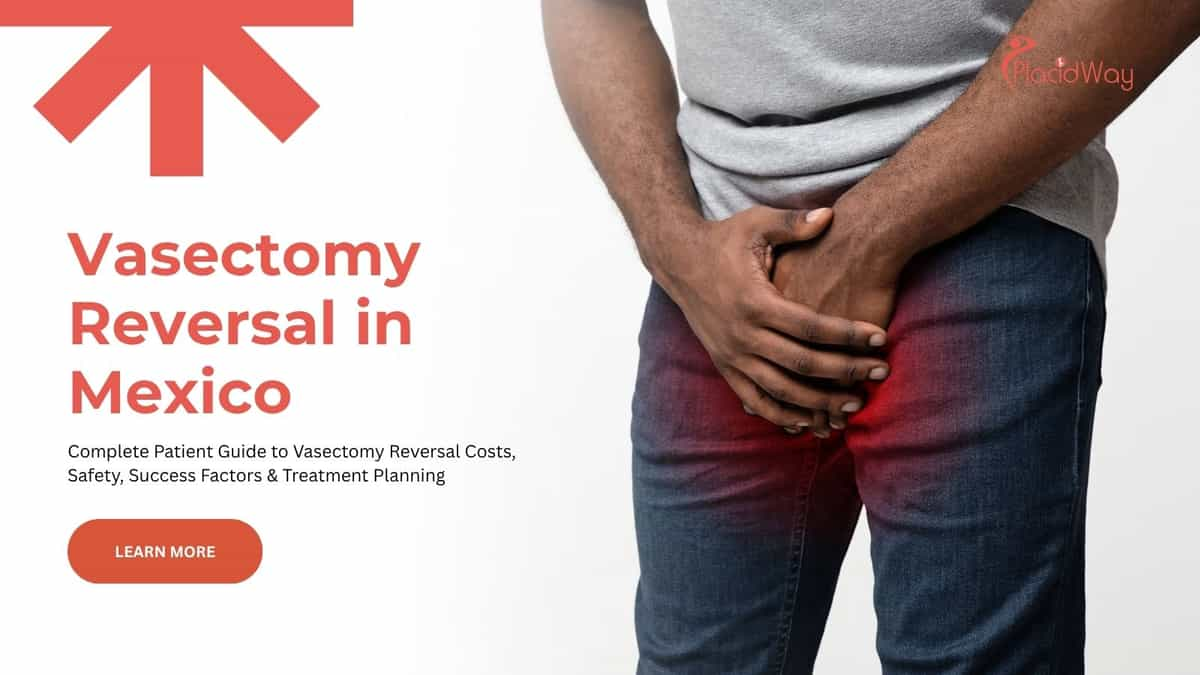
Reversing a vasectomy is a deeply personal decision for families wanting to grow. Many men and couples find themselves searching for affordable alternatives when facing the high costs of microsurgery at home, wondering if traveling across the border provides the same level of care. This guide helps you understand exactly what to expect from a vasectomy reversal in Mexico, detailing the estimated costs, vital urology board certifications to verify, and how to safely navigate your medical journey.
Quick Summary
- Estimated Cost: Typically ranges between $3,000 and $5,500 USD, often including the surgeon's fee, facility costs, and anesthesia.
- Safety Overview: Generally safe when performed by a licensed, board-certified urological microsurgeon in a COFEPRIS-approved surgical facility.
- Ideal Candidate: Men whose partners have healthy fertility and who had their original vasectomy less than 10 to 15 years ago.
- Recovery Time: Most patients return to light work in 3 to 7 days, with full activity and exercise resuming after 3 to 4 weeks.
- Main Reason Patients Choose Mexico: Access to highly trained microsurgeons using advanced surgical microscopes at a fraction of the cost found in the US and Canada.
- Important Caution: Always verify that your surgeon holds active certification from the Consejo Nacional Mexicano de Urología (CONAMEXURO) before booking your procedure.
Why Patients Travel for Vasectomy Reversal in Mexico
Deciding to reverse a vasectomy brings hope for a new chapter in your family's life. However, the financial reality of this procedure in countries like the United States and Canada often acts as a significant barrier. Insurance rarely covers fertility procedures, leaving couples to pay out of pocket. Mexico has emerged as a leading destination for urological care, offering a blend of modern medical infrastructure and highly skilled specialists.
Patients choose Mexico for several key reasons:
- Significant Cost Savings: Procedures often cost 50% to 70% less than equivalent surgeries in the US, without sacrificing the quality of medical instruments.
- Specialized Microsurgical Expertise: Many top Mexican urologists complete extensive fellowships in microsurgery, often training internationally.
- Geographic Proximity: For North American patients, a short flight or drive makes travel straightforward and less physically demanding.
- Prompt Scheduling: Patients can typically book their surgery within weeks, avoiding long wait lists common in public healthcare systems.
- Concierge Medical Care: Top clinics often provide comprehensive support, including local transportation, bilingual coordinators, and structured follow-up care.
Understanding the Vasectomy Reversal Procedure
A vasectomy reversal is a delicate microsurgical procedure designed to restore the flow of sperm through the vas deferens. Because the tubes are incredibly small, your surgeon relies on a high-powered operating microscope and sutures finer than a human hair. Your doctor will typically perform one of two techniques, depending on what they discover during the surgery.
The surgeon evaluates the fluid from the testicular end of the vas deferens. If sperm are present, the pathway is clear, and a simpler connection is made. If the fluid is thick and lacks sperm, it may indicate a blockage in the epididymis, requiring a more complex bypass.
| Procedure Type | Clinical Name | When It Is Used | Complexity |
|---|---|---|---|
| Vasovasostomy (VV) | Direct Connection | When healthy sperm or clear fluid is found in the vas deferens. | Standard microsurgery; generally yields higher success rates. |
| Vasoepididymostomy (VE) | Epididymal Bypass | When an epididymal blowout or blockage prevents sperm flow. | Highly complex; requires exceptional microsurgical skill. |
Assessing Your Eligibility for Treatment
Not every man is an ideal candidate for a vasectomy reversal. Before you travel to Mexico, a qualified urologist will review your medical history to ensure the procedure is your most effective option for achieving pregnancy.
Your doctor will evaluate the time elapsed since your original vasectomy. The longer the interval, the higher the chance of epididymal blockage. They will also inquire about your partner's age and reproductive health, as female fertility factors heavily influence the overall success of achieving a pregnancy.
Patient Evaluation Checklist
- Determine the exact date of your original vasectomy.
- Review any operative notes from the original procedure, if available.
- Discuss your partner's fertility status with a gynecologist or fertility specialist.
- Undergo a basic physical examination and blood tests as required by your Mexican clinic.
- Confirm your ability to travel and rest for at least 3 to 5 days post-surgery.
Cost of Vasectomy Reversal in Mexico
Cost is the primary driver for cross-border fertility care. In the United States, a microsurgical vasectomy reversal can easily range from $8,000 to $15,000 USD, and these estimates often do not include facility fees or anesthesia. By contrast, Mexico offers transparent, bundled pricing that provides substantial relief to self-pay patients.
The cost in Mexico generally ranges between $3,000 and $5,500 USD. This variance depends on the surgeon's experience, the clinic's location (such as Tijuana, Cancun, or Mexico City), and whether the package includes hotel accommodations and ground transport.
| Country | Estimated Cost Range (USD) | Typical Inclusions |
|---|---|---|
| United States | $8,000 - $15,000+ | Procedure only; facility and anesthesia often billed separately. |
| Canada | $7,000 - $12,000+ | Varies by province; private clinics charge separate fees. |
| Mexico | $3,000 - $5,500 | Surgeon fee, operating room, anesthesia, basic medications. |
While the initial quote may look attractive, always ask for an itemized breakdown. Inquire if the price covers a complex Vasoepididymostomy if the surgeon finds a blockage during the operation, as some clinics charge extra for this technique.
Patient Demographics and Cross-Border Trends
Medical travel for urological procedures has seen consistent growth. Recent data tracking international patient mobility indicates a steady influx of North American men seeking fertility restoration abroad. The majority of these patients are between the ages of 35 and 55.
According to 2024–2025 cross-border healthcare analyses, over 80% of men traveling to Mexico for vasectomy reversals originate from the United States, primarily from states like California, Texas, and Arizona. The primary clinical motivation remains the desire to start a family in a new relationship, followed by couples deciding they want more children.
Estimated Growth in Urological Medical Tourists to Mexico (2024-2026)
Visualization based on aggregated 2024-2026 cross-border healthcare trend reports for elective urological procedures.
How to Select a Safe Hospital and Clinic in Mexico
Ensuring your safety begins with thoroughly evaluating the medical facility where your surgery will take place. Mexico has a robust regulatory system, but the quality of clinics can vary. You must look beyond glossy marketing photos and focus on documented legal and medical credentials.
The facility must be licensed by COFEPRIS (Federal Commission for the Protection against Sanitary Risk), which is Mexico's equivalent to the FDA. This license proves the clinic meets national hygiene, equipment, and safety standards.
Additionally, check if the hospital holds certification from the Consejo de Salubridad General (CSG). This is the highest national accreditation in Mexico, indicating rigorous patient safety protocols. While international accreditations like JCI (Joint Commission International) are excellent trust signals, a clinic fully compliant with COFEPRIS and CSG standards is highly capable of delivering safe, sterile surgical care.
Verifying Your Urologist’s Credentials
A successful vasectomy reversal relies entirely on the surgeon's skill. Microsurgery is a highly specialized field, and not every general urologist has the required training to perform complex bypasses.
When reviewing a doctor's profile, confirm they are board-certified by the Consejo Nacional Mexicano de Urología (CONAMEXURO). This board certification ensures the doctor has completed the mandatory residency and passed rigorous national examinations.
Red Flag Warning
Do not proceed if the doctor cannot provide a valid "Cédula Profesional" (medical license number) or if they refuse to disclose their complication rates. A trustworthy surgeon will happily share their specific training in microsurgical techniques and their annual case volume for vasectomy reversals.
Clinical Success Rates and Factors Influencing Outcomes
Success in vasectomy reversal is measured in two ways: patency (the return of moving sperm to the semen) and pregnancy (the ability to naturally conceive). Patency rates are generally higher than pregnancy rates because female fertility factors and sperm quality play crucial roles after the tubes are reconnected.
The most critical factor influencing success is the "obstructive interval," which is the number of years between your original vasectomy and the reversal. Recent clinical registries confirm that men who undergo reversal within 10 years of their vasectomy experience significantly better outcomes.
Patency Success Rates Based on Time Since Vasectomy (2024-2025 Clinical Averages)
Graph represents average anatomical patency rates based on recent contemporary urological reviews (2024).
The Patient Travel and Treatment Timeline
Planning medical travel requires careful organization. Most urology clinics in Mexico optimize the itinerary so international patients spend minimal time away from work while ensuring maximum safety during the immediate recovery phase.
Typically, patients spend about three to four days in Mexico. You should arrive a day before the surgery to settle in and complete any final pre-operative consultations. Following the procedure, rest is mandatory before traveling home.
| Day | Activity | Patient Action Required |
|---|---|---|
| Day 1 | Arrival and Consultation | Arrive in Mexico. Meet with the urologist for a pre-op physical and ultrasound if required. |
| Day 2 | Surgery Day | Arrive at the clinic fasting. The microsurgery typically lasts 2 to 4 hours under local anesthesia with sedation or general anesthesia. |
| Day 3 | Initial Recovery | Rest at your hotel. Apply ice packs to the scrotum. Manage discomfort with prescribed medication. |
| Day 4 | Follow-up and Departure | Attend a brief post-op checkup. Obtain medical clearance to fly or drive back home safely. |
Safety Protocols, Risks, and Complications
Every surgical procedure involves inherent risks. While a vasectomy reversal is generally safe and minimally invasive, complications can occur. Transparent communication with your Mexican surgeon about these risks is a hallmark of high-quality care.
Common, mild side effects include bruising, swelling, and temporary discomfort in the scrotum. These typically resolve within a week. More significant complications may require medical intervention.
Potential Risks
- Scrotal hematoma (blood pooling in the scrotum).
- Infection at the incision site.
- Sperm granuloma (a small lump caused by leaking sperm).
- Chronic testicular pain (rare).
- Failure to restore sperm flow (scar tissue formation).
Prevention & Management
- Strict adherence to post-operative rest instructions.
- Taking full courses of prescribed antibiotics.
- Wearing a jockstrap or supportive underwear continuously.
- Avoiding all heavy lifting and sexual activity for 3-4 weeks.
- Having local medical support ready if you experience severe swelling or fever after returning home.
Recovery and Aftercare Following Vasectomy Reversal
Your actions during the first few weeks after surgery directly impact the success of the reversal. The delicate microsurgical connections take time to heal. Any sudden strain or trauma can disrupt the fine sutures, causing the procedure to fail.
Upon returning home, you must maintain communication with your clinic in Mexico. Many top providers offer telehealth follow-ups to monitor your progress. Around six to eight weeks after the procedure, you will need to schedule a semen analysis at a local lab in your home country to check for the presence of sperm.
| Timeframe | Biological Process | Patient Sensation | Action Required |
|---|---|---|---|
| 1 - 3 Days | Initial wound healing; inflammation peaks. | Swelling, bruising, and mild to moderate aching. | Strict bed rest. Apply ice for 20 minutes at a time. Wear scrotal support. |
| 1 - 2 Weeks | Sutures dissolve; internal connections stabilize. | Decreasing tenderness. Scrotum may still appear bruised. | Return to desk work. No heavy lifting over 10 lbs. No sexual activity. |
| 3 - 4 Weeks | Scar tissue matures around the surgical site. | Feeling normal. Incisions are fully closed. | Gradually resume normal activities. Sexual activity may typically resume as cleared by the doctor. |
Alternatives to Vasectomy Reversal
If your original vasectomy occurred more than 15 years ago, or if your partner has known fertility challenges, a reversal may not be the most effective path to pregnancy. Your Mexican urologist may discuss alternative fertility treatments during your consultation.
The primary alternative is surgical sperm retrieval combined with In Vitro Fertilization (IVF) and Intracytoplasmic Sperm Injection (ICSI). During this process, a specialist extracts sperm directly from the testicle or epididymis using a small needle. This sperm is then used in a laboratory to fertilize your partner's egg. Many fertility clinics in Mexico offer comprehensive IVF packages alongside their urology services, allowing couples to choose the treatment with the highest statistical chance of success based on their unique biology.
Frequently Asked Questions
Is a vasectomy reversal in Mexico safe?
Yes, it is generally safe when performed in a COFEPRIS-licensed clinic by a board-certified urologist specializing in microsurgery. Complication rates in certified Mexican clinics align closely with those in the US and Canada.
How long should I stay in Mexico after the surgery?
Patients are typically advised to stay in Mexico for 2 to 3 days after the procedure. This allows for an initial post-operative checkup and ensures you are stable enough for air or car travel.
Will my Mexican urologist use a surgical microscope?
Reputable microsurgeons in Mexico use high-powered operating microscopes. You should always verify this with the clinic beforehand, as loops or magnifying glasses are not sufficient for optimal reversal success.
Does the cost in Mexico include Vasoepididymostomy if needed?
This varies by clinic. Some provide an all-inclusive price regardless of the technique used, while others charge an additional fee if a complex Vasoepididymostomy is required. Always ask for a clear, itemized quote.
How soon can we try to conceive after a reversal?
Doctors typically advise waiting 3 to 4 weeks before resuming sexual intercourse to allow the microsurgical connections to heal. However, it can take 3 to 12 months for healthy sperm counts to return.
What happens if the vasectomy reversal fails?
If no sperm appear in the semen analysis after 6 to 12 months, the procedure may have failed due to scar tissue or a missed blockage. You can either attempt a revision surgery or explore sperm retrieval with IVF.
Can I use my US or Canadian health insurance in Mexico?
Most traditional US and Canadian health insurance policies do not cover elective fertility treatments, regardless of where they are performed. Patients usually pay out of pocket using savings, medical loans, or credit cards.
How do I know if the surgeon is qualified?
Check that the surgeon is registered with the national medical council and holds board certification from the Consejo Nacional Mexicano de Urología (CONAMEXURO). Ask about their specific fellowship training in microsurgery.
Is a vasectomy reversal painful?
The procedure itself is performed under anesthesia, so you will not feel pain during surgery. Post-operative pain is usually described as a dull ache, similar to the original vasectomy, and is managed with medication and ice packs.
Are the surgical standards in Mexico comparable to the US?
Yes, private hospitals catering to international patients often match or exceed US standards in terms of equipment, hygiene protocols, and patient care, provided they hold proper COFEPRIS and CSG accreditations.
Ready to Take the Next Step?
Navigating medical care abroad can be complex. PlacidWay can help you compare top-rated urologists in Mexico, understand exact treatment costs, and request detailed information directly from certified clinics.
Request Free Information TodayDisclaimer: This information is for educational purposes only and does not replace professional medical advice. Always consult a qualified healthcare provider before making medical decisions.
References
- Guidelines on Male Infertility – American Urological Association (AUA)
- National Health Regulation & Safety Standards – Federal Commission for the Protection against Sanitary Risk (COFEPRIS)
- Urologist Board Certification Verification – Consejo Nacional Mexicano de Urología (CONAMEXURO)
- 2024 Contemporary Outcomes of Vasectomy Reversal – Fertility and Sterility Journal
- Travel Health Guidelines for Mexico – Centers for Disease Control and Prevention (CDC)
- National Hospital Accreditation and Quality Standards – Consejo de Salubridad General (CSG)
- 2024 Review on Microsurgical Vasovasostomy Success Rates – Human Reproduction
























Share this listing