
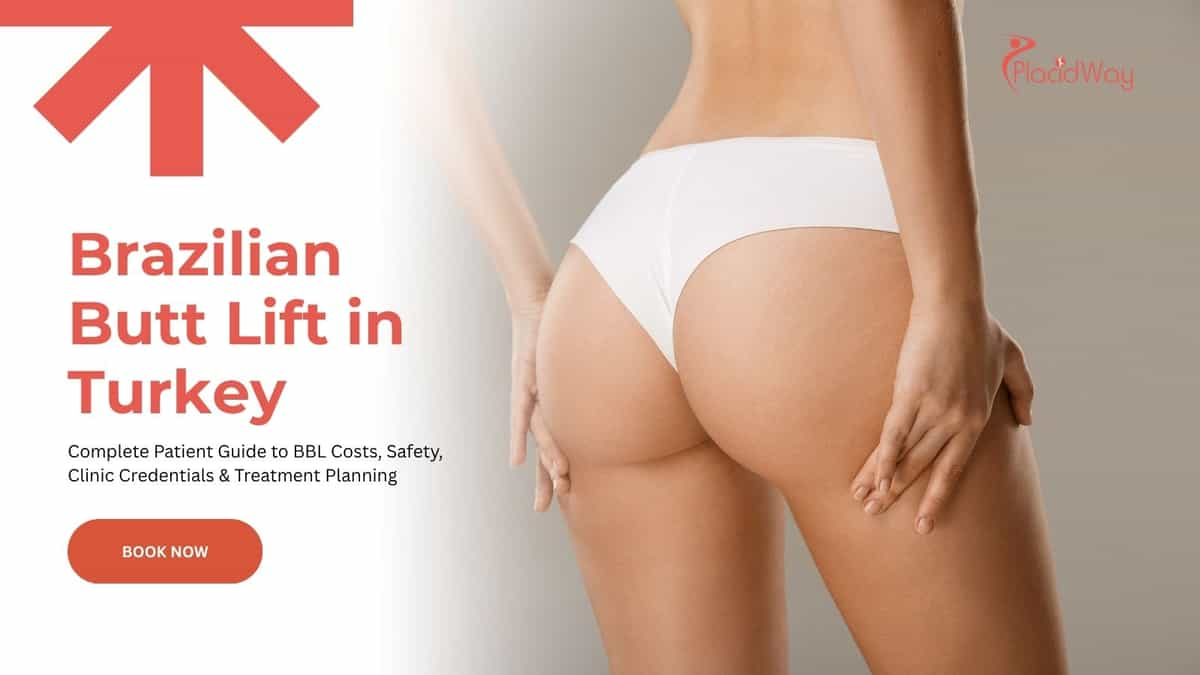
Many international patients consider traveling for body contouring procedures to combine experienced surgical care with clear pricing. However, choosing a destination for gluteal fat transfer requires careful research into surgeon qualifications, specific safety protocols like ultrasound guidance, and local healthcare regulations. This guide helps you navigate treatment options, understand estimated costs, and identify the essential medical certificates needed to make an informed decision about your care in Turkey.
Quick Summary: Brazilian Butt Lift in Turkey
- Estimated Cost: Typically ranges between $3,000 and $5,500 USD, often including accommodation, transfers, and hospital fees.
- Safety Priority: Prioritize surgeons utilizing Ultrasound-Guided Gluteal Fat Grafting to ensure fat is placed safely above the muscle.
- Ideal Candidate: Individuals near their ideal body weight with sufficient donor fat in the abdomen, flanks, or thighs for transfer.
- Recovery Time: Initial healing takes 2 to 3 weeks, requiring specialized sitting pillows and restricted physical activity.
- Why Turkey: High volume of experienced plastic surgeons, modern medical facilities, and comprehensive patient care packages.
- Credentials to Verify: Look for clinics with a Turkish Ministry of Health Tourism Authorization Certificate and surgeons certified by the Turkish Society of Plastic Reconstructive and Aesthetic Surgeons (TPRCD).
Why International Patients Choose Turkey for Brazilian Butt Lift
Traveling across borders for cosmetic surgery is a major decision that requires evaluating both medical outcomes and logistical support. Many patients explore gluteal fat transfer in Turkey because the country has developed a robust healthcare infrastructure focused heavily on international medical tourists.
The combination of experienced medical professionals and comprehensive care models makes the destination appealing. When you look closely at patient motivations, several distinct factors drive this medical travel trend.
- Concentration of Surgical Experience: Turkish plastic surgeons often perform high volumes of body contouring procedures, leading to refined surgical techniques.
- Comprehensive Care Packages: Clinics typically bundle the surgery, hospital stay, hotel accommodation, and VIP airport transfers into a single transparent price.
- Advanced Medical Facilities: Many private hospitals cater specifically to international patients, featuring modern operating theaters and multilingual staff.
- Cost Predictability: Patients often face lower overhead costs compared to North America or the UK, allowing for significant savings without necessarily compromising on facility quality.
- Strict Government Oversight: Facilities treating international patients must hold specific authorizations from the Ministry of Health, establishing baseline safety standards.
Patient Demographics for Cosmetic Travel to Turkey
Understanding who travels for body contouring procedures provides insight into global healthcare patterns. According to international aesthetic society surveys and recent medical tourism data from 2024 to 2026, the demographic profile of patients seeking gluteal fat transfer is highly specific.
Most patients traveling to Turkey for this procedure originate from countries where private cosmetic surgery costs are prohibitive. Women between the ages of 30 and 39 make up the largest segment, often seeking body restoration after weight loss or pregnancy.
Age Distribution of Gluteal Fat Transfer Patients (2024-2026 Data Trends)
The line graph below illustrates the standard age distribution of patients pursuing gluteal fat transfer globally, reflecting the primary demographics seen in cross-border cosmetic travel.
Primary Regions of Origin for Medical Travel to Turkey
This bar chart demonstrates the estimated regional origins of patients traveling to Turkey for aesthetic procedures based on recent medical tourism reports.
Understanding the Brazilian Butt Lift Procedure
The medical term for a Brazilian Butt Lift is gluteal fat transfer or gluteal fat grafting. This procedure does not use silicone implants. Instead, it utilizes your body's own natural fat to reshape and add volume to the gluteal area.
The surgery generally involves two main phases. First, the surgeon performs liposuction to remove excess fat from areas like the abdomen, flanks (love handles), lower back, or thighs. This helps contour the surrounding areas, which naturally enhances the prominence of the buttocks.
Second, the extracted fat is purified and carefully re-injected into the subcutaneous tissue of the buttocks. Because the procedure uses your own tissue, there is no risk of allergic reaction to the material. However, the survival rate of the transferred fat varies, and your body will naturally absorb a portion of it during the initial recovery months.
Clinical Tip: Approximately 60% to 80% of the transferred fat typically survives long-term. Surgeons often slightly overfill the area during surgery to account for this natural absorption process.
Evaluating Brazilian Butt Lift Safety Protocols in Turkey
Patient safety is the most critical consideration when planning a gluteal fat transfer. Historically, this procedure carried high complication rates globally due to improper injection techniques. Fat injected too deeply into the gluteal muscle can enter the bloodstream, causing a life-threatening pulmonary fat embolism.
To mitigate this risk, international plastic surgery societies established strict safety guidelines. The current standard of care requires surgeons to inject fat strictly into the subcutaneous space—the layer of tissue directly beneath the skin and strictly above the muscle.
Safety Warning: When consulting with surgeons in Turkey, you must ask if they perform Ultrasound-Guided Gluteal Fat Grafting. Using a real-time ultrasound probe allows the surgeon to visualize the exact placement of the cannula, ensuring no fat enters the dangerous muscle layer.
Reputable clinics in Turkey adhere to these updated safety guidelines. They utilize large, blunt cannulas and real-time ultrasound monitoring to maintain safety. Prioritize providers who transparently discuss these protocols during your initial virtual consultation.
Turkish Healthcare Standards and Government Regulations
Turkey’s healthcare system is heavily regulated by the national government, providing a structured framework for patient safety. The Ministry of Health oversees all private and public hospitals, conducting regular inspections to ensure compliance with hygiene, emergency care, and facility standards.
For a clinic or hospital to legally treat international patients, they must obtain an International Health Tourism Authorization Certificate. This document verifies that the facility meets specific criteria regarding language support, transparent pricing, patient rights, and clinical infrastructure.
Many private hospitals in Istanbul, Izmir, and Antalya also feature on-site Intensive Care Units (ICUs). Having an ICU on-site is a crucial safety indicator for any major surgical procedure, ensuring immediate advanced medical care is available in the rare event of a surgical complication.
How to Verify Plastic Surgeon Credentials in Turkey
Selecting a highly qualified plastic surgeon is the most important decision in your medical travel journey. In Turkey, medical professionals must undergo rigorous training to specialize in plastic surgery.
Do not rely solely on social media before-and-after photos. Instead, verify the surgeon's professional background and licensing. A qualified surgeon should hold specific national credentials that confirm their expertise.
| Credential | What It Means for Your Care |
|---|---|
| Ministry of Health License | Confirms the doctor is legally permitted to practice medicine in Turkey. |
| TPRECD Certification | Membership in the Turkish Society of Plastic Reconstructive and Aesthetic Surgeons indicates specialized board-certified training. |
| TSAPS Membership | Turkish Society of Aesthetic Plastic Surgery membership shows a focus specifically on cosmetic procedures. |
| ISAPS / ASPS (Optional) | International affiliations demonstrate a commitment to global safety standards and continuous education. |
Selecting a Clinic or Hospital for Brazilian Butt Lift
The facility where your surgery takes place is just as important as the surgeon performing it. Turkish medical tourism offers options ranging from private boutique clinics to massive multispecialty hospitals.
When comparing your options, you should evaluate the clinical environment rather than the luxury amenities. Ask specific questions about the facility's emergency preparedness and patient monitoring systems.
Clinic Vetting Checklist for International Patients
- Does the facility hold an active International Health Tourism Authorization Certificate?
- Is the surgery performed in a fully equipped hospital or a day clinic?
- Does the facility have an on-site Intensive Care Unit (ICU)?
- Is there a dedicated, full-time anesthesiologist present during the entire surgery?
- Does the clinic provide a written, itemized quote detailing exactly what is included?
- Do they offer medical complications insurance for international travelers?
Estimated Costs of Brazilian Butt Lift in Turkey
Cost is a primary driver for patients researching gluteal fat transfer abroad. In Turkey, clinics generally offer all-inclusive medical packages. These packages bundle the medical fees with logistical support, making financial planning much easier for international travelers.
The total price typically depends on the surgeon’s experience, the hospital’s reputation, the number of liposuction areas required, and the city where the surgery takes place. Istanbul generally has slightly higher prices than Antalya or Izmir due to higher operational costs.
| Cost Component | Standard Package Inclusion |
|---|---|
| Surgical Fees | Surgeon, anesthesiologist, operating room, and medical supplies. |
| Hospital Stay | Typically 1 to 2 nights in a private recovery room with nursing care. |
| Accommodation | 4 to 6 nights in a partnered 4-star or 5-star hotel post-discharge. |
| Transfers | VIP airport pickup and shuttles between the hotel and hospital. |
| Aftercare Items | Compression garments, BBL sitting pillow, and prescribed medications. |
While the standard package ranges from $3,000 to $5,500 USD, you must also budget for your round-trip flights, travel insurance, and daily food expenses while recovering at the hotel.
Cost Comparison: Turkey vs. Patient Home Countries
To understand why medical travel is so prevalent, it helps to compare the estimated out-of-pocket costs globally. In countries like the United States and the United Kingdom, cosmetic procedures are rarely covered by health insurance and carry high facility fees.
The price difference is not due to a lack of quality in Turkey. Instead, it reflects lower costs of living, favorable currency exchange rates, and lower medical malpractice insurance overhead for surgeons.
| Country | Estimated Procedure Cost (USD) | Package Inclusions |
|---|---|---|
| Turkey | $3,000 - $5,500 | Surgery, hotel, transfers, garments |
| United States | $8,000 - $15,000+ | Surgery and anesthesia only |
| United Kingdom | $7,500 - $12,000 | Surgery and anesthesia only |
| Canada | $9,000 - $14,000 | Surgery and anesthesia only |
Ideal Candidates for Gluteal Fat Transfer
Not every patient is medically suitable for a gluteal fat transfer. Because the procedure relies on your body's existing fat, your current Body Mass Index (BMI) and fat distribution play a major role in determining your eligibility.
Surgeons typically look for patients who are close to their ideal body weight but have stubborn areas of localized fat. If your BMI is too low, you may not have enough donor fat to achieve a noticeable result. Conversely, if your BMI is too high (typically over 30 or 32), the surgical risks regarding anesthesia and blood clots increase significantly.
Favorable Candidate Traits
- BMI between 22 and 29
- Sufficient excess fat in abdomen or flanks
- Good skin elasticity
- Non-smoker or willing to quit
- Realistic expectations regarding fat survival
Potential Contraindications
- Severe bleeding disorders
- Active smoking habits (hampers fat survival)
- BMI below 20 (lack of donor fat)
- BMI above 32 (increased anesthesia risks)
- History of severe cardiovascular issues
Preparing for Your Surgery Abroad
Proper preparation minimizes complications and reduces travel-related stress. Once you have selected your surgeon and scheduled your date, you must prepare both medically and logistically.
Your surgeon will require you to complete blood tests. In many Turkish clinics, these preoperative tests are performed on the day you arrive at the hospital. However, you should review your medical history with your local general practitioner before booking flights.
You must stop smoking and avoid nicotine products for at least four weeks before and after surgery. Nicotine constricts blood vessels, severely reducing the blood supply to the newly transferred fat cells, which can cause the fat to die (necrosis).
Additionally, stop taking blood-thinning medications, ibuprofen, aspirin, and certain herbal supplements at least two weeks prior to surgery to reduce bleeding risks.
BBL Recovery Timeline and Aftercare Guidelines
The recovery phase is highly demanding and requires strict adherence to your surgeon's protocols. Your behavior during the first few weeks directly influences how much transferred fat survives.
The most important rule is to avoid putting direct pressure on your buttocks. Sitting directly on the surgical area restricts blood flow to the newly grafted fat cells, causing them to fail. You will need to sleep on your stomach and use a specialized BBL pillow when sitting is absolutely necessary.
| Timeframe | Clinical Process | Patient Sensation | Required Action |
|---|---|---|---|
| Days 1-3 | Acute inflammation, fluid drainage from liposuction sites. | Significant soreness, swelling, grogginess. | Rest in hotel/hospital, wear compression garments 24/7. |
| Weeks 1-2 | Fat cells begin establishing new blood supply. | Bruising peaks and begins to fade, itching. | Strict stomach sleeping, light walking to prevent blood clots. |
| Weeks 3-6 | Initial fat absorption stabilizes. Swelling subsides. | Mobility improves, tightness in liposuction areas. | Gradual return to normal sitting as cleared by surgeon. |
| Months 3-6 | Final fat survival rate is established. Tissue softens. | Normal sensation returns, final shape becomes visible. | Maintain stable weight to preserve results. |
Long-Term Results and Maintenance
While gluteal fat transfer can produce excellent body contouring results, patients must maintain realistic expectations. The final shape will not be fully visible until roughly three to six months post-surgery, once all residual swelling has resolved and the fat has settled.
Because the enhancement uses your own biological fat, the results fluctuate with your body weight. If you gain significant weight, the fat cells in your buttocks will expand. If you lose weight, those cells will shrink, potentially reducing the volume of your enhancement.
Maintaining a stable, healthy lifestyle and a consistent diet is the best way to protect your surgical investment. Always follow up with your local physician if you experience late-onset pain, unusual swelling, or skin changes.
Frequently Asked Questions
Review these common patient questions regarding safety, suitability, and travel logistics for gluteal fat transfer.
Is a Brazilian Butt Lift in Turkey safe for international patients?
Treatment can be safe when performed by a board-certified plastic surgeon using ultrasound-guided injection techniques in a fully accredited hospital. Always verify the clinic's Ministry of Health licensure and the surgeon's TPRCD credentials.
How long should I stay in Turkey after gluteal fat transfer?
Surgeons typically require patients to remain in Turkey for 6 to 8 days following the procedure. This ensures sufficient time for postoperative check-ups, drain removal, and medical clearance before flying.
Can I sit down during my flight home?
You cannot sit directly on your buttocks for several weeks. During your flight, you must use a specialized BBL recovery pillow designed to transfer weight to your upper thighs, keeping pressure off the surgical area.
What happens if I don't have enough fat for the transfer?
If your BMI is too low to harvest adequate fat, your surgeon may recommend alternatives. This might include a specialized weight gain protocol prior to surgery, or discussing gluteal implants, though implants carry different risk profiles.
Why are BBL prices lower in Istanbul compared to the US?
Lower prices are a result of lower local costs of living, subsidized healthcare infrastructure, and lower operational costs for clinics, not a reduction in medical quality or safety standards.
Does the surgical package include medical complications insurance?
Many standard packages do not automatically include medical complications insurance. You should ask the clinic if they offer it or purchase dedicated medical travel insurance from an independent provider before your trip.
What is ultrasound-guided fat transfer?
It is a critical safety technique where the surgeon uses an ultrasound device to watch the cannula beneath your skin in real-time. This guarantees the fat is injected safely above the muscle, preventing fatal embolisms.
Will there be visible scars from the liposuction?
Liposuction incisions are typically very small, around 3 to 5 millimeters. Surgeons strategically place these incisions in natural body folds so the resulting scars fade and become minimally visible over time.
Are the results of gluteal fat grafting permanent?
The fat cells that survive the initial 3 to 6 month recovery period remain permanently in place. However, their size will expand or shrink depending on future weight fluctuations and aging.
When can I resume exercising after my procedure?
Light walking is encouraged immediately to prevent blood clots. However, strenuous workouts and heavy lifting are usually restricted for 6 to 8 weeks to allow the body to heal and protect the new fat grafts.
Need Help Choosing a Certified Clinic in Turkey?
Navigating international healthcare can be complex. PlacidWay Medical Tourism can help you verify credentials, compare transparent treatment costs, and connect directly with licensed plastic surgeons tailored to your needs.
Request Clinic InformationDisclaimer: This information is for educational purposes only and does not replace professional medical advice. Always consult a qualified healthcare provider before making medical decisions.
References
- ISAPS Global Survey Data – International Society of Aesthetic Plastic Surgery
- Urgent Warning About BBL Risks – American Society of Plastic Surgeons
- Health Tourism Authorization Guidelines – Republic of Turkey Ministry of Health
- Ultrasound-Guided Gluteal Fat Grafting Safety Study – National Center for Biotechnology Information
- Surgeon Directory and Board Certification – Turkish Society of Plastic Reconstructive and Aesthetic Surgeons (TPRECD)
- Gluteal Fat Transfer Recovery and Fat Survival Rates – National Center for Biotechnology Information

















Share this listing