
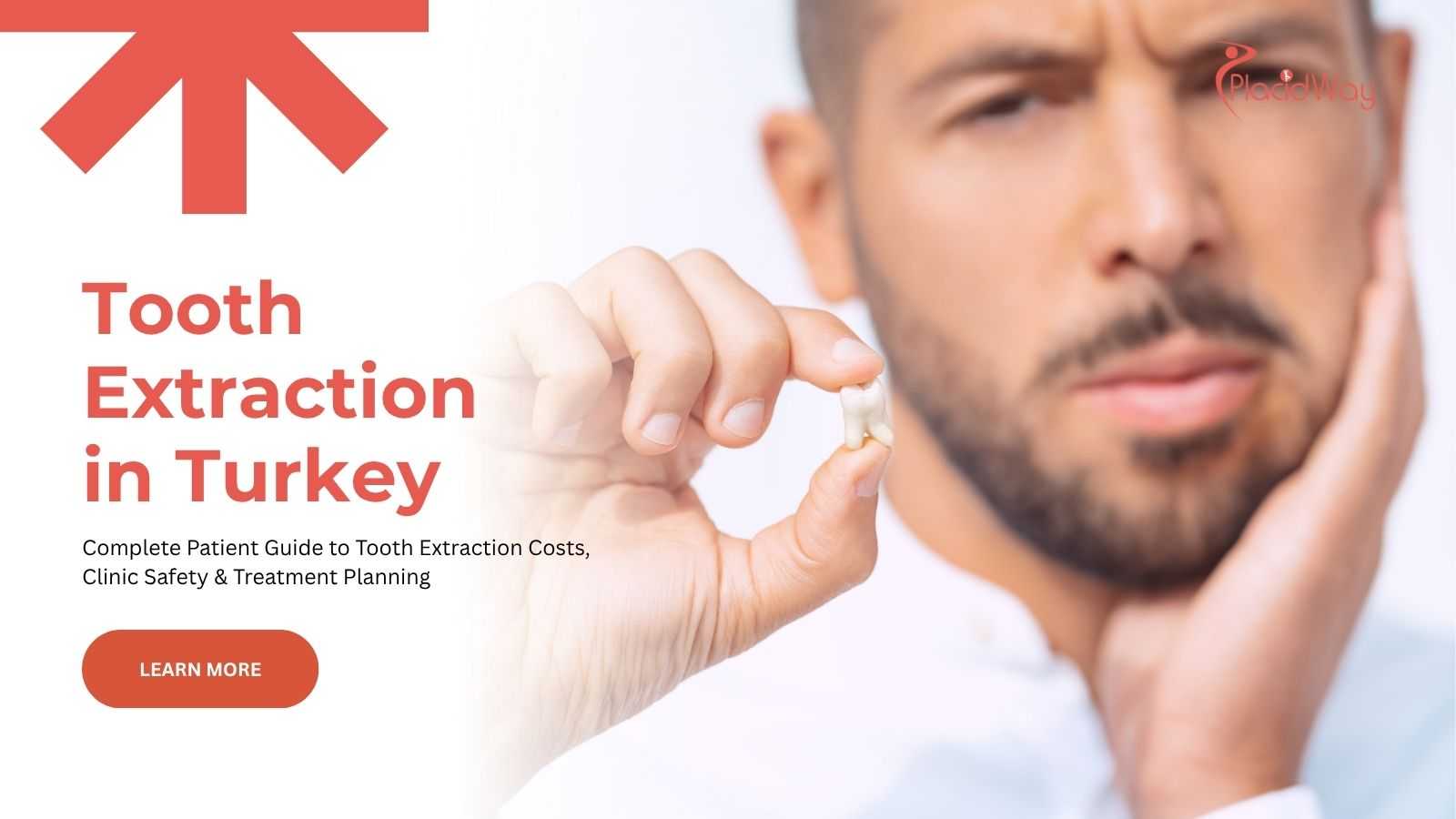
Navigating dental care abroad requires careful consideration, especially when evaluating tooth extraction in Turkey. Many international patients look for this treatment to alleviate severe dental pain or prepare for dental implants while managing high domestic healthcare expenses. This guide helps you understand expected procedural costs, essential Ministry of Health certifications to verify before booking, and what to expect during your clinical recovery. Evaluating specialized oral surgeons and licensed facilities ensures you make an informed, safety-first decision for your oral health.
Quick Summary
- Estimated Cost: Typically ranges from $50 to $250 USD per tooth, depending on complexity (simple vs. surgical wisdom tooth removal).
- Safety Overview: Highly regulated environment when choosing clinics licensed by the Turkish Ministry of Health and dentists registered with the Turkish Dental Association.
- Ideal Candidate: Individuals with severe tooth decay, advanced periodontal disease, impacted wisdom teeth, or those requiring extraction before implant placement.
- Recovery Time: Initial tissue healing takes 7 to 14 days, while complete bone regeneration may take several months.
- Main Reason Patients Choose Turkey: Access to experienced oral and maxillofacial surgeons at a fraction of Western costs, often combined with full-mouth rehabilitation.
- Important Caution: Always verify that the facility holds a valid Health Tourism Authorization Certificate and provides a transparent, itemized written quote before traveling.
Understanding Tooth Extraction for International Patients in Turkey
Tooth extraction involves the careful removal of a tooth from its socket in the jawbone. While dentists strive to preserve natural teeth whenever possible, extraction becomes necessary when a tooth is irreparably damaged by decay, infection, or trauma. International patients frequently look toward Turkey for this procedure due to the country's robust dental infrastructure and highly trained specialists.
Before planning your trip, it is critical to understand the clinical context of the procedure. Extraction is rarely performed in isolation for international travelers. More often, it serves as the necessary first step in a broader treatment plan, such as all-on-4 dental implants or full-mouth restoration.
Clinical Tip: If you are traveling for a tooth extraction, inform your chosen clinic if you plan to get implants later. Your surgeon may recommend a bone graft immediately after extraction to preserve the jawbone structure for future implant placement.
Primary Reasons Patients Travel for Tooth Extraction in Turkey
Medical tourism for dental care is driven by a combination of economic, clinical, and logistical factors. Patients dealing with chronic dental pain or complex restorative needs often find domestic treatment pathways inaccessible due to long waiting lists or prohibitively high insurance copays.
The primary motivations for seeking tooth extractions in Turkey include:
- Significant Cost Relief: Patients can typically save substantial amounts on complex surgical extractions, especially impacted wisdom teeth, compared to private care in the US or UK.
- Access to Maxillofacial Specialists: Turkey requires rigorous specialization for oral surgeons, ensuring complex extractions are handled by highly trained experts.
- Comprehensive Care Packages: Clinics often bundle extractions with necessary diagnostic imaging (3D CBCT scans), medications, and local transportation.
- Preparation for Restorative Work: Many travel specifically to have failing teeth removed by the same specialist who will place their titanium implants.
- Reduced Wait Times: Patients experiencing acute dental distress can often secure surgical appointments within days rather than waiting months for public healthcare referrals.
Types of Tooth Extractions Performed in Turkey
The complexity of your extraction directly influences your treatment plan, the type of specialist required, and your recovery timeline. Dental professionals in Turkey generally categorize extractions into two main clinical pathways.
A simple extraction is performed on a tooth that is fully visible above the gum line. The dentist uses an elevator to loosen the tooth and forceps to remove it. This procedure usually requires only local anesthesia and boasts a rapid recovery window.
Conversely, a surgical extraction is necessary for teeth that are broken at the gum line, severely decayed, or impacted (like many wisdom teeth). This procedure requires a small incision in the gum tissue and potentially the removal of some surrounding bone. Surgical extractions are typically performed by an oral and maxillofacial surgeon.
Simple Extraction
- Visible teeth
- Performed by general dentist
- Local anesthesia
- Shorter recovery (few days)
- Lower procedural cost
Surgical Extraction
- Impacted or broken teeth
- Performed by oral surgeon
- May require IV sedation
- Longer recovery (1-2 weeks)
- Higher procedural cost
Evaluating the Cost of Tooth Extraction in Turkey
Cost transparency is a critical factor for any patient considering cross-border healthcare. The cost of a tooth extraction in Turkey is not a flat rate; it fluctuates based on the tooth's anatomical position, the level of impaction, the type of anesthesia utilized, and the credentials of the treating surgeon.
When reviewing quotes from dental clinics, ensure you understand exactly what is included. Some clinics provide a price strictly for the surgical removal, while others offer a comprehensive fee that covers pre-operative panoramic x-rays, localized anesthesia, and post-operative medications.
| Extraction Type | Estimated Cost in Turkey (USD) | Clinical Factors Influencing Price |
|---|---|---|
| Simple Extraction | $50 - $100 | Tooth accessibility, root anatomy |
| Surgical Extraction | $100 - $150 | Incision required, bone removal |
| Impacted Wisdom Tooth | $150 - $250 | Proximity to nerve, angle of impaction |
| IV Sedation (Add-on) | $150 - $300 | Anesthesiologist presence, duration |
Cost Comparison for Tooth Extraction: Turkey vs. Other Nations
To understand the financial viability of traveling for dental surgery, patients must compare the procedural costs in Turkey against the out-of-pocket expenses in their home countries. For patients in the United States and the United Kingdom, private dental fees for oral surgery can be overwhelming, especially when multiple extractions are required.
The following table illustrates why many patients find it financially practical to fly to Turkey, particularly when they need multiple wisdom teeth removed or require extractions as part of a larger rehabilitation plan.
| Country | Estimated Cost (Surgical Extraction) | Estimated Cost (Impacted Wisdom Tooth) |
|---|---|---|
| United States | $250 - $600 | $400 - $800+ |
| United Kingdom (Private) | $200 - $400 | $350 - $600+ |
| Turkey | $100 - $150 | $150 - $250 |
Identifying Hidden Costs in Dental Tourism Packages
While the initial cost of tooth extraction in Turkey is appealing, patients must budget for the entire journey. Reputable clinics will provide a transparent quote, but patients should remain vigilant about peripheral expenses that fall outside the clinical environment.
Travel-related costs such as flights, hotel accommodations, and travel insurance must be factored into your overall budget. Additionally, if complications arise that require a longer stay or additional medications, you need a financial contingency plan.
Financial Warning: Always ask your clinic if a 3D CBCT scan is included in the extraction fee. For impacted wisdom teeth, this scan is clinically necessary to locate the inferior alveolar nerve, and some clinics bill this separately as a diagnostic fee.
How to Choose a Licensed Dental Clinic in Turkey
Selecting a safe, regulated dental clinic is the most important decision you will make in your medical tourism journey. Turkey has a highly developed healthcare sector, but clinical standards can vary between facilities that cater solely to tourists and those that serve both local and international populations.
You must verify the legal standing of the clinic. The Turkish government actively regulates facilities that treat international patients to maintain high standards of care and infection control.
- Health Tourism Authorization Certificate: Issued by the Ministry of Health (Sa?l?k Bakanl???), this certificate proves the clinic meets the national standards required to treat international patients.
- Facility Licensing: Ensure the clinic is officially registered as a dental polyclinic (A??z ve Di? Sa?l??? Poliklini?i) or a dental hospital.
- Infection Control Protocols: Inquire about their sterilization room. Reputable clinics use Class B autoclaves for sterilizing surgical instruments.
Verifying Your Oral Surgeon’s Credentials in Turkey
Not all tooth extractions should be performed by a general dentist. For complex cases, particularly impacted wisdom teeth or extractions near the sinus cavity, you require the expertise of an oral and maxillofacial surgeon.
Before committing to treatment, request the full name of your treating dentist and review their professional background. Proper vetting ensures that the individual removing your tooth has the specific surgical training required to minimize risks like nerve damage or sinus perforation.
Look for the following credentials:
- TDB Registration: The dentist must be actively registered with the Turkish Dental Association (Türk Di?hekimleri Birli?i).
- Specialization Title: For surgical extractions, look for a specialist holding the title "A??z, Di? ve Çene Cerrahisi Uzman?" (Specialist in Oral and Maxillofacial Surgery).
- Experience Level: Ask how many surgical extractions or wisdom tooth removals the surgeon performs annually.
Turkey’s Healthcare Ecosystem and Dental Regulations
The healthcare system in Turkey is overseen by the Ministry of Health, which sets strict operational guidelines for both public and private medical facilities. Over the past decade, the government has heavily invested in medical tourism infrastructure, creating specific regulatory frameworks to protect international patients.
International accreditation, such as the Joint Commission International (JCI), is a strong trust signal, but it is typically held by large multi-specialty hospitals rather than boutique dental clinics. For a standalone dental polyclinic in Turkey, national licensing and Ministry of Health Health Tourism Certification are the primary and most vital indicators of regulatory compliance and patient safety.
Patient Demographics for Dental Extractions in Turkey
Understanding who travels to Turkey for dental care provides valuable context regarding the destination's reliability and global reputation. Recent data highlights distinct patterns in patient origins and clinical needs.
Based on 2024–2025 healthcare registry trends observed through international health services data, the primary influx of dental patients originates from Western Europe and North America. Patients commonly present for complex surgical interventions, including multiple wisdom tooth extractions combined with implant therapies, driven by a lack of accessible specialized care in their home countries.
2024 International Dental Patient Origin in Turkey
In addition to geographical origin, clinical data from 2024 indicates a steady rise in patients aged 45-60 traveling specifically for pre-implant extractions, while patients under 30 primarily travel for impacted wisdom tooth surgery.
Age Distribution for Dental Extractions Abroad (2024)
Step-by-Step Procedure for Tooth Extraction
Knowing what happens in the dental chair can significantly reduce patient anxiety. The clinical process for tooth extraction in Turkey generally follows standard international protocols. Your journey begins with a thorough diagnostic phase, including a physical examination and necessary radiographic imaging.
Once the tooth's root structure is mapped, the dentist will administer a local anesthetic to numb the tooth, jawbone, and surrounding gums. If you have severe dental anxiety or are undergoing multiple surgical extractions, IV sedation may be administered by a qualified anesthesiologist.
During the extraction, you will feel pressure but no sharp pain. The dentist gently rocks the tooth to widen the socket and separate it from the periodontal ligament. Once removed, the socket is cleaned, and if a surgical incision was made, the dentist will close the site using self-dissolving sutures. You will be asked to bite down on sterile gauze to initiate blood clot formation.
Post-Extraction Recovery and Healing Timeline
Proper aftercare is essential to prevent complications like dry socket or infection. Since you will be recovering in a hotel before flying home, strict adherence to your surgeon’s post-operative instructions is vital. Your clinic should provide you with a written aftercare guide, extra sterile gauze, and necessary prescriptions.
Flying immediately after oral surgery can be uncomfortable due to cabin pressure changes. Most dental surgeons in Turkey recommend waiting at least 48 to 72 hours after a surgical extraction before boarding a flight.
| Timeframe | Biological Process | Patient Sensation | Action Required |
|---|---|---|---|
| First 24 Hours | Blood clot formation in socket | Numbness fading, localized swelling, mild bleeding | Bite on gauze, apply ice packs, rest. Avoid spitting. |
| Days 2 to 3 | Initial gum tissue healing | Peak swelling, soreness, bruising | Eat soft foods, take prescribed pain medication. |
| Days 4 to 7 | Granulation tissue forms | Swelling reduces, pain subsides | Warm salt water rinses gently. Resume normal brushing carefully. |
| Weeks 2 to 4 | Gum tissue fully closes | Socket feels closed, normal sensation | Resume normal diet. Keep area clean. |
Potential Risks and Complication Management in Turkey
No surgical procedure is entirely risk-free. While tooth extraction is highly common and generally safe, biological complications can occur. Being thousands of miles away from home means you must understand how your chosen clinic handles emergencies.
The most common complication is alveolar osteitis, commonly known as "dry socket." This occurs when the protective blood clot dislodges before the wound heals, exposing the underlying bone and nerves. Other potential risks include localized infection, prolonged bleeding, or, in rare wisdom tooth cases, temporary nerve paresthesia (numbness in the lip or tongue).
Safety Takeaway: Before your procedure, ask your clinic for their aftercare protocol. Ensure you are provided with a 24/7 WhatsApp or direct contact number for an English-speaking coordinator in case you experience severe pain, excessive bleeding, or fever at your hotel.
Combining Extraction with Dental Implants or Restoration
A significant percentage of patients traveling to Turkey for oral surgery do so to replace missing or failing teeth with dental implants. If a tooth cannot be saved, extraction is just the beginning of the restorative journey.
Depending on the condition of your jawbone and the presence of any active infection, your surgeon may recommend immediate implant placement. This technique involves placing the titanium implant post into the socket during the same surgical appointment as the extraction. If the bone is deficient, a bone graft may be placed into the empty socket, requiring a healing period of three to six months before an implant can be securely placed.
Always consult your specialist regarding the best biological approach for your long-term dental health rather than pushing for the fastest aesthetic result.
Frequently Asked Questions About Tooth Extraction in Turkey
Addressing common patient concerns can help you prepare mentally and logistically for your dental travel.
Is it safe to have a tooth extracted in Turkey?
Yes, it is generally safe when performed in a facility licensed by the Turkish Ministry of Health and by a dentist registered with the Turkish Dental Association. Ensuring your clinic follows international sterilization protocols minimizes the risk of infection.
How long should I stay in Turkey after a tooth extraction?
For a simple extraction, a stay of 3 to 4 days is usually sufficient. For multiple surgical extractions or impacted wisdom teeth, surgeons typically recommend staying for 5 to 7 days to allow for a follow-up check and to ensure initial healing before flying.
Can I fly immediately after oral surgery?
Flying immediately is not recommended due to changes in cabin pressure, which can cause discomfort, increase swelling, or dislodge the blood clot (leading to dry socket). Most oral surgeons advise waiting 48 to 72 hours.
Do dentists in Turkey use general anesthesia for extractions?
Most extractions are performed under local anesthesia. However, for highly anxious patients or complex multiple extractions, IV sedation or general anesthesia can be arranged, provided the clinic has an anesthesiologist on staff.
What should I eat after my tooth extraction while staying at a hotel?
Stick to soft, cool, or room-temperature foods like yogurt, smoothies, scrambled eggs, and mashed potatoes. Avoid hot liquids, spicy foods, crunchy items, and strictly avoid using a straw, as the suction can cause dry socket.
Will my home dentist provide aftercare if I have complications?
This varies. While emergency dentists will treat acute infections or severe pain, some local dentists may be hesitant to perform routine follow-ups on work done abroad. It is crucial to have a digital copy of your treatment records from Turkey.
Are the materials and instruments used in Turkey high quality?
Reputable, licensed clinics in Turkey use CE-certified and FDA-approved dental materials and state-of-the-art sterilization equipment (Class B autoclaves) identical to those used in Western Europe and North America.
What if I don't speak Turkish?
Clinics catering to international patients employ bilingual staff and patient coordinators who speak fluent English, German, or other major languages. You will typically have a dedicated coordinator translating during your consultation.
How do I know if my tooth needs a simple or surgical extraction?
Your dentist determines this based on an X-ray or CBCT scan. If the tooth has erupted through the gum and has straightforward roots, it is usually a simple extraction. If it is broken, impacted, or involves curved roots, it requires surgery.
Are consultations free at dental clinics in Turkey?
Many clinics offer complimentary initial online consultations based on panoramic X-rays you provide. However, once you arrive, in-person diagnostic exams and 3D CBCT scans may carry a separate fee unless specifically bundled into your package.
Need Help Planning Your Dental Treatment?
PlacidWay can help you compare certified dental providers in Turkey, understand itemized treatment costs, and request information directly from highly qualified oral surgeons.
Request Clinic InformationDisclaimer: This information is for educational purposes only and does not replace professional medical advice. Always consult a qualified healthcare provider before making medical decisions.
References
- Health Tourism in Turkey Official Framework – USHA? (International Health Services)
- Turkish Dental Association National Registry and Standards – Türk Di?hekimleri Birli?i (TDB)
- Tooth Extraction Procedure and Aftercare Guidelines – National Health Service (NHS)
- Clinical Complications in Oral Surgery and Extraction Management – PubMed Central
- Global Oral Health Guidelines and Surgical Extraction Needs – World Health Organization (WHO)
- Regulations on Private Healthcare Facilities – Republic of Turkey Ministry of Health




















Share this listing