

If pancreatic cancer has stopped responding to treatment, returned after therapy, or you are searching for options beyond another chemotherapy regimen, immunotherapy can quickly become part of the conversation. For patients researching pancreatic cancer immunotherapy options in Tijuana, Mexico, the critical question is not simply which therapies are available—it is whether a proposed therapy matches the biology of your particular cancer.
Current Tijuana pancreatic cancer programs listed through PlacidWay begin around $18,995 for one provider-specific three-week outpatient program, while an inpatient version is currently listed at $30,000. Before comparing prices, verify the center's applicable COFEPRIS documentation, its responsible physician, your oncologist's Mexican professional and specialty credentials, and exactly which immune therapy you would receive.
Quick Summary
- Current Tijuana price example: A PlacidWay-listed three-week pancreatic cancer program starts at $18,995 outpatient and $30,000 inpatient. These are provider-specific prices, not a universal pancreatic immunotherapy rate.
- Who may benefit from established checkpoint immunotherapy: A small biomarker-defined group of pancreatic cancer patients, particularly those whose tumors have microsatellite instability or related mismatch-repair abnormalities.
- What is innovative: Personalized cancer vaccines, multi-antigen T-cell therapies, immune-checkpoint combinations, immune-stroma strategies, and other cell-based approaches remain active research areas.
- What to verify in Mexico: The facility's applicable COFEPRIS authorization or operating documentation, its Responsable Sanitario, and any regulatory status applying to drugs, cells, tissues, or experimental procedures.
- Doctor credentials: Verify a Mexican cédula profesional and appropriate specialty credentials. For oncology, look for certification through a CONACEM-recognized specialty board such as the Consejo Mexicano de Oncología.
- Recovery: There is no single recovery period for immunotherapy. Monitoring depends on the therapy, cancer stage, prior treatment, side effects, nutrition, organ function, and overall health.
- Important caution: An intervention described as “immunotherapy” is not automatically an established pancreatic cancer treatment. Ask whether it is approved for your indication, biomarker-directed, experimental, or being provided under a formal research protocol.
Why Patients Consider Pancreatic Cancer Treatment in Tijuana
People rarely start researching Tijuana because pancreatic cancer feels simple. More often, they are looking because the disease is difficult to treat, standard options may be narrowing, or they have discovered an immune-based treatment that is unavailable at home. That urgency makes careful evidence checking more important—not less important.
The National Cancer Institute states that surgery, chemotherapy, radiation, or combinations of these remain established components of pancreatic cancer treatment depending on stage. Immunotherapy has a much narrower established role, although clinical research is expanding rapidly.
- Mexico is one of the countries U.S. residents commonly visit for medical care, according to the CDC.
- Cancer treatment is among the reasons people travel internationally for healthcare.
- Tijuana's border location makes it geographically accessible for many U.S. patients.
- Private-pay treatment can provide access to consultations without relying on a domestic insurance network.
- Some patients investigate experimental or integrative therapies after standard options have become limited.
- Patients may also seek another oncology opinion before deciding whether to continue, change, or stop a treatment strategy.
None of those reasons establishes that treatment abroad is appropriate for you. Before travel, your current oncology records, pathology, imaging, previous treatment history, tumor molecular testing, medications, organ function, and performance status should be reviewed by a qualified oncology team.
What Pancreatic Cancer Immunotherapy Can—and Cannot—Do
Immunotherapy attempts to help the immune system identify or attack cancer, but pancreatic ductal adenocarcinoma is unusually difficult to treat with immune therapies. Its tumor environment can suppress immune activity and physically restrict immune cells from reaching cancer cells effectively.
The National Cancer Institute reports that tumors with microsatellite instability account for only about 1% to 3% of pancreatic cancers. These biomarker-selected cancers can be candidates for immunotherapy, while single-agent immunotherapy has not been effective for most pancreatic cancer patients without this characteristic.
| Approach | How It Works | Pancreatic Cancer Status | What You Should Ask |
|---|---|---|---|
| Checkpoint inhibitors | Remove immune-system signals that can prevent T cells from attacking cancer. | Relevant mainly to selected tumors with biomarkers such as MSI-H/dMMR; not broadly effective as single therapy for typical PDAC. | Which biomarker makes me eligible? |
| Personalized cancer vaccines | Train immune cells to recognize tumor-specific antigens or mutations. | Early clinical research is ongoing, including individualized DNA/RNA and neoantigen approaches. | Is this part of a registered clinical trial? |
| T-cell therapies | Collect, expand, select, or engineer immune cells to recognize cancer targets. | Experimental for pancreatic cancer, with encouraging but early data from small trials. | What target does the cell product recognize? |
| Combination immunotherapy | Combines immune therapies or adds chemotherapy, radiation, targeted agents, or tumor-microenvironment strategies. | An active research direction rather than a single standard regimen for all patients. | Which component is established and which is experimental? |
2025–2026 Pancreatic Cancer Immunotherapy Innovations
Research is moving beyond the idea that one checkpoint inhibitor can make most pancreatic cancers vulnerable to immune attack. Scientists are instead investigating ways to generate cancer-specific T cells, target several tumor antigens simultaneously, develop personalized vaccines, and alter the immune-suppressive tumor environment.
Multi-Antigen T-Cell Therapy for Pancreatic Cancer
A phase 1/2 study published in Nature Medicine in January 2026 evaluated autologous T cells expanded to recognize five tumor-associated antigens. Thirty-seven patients with pancreatic ductal adenocarcinoma received treatment across three study groups.
Among patients whose advanced disease was stable or responding to first-line chemotherapy, the study reported a 23.1% objective response rate and an 84.6% disease-control rate. In the chemotherapy-refractory group, no objective responses were recorded and the disease-control rate was 25%. The researchers emphasized that further study is required.
Line Graph: Outcomes in the 2026 Multi-Antigen T-Cell Study
Percentages represent exploratory outcomes in two small study arms and should not be interpreted as expected results for an individual patient.
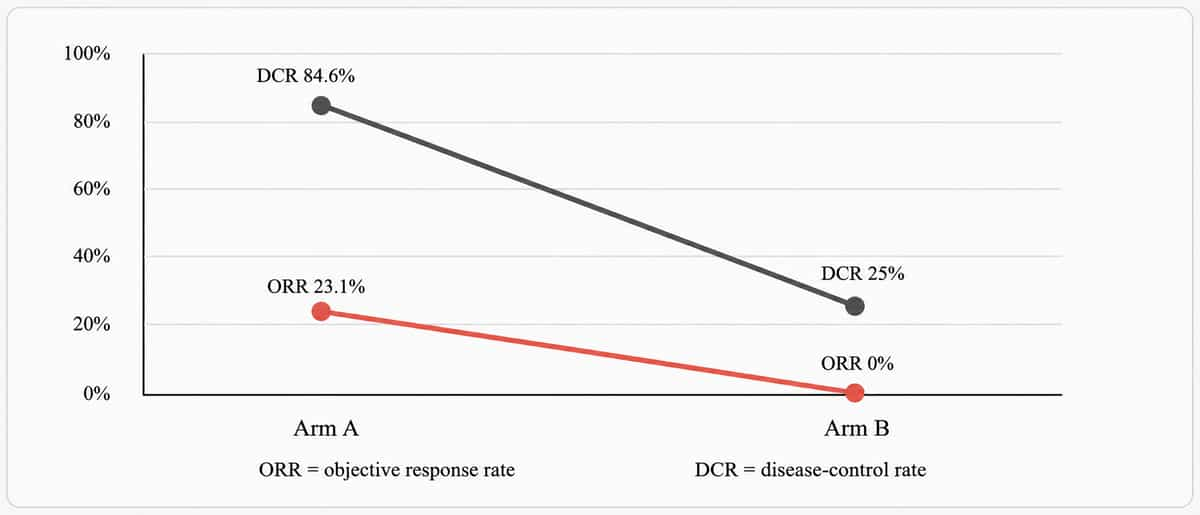
Source: Nature Medicine, 2026. Arm A included advanced disease responding or stable after first-line chemotherapy; Arm B included refractory disease.
Histogram: Treated Participants by Study Arm
Source: Nature Medicine, 2026. Thirty-seven patients ultimately received at least one infusion.
Personalized Pancreatic Cancer Vaccines
The National Cancer Institute highlights individualized cancer vaccines using tumor DNA or RNA as another developing approach. The principle is to identify antigens specific to a patient's tumor and teach T cells to recognize them. These technologies are scientifically different from preventive vaccines and remain investigational in pancreatic cancer.
Combinations Designed to Break Immune Resistance
Researchers are also combining immunotherapies with radiation, targeted drugs, chemotherapy, stromal-modifying strategies, and other immune agents. This matters because pancreatic tumors often create a dense, immune-suppressive microenvironment that can prevent activated immune cells from reaching or effectively attacking tumor cells.
Who May Be a Candidate for Pancreatic Cancer Immunotherapy?
Immunotherapy candidacy depends primarily on tumor biology, cancer stage, previous treatments, physical condition, organ function, and the specific therapy being considered. Living near Tijuana or being willing to travel does not make someone an appropriate candidate.
For advanced pancreatic cancer, molecular and biomarker testing can be especially important. NCI recommends genetic testing for inherited mutations and tumor biomarker testing for people with advanced or metastatic pancreatic cancer because these findings can help identify treatment possibilities.
| Clinical Question | Why It Matters | Records to Request |
|---|---|---|
| Is the diagnosis definitely PDAC? | Pancreatic neuroendocrine tumors and other cancers have different biology and treatment pathways. | Pathology report and, when appropriate, pathology slides. |
| What is the stage? | Resectable, locally advanced, and metastatic disease may require substantially different strategies. | Recent CT, MRI, PET when relevant, and oncology staging notes. |
| Is the tumor MSI-H or dMMR? | This uncommon biomarker profile can make checkpoint immunotherapy clinically relevant. | Molecular pathology and mismatch-repair testing. |
| Has broad molecular profiling been performed? | Some findings may identify targeted therapy or research options instead of—or alongside—immunotherapy. | Next-generation sequencing report and germline genetic results. |
| What treatments have already been given? | Prior response, resistance, and toxicity influence later treatment choices. | Chemotherapy records, surgery notes, radiation summary, and response imaging. |
| Is the proposed therapy experimental? | Experimental treatment should be evaluated differently from established treatment. | Protocol, trial registration, consent document, regulatory information, and published evidence. |
Pancreatic Cancer Immunotherapy Costs in Tijuana
There is no single price for pancreatic cancer immunotherapy in Tijuana because the term can describe very different interventions. A checkpoint inhibitor, personalized cell product, intratumoral procedure, immune-support program, laboratory-manufactured vaccine, and multiweek integrative package should not be treated as equivalent products.
A current PlacidWay-listed Tijuana pancreatic cancer program has a starting price of $18,995 for a three-week outpatient program and $30,000 for a three-week inpatient program. The same provider listing currently describes optional intratumoral immunotherapy at an additional $6,200–$7,200. These figures are provider-specific and should not be interpreted as an average price for evidence-based checkpoint immunotherapy.
| Cost Item | Current Example | What to Verify |
|---|---|---|
| Three-week outpatient pancreatic cancer program | $18,995 starting price | Exact therapies, medications, laboratory testing, imaging, physician fees, meals, accommodation, and follow-up. |
| Three-week inpatient pancreatic cancer program | $30,000 | Nursing level, room and board, emergency capability, medication exclusions, and hospital-transfer arrangements. |
| Optional intratumoral immunotherapy | $6,200–$7,200 | Product or agent, route, evidence, anesthesia, imaging guidance, pathology requirements, complications, and whether medications are additional. |
| Checkpoint inhibitor | No standardized Tijuana benchmark used in this guide | Drug name, indication, biomarker, COFEPRIS status, number of cycles, infusion fees, and laboratory monitoring. |
| Personalized vaccine or cell therapy | Highly individualized; verified benchmark not available | Manufacturing, collection, tissue processing, testing, storage, number of administrations, regulatory status, and follow-up. |
Tijuana vs. the United States and Canada
| Destination | How Cost Is Usually Encountered | Important Limitation |
|---|---|---|
| Tijuana, Mexico | Private-pay programs may be packaged by duration or therapy. | Packages may contain therapies that differ substantially in evidence and regulatory status. |
| United States | Costs vary by drug, clinical indication, hospital, insurance coverage, deductibles, and trial participation. | A single self-pay number would not provide a reliable comparison. |
| Canada | Standard cancer care and drug access depend on provincial programs and clinical eligibility. | Public coverage and access differ by province; experimental therapies may be available primarily through research. |
How to Choose a Pancreatic Cancer Center in Tijuana
The first quality check should be Mexican regulatory compliance, not marketing language. COFEPRIS regulates health establishments and identifies categories of facilities that require sanitary licensing before beginning certain activities, including facilities involved with surgical care, cell and tissue procedures, regenerative medicine, radiation, and other regulated health services.
Other healthcare establishments may operate under applicable notices of operation and a designated Responsable Sanitario. Because requirements depend on the activities actually performed, ask the center to identify exactly which COFEPRIS documentation applies to its services instead of accepting a generic statement that the facility is “licensed.”
| Verification Item | What to Request | Why It Matters |
|---|---|---|
| COFEPRIS status | Applicable Licencia Sanitaria or Aviso de Funcionamiento details. | Confirms which Mexican sanitary framework applies to the facility. |
| Responsible health professional | Name and documentation of the Responsable Sanitario. | Establishes who holds formal responsibility for sanitary compliance. |
| Drug or biological product | Generic name, manufacturer, lot information where appropriate, and Mexican regulatory status. | “Immunotherapy” alone does not identify what is being administered. |
| Cell or tissue processing | Where cells are collected, processed, stored, tested, and administered. | Cell handling can create regulatory, manufacturing, sterility, and traceability requirements. |
| Emergency capability | Emergency protocol, physician availability, transfer hospital, ICU access, and ambulance arrangements. | Cancer patients can deteriorate quickly or experience treatment complications. |
| Experimental treatment governance | Research protocol, informed consent, ethics documentation, regulatory authorization, and trial registration when applicable. | Research treatment should not be presented as established treatment. |
| International accreditation | JCI, Temos, or another accreditation only if the center actually holds it. | It can provide an additional quality signal but does not replace Mexican licensing. |
How to Verify an Oncologist in Tijuana, Mexico
You should be able to verify who is actually making your cancer-treatment decisions. In Mexico, ask for the physician's full legal name and professional license information rather than relying only on titles such as “cancer specialist,” “immunotherapy expert,” or “integrative oncologist.”
Mexico's Secretaría de Educación Pública provides public mechanisms for checking professional credentials. For specialist oncology credentials, CONACEM recognizes the Consejo Mexicano de Oncología, A.C., which certifies specialties including medical oncology, pediatric oncology, surgical oncology, pediatric surgical oncology, and gynecologic oncology.
Doctor Verification Checklist
- Ask for the physician's full name and Mexican cédula profesional.
- Verify the medical degree and any specialty cédula through official Mexican professional records.
- For an oncologist, ask whether board certification from a CONACEM-recognized oncology board is current.
- Ask how many patients with your specific pancreatic cancer stage and treatment history the physician manages.
- Ask who will manage complications outside normal clinic hours.
- Ask whether another medical oncologist, surgeon, radiologist, pathologist, gastroenterologist, or palliative-care specialist participates in treatment planning.
- Request a written plan explaining the objective of every therapy and how response will be measured.
A physician's years of experience alone do not establish expertise in a specific experimental therapy. For personalized vaccines, cellular therapies, or other biologic interventions, ask about training in that particular treatment, manufacturing oversight, published research involvement, adverse-event management, and the scientific evidence supporting its use in pancreatic cancer.
Patient Demographics, Travel Planning, Recovery, and Safety in Tijuana
Pancreatic cancer primarily affects older adults. The American Cancer Society reports that almost all patients are older than 45, roughly two-thirds are at least 65, and the average age at diagnosis is about 70. Men are slightly more likely than women to develop pancreatic cancer.
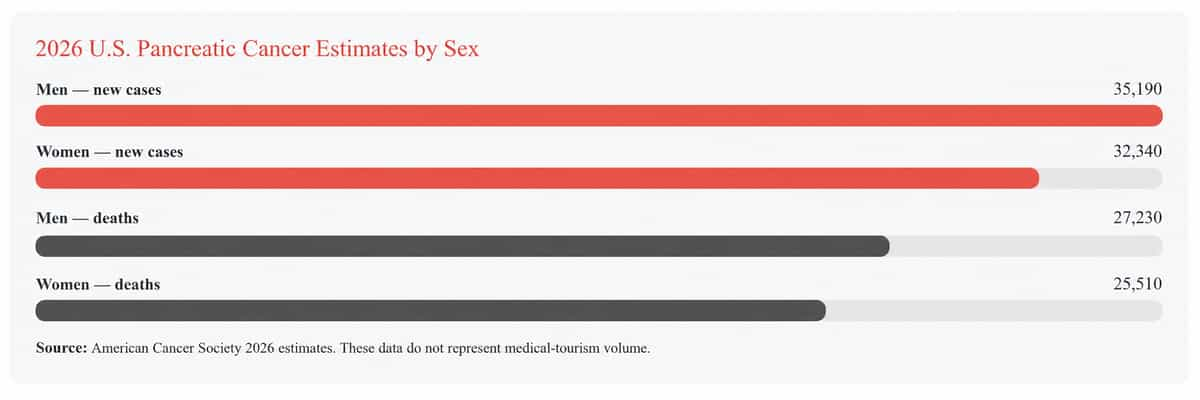
For 2026, the American Cancer Society estimates approximately 67,530 new U.S. pancreatic cancer diagnoses: 35,190 in men and 32,340 in women. These figures describe U.S. disease burden—not the demographics of patients traveling to Tijuana. Reliable public statistics specifically describing pancreatic immunotherapy travelers to Tijuana were not available in the sources used for this article.
Before Traveling to Tijuana for Pancreatic Cancer Care
The CDC notes that U.S. residents commonly travel to Mexico for medical care and specifically lists cancer treatment among medical-tourism procedures. It also warns that receiving healthcare abroad can create infection, communication, quality-control, and continuity-of-care concerns.
| Timeframe | Clinical Process | What You May Experience | Activity Level | Action Required |
|---|---|---|---|---|
| Before travel | Records and candidacy review | Existing cancer symptoms may continue. | Based on your current condition. | Send pathology, imaging, treatment history, labs, and medication list before booking. |
| Arrival | Medical examination and baseline testing | Fatigue can be influenced by cancer, travel, nutrition, or previous therapy. | Keep travel demands modest. | Confirm the final written treatment plan before undergoing therapy. |
| During therapy | Treatment and monitoring | Effects vary greatly by drug or cell-based intervention. | Follow the treating team's restrictions. | Report new symptoms promptly rather than assuming they are expected. |
| Before returning home | Discharge and continuity planning | You may still require active monitoring. | Travel only when medically appropriate. | Obtain complete records, medication list, laboratory results, and emergency instructions. |
| After returning home | Response and toxicity monitoring | Delayed treatment effects or cancer symptoms can occur. | Individualized. | Give your local oncologist complete documentation from Mexico. |
When to Seek Urgent Medical Care
Contact your medical team promptly for significant new or worsening symptoms. Emergency evaluation may be necessary for severe breathing difficulty, chest pain, confusion, fainting, uncontrolled vomiting or diarrhea, high fever, severe dehydration, bleeding, rapidly worsening abdominal pain, or other signs of serious illness.
Frequently Asked Questions About Pancreatic Cancer Immunotherapy in Tijuana
Is immunotherapy an established treatment for pancreatic cancer?
Immunotherapy is established only for selected pancreatic cancers with particular biomarkers, such as MSI-H or dMMR tumors. Most pancreatic ductal adenocarcinomas do not respond well to single-agent checkpoint immunotherapy. Vaccines, T-cell approaches, and many combinations remain experimental and should be evaluated according to their clinical evidence.
How much does pancreatic cancer immunotherapy cost in Tijuana?
Costs depend on the exact treatment. A current PlacidWay-listed three-week pancreatic cancer program starts at $18,995 outpatient and $30,000 inpatient, while one optional intratumoral immunotherapy component is listed separately. These are provider-specific figures and should not be treated as a universal immunotherapy price.
What tests should I have before considering immunotherapy in Tijuana?
Your team may need pathology confirmation, cancer staging, recent imaging, laboratory testing, treatment history, germline genetic testing, and tumor molecular profiling. MSI and mismatch-repair testing can be particularly relevant to checkpoint immunotherapy. The exact evaluation depends on your diagnosis, stage, health, and proposed therapy.
What are the newest immunotherapy approaches for pancreatic cancer in 2026?
Research includes personalized tumor vaccines, multi-antigen T-cell therapies, checkpoint combinations, immune therapies combined with chemotherapy or targeted treatment, and strategies that alter pancreatic cancer's immune-suppressive microenvironment. These approaches are at different stages of clinical development, and many are not standard treatment.
Are pancreatic cancer vaccines available as standard treatment?
No personalized pancreatic cancer vaccine should be assumed to be standard treatment simply because a clinic offers a vaccine-based therapy. Personalized DNA, RNA, neoantigen, and other therapeutic vaccine strategies are active research areas. Ask for the exact product, clinical-trial phase, published evidence, and regulatory status.
How do I verify a cancer clinic in Tijuana?
Ask for the facility's applicable COFEPRIS documentation and the name of its Responsable Sanitario. Requirements vary according to the procedures performed. If treatment involves surgery, radiation, cells, tissues, biologic products, or other regulated activities, verify which additional licenses or authorizations apply to those services.
How can I verify an oncologist's credentials in Mexico?
Request the physician's full name, professional cédula, specialty credentials, and current specialty-board status. Mexican professional credentials can be checked through official government records. CONACEM recognizes the Consejo Mexicano de Oncología for certification in medical oncology and several other oncology specialties.
Can immunotherapy replace chemotherapy for pancreatic cancer?
Usually not. Combination chemotherapy remains a central treatment for many patients with pancreatic ductal adenocarcinoma. Immunotherapy may have a role in selected biomarker-defined cancers or research protocols. Whether treatment should include chemotherapy, surgery, radiation, targeted therapy, immunotherapy, or supportive care depends on your individual case.
How long should I stay in Tijuana after pancreatic cancer immunotherapy?
There is no standard travel duration because treatments differ substantially. Some programs are structured over several weeks, while individual infusions may involve shorter visits. Your travel plan should account for baseline assessment, monitoring, potential complications, follow-up testing, and whether your home oncology team can safely continue care.
What should I ask if a Tijuana clinic calls a therapy experimental?
Ask for the trial or protocol number, research phase, eligibility criteria, ethics documentation, Mexican regulatory authorization where applicable, published results, known adverse events, financial responsibilities, and the plan if your cancer progresses. Also ask whether participating will affect eligibility for future clinical trials or standard treatments.
Is a high success rate a good reason to choose a pancreatic cancer clinic?
A percentage is meaningful only when you know how it was calculated. Ask for the number of pancreatic cancer patients treated, stages included, treatment used, definition of success, follow-up duration, lost follow-up, and whether results were independently published. Testimonials cannot establish treatment effectiveness.
Should I get a second opinion before traveling to Tijuana?
A second oncology opinion can be particularly useful when considering experimental treatment or when standard options have become limited. It can help confirm the diagnosis, stage, molecular findings, available standard therapies, clinical-trial options, and whether the proposed treatment in Mexico has a reasonable scientific rationale for your cancer.
Compare Pancreatic Cancer Treatment Options Through PlacidWay
If you are considering pancreatic cancer care in Tijuana, PlacidWay can help you request information from providers, compare treatment descriptions and costs, and organize questions before speaking with a medical team.
Ask each provider to explain the exact therapy being proposed, why you may be a candidate, its regulatory status, available clinical evidence, potential complications, total expected price, and the plan for follow-up after you return home.




























Share this listing