
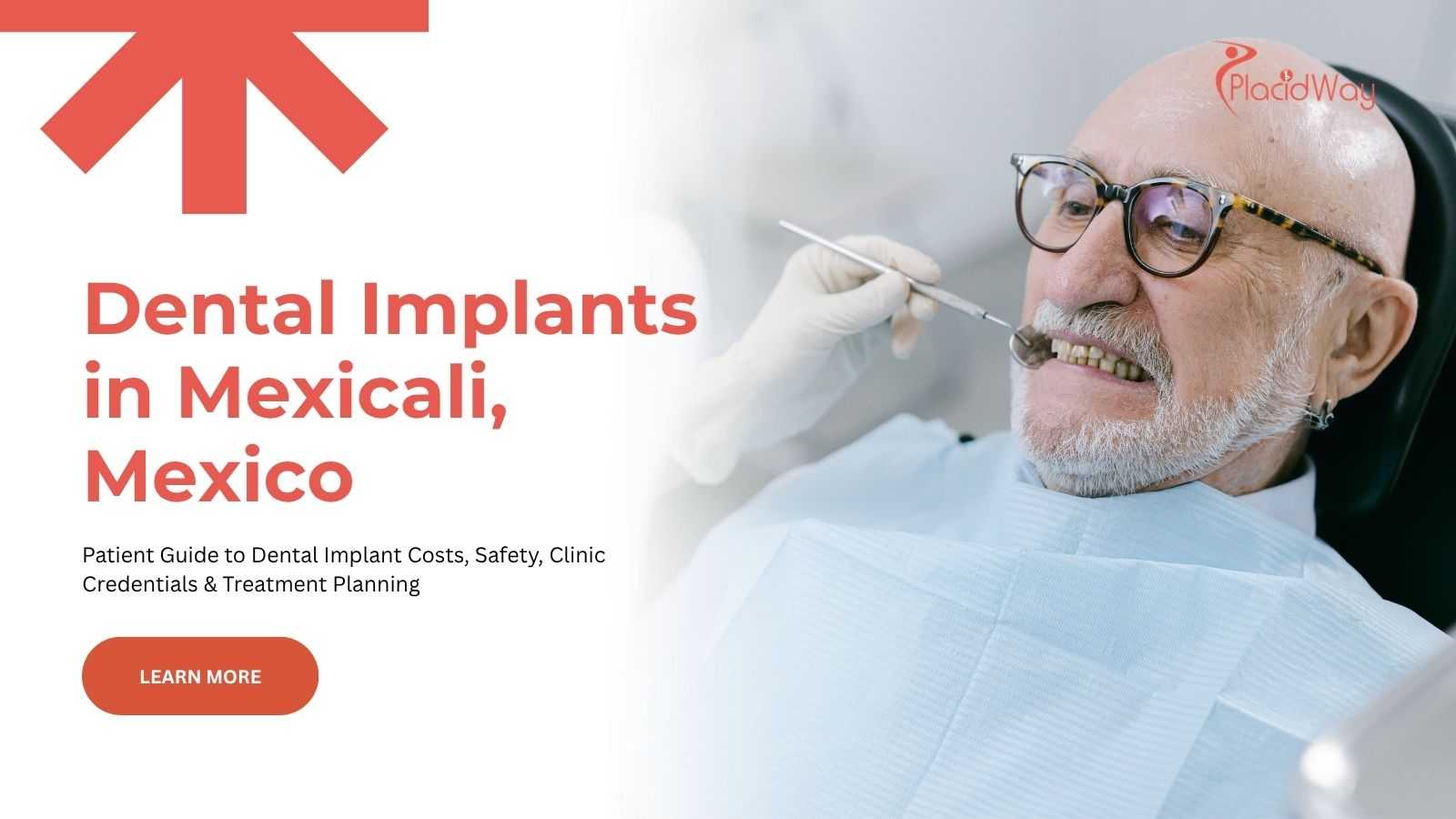
If you are struggling with missing teeth and feeling frustrated by the high prices of dental care at home, traveling across the border might be the exact solution you need. Understanding the costs of full mouth dental implants in Mexicali Mexico can help you safely plan your budget while receiving care from highly qualified specialists. You should carefully check your chosen clinic for essential credentials like the Mexican Dental Association membership and COFEPRIS licensing to ensure a safe and successful outcome.
- Estimated Cost: Typically ranges from $900 to $1,500 per single implant, saving patients significantly compared to US prices.
- Safety Overview: Highly safe when performed at clinics certified by COFEPRIS and by board-certified oral surgeons.
- Ideal Candidate: Adults with missing teeth, good overall health, and sufficient jawbone density to support the titanium post.
- Recovery Time: Initial healing takes a few days, while complete bone integration requires three to six months.
- Main Reason to Choose Mexicali: Convenient border access for US and Canadian patients combined with high standards of specialized dental care.
- Important Caution: Always verify that your dentist is registered with the Mexican Dental Association (ADM) before booking your procedure.
Why Patients Travel Across the Border for Missing Teeth
Losing teeth can impact your self-confidence and make eating your favorite foods difficult. Many patients look for solutions at home but quickly realize that complex dental restorations are financially out of reach. Mexicali has grown into a major hub for medical travelers seeking advanced restorative dentistry without sacrificing clinical quality.
Patients arriving from California, Arizona, and western Canada choose this border city because it offers a seamless blend of expert care and travel convenience. By traveling a short distance, you gain access to modern facilities equipped with the same advanced imaging technologies found in top-tier clinics back home.
- Proximity to the US border makes multiple treatment visits highly convenient
- Access to English-speaking dental teams trained in international protocols
- Significant cost savings on complex procedures like full mouth restorations
- Shorter waiting times for specialized surgical appointments
- Opportunity to receive care from internationally trained prosthodontists
Understanding How Tooth Replacement Surgery Works
The process of placing a titanium root into your jaw is a sophisticated clinical procedure that requires careful planning. Your dentist will first use 3D cone beam imaging to assess your bone volume and nerve pathways. This mapping ensures that the surgical placement is precise and minimizes any potential tissue damage.
Once the titanium post is carefully inserted into the jawbone, a critical biological process called osseointegration begins. Over several months, your natural bone cells will grow and attach to the porous surface of the implant. This creates a highly stable foundation that can securely hold a custom dental crown.
| Treatment Phase | Clinical Action Required |
|---|---|
| Initial Consultation | 3D imaging and comprehensive oral health assessment |
| Surgical Phase | Placement of the titanium post into the jawbone |
| Healing Phase | Osseointegration over a period of three to six months |
| Restoration Phase | Attaching the abutment and placing the final custom crown |
Essential Eligibility Criteria for Dental Patients
Not everyone with a missing tooth is immediately ready for surgical restoration. Your clinical suitability depends heavily on the health of your gums and the density of your jawbone. Patients with severe periodontal disease must undergo treatment to clear any infections before a surgeon can safely place the titanium root.
Systemic health conditions also play a major role in your eligibility for this procedure. Uncontrolled diabetes, autoimmune disorders, or a history of heavy smoking can significantly impair your body's ability to heal and integrate the new device. Your dentist will review your complete medical history to determine if this approach is medically safe for you.
- Healthy gum tissue free of active periodontal disease
- Sufficient jawbone density to support the titanium post
- Commitment to excellent daily oral hygiene habits
- Non-smoker or willing to quit during the healing phase
- Unmanaged chronic conditions like severe diabetes
- Active oral infections or untreated tooth decay
- Recent radiation therapy to the head or neck area
- Medications that inhibit bone healing or blood clotting
Examining the Financial Investment for Treatment
Planning your medical trip requires a clear understanding of the financial commitment involved. The total expense can vary widely based on the specific type of restoration you need, the materials selected for your crown, and whether you require additional preparatory surgeries. Prices in border clinics are generally comprehensive, but you should always request a fully itemized treatment plan.
Patients requiring multiple teeth replaced or full arch restorations will naturally face higher overall costs. However, these complex procedures often yield the most dramatic savings when compared to domestic pricing. It is crucial to account for all phases of treatment, including the initial surgery, the healing abutment, and the final porcelain or zirconia crown.
| Procedure Type | Estimated Cost in USD |
|---|---|
| Standard Single Tooth Replacement | $900 to $1,500 |
| Bone Grafting Preparation | $200 to $500 per site |
| Sinus Lift Surgery | $500 to $1,200 |
| Full Arch Restoration System | $5,000 to $9,000 per arch |
Comparing International Treatment Prices for Tooth Restoration
The primary driver for cross-border medical travel is the vast difference in healthcare pricing structures between North American countries. Dental care in the United States and Canada carries high overhead costs, stringent insurance limitations, and expensive laboratory fees. These factors drive the consumer price of restorative dentistry to levels that many patients simply cannot manage.
Clinics operating in the border region benefit from lower administrative overhead, favorable real estate costs, and subsidized medical education. These economic differences allow highly trained specialists to offer the exact same premium titanium brands and ceramic materials at a fraction of the price. The quality of the physical materials remains identical to what you would receive in a domestic clinic.
| Location | Single Unit Estimate USD | Full Arch Estimate USD |
|---|---|---|
| United States | $3,500 to $5,000 | $24,000 to $30,000 |
| Canada | $3,000 to $4,500 | $22,000 to $28,000 |
| Mexicali Mexico | $900 to $1,500 | $5,000 to $9,000 |
Step by Step Recovery Expectations After Surgery
Knowing what to expect during your recovery phase can help you plan your travel schedule effectively. Immediately following the placement procedure, you may experience mild swelling, minor bruising, and localized tenderness around the surgical site. These symptoms are a normal biological response to the procedure and can typically be managed with standard over-the-counter pain relievers.
The long-term recovery involves waiting for the titanium to fuse permanently with your jawbone. During this critical window, you must adhere to a soft food diet to avoid placing undue pressure on the healing surgical site. Your dentist will provide a strict set of aftercare guidelines to prevent infection and encourage rapid cellular regeneration.
| Timeframe | Biological Process | Patient Sensation | Activity Level | Action Required |
|---|---|---|---|---|
| Days 1 to 3 | Acute tissue response | Mild swelling and tenderness | Resting and limited movement | Apply ice and eat soft foods |
| Days 4 to 14 | Soft tissue closure | Decreasing sensitivity | Return to normal routine | Gentle brushing around site |
| Weeks 3 to 12 | Initial osseointegration | Normal feeling returns | Fully active | Avoid chewing hard objects |
| Months 3 to 6 | Complete bone fusion | Completely natural sensation | Unrestricted | Routine daily oral care |
Evaluating Patient Demographics and Travel Trends
Recent healthcare data reveals significant shifts in who is traveling for restorative dentistry. As of 2024 and 2025, demographic reports highlight that older adults nearing retirement represent the largest segment of patients crossing the border for extensive tooth replacement. Many of these individuals live on fixed incomes and lack comprehensive dental insurance coverage in their home countries.
The data also indicates that patients are highly motivated by the desire to improve their digestive health and restore their social confidence. Understanding these trends helps clinics tailor their services to older adults, ensuring they offer comprehensive travel support, clear communication, and focused post-operative care.
Clinical Success Rates for Long Term Smile Restoration
Modern restorative dentistry enjoys an exceptionally high rate of clinical success. Based on updated 2024 clinical reviews, the vast majority of patients who undergo this surgical procedure experience favorable long-term outcomes. The titanium material is highly biocompatible, meaning the human body rarely rejects it as a foreign object.
Success depends heavily on excellent daily hygiene and regular professional cleanings. When patients follow all recommended maintenance protocols, their new restorations can function flawlessly for over a decade. The clinical data strongly supports this treatment as a reliable, enduring solution for missing teeth.
Identifying Potential Clinical Risks and Complications
While the procedure is highly reliable, any surgical intervention carries inherent biological risks. The most common early complication is localized infection at the surgical site, which can usually be treated rapidly with prescribed antibiotics. In rare cases, minor nerve damage may occur during drilling, causing temporary numbness in the lips or chin.
Long-term failure is rare but can happen if the bone fails to properly integrate with the titanium root. This condition is frequently linked to poor oral hygiene, uncontrolled systemic diseases, or heavy tobacco use. Your dental team will conduct rigorous evaluations to minimize these risk factors before moving forward with your treatment plan.
| Potential Risk | Prevention Strategy |
|---|---|
| Surgical Site Infection | Strict adherence to post-operative antibiotic prescriptions |
| Failure to Integrate | Refraining entirely from smoking during the healing phase |
| Nerve Irritation | Precise surgical planning using advanced 3D imaging technology |
| Gum Recession | Maintaining excellent daily brushing and flossing routines |
Recognizing Quality Dental Clinics in the Region
Selecting the right facility requires careful research into national healthcare standards and local medical oversight. You should seek out facilities that operate under the strict guidelines established by COFEPRIS, the Mexican federal authority responsible for healthcare safety. A clinic bearing this certification has undergone rigorous inspections regarding hygiene and sterilization protocols.
The visual appearance of a clinic's marketing materials is never a substitute for documented medical credentials. Focus entirely on their transparent publication of operating licenses, infection control standards, and professional affiliations. High-quality clinics often feature state-of-the-art diagnostic equipment directly on site, reducing your need to travel between different facilities.
- Verify current COFEPRIS operating license status
- Confirm availability of on-site 3D panoramic imaging
- Ask about specific sterilization protocols and autoclave use
- Request information on emergency medical response plans
- Ensure the clinic offers a detailed, written complication policy
Verifying the Credentials of Your Chosen Oral Surgeon
The clinical skill of your chosen specialist dictates the long-term success of your restorative procedure. General dentists can legally place titanium roots, but complex cases are best handled by dedicated oral surgeons or certified periodontists. These specialists possess years of advanced training specific to hard and soft tissue surgery.
You must confirm that your doctor is officially registered with the Mexican Dental Association (ADM) or the national board of oral surgery. Specialists who frequently treat international patients often hold complementary memberships in cross-border professional societies, which signals their dedication to ongoing medical education.
Extremely low prices that seem too good to be true often indicate a lack of proper certification, the use of substandard materials, or a practitioner lacking specialized surgical experience. Always demand proof of board certification and request details regarding the exact brand of titanium hardware they intend to use.
Understanding Healthcare Regulations and Safety Standards
The medical tourism ecosystem in this region is tightly monitored by federal and state health departments to ensure patient protection. COFEPRIS enforces strict sanitary regulations that mirror the quality standards expected in North American medical facilities. Regular unannounced inspections guarantee that clinical environments maintain impeccable hygiene.
Understanding your rights as an international patient provides valuable peace of mind during your journey. Ethical clinics will provide comprehensive consent forms in English, clearly outlining the clinical scope, expected outcomes, and inherent risks. They will also document the exact specifications of the medical devices placed in your jaw.
Always request a physical or digital copy of your "implant passport" or device registration card post-surgery. This vital document contains the exact lot number, brand, and dimensions of your titanium hardware, which is critical information if you require follow-up care from a different dentist back home.
Navigating Travel and Logistics for Your Dental Trip
Getting to your clinical appointments requires straightforward planning, especially if you live in California or Arizona. Many patients fly into nearby domestic airports or drive directly to the Calexico border crossing. It is crucial to carry a valid passport and any required medical letters to ensure a smooth transition across the international boundary.
Top-tier clinics frequently provide a dedicated patient coordinator to assist with your transportation logistics. These professionals can arrange dedicated shuttle services from the border directly to the clinic, completely eliminating the stress of navigating an unfamiliar city. Planning your travel thoroughly ensures you arrive relaxed and ready for your consultation.
| Planning Phase | Required Action |
|---|---|
| 4 Weeks Before | Confirm your consultation and secure your valid passport |
| 2 Weeks Before | Finalize your transportation and any necessary hotel bookings |
| 1 Week Before | Review all medical instructions and pause restricted medications |
| Day of Travel | Carry your medical files, imaging discs, and identification |
Managing Postoperative Care From Your Home Country
The success of your clinical journey relies heavily on how well you manage your recovery once you return home. Quality clinics will establish a clear line of communication, allowing you to report your healing progress through secure messaging or video consultations. You must follow their specific dietary and hygiene instructions without deviation.
If you experience unexpected severe pain or prolonged bleeding, you must contact your surgical team immediately. Reliable providers maintain structured aftercare programs to guide you through these concerns. In some instances, they may coordinate with a local dentist in your hometown to manage minor adjustments or check-ups.
- Fill all prescribed antibiotic and pain medications before crossing the border.
- Stick exclusively to a soft-food diet for the duration recommended by your surgeon.
- Maintain daily communication with your clinic's patient coordinator if issues arise.
- Schedule a local check-up if you experience unusual swelling after the first week.
Exploring Alternative Options to Surgical Implants
While inserting a titanium root offers exceptional stability, it may not be the optimal medical choice for every patient. If you have severe bone loss or underlying health complications, your doctor may suggest alternative methods for restoring your smile. These options require less invasive procedures and generally feature faster healing times.
Traditional dentures and dental bridges remain highly effective treatments for replacing missing teeth. A fixed bridge utilizes adjacent healthy teeth to support a prosthetic, while modern removable dentures provide a highly aesthetic and functional solution for total tooth loss. Your specialist will review these alternatives to ensure your treatment matches your physiological needs.
| Treatment Option | Clinical Mechanism | Primary Advantage |
|---|---|---|
| Titanium Implants | Fuses directly into the jawbone | Preserves bone health and offers maximum stability |
| Fixed Dental Bridge | Anchors to adjacent healthy teeth | No surgery required and faster completion time |
| Removable Dentures | Rests securely on the gum tissue | Highly cost-effective for full arch restoration |
Preparing for Your Initial Dental Consultation
Your first conversation with the dental specialist sets the foundation for your entire treatment experience. You should arrive prepared with copies of your recent medical records and a comprehensive list of your current medications. This clinical data allows the surgeon to accurately assess your physiological readiness for surgery.
Do not hesitate to ask detailed questions regarding the materials used and the surgeon’s complication rates. A trustworthy medical professional will welcome your inquiries and provide clear, evidence-based answers. Open communication ensures that your expectations align perfectly with the realistic clinical outcomes.
- How many procedures of this specific type do you perform annually?
- Are you officially certified by the Mexican Dental Association?
- What specific brand of titanium hardware will you use for my procedure?
- What is your clinic's protocol if the bone fails to integrate?
- Can you provide a fully itemized written quote outlining every single fee?
Frequently Asked Questions
Is it safe to get complex dental work done across the border?
Yes, it is highly safe when you select a clinic regulated by COFEPRIS and choose a specialist registered with the Mexican Dental Association. These professionals adhere to strict international sterilization and clinical protocols.
How many trips will I need to complete the full restoration process?
Most patients require at least two separate trips. The first trip involves the surgical placement of the titanium root, and the second trip, typically three to six months later, involves attaching the final custom crown.
Will the surgical placement procedure cause significant pain?
The procedure is performed under local anesthesia, so you will not feel pain during the surgery itself. Post-operative discomfort is typically mild and can be effectively managed with standard over-the-counter medications.
What happens if my jawbone is too thin to support the hardware?
If your jaw lacks sufficient density, your oral surgeon may recommend a bone grafting procedure. This builds up the bone volume and creates a secure foundation, though it will extend your overall healing timeline.
Do clinics in this region use the same materials as US dentists?
Yes, reputable clinics utilize the exact same globally recognized titanium brands and high-grade ceramic materials that are standard in the United States and Canada.
Can I return to work immediately after my surgical appointment?
Most patients can return to non-strenuous work within one to three days. However, you must carefully monitor swelling and strictly adhere to a soft-food diet during the initial healing phase.
How long will my new artificial teeth realistically last?
With excellent daily oral hygiene and routine professional cleanings, the titanium root can last a lifetime, while the attached ceramic crown typically lasts 10 to 15 years before needing replacement.
Will my domestic dental insurance cover procedures in Mexico?
Some US and Canadian insurance plans offer partial reimbursement for cross-border treatments. You must consult directly with your provider to verify your out-of-network international coverage limits.
What is the risk of my body rejecting the new titanium root?
True biological rejection is exceptionally rare due to the biocompatible nature of titanium. However, failure to integrate can occur due to smoking, poor hygiene, or uncontrolled systemic diseases like diabetes.
How can I verify the credentials of my chosen oral surgeon?
You should request their license number and verify their active standing with the Mexican Dental Association (ADM) and relevant national boards of oral and maxillofacial surgery before booking your procedure.
Taking the Next Steps Towards Your New Smile
PlacidWay can help you compare highly rated providers, understand your exact treatment costs, and request information from fully vetted clinics. Start planning your journey safely today.
Request Information Now
Disclaimer: This information is for educational purposes only and does not replace professional medical advice. Always consult a qualified healthcare provider before making medical decisions.
References
- Dental Implants Clinical Overview – American Dental Association
- Medical Tourism Travel Guidelines – Centers for Disease Control and Prevention
- Long-Term Survival Rates of Dental Implants (2024 Update) – National Institutes of Health
- Healthcare Regulations and Clinic Certifications – COFEPRIS Mexico
- Global Oral Health Standards and Tooth Replacement – World Health Organization
- Professional Dental Standards and Specialist Verification – Mexican Dental Association






















Share this listing