
Contents
Paying for a single dental crown in the United States or Canada often feels like you are accidentally buying a tiny, porcelain sports car. When your local clinic hands over an estimate that makes your jaw ache more than the actual tooth, finding a practical alternative naturally becomes a top priority.
Many North Americans are discovering that traveling south provides a reliable solution without compromising on the quality of dental materials. The total cost for a durable dental crown in Cancun generally runs between $350 and $500, offering a stark contrast to domestic prices. While the financial savings are clear, patient safety must always remain your primary focus when traveling. Always verify local accreditation by checking if the facility holds certification from the General Health Council (Consejo de Salubridad General) or if the dentists are actively registered with the Mexican Dental Association (Asociación Dental Mexicana).
Quick Facts at a Glance
Trying to piecemeal a medical trip from scratch often leads to hidden fees and logistical headaches. Dental clinics catering to international patients usually bundle their services to make the entire process more straightforward.
A comprehensive dental package generally covers your initial consultation, panoramic x-rays, temporary resin crowns, the final permanent restoration, and sometimes even local airport transfers. Knowing exactly what is included upfront helps you manage your budget securely and removes the stress of navigating local transport. Explore the dental packages below to find an inclusive plan that simplifies your journey.

Price starting from $567
Dental Crowns Package in Cancun, Mexico by Dentaris Cancun Riviera Maya
Dentaris Cancun Riviera Maya Dentistry
- Dentistry
Cancun, Mexico

Price starting from $615
Dental Crowns Package by Costamed Medical Group in Cancun, Mexico
Costamed Medical Group in Playa del Carmen Mexico
- Dentistry
Tulum,Cancun,Playa Del Carmen,Cozumel, Mexico

Price starting from $522
Dental Crowns Package by NEO Dental Group in Cancun, Mexico
YeahSmile
- Dentistry
Cancun, Mexico
The cost for a high-quality dental crown in Cancun ranges directly from $350 to $500 on average. This pricing depends primarily on the specific material you select, with highly durable and aesthetic options like Zirconia or E-max sitting toward the higher end.
Back in North America, a single crown made from those exact same materials routinely costs upwards of $1,500 before factoring in standard consultation and x-ray fees. The lower operational overhead in Mexico allows these practices to offer more competitive rates without sacrificing the integrity of the materials used. Compare the pricing estimates below to understand how different choices impact your total investment.
Dental Crowns Centers Cost Comparison in Cancun, Mexico
| Provider | Procedure | Price |
|---|---|---|
| Dentaris Cancun Riviera Maya Dentistry | Dental Crowns, Dentistry | $567 |
| YeahSmile | Dental Crowns, Dentistry | $450 |
| Costamed Medical Group in Playa del Carmen Mexico | Dental Crowns, Dentistry | $325 |
Dental Crowns Cost Comparison in Mexico
| Country | Procedure | Price |
|---|---|---|
| Canada | Dental Crowns, Dentistry | $1000 |
| United States | Dental Crowns, Dentistry | $1750 |
A glossy website and a modern waiting room are nice, but they do not guarantee clinical excellence. When choosing a facility for restorative dentistry abroad, you need to look past the aesthetics and focus heavily on verifiable credentials.
Take the time to ensure the clinic follows strict infection control protocols and utilizes modern diagnostic tools, such as 3D CBCT scanners. Confirming their registration with local Mexican health boards ensures the practice operates safely under established medical guidelines. Transparency regarding their onsite or partnered dental laboratories is another excellent indicator of reliability. Review the clinic options below to evaluate their certifications and patient safety standards.

Dentaris Cancun Riviera Maya Dentistry
Cancun, Mexico

Costamed Medical Group in Playa del Carmen Mexico
Tulum,Cancun,Playa Del Carmen,Cozumel, Mexico

YeahSmile
Cancun, Mexico
Sani Dental Group Cancun
Cancun, Mexico
Handing over your dental health to a completely new team in another country requires a significant leap of faith. Video tours bridge that physical gap by letting you inspect the treatment rooms before you ever book your flight.
Watching clinical footage allows you to gauge overall cleanliness, see the dental technology in action, and observe how the staff interacts with their patients. Listening to the dentists explain their restorative techniques also helps you assess their communication style and English fluency. Watch the clinic and procedure videos below to build confidence in your prospective dental providers.
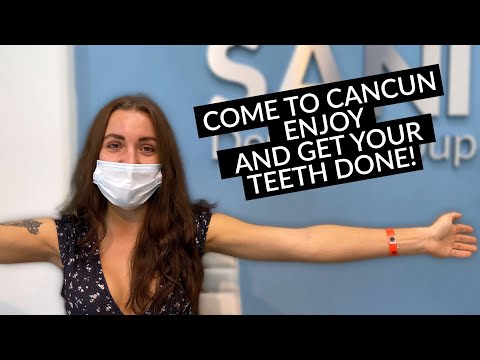
Medical brochures highlight the best possible outcomes, but honest patient reviews reveal the day-to-day reality of receiving care abroad. Hearing from individuals who have recently navigated the same process provides invaluable context.
Pay close attention to comments detailing how comfortably the crowns fit, the pain management techniques used during preparation, and how the clinic handled any needed bite adjustments. Feedback about language barriers or appointment wait times gives you a highly realistic expectation of the overall experience. Read through the patient reviews below to learn from others who have traveled for this exact procedure.

Understanding the nuances of receiving restorative dentistry abroad helps you prepare for a much smoother trip. Here are clear answers to the most common questions patients ask about getting dental work done in Quintana Roo.
What materials are used for dental crowns in Cancun?
Clinics use the same standard materials found in the US and Canada. This includes full porcelain, high-strength Zirconia, E-max (lithium disilicate), and traditional porcelain-fused-to-metal (PFM). Your dentist will recommend the best material based on whether the crown is for a visible front tooth or a heavy-chewing molar.
How many days should I stay in Cancun for a crown?
You should generally plan to stay for 3 to 5 days. Traditional crowns require an initial preparation day and a fitting day a few days later once the lab creates the crown. Some clinics offer CAD/CAM same-day crowns, but it is always safer to build in an extra day for final adjustments.
Will my dentist in Cancun speak English?
Yes, dentists and support staff at facilities that cater to international medical tourists are typically fluent in English. Clear communication regarding your bite, comfort level, and dental history is a standard part of their daily practice.
Is a passport required to travel to Mexico for dental work?
Yes, all patients traveling from the United States or Canada by air must have a valid passport book to enter Mexico and return home. Ensure your passport is valid for at least six months beyond your planned date of travel.
Are the local dental laboratories comparable to those in the US?
Reputable clinics in the area either house modern in-house laboratories or partner with high-end external labs that use precise digital milling and CAD/CAM technology. These facilities meet strict international standards for producing accurate and durable restorations.
What happens if my new crown chips after I return home?
Many established clinics offer warranties on their restorative work covering a specific period. However, you would need to travel back for the replacement, or pay a local dentist out-of-pocket to fix it. Always ask the clinic for their written warranty policy before beginning treatment.
Can I get a crown and a root canal during the same trip?
Yes, it is very common to combine a root canal with crown placement. The endodontist performs the root canal first, and then the prosthodontist prepares the tooth for the permanent crown. This combined treatment usually takes about 4 to 6 days in total.
Does dental insurance cover crowns done in Mexico?
Some US dental insurance plans (mostly PPOs) will reimburse a portion of out-of-network care received abroad. You must pay the Mexican clinic out-of-pocket upfront, request itemized receipts with standard treatment codes, and submit a manual claim to your provider upon returning.
Is it safe to leave my resort for a dental appointment?
The medical districts and major tourist zones in Cancun are generally safe for visitors. It is highly recommended to arrange transportation directly through your clinic or official hotel services rather than hailing local street cabs.
How soon can I eat normally after getting my permanent crown?
You should wait until the local anesthesia completely wears off to avoid accidentally biting your tongue or cheek. It is best to avoid sticky or overly hard foods for the first 24 hours while the final cement fully cures.
The physical crown is only as good as the hands preparing your tooth and securing the restoration. For the best functional outcome, you need a practitioner who specializes specifically in prosthodontics or cosmetic dentistry, rather than just a general practitioner.
Many highly rated dentists in Mexico maintain active memberships with international dental organizations and frequently complete advanced training in the US or Europe. Verifying their hands-on experience with complex bite alignments ensures your new tooth will function correctly for years. Browse the dentist profiles below to evaluate their specific clinical backgrounds and specialty certifications.
Combining necessary dental work with a calm, tropical environment can significantly reduce the anxiety naturally associated with medical procedures. Cancun has quickly established itself as a premier hub for healthcare travel, drawing thousands of patients primarily from the United States and Canada.
Accessibility is a major factor in this location's high popularity. Direct flights from most major North American airports to Cancun International Airport (CUN) take only a few hours. Once you land, navigating the local area is relatively straightforward, with many reputable clinics located in easily accessible, secure medical districts just outside the main hotel zone.
| Flight from Houston (IAH) | Approx. 2 hours 15 minutes |
| Flight from New York (JFK) | Approx. 4 hours |
| Flight from Toronto (YYZ) | Approx. 4 hours 30 minutes |
| Local Currency | Mexican Peso (USD is widely accepted in private clinics) |
While the resort areas and designated medical sectors are generally safe for tourists, standard travel precautions still apply. Arranging your daily transportation through your clinic's patient coordinator or official hotel car services is heavily recommended. By planning your logistics carefully, you can focus fully on recovering and adjusting to your new dental restoration.
Coordinating a dental trip across borders involves carefully balancing clinic research, budget planning, and travel logistics. Having a structured support system simplifies the finer details and helps you make informed choices without feeling overwhelmed by options.
PlacidWay connects you directly with vetted, locally accredited dental facilities in Mexico that consistently meet international patient safety standards. We can help you request accurate pricing estimates, compare provider credentials, and set up your initial consultations so you can move forward with absolute clarity.
References

















Share this listing