

The bill detective · Patient-first cost guide
Dental Veneers in Los Algodones, Mexico: What the Price Per Tooth Leaves Out
A lower quote can be useful. A complete quote is better. Here is how to compare treatment at home with a border-town visit without overlooking the bills that arrive later.
The opening file
The spreadsheet had one column too few
Mara had already done what a careful shopper does. She entered the price per tooth from a U.S. cosmetic dentist in one column and a Los Algodones quote in another. For eight veneers, the difference looked substantial. Then she opened the U.S. office’s follow-up estimate. It separated the consultation, imaging, temporary restorations and possible gum treatment from the veneer fee. Her spreadsheet had no place for those charges. It also had no place for time away from work, or for a return trip if a veneer needed adjustment after she got home.
Mara is a composite patient, not a report of anyone’s actual treatment or bill. Her situation illustrates a common budgeting problem: a per-tooth price answers only part of the question. In the United States, cosmetic veneers are commonly self-pay because dental plans often exclude treatment undertaken solely for appearance. Coverage can differ when a restoration is medically necessary, so a patient must check their own plan and the proposed billing codes rather than assume every veneer claim will be denied or paid.
For an adult arranging care around a job, the practical comparison is not simply “eight times the advertised price.” It is the amount due from the first examination through the final bite check, plus what it would take to resolve a problem after returning home. That calculation matters on either side of the border.
Check 01 · The home quote
Which U.S. charges are outside the veneer fee?
The planning range for porcelain veneers in the United States is approximately $925–$2,500 per tooth. These are estimated self-pay prices, not a promise that a particular office will charge within that range. Material, laboratory work, location, tooth condition and the dentist’s treatment plan all affect a quote. Eight teeth at that range would put the veneer fees alone at approximately $7,400–$20,000. That multiplication is useful for scale, but it is not a final bill.
“Per tooth” describes a unit of pricing. It does not describe everything needed to prepare, place and maintain that tooth’s veneer.
Editorial reminder, not a patient testimonial
A U.S. estimate may list an examination and X-rays separately. Some offices charge separately for a diagnostic wax-up or digital preview, temporary veneers, laboratory work, sedation if requested and treatment that must happen first. Decay, gum inflammation or an unstable bite should be assessed before elective cosmetic work. If the plan changes after that assessment, the price can change too. Ask for a written treatment plan that distinguishes required care from optional cosmetic choices.
The phrase facility fee needs precision here. Routine veneers performed in a private dental office do not automatically carry the kind of hospital facility fee patients may recognize from medical care. A separate facility or operating-room charge may arise if care is arranged in a hospital or ambulatory setting, or if a complex case involves services beyond an ordinary office visit. Do not add an imaginary facility fee to every veneer estimate. Do ask whether any setting, anesthesia or administrative charge is billed outside the dentist’s stated fee.
“Out of network” can be confusing in cosmetic dentistry. A plan may exclude cosmetic veneers regardless of network status. If some preparatory treatment is eligible for benefits, the dentist’s network participation, the plan’s annual maximum, deductibles and exclusions can affect what you owe. Request a written pre-treatment estimate from your insurer where available, while remembering that an estimate is not a guarantee of payment.
Check 02 · The border quote
What does the Los Algodones price actually buy?
For budgeting, estimated Los Algodones prices for porcelain, ceramic or zirconia veneers are $250–$550 per tooth. Eight veneers at that range suggest $2,000–$4,400 in veneer fees before any separate charges. These figures are planning estimates supplied for this guide, not a clinic price list or a published survey. Verify your own case with a written, itemized quote in U.S. dollars and ask how payment is handled if a final charge is set in Mexican pesos.
Some clinics may bundle a consultation, preparation, impressions or digital scans, laboratory fabrication, temporary veneers and placement into a package. Others may itemize some of those steps. Neither format proves that the treatment is better or cheaper. An inclusive quote can be easier to compare, but only if it names the veneer material, number of teeth, diagnostic work, temporaries, laboratory charges and planned visits. A quote that says “veneers included” without specifying the material and steps leaves too much for a patient to guess.
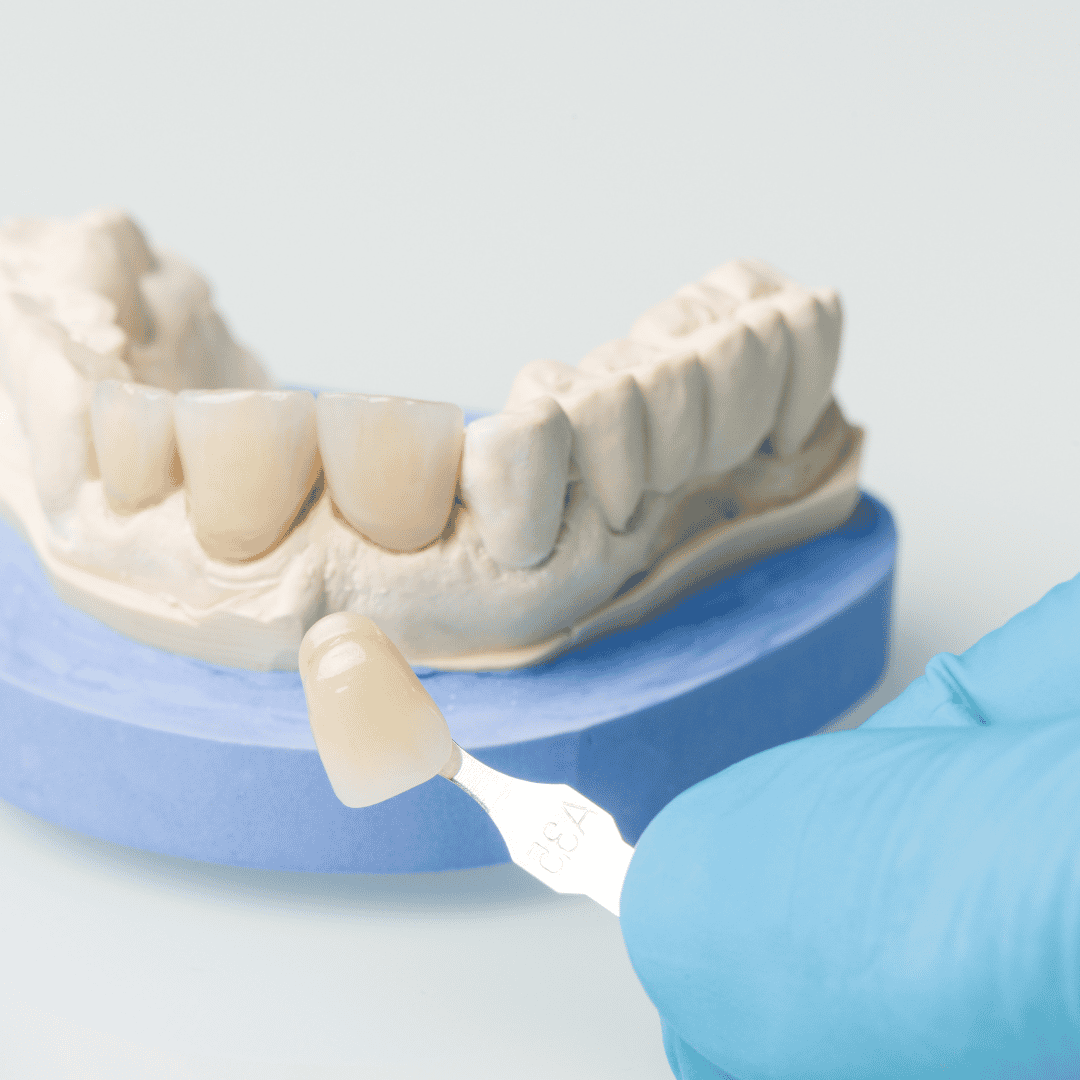
Ask what happens if the first examination finds decay, gum disease, a cracked tooth or a bite problem. Such findings may change the recommended treatment or require additional care. Also ask whether the quoted material is a specific type of porcelain, another ceramic or zirconia, and whether the proposed veneer design is appropriate for your teeth. Veneers usually involve removal of some enamel. A clinician should explain that trade-off, the alternatives and the possibility of future replacement before you agree to treatment.
Los Algodones is close to the Andrade, California, port of entry. That makes a same-day border crossing practical for some people driving from the Southwest or connecting through the Yuma area. It does not make fabrication instantaneous. The number of visits depends on your examination, preparation, laboratory schedule and final fit. If you live far from Arizona or southeastern California, airfare, lodging and time off can change the arithmetic substantially.
Check 03 · Compare like with like
Five Mexico destinations, one consistent question
The ordering below is an editorial starting point for a U.S. patient focused on self-pay value and practical access, not a ranking of individual dentists or clinical results. The comparison framework gives cost and overall value the most weight, followed by provider qualifications and licensing, then materials and diagnostic quality, aftercare, travel access and clarity of inclusions. Reliable, comparable clinic-level evidence is not supplied for those clinical factors. A well-documented provider in any of these cities could be a better fit than a poorly documented provider in the city listed first.
| Editorial order | Destination | Estimated veneer fee per tooth | Cost or access point to check |
|---|---|---|---|
| 1 | Los Algodones | $250–$550 | Border access may reduce lodging needs for some travelers. Imaging, temporaries and related care may be extra. |
| 2 | Tijuana | $300–$650 | Another border option. Confirm design, consultation, laboratory and temporary-veneer fees. |
| 3 | Guadalajara | $300–$650 | Allow for flights and a stay. Preliminary dental work and imaging may be separate. |
| 4 | Cancun | $350–$700 | Travel and accommodation are generally separate unless a package says otherwise. |
| 5 | Mexico City | $350–$750 | Confirm consultation, imaging, laboratory and temporary-veneer charges. |
All amounts are approximate self-pay estimates in U.S. dollars. The ranges cover different veneer materials and may not represent equivalent treatment plans. Actual quotes vary by material, laboratory, dentist, case complexity, tooth count and included services.
For context, the estimated U.S. range for porcelain veneers is $925–$2,500 per tooth. A Mexico quote for zirconia and a U.S. quote for porcelain are not a clean price comparison simply because both are called veneers. Ask each dentist to explain the recommended material, why it fits your case and what the written price covers. The cheapest line in a table cannot tell you who will assess your gums carefully or help if your bite feels wrong after placement.
Check 04 · Proof before payment
A polished quote is not a credential check
Ask for the treating dentist’s full name and Mexican professional license number, known as a cédula profesional. Mexico’s professional-license lookup provides a way to check the information given to you. If a clinic names an accreditation or specialist credential, ask which organization issued it and verify it with that organization. Accreditation, licensing and a dentist’s experience answer different questions. None should be inferred from attractive photographs or from the number of veneers a clinic advertises.
Discuss infection control in concrete terms. Who sterilizes reusable instruments, and how are sterilization procedures monitored? Are single-use items discarded after use? What procedures are followed between patients? The U.S. Centers for Disease Control and Prevention publishes dental infection-prevention guidance that can help you frame these questions. A patient cannot audit a clinic from a website alone, but a provider should be willing to explain its processes without treating basic safety questions as an inconvenience.
Quality also begins before a tooth is prepared. Ask whether the dentist will examine the gums, evaluate decay and existing restorations, review your bite, and explain how much tooth structure may be removed. Discuss grinding or clenching if either applies to you. Ask who makes the veneers, how color and shape will be approved, and whether you will be able to assess the fit before final bonding. The American Dental Association’s patient information explains that veneers are not right for everyone and that ongoing oral hygiene remains necessary.
A materials claim should be specific enough to be useful. “Ceramic” describes a broad category, while different products and techniques can have different indications. A good discussion connects material choice to your teeth, the desired appearance and how the restoration will be maintained. Your own dentist or another qualified clinician can help you understand alternatives if a treatment plan feels rushed or unclear.
Check 05 · The travel ledger
Write down the cost of crossing twice
For a Los Algodones trip, start with transportation from your actual front door. A person driving from Phoenix faces a different bill from someone flying from the Midwest, renting a car and booking a hotel near Yuma. Add fuel or airfare, parking, car rental, meals, lodging, any companion’s travel and the wages or paid leave used for appointments. Leave space for a second visit if the treatment plan calls for separate preparation and placement days. Do not assume that “close to the border” means one appointment will finish every case.
Check current U.S. reentry document rules before leaving. For U.S. citizens returning by land, accepted documents can differ from those required for air travel. A valid U.S. passport book is a straightforward option, while other eligible documents may be accepted for land entry under federal rules. Confirm your own situation with U.S. Customs and Border Protection rather than relying on an old travel checklist. Border wait times can change, so avoid scheduling a nonrefundable flight immediately after an appointment.
Then budget for aftercare, not just the planned trip. Ask whether a post-placement bite adjustment is included, how soon it can be performed and what happens if you are already back in the United States. A local U.S. dentist may charge for an examination or adjustment of work placed elsewhere, and may be unwilling to alter a restoration without evaluating it first. Your travel clinic’s guarantee, if offered, may cover certain clinical work while excluding transportation, accommodation, missed work or treatment by another dentist. Read its terms, duration and exclusions before paying a deposit.
Keep copies of your examination findings, X-rays or scans, material details, consent forms and final treatment record. Ask how they will be shared securely with a U.S. dentist if follow-up is needed. If you develop pain, swelling or another concerning symptom after travel, contact a clinician promptly rather than waiting for a convenient return trip. Travel plans should never dictate whether you seek needed care.
Check 06 · The cost of waiting
Not every delay costs money in the same way
There is no automatic medical penalty for taking time to compare elective veneer quotes. In fact, time spent checking credentials, reviewing alternatives and requesting complete prices can prevent a rushed decision. A person whose teeth and gums are healthy may reasonably decide to postpone cosmetic treatment while saving money. The meaningful distinction is between delaying an elective appearance change and delaying diagnosis or care for an active dental problem.
Put waiting in the ledger if:
- A dentist has identified decay, gum disease, a damaged tooth or pain that needs assessment before veneers.
- Repeated consultations or poorly coordinated appointments would require additional unpaid time off.
- A delayed visit could make an already recommended treatment more involved, according to your clinician.
No article can predict that a particular untreated tooth will worsen or assign a dollar amount to that possibility. The responsible move is to ask your own clinician what needs prompt attention, what can safely wait and what the alternatives cost. If a U.S. dentist recommends treatment before cosmetic work, get that recommendation in writing. It makes a Mexico quote more accurate too, because a veneer package may not include the underlying care.
Lost work is also a real expense, but it is personal rather than a standard clinic fee. Someone paid hourly may need to count each appointment and travel day. Someone with paid time off may still value the days used. A caregiver may have to arrange coverage at home. Give both the U.S. and Los Algodones plans the same treatment in your spreadsheet: count the time required for consultations, preparation, placement and a reasonable follow-up plan.
Check 07 · Ask before saying yes
Questions that make a quote harder to misunderstand
Send the same questions to every office you are seriously considering. Written answers create a fairer comparison than trying to remember what different coordinators said on the phone.
- What is the total estimated price for my proposed number of teeth? Ask for a per-tooth breakdown and a separate list of consultation, examination, imaging, laboratory, temporary-veneer, anesthesia and final-placement charges.
- Which findings could change the estimate? Ask how decay, gum treatment, old restorations, bite concerns or the need for a different type of restoration would be priced and approved before work begins.
- Exactly which material and laboratory process are proposed? Ask who selects the material, who fabricates the veneers and when you can review shape, shade and fit.
- Who will perform each clinical step? Request the treating dentist’s full name, license information and an explanation of the examination and infection-control procedures.
- How many visits should I reserve? Ask what happens if laboratory work takes longer or a temporary veneer needs attention before final placement.
- What happens after I go home? Request the adjustment policy and any guarantee in writing. Ask whether the clinic will coordinate with a local dentist and which costs, if any, it will reimburse.
- What will I owe if I decide not to proceed? Clarify deposit refunds, charges for diagnostic work already completed and how a revised plan will be presented for consent.
- For U.S. care, will insurance contribute to any part of the plan? Ask the office and your insurer about each proposed service separately, including eligible preparatory care, network rules and your expected out-of-pocket amount.
If answers remain vague, pause. A pause is not a rejection of care or of a destination. It is time to get the clinical plan and financial agreement into the same document.
Check 08 · Close the file carefully
What Mara did next
Mara did not book the lower-priced option the day she opened the estimate. She asked her U.S. dentist to separate recommended health-related treatment from elective veneer work. She requested an itemized Los Algodones quote covering the proposed material, diagnostics, temporaries, visits and adjustment policy. She also added travel, time off and a possible follow-up visit to her spreadsheet. Her next decision would depend on those answers and on advice from the clinician examining her teeth, not on a single advertised number.
That is a useful ending even without a destination chosen. A complete comparison protects your budget while leaving room for the factors a spreadsheet cannot decide: whether you understand the treatment, trust the dentist’s explanation and have a workable plan if you need help after placement.
Patient-story note: Mara is a composite created to illustrate the comparison process. No bill, clinic interaction or outcome in her story is presented as a real patient record.






















Share this listing