

Yes, you can explore pancreatic cancer treatment in Mexico if access to specialist review is delayed where you live, but speed should never come at the expense of proper diagnosis, staging, or safety. Pancreatic cancer often requires coordinated care from medical oncology, pancreatic surgery, gastroenterology, radiology, pathology, nutrition, and palliative care specialists.
Before traveling, ask whether the hospital is appropriately licensed in Mexico, whether the treating oncologist holds current professional and specialty credentials, whether the team regularly manages pancreatic cancer, and whether your imaging and pathology can be reviewed in advance. Having your medical records evaluated before booking a flight can help ensure that travel supports, rather than delays, appropriate treatment planning.
Quick Summary: Pancreatic Cancer Treatment in Mexico
- Can you explore Mexico? Yes. A private oncology center may be able to review records and discuss availability sooner, but no provider should promise treatment before confirming diagnosis, stage, resectability, and fitness for therapy.
- Estimated cost: There is no reliable standardized national self-pay price for pancreatic cancer treatment in Mexico. Costs depend on surgery, chemotherapy drugs, radiation, pathology, molecular testing, ICU needs, and length of stay. Request an itemized USD quote for your exact case.
- Safety: Look for a facility with appropriate Mexican health-service authorization, a verified oncology team, emergency capability, pathology and imaging access, and a clear complication-transfer plan.
- Doctor credentials: For oncology care, verify current specialist certification through the Consejo Mexicano de Oncología where applicable and confirm the surgeon’s specific pancreatic surgery experience.
- Recovery: There is no single recovery time. Pancreatic surgery can require substantial recovery, while chemotherapy is delivered in repeated cycles and may continue for months depending on the treatment plan.
- Important caution: Do not travel if doing so will delay urgent biliary drainage, treatment of infection, control of severe symptoms, or another intervention your current team says is medically necessary.
Can Pancreatic Cancer Treatment in Mexico Help You Avoid a Long Wait?
Mexico can be worth exploring when your main problem is access: you already have a suspected or confirmed pancreatic cancer diagnosis, but the next specialist consultation, multidisciplinary review, biopsy, staging work-up, or treatment discussion is many weeks away. The useful question is not simply whether Mexico is faster. It is whether a qualified pancreatic cancer team can review your case promptly and move you into the right evidence-based pathway without repeating unnecessary tests or creating gaps in care.
Pancreatic cancer is not one disease with one treatment. The most common form, pancreatic ductal adenocarcinoma, is generally managed according to whether it is resectable, borderline resectable, locally advanced, or metastatic. Pancreatic neuroendocrine tumors are biologically different and can require a different treatment approach. That distinction alone is a reason to send pathology, imaging, and clinical records before making travel plans.
Why patients may consider pancreatic cancer care in Mexico
- To seek an earlier specialist review when local appointments are delayed.
- To obtain a second opinion on whether a pancreatic tumor may be surgically removable.
- To compare private treatment pathways and self-pay costs.
- To access coordinated testing and oncology consultations in one location.
- To be geographically closer to home than other international destinations, especially for some North American patients.
- To discuss a treatment plan while preserving continuity with an oncologist at home.
How Pancreatic Cancer Treatment in Mexico Is Planned by Stage
The central treatment decision is usually whether the tumor can be removed completely and whether cancer has spread elsewhere. A pancreatic surgeon should review contrast-enhanced imaging together with oncology and radiology specialists before a major operation is recommended. For some borderline resectable cancers, systemic therapy may be given before surgery. For locally advanced or metastatic disease, systemic therapy is often central to treatment, with radiation or procedures used selectively.
| Clinical situation | What it generally means | Treatment discussions may include | What to confirm before travel |
|---|---|---|---|
| Resectable | Imaging suggests the cancer may be completely removable. | Surgery with systemic therapy before or after surgery, depending on the case. | Pancreatic surgeon review, operative volume, ICU access, pathology, complication management. |
| Borderline resectable | The tumor may involve nearby vessels in a way that makes immediate surgery uncertain. | Systemic therapy first, sometimes radiation, followed by reassessment for surgery. | Whether vascular and pancreatic surgery expertise is available and how resectability is defined. |
| Locally advanced | Cancer has not necessarily spread to distant organs but cannot currently be removed safely. | Systemic therapy; selected patients may also discuss radiation or later surgical reassessment. | Treatment goal, regimen rationale, response-assessment schedule, symptom support. |
| Metastatic | Cancer has spread to distant sites such as the liver or other organs. | Systemic treatment, biomarker-guided options in selected cases, clinical trials, and symptom-focused care. | Molecular testing, treatment goals, expected toxicities, emergency access, and follow-up at home. |
Current pancreatic cancer survival context
Current U.S. SEER data show why accurate staging matters: five-year relative survival differs substantially by extent of disease. These population statistics cannot predict what will happen to one person, and they should not be used to compare individual hospitals or countries.
Source context: American Cancer Society 2026 survival page using SEER data for people diagnosed in 2015–2021.
What Tests Should Be Completed Before Pancreatic Cancer Treatment in Mexico?
A fast international second opinion works best when the receiving team can review a complete case rather than reconstruct it after you arrive. Before travel, ask exactly which records the Mexican center wants and whether its specialists can perform a remote chart review. This can reduce duplicate testing and identify missing information early.
Pancreatic Cancer Diagnosis and Pathology
- Pathology report
- Biopsy slides or digital pathology, if available
- Procedure report from EUS or other biopsy method
Pancreatic Cancer Imaging and Staging
- Recent contrast CT or MRI images, not only the written report
- Prior scans for comparison
- Any PET or additional imaging already performed
Clinical Information for Pancreatic Cancer Care
- Blood tests and liver function
- Current medications and allergies
- Weight loss, jaundice, pain, diabetes, and nutrition history
Pancreatic Cancer Treatment-Selection Data
- Inherited genetic testing results, if done
- Tumor biomarker or molecular testing for advanced disease, if done
- Previous chemotherapy or radiation records
Current NCI information notes that people with pancreatic cancer are generally recommended to have testing for inherited genetic changes, and patients with advanced or metastatic disease may also benefit from tumor biomarker testing because results can affect treatment options. Ask whether the Mexican center performs these tests in-house, sends them to an outside laboratory, or can use results from your home country.
What Pancreatic Cancer Treatments Are Available in Mexico?
Evidence-based pancreatic cancer care in Mexico can include the same broad treatment categories used internationally: surgery, chemotherapy, radiation therapy, supportive procedures, symptom control, and selected biomarker-directed treatments. The appropriate combination depends on tumor type, stage, resectability, prior therapy, performance status, organ function, and treatment goals.
| Treatment | When it may be discussed | Questions to ask a Mexican provider |
|---|---|---|
| Pancreatic surgery | For tumors considered resectable or selected borderline cases after multidisciplinary review. | Who will operate? How many pancreatic resections does the surgeon and hospital perform? Is vascular reconstruction available? Is ICU care on-site? |
| Chemotherapy | Before surgery, after surgery, or for locally advanced and metastatic disease. | What regimen is recommended and why? Which drugs are included? How are side effects and infections managed? Can treatment continue at home? |
| Radiation therapy | Selected locally advanced or borderline situations, symptom control, or other individualized indications. | What is the treatment goal? What technology is used? How many fractions? How will the plan integrate with systemic therapy? |
| Biliary stenting or drainage | When a tumor blocks bile flow and causes jaundice or related complications. | Is ERCP available? Who manages infection or stent blockage? Will drainage be required before systemic therapy or surgery? |
| Supportive and palliative care | At any stage to manage pain, nutrition problems, digestive symptoms, fatigue, anxiety, and quality of life. | Is pain management available? Is there oncology nutrition support? How are pancreatic enzyme needs or diabetes addressed? |
Be especially cautious when a center markets an intervention as a cure, “natural replacement” for standard treatment, guaranteed immunotherapy, unproven cell therapy, or a protocol that supposedly works for every pancreatic cancer patient. A legitimate oncology team should be able to explain the evidence, regulatory status, realistic goal, alternatives, expected toxicities, and what happens if the cancer progresses.
What Does Pancreatic Cancer Treatment in Mexico Cost?
There is no single reliable national price for pancreatic cancer treatment in Mexico, so a flat “package cost” can be misleading. A patient who needs only a second opinion has a very different financial profile from someone undergoing a Whipple procedure, an ICU stay, adjuvant chemotherapy, radiation, molecular testing, or treatment for metastatic disease. Because the attached brief requires verified pricing, unsupported dollar figures should not be invented.
| Cost component | Mexico private self-pay estimate | Why the amount varies |
|---|---|---|
| Oncology second opinion | Information not available as a standardized national USD figure | Specialist, record review complexity, telemedicine versus in-person review |
| Pathology and imaging review | Information not available as a standardized national USD figure | Need for repeat biopsy, outside slide review, CT/MRI protocol, contrast, radiologist review |
| Pancreatic surgery | Case-specific written quote required | Procedure type, surgeon, operating time, ICU, complications, blood products, length of stay |
| Chemotherapy | Case-specific written quote required | Drug regimen, dose, cycle count, brand/generic availability, infusion fees, labs, supportive medications |
| Radiation therapy | Case-specific written quote required | Planning, technology, number of fractions, imaging guidance, concurrent therapy |
| Genetic and tumor biomarker testing | Case-specific written quote required | Panel size, local versus send-out laboratory, tissue availability, counseling |
Pancreatic Cancer Cost Comparison: Mexico vs Home-Country Care
A trustworthy Mexico-versus-home-country comparison cannot be reduced to one national dollar figure because pancreatic cancer care is individualized and payment systems differ. U.S. patients may face insurer-negotiated or self-pay prices, while eligible patients in Canada or the United Kingdom may receive publicly funded care. For a useful comparison, obtain the same clinical plan and compare what you would personally pay.
| Care setting | Comparable national USD price? | What the patient should compare |
|---|---|---|
| Mexico private care | No standardized pancreatic cancer package price | Case-specific USD quote, inclusions, complication policy, follow-up, travel and lodging |
| United States | No single patient-pay national figure | Deductible, coinsurance, network status, drug coverage, travel to a high-volume center, out-of-pocket maximum |
| Canada or United Kingdom | Public coverage makes a simple self-pay comparison inappropriate | Eligibility, local wait, travel costs, private second-opinion costs, and how overseas treatment affects follow-up |
What an itemized pancreatic cancer quote should show
- Hospital, surgeon, anesthesiology, pathology, imaging, and laboratory fees separately
- Drug names and whether the quote covers one cycle or a full planned course
- Expected inpatient days and the cost of extra hospital or ICU days
- Blood products, stents, drains, devices, or disposable surgical supplies
- Molecular testing and pathology review
- Management of complications and whether emergency readmission is included
- Follow-up consultations after you return home
- Travel, accommodation, caregiver expenses, and local transportation
How to Choose a Pancreatic Cancer Hospital in Mexico
For pancreatic cancer, hospital capability matters as much as appearance, concierge service, or international marketing. Major pancreatic surgery can involve bleeding, infection, delayed gastric emptying, pancreatic leak, biliary complications, nutrition problems, and the need for critical care. A center offering pancreatic surgery should be able to explain how it manages these risks and what happens if a complication develops at night or on a weekend.
| Hospital check | What to request | Why it matters for pancreatic cancer |
|---|---|---|
| Mexican health-service authorization | Ask for the facility’s applicable sanitary authorization or licensing details and the issuing authority. | Confirms that the facility is operating within the relevant Mexican regulatory framework. |
| CSG certification status | Check whether the establishment appears in the current Consejo de Salubridad General certification resources. | Provides an additional quality signal, although it should not replace case-specific clinical vetting. |
| Pancreatic surgery experience | Ask how many Whipple procedures and other pancreatic resections the hospital performs each year. | Complex pancreatic surgery is safer when performed by experienced teams at experienced centers. |
| Multidisciplinary review | Confirm access to medical oncology, pancreatic surgery, radiology, pathology, gastroenterology, radiation oncology, nutrition, and palliative care. | Treatment sequencing and resectability decisions are often multidisciplinary. |
| Emergency capability | Ask about 24/7 emergency coverage, ICU access, blood bank support, interventional radiology, endoscopy, and transfer agreements. | Cancer treatment and pancreatic surgery can cause urgent complications. |
| Continuity plan | Ask for a written discharge summary, operative note, pathology, imaging, medication list, and direct physician contact for your home team. | Cross-border care fails when records and responsibility are unclear after discharge. |
International accreditation can be an additional signal when genuinely applicable, but it is not a substitute for Mexican regulatory compliance, specialist credentials, pancreatic cancer experience, and transparent outcomes. For a high-risk operation, ask about actual pancreatic surgery volume and complication management rather than accepting a general claim that the hospital is “internationally accredited.”
How to Verify a Pancreatic Cancer Doctor or Surgeon in Mexico
You should verify the individual doctor, not only the hospital brand. The Consejo Mexicano de Oncología maintains a directory of certified oncology specialists and evaluates physicians in specialties including medical oncology and surgical oncology. For pancreatic surgery, also ask about the surgeon’s formal specialty training and specific hepatopancreatobiliary or pancreatic case experience.
- Confirm full name and specialty. Do not rely on a coordinator’s statement that someone is an “oncology expert.”
- Verify current specialist certification. Search the relevant Mexican specialty-board directory where applicable.
- Ask for pancreatic case volume. For a Whipple procedure, ask how many the surgeon personally performs and how many the hospital performs each year.
- Ask who makes the resectability decision. It should not be based only on one scan summary or a salesperson’s interpretation.
- Request complication data carefully. Ask how the team defines and tracks major postoperative complications, reoperation, mortality, readmission, and pancreatic fistula.
- Clarify follow-up responsibility. Know who will answer urgent questions after you return home.
Who Considers Traveling to Mexico for Pancreatic Cancer Care?
Reliable national data showing the exact origin country, age, gender, and treatment type of international pancreatic cancer patients traveling to Mexico are not publicly available. It would therefore be misleading to invent a percentage for Americans, Canadians, Europeans, or other groups. Geography and private-care access make Mexico a practical country to consider for some North American patients, but that is a logistical observation, not a pancreatic-cancer travel statistic.
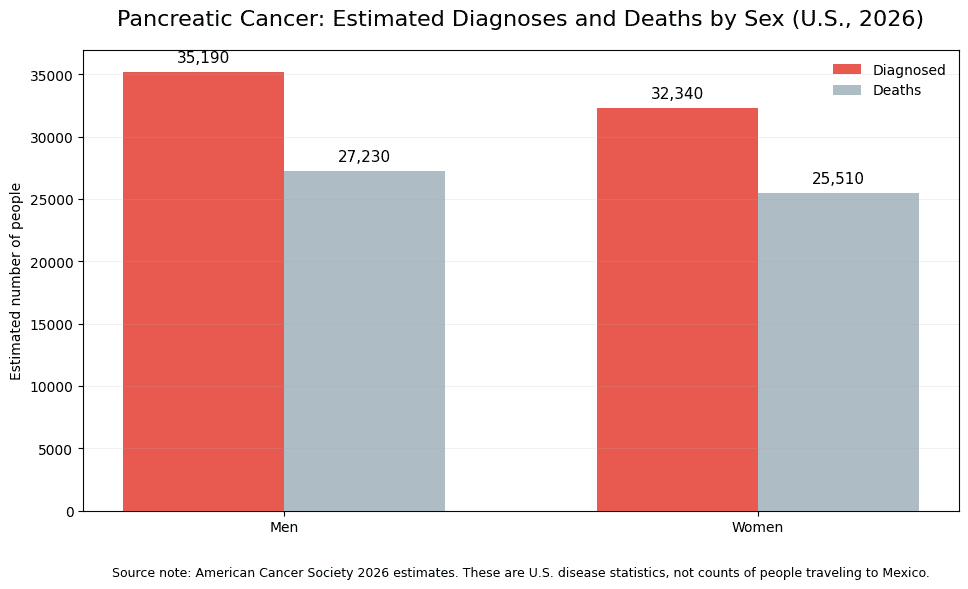
For general disease context, current U.S. data show pancreatic cancer is primarily diagnosed in older adults. SEER reports a median diagnosis age of 71, with the largest share of new cases among people aged 65–74. This matters for medical travel because older adults may also have diabetes, cardiovascular disease, frailty, weight loss, or other conditions that affect surgical risk and flight planning.
Stable enough to travel, records available, a clear reason for seeking Mexico, and a home clinician willing to coordinate follow-up.
Severe jaundice, infection, uncontrolled pain, dehydration, blood-count problems, breathing difficulty, or immediate need for an urgent procedure.
How to Coordinate Pancreatic Cancer Treatment in Mexico Safely
Cross-border cancer care should be planned as one continuous pathway, not as two disconnected episodes. Before leaving home, ask your current oncologist what cannot safely wait and whether you are fit to fly. Before leaving Mexico, make sure your home team can access the complete medical record and knows what follow-up is required.
| Timeframe | Biological or clinical process | Patient sensation | Activity level | Action required |
|---|---|---|---|---|
| Before booking | Diagnosis and stage are being clarified. | Symptoms may vary from mild to significant. | Depends on current condition. | Remote record review, travel fitness check, confirm provider credentials and exact purpose of travel. |
| Arrival in Mexico | Specialists confirm pathology, imaging, resectability, and treatment plan. | Fatigue, pain, appetite changes, jaundice, or no major symptoms. | Light activity as tolerated. | Do not start treatment until consent, diagnosis, stage, goals, alternatives, and costs are clear. |
| During systemic therapy | Chemotherapy is delivered in cycles with recovery periods. | Fatigue, nausea, appetite changes, neuropathy, diarrhea, or blood-count effects can occur depending on regimen. | Variable; avoid overexertion. | Know the emergency number and fever/infection plan; coordinate next cycle before travel home. |
| After pancreatic surgery | Healing, digestive adaptation, nutrition recovery, and monitoring for postoperative complications. | Pain, fatigue, reduced appetite, bowel changes, or weakness may occur. | Gradual, clinician-guided increase. | Do not book an early return flight without surgeon clearance; get operative, pathology, and discharge records. |
| Back home | Ongoing treatment, wound monitoring, nutrition care, imaging, or surveillance may be needed. | Recovery or treatment effects can persist. | As advised by home and Mexico teams. | Transfer records immediately and confirm who manages complications, prescriptions, and further treatment. |
CDC guidance on medical tourism emphasizes continuity of care, access to provider licensing information, planning for complications, and arranging follow-up before travel. This is particularly important in pancreatic cancer because treatment may extend over multiple cycles or require postoperative monitoring long after the international trip ends.
Questions to Ask Before Choosing Pancreatic Cancer Treatment in Mexico
A provider that can answer difficult questions clearly is usually more useful than one that sends only a price and an arrival date. Send these questions in writing and keep the answers with your medical records.
- Has a pathologist reviewed my biopsy, and is the exact pancreatic tumor type confirmed?
- Has a pancreatic radiologist reviewed the actual imaging files?
- Is my cancer considered resectable, borderline resectable, locally advanced, or metastatic, and why?
- Will my case be discussed by a multidisciplinary tumor board?
- If surgery is recommended, how many pancreatic resections does the surgeon and hospital perform each year?
- What is the goal of treatment: cure, disease control, shrinking the tumor before surgery, or symptom relief?
- Should I have inherited genetic testing and tumor biomarker testing before treatment?
- What complications are most relevant to the treatment you recommend, and how are they managed?
- What exactly is included in the written USD quote, and what could create extra charges?
- How will treatment continue if I return home after surgery or between chemotherapy cycles?
- Who can my home oncologist contact directly if there is a complication or question?
- What alternatives do I have if I choose not to receive the proposed treatment in Mexico?
Frequently Asked Questions About Pancreatic Cancer Treatment in Mexico
Can I go to Mexico if my pancreatic cancer treatment is delayed at home?
Yes, you can explore a qualified Mexican oncology center for a faster consultation or second opinion. The safest approach is to send records first and confirm that travel will not delay an urgent local procedure. A faster appointment is useful only when diagnosis, staging, resectability, and treatment planning remain evidence-based.
How quickly can pancreatic cancer treatment start in Mexico?
There is no reliable national waiting-time guarantee for private pancreatic cancer care in Mexico. Timing depends on record review, biopsy confirmation, staging, specialist availability, medical fitness, and the proposed treatment. Ask a provider for the earliest consultation and a realistic treatment date only after its team has reviewed your medical information.
Can I have a Whipple procedure for pancreatic cancer in Mexico?
Whipple surgery may be available at Mexican centers with pancreatic surgery capability, but eligibility depends on tumor location, spread, blood-vessel involvement, and your health. Before choosing a hospital, verify the surgeon’s pancreatic case volume, hospital experience, ICU access, complication management, pathology support, and multidisciplinary review process.
Is pancreatic cancer treatment cheaper in Mexico than in the United States?
Private care in Mexico may be quoted differently from U.S. care, but there is no standardized national pancreatic cancer price that supports a safe blanket savings claim. Compare itemized USD quotes covering surgery, hospital stay, ICU, drugs, pathology, imaging, molecular testing, complications, travel, lodging, and follow-up rather than comparing headline prices.
How do I know if a pancreatic cancer hospital in Mexico is properly regulated?
Ask the hospital for its applicable Mexican sanitary authorization or licensing information and verify current quality credentials where possible. You can also check Consejo de Salubridad General certification resources. Regulatory status is only one layer; pancreatic surgery volume, oncology expertise, emergency capability, transparent outcomes, and continuity planning also matter.
How can I verify an oncologist in Mexico?
Request the doctor’s full name, specialty, and current certification details. The Consejo Mexicano de Oncología maintains a directory of certified oncology specialists. For a pancreatic surgeon, go further and ask about formal surgical training, pancreatic and hepatopancreatobiliary experience, annual case volume, complication management, and the hospital where operations are performed.
Should I get genetic testing before pancreatic cancer treatment in Mexico?
Current NCI information states that people with pancreatic cancer are generally recommended to have testing for inherited genetic changes. For advanced or metastatic disease, tumor biomarker testing can also help identify treatment possibilities. Ask whether testing should be completed before treatment and how results will change the proposed plan.
Can I receive chemotherapy in Mexico and continue it at home?
Sometimes, but coordination is essential. Your home oncologist must be willing and able to continue the regimen, and the records should clearly state drug names, doses, dates, toxicities, laboratory results, and response-assessment plans. Insurance, drug availability, and local prescribing requirements can also affect whether the same treatment can continue seamlessly.
Should I travel to Mexico before my biopsy is confirmed?
Usually, the safer approach is to clarify what diagnostic step is still needed and whether it can be completed promptly at home or at the destination center. A suspected pancreatic mass is not automatically pancreatic adenocarcinoma. Treatment decisions can change substantially based on pathology, stage, tumor type, and whether the disease is surgically removable.
What records should I send for a pancreatic cancer second opinion in Mexico?
Send your pathology report, biopsy procedure report, actual CT or MRI images, radiology reports, recent laboratory results, medication list, treatment history, and discharge summaries. Include genetic or tumor biomarker results if available. Ask the receiving team whether it also needs pathology slides, DICOM imaging files, or translated documents before reviewing your case.
What should make me cautious about a pancreatic cancer clinic in Mexico?
Be cautious if a clinic guarantees a cure, recommends treatment before reviewing pathology and imaging, refuses to identify the treating physician, cannot explain regulatory status, avoids discussing complications, or sells unproven therapy as a replacement for standard oncology care. Transparent providers should discuss evidence, alternatives, risks, costs, and follow-up.
Is it safe to fly during pancreatic cancer treatment?
Flight safety depends on your condition, recent surgery, blood counts, infection risk, breathing status, hydration, clot risk, and current treatment. Some patients receiving cancer therapy need individualized travel clearance. Ask your treating clinician before flying, especially after major pancreatic surgery or when you have severe symptoms or treatment-related complications.
Compare Pancreatic Cancer Treatment Options in Mexico
PlacidWay can help you request information from providers, compare proposed treatment pathways, understand what is included in a quote, and prepare questions about credentials, timing, and follow-up. A provider still needs to review your medical records before confirming whether a particular treatment is appropriate.
Pancreatic Cancer Treatment Disclaimer
Disclaimer: This information is for educational purposes only and does not replace professional medical advice. Always consult a qualified healthcare provider before making medical decisions.
Pancreatic Cancer Treatment References
- Surgery for Pancreatic Cancer – American Cancer Society
- Advances in Pancreatic Cancer Research – National Cancer Institute
- Key Statistics for Pancreatic Cancer – American Cancer Society
- Cancer Stat Facts: Pancreatic Cancer – National Cancer Institute SEER
- Medical Tourism – CDC Yellow Book
- Licencia Sanitaria de Servicios de Salud – COFEPRIS
- Establecimientos de Atención Médica Certificados – Consejo de Salubridad General
- Directorio de Médicos Certificados – Consejo Mexicano de Oncología










.png)

.png)






.png)
.jpg)








Share this listing