


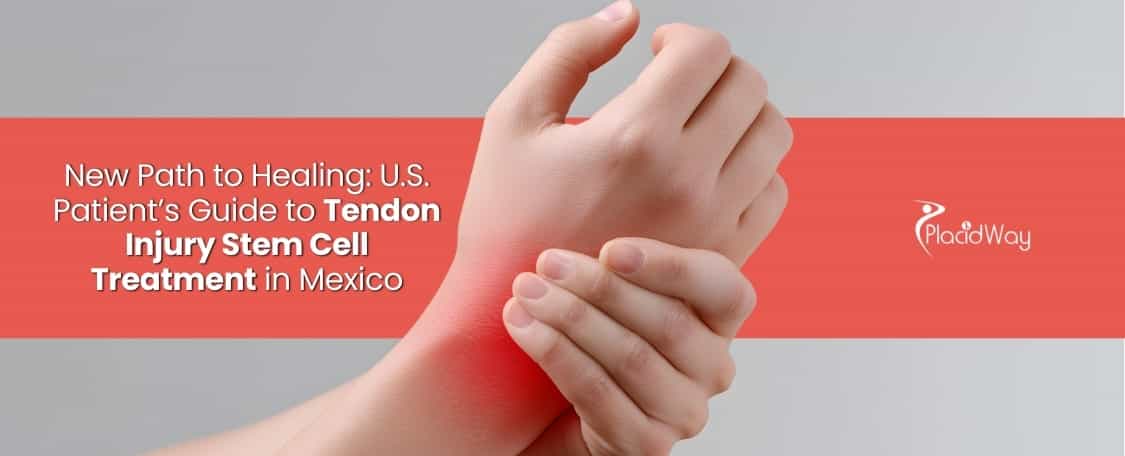
For U.S. patients recovering from tendon tears, repetitive strain, or sports-related injuries, tendon injury stem cell treatment in Mexico is becoming an increasingly attractive option.
Mexico’s regenerative medicine centers offer advanced stem cell protocols aimed at accelerating tissue repair, reducing inflammation, and helping patients regain mobility faster without major surgery.
Key Takeaways
-
Cost Savings: U.S. patients typically save 50%–70% on comprehensive tendon and joint regenerative protocols in Mexico, with treatment costs ranging from $2,500 – $6,500 USD per site.
-
The Treatment Advantage: Mexico offers legal access to Allogeneic (Donor) Stem Cells (Umbilical Cord-Derived MSCs) and expanded cell counts (30M–100M+ cells), which are often restricted by the FDA to low-dose autologous (patient's own) treatments in the U.S.
-
Target Conditions: Highly effective for chronic pain from Rotator Cuff Tears, Achilles Tendinopathy, ACL/MCL support, and Patellar Tendonitis.
-
Logistics & Ease: Clinics in Tijuana and Cancun provide dedicated patient support, fast scheduling, and often offer "Medical Lane" border passes to U.S. residents.
The Regulatory Gap: Why Mexico for Tendon Repair?
For chronic tendon injuries that fail to heal naturally, Mexico provides a pathway to high-dose regenerative medicine that bypasses the long clinical trial process required in the United States.
In the U.S., the FDA regulates processed stem cells as a drug, severely limiting their availability outside of approved clinical trials or minimally manipulated procedures (like same-day bone marrow concentrate). This limits the potency (cell count) that can be administered.
Mexico's regulatory body, COFEPRIS (Comisión Federal para la Protección contra Riesgos Sanitarios), oversees cell procurement and handling, allowing licensed clinics to offer expanded cell products and high-potency Allogeneic Umbilical Cord MSCs for orthopedic use.
Quality vs. Quantity Comparison
|
Feature |
Mexico (COFEPRIS Licensed) |
USA (Non-FDA Trial) |
|---|---|---|
|
Primary Cell Source |
Allogeneic UC-MSCs (Umbilical Cord) |
Autologous BMC/Fat (Patient's Own) |
|
Cell Count Administered |
High (30 Million – 100 Million+) |
Low (Typically < 100,000 unexpanded) |
|
Cost (Single Joint) |
$2,500 – $6,500 USD |
$6,000 – $15,000 USD |
|
Advantage |
Higher regenerative potential due to cell youth and volume. |
Minimal risk of rejection (but lower potency). |
Target Tendon and Ligament Injuries
Stem cell therapy acts as a biological scaffold and signaling mechanism to stimulate the body's natural, though often slow, healing process within injured tendons.
1. Rotator Cuff Tears (Shoulder)
-
Focus: Partial-thickness tears (tendinopathy) where surgical repair is not yet necessary or desired. MSCs are injected to rebuild collagen fibers and reduce pain.
2. Achilles Tendinopathy
-
Focus: Chronic, debilitating inflammation and micro-tearing in the Achilles tendon. MSCs stimulate repair and improve tissue structure, avoiding the need for lengthy surgical recovery.
3. ACL/MCL Support (Knee Ligaments)
-
Focus: Partial tears where the ligament fibers are still partially intact. Stem cells support the natural healing of the damaged fibers, enhancing stability and strength.
4. Chronic Tendinitis (Elbow/Knee)
-
Focus: Conditions like Tennis Elbow or Patellar Tendinopathy that have failed to respond to steroid injections or standard physical therapy.
The Orthopedic Treatment Protocol
Tendon repair protocols in Mexico are minimally invasive, requiring precision image guidance and a short stay of 1–3 days.
The Procedure: Image-Guided Injection
-
Preparation: The site is numbed with a local anesthetic.
-
Visualization: The orthopedic specialist uses high-resolution Ultrasound Guidance to clearly visualize the tendon tear or joint capsule.
-
Injection: The concentrated stem cells (often UC-MSCs combined with PRP/Exosomes) are injected directly into the damaged tendon/ligament, ensuring maximum cellular exposure at the point of injury.
-
Discharge: Patients are typically discharged within an hour and given anti-inflammatory instructions.
Post-Treatment & Rehabilitation
The regenerative process takes time. Patients are advised:
-
Week 1-2: Relative rest, limited weight-bearing activity, avoiding stretching or placing tension on the treated tendon.
-
Month 1-3: Begin targeted, gentle physical therapy focused on strength building to stabilize the newly forming tissue.
-
Long-term: Peak pain relief and functional improvement are usually achieved 3–6 months after the procedure.
Travel Logistics for U.S. Patients
1. Tijuana (West Coast Access)
-
Convenience: Ideal for patients in Southern California, Arizona, and Nevada.
-
Logistics: Clinics offer shuttle services from the San Ysidro border crossing and the use of the Medical Lane (FastLane) pass to expedite return crossing into the U.S.
2. Cancun (East Coast Access)
-
Convenience: Easily reached via direct flights from major U.S. hubs.
-
Logistics: Many clinics offer "recuperative packages" that include resort stays, allowing patients to combine treatment with a relaxing break.
Frequently Asked Questions (FAQ)
Will my U.S. insurance cover the cost? No. Stem cell therapy for orthopedic injuries remains classified as investigational by the FDA, meaning Medicare and major private insurers (Blue Cross, Cigna, etc.) do not cover the procedure, whether performed in the U.S. or Mexico. It is an out-of-pocket expense.
Are Allogeneic (Donor) Stem Cells safe? Yes. Allogeneic UC-MSCs are considered immune-privileged, meaning they do not trigger a rejection response. Reputable Mexican clinics adhere to strict GMP standards for donor screening (HIV, Hepatitis, etc.) and lab sterility, providing a safe product.
How long do I need to stay in Mexico? Most orthopedic procedures require a minimum stay of 2–3 days (arrival, treatment, post-op check-up) to ensure immediate stability and recovery before travel.
How do I verify the clinic's quality? Ask the clinic for proof of their COFEPRIS licensing and documentation (Certificate of Analysis) confirming the viability (>90%) and cell count of the product they intend to inject.
Ready to Explore Your Non-Surgical Option?
PlacidWay specializes in connecting U.S. patients with COFEPRIS-certified orthopedic specialists in Mexico. We ensure transparent pricing and seamless travel coordination, allowing you to focus entirely on your recovery.
We assist with:
-
Specialist Matching: Finding orthopedic surgeons experienced in high-dose UC-MSC tendon repair.
-
Logistics: Arranging transport, accommodation, and obtaining the necessary border crossing information.
-
Price Transparency: Guaranteed package pricing that saves you money without compromising cell potency.

















Share this listing