
Persistent knee, hip, or joint pain from osteoarthritis can affect your ability to walk comfortably, work, exercise, and maintain your daily routine. Some Bangladeshi patients explore osteoarthritis stem cell treatment in Thailand because they are interested in emerging regenerative medicine approaches and want to understand options beyond conventional arthritis management. Before traveling, it is important to understand that stem cell therapy for osteoarthritis is still an evolving area of research.
Current studies are investigating whether certain cell-based treatments may influence pain, inflammation, and joint function, but evidence remains variable and does not confirm guaranteed cartilage restoration or a permanent cure. Bangladeshi patients comparing Thailand with local treatment options should carefully evaluate medical credentials, facility licensing, treatment evidence, laboratory standards, total costs, and follow-up arrangements before making healthcare decisions.
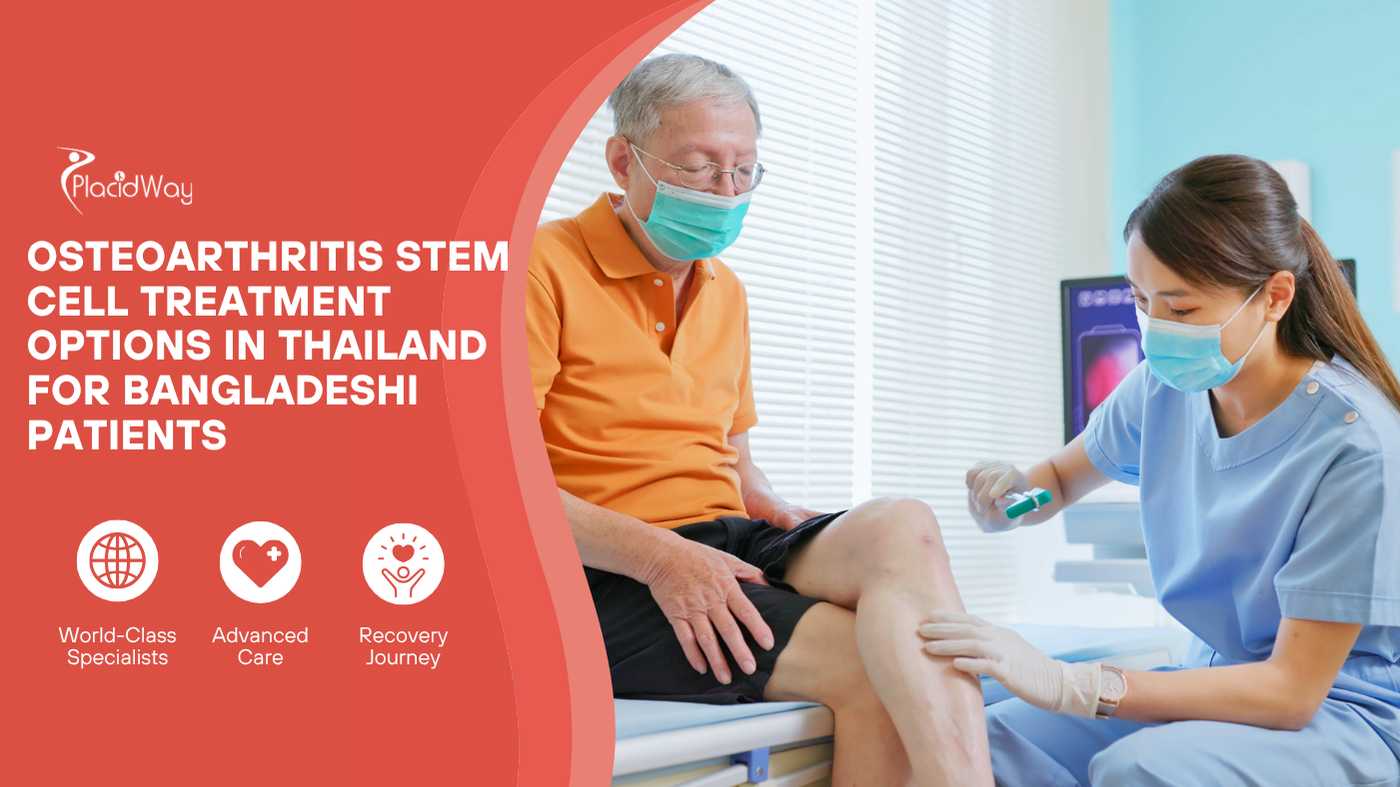
Quick Summary: Osteoarthritis Stem Cell Treatment in Thailand
- Current evidence: Stem cell therapy for osteoarthritis is being studied, particularly for knee osteoarthritis. Research has explored possible effects on pain and joint function, but long-term effectiveness and disease-modifying benefits remain uncertain.
- Cost: There is no standardized international price for osteoarthritis stem cell treatment. Costs depend on the stem cell type, number of injections, medical evaluation, laboratory services, rehabilitation, and travel expenses.
- Safety: Patients should review infection prevention procedures, cell processing standards, physician qualifications, emergency support, and regulatory documentation.
- Potential candidates: Suitability depends on arthritis diagnosis, joint condition, previous treatments, age, overall health, and individual treatment goals.
- Why Thailand: Some Bangladeshi patients consider Thailand because of private healthcare facilities, international patient services, and access to regenerative medicine consultations.
- Regulatory checks: Patients should verify healthcare facility licensing, physician registration, treatment documentation, and applicable Thai regulatory requirements.
- Important caution: Stem cell therapy should not replace established osteoarthritis management without discussion with a qualified healthcare provider.
Understanding Osteoarthritis Stem Cell Treatment in Thailand
Osteoarthritis is a degenerative joint condition that affects cartilage, bones, and surrounding tissues. Cartilage normally helps joints move smoothly by reducing friction between bones. As osteoarthritis progresses, cartilage can become damaged, contributing to pain, stiffness, and reduced mobility.
Stem cell treatment for osteoarthritis involves using cells that researchers are studying for their potential biological effects within damaged joints. Scientists are investigating whether certain cells may influence inflammation, support tissue environments, or contribute to repair processes.
However, osteoarthritis develops through multiple factors, including aging, previous injuries, genetics, body weight, joint mechanics, and inflammation. A single treatment approach may not address every factor involved in joint degeneration.
| Patient Concern | What Patients Should Evaluate |
|---|---|
| Chronic knee pain | Understand whether the treatment goal is symptom improvement or research-based regeneration. |
| Difficulty walking or exercising | Review rehabilitation support and realistic functional expectations. |
| Interest in regenerative medicine | Ask what scientific evidence supports the specific treatment offered. |
| International treatment planning | Verify provider qualifications, regulations, and follow-up options. |
Why Bangladeshi Patients Explore Osteoarthritis Stem Cell Treatment in Thailand
Bangladesh provides access to orthopedic specialists, medications, physiotherapy, and surgical treatments for advanced arthritis. However, some patients explore Thailand because they want to learn about emerging regenerative medicine approaches or compare healthcare options internationally.
Thailand has developed private healthcare services that receive international patients. Some facilities offer regenerative medicine consultations, but patients should evaluate each provider individually because availability does not always indicate proven effectiveness.
- Interest in emerging arthritis treatment research.
- Seeking additional opinions about joint pain management.
- Comparing healthcare costs between countries.
- Access to private hospitals and international patient services.
- Exploring treatment options before considering surgery.
- Looking for coordinated medical travel assistance.
| Bangladesh | Thailand |
|---|---|
| Patients commonly receive arthritis care through local orthopedic and rehabilitation services. | Private healthcare facilities may provide international patient programs. |
| Access to advanced regenerative treatments may vary by provider and availability. | Patients should verify regulatory status and scientific evidence. |
| Follow-up care is closer to home. | Patients need a clear follow-up plan after returning home. |
Understanding Osteoarthritis Before Considering Stem Cell Treatment
Osteoarthritis is the most common form of arthritis and usually develops gradually as joint structures change over time. It commonly affects weight-bearing joints such as the knees and hips but can also involve hands, spine, and other joints.
Symptoms may include pain during movement, stiffness after inactivity, swelling, and reduced range of motion. Diagnosis typically involves medical history, physical examination, and imaging when appropriate.
| Osteoarthritis Factor | Why It Matters |
|---|---|
| Severity of cartilage changes | Treatment options may differ depending on joint condition. |
| Affected joint | Knee, hip, and other joints may have different treatment considerations. |
| Previous treatments | Doctors consider what treatments have already been tried. |
| Overall health | Medical conditions may affect treatment suitability and safety. |
Current Scientific Evidence for Osteoarthritis Stem Cell Treatment
Research into stem cell treatment for osteoarthritis has increased, especially for knee osteoarthritis. Scientists have studied mesenchymal stem cells and other approaches to understand whether they may influence pain, inflammation, and joint function.
Systematic reviews have found that some studies report improvements in pain or patient-reported outcomes, but research quality varies because studies use different cell sources, treatment methods, patient groups, and evaluation methods.
A 2025 Cochrane review reported that stem cell injections may slightly improve pain and function for some knee osteoarthritis patients over shorter follow-up periods, while evidence about longer-term structural changes remains limited.
| Research Question | Current Understanding |
|---|---|
| Can stem cells reduce arthritis pain? | Some studies report possible symptom improvement, but results vary. |
| Can stem cells restore cartilage? | Cartilage regeneration remains under investigation. |
| Are results predictable? | Outcomes depend on patient factors and treatment methods. |
Types of Stem Cell Approaches Studied for Osteoarthritis Treatment
Different cell-based approaches are being investigated for osteoarthritis. Each approach has different biological characteristics, evidence levels, and safety considerations.
| Stem Cell Approach | Research Interest | Patient Question |
|---|---|---|
| Mesenchymal stem cells (MSCs) | Studied for possible effects on inflammation and joint environment. | What evidence supports this specific MSC source? |
| Bone marrow-derived cells | Investigated in orthopedic regenerative medicine studies. | How are cells collected and processed? |
| Adipose-derived cells | Studied for potential joint applications. | What clinical evidence exists for osteoarthritis? |
Bangladeshi Patient Profile Exploring Osteoarthritis Stem Cell Treatment in Thailand
Bangladeshi patients who research osteoarthritis stem cell treatment in Thailand often look for information after experiencing persistent joint pain, reduced mobility, or limited improvement from conventional arthritis management. Most patients interested in regenerative medicine are seeking additional information rather than replacing established medical care.
Patients commonly explore treatment options for knee osteoarthritis because it is one of the most frequently studied joints in regenerative medicine research. However, eligibility depends on medical evaluation, including the severity of cartilage changes, previous treatments, overall health, and personal goals.
| Patient Group | Why They May Research Thailand |
|---|---|
| Adults with knee osteoarthritis | May explore regenerative medicine information when managing chronic knee pain and stiffness. |
| Patients delaying joint replacement | May want to understand emerging treatments before considering surgical options. |
| Active adults with mobility limitations | May seek options related to maintaining daily activities and movement. |
| Older adults managing chronic arthritis | May compare international healthcare options, costs, and treatment availability. |
Why Bangladeshi Patients Compare Thailand and Bangladesh for Osteoarthritis Treatment
Bangladesh has orthopedic specialists, hospitals, physiotherapy services, and conventional arthritis treatments. Some patients still research Thailand because they want access to private international healthcare facilities or want to understand emerging regenerative medicine options.
The decision to travel should involve comparing complete care pathways rather than only comparing treatment prices. Follow-up care, communication after returning home, and management of possible complications are important parts of medical travel planning.
| Comparison Factor | Bangladesh | Thailand |
|---|---|---|
| Healthcare access | Patients commonly access local orthopedic consultation and rehabilitation. | Private hospitals may provide international patient coordination services. |
| Regenerative medicine options | Availability may vary between providers. | Patients should verify the regulatory status of specific stem cell procedures. |
| Follow-up care | Local follow-up may be easier after treatment. | Patients need a plan for communication after returning home. |
| Travel requirements | No international travel arrangements required. | Requires flights, accommodation, and medical travel preparation. |
Thailand Healthcare System and Stem Cell Treatment Regulations
Patients considering osteoarthritis stem cell treatment in Thailand should understand the country’s healthcare oversight structure. Thailand regulates healthcare professionals, hospitals, and medical products through government authorities and professional organizations.
The Medical Council of Thailand oversees physician registration and professional standards. The Thai Food and Drug Administration (Thai FDA) regulates medicines, health products, and certain biological products. Patients should confirm how these regulations apply to the specific stem cell therapy being offered.
| Regulatory Area | What Patients Should Confirm |
|---|---|
| Hospital or clinic licensing | Verify the facility is legally authorized to provide healthcare services. |
| Physician registration | Confirm the doctor is registered with the Medical Council of Thailand. |
| Cell processing standards | Ask how cells are collected, processed, tested, and stored. |
| Treatment classification | Ask whether the treatment is approved, experimental, or research-based. |
| Patient consent | Ensure risks, benefits, alternatives, and limitations are explained. |
Choosing Hospitals for Osteoarthritis Stem Cell Treatment in Thailand
Choosing a hospital or medical center requires reviewing safety systems, healthcare credentials, and transparency about treatment evidence. Patients should evaluate the complete medical environment rather than focusing only on the availability of stem cell therapy.
| Hospital Evaluation Point | Questions Bangladeshi Patients Should Ask |
|---|---|
| Government license | Is the facility licensed under Thai healthcare regulations? |
| Medical team | Who evaluates the arthritis diagnosis and treatment suitability? |
| Laboratory quality | What quality controls exist for cell preparation? |
| Emergency capability | How are complications managed if they occur? |
| Aftercare | How will follow-up happen after the patient returns to Bangladesh? |
Hospital Certifications and Quality Indicators to Review
- Thai healthcare facility licensing requirements.
- Physician registration with the Medical Council of Thailand.
- Documented infection control procedures.
- Clear informed consent documentation.
- Transparent treatment information and cost breakdown.
- Emergency referral or hospital transfer capability.
- Structured follow-up communication plan.
International accreditation, such as Joint Commission International (JCI), may be available at some facilities. However, international accreditation should be considered together with local licensing, physician qualifications, and treatment-specific safety evaluation.
How to Verify Doctors Offering Osteoarthritis Stem Cell Treatment in Thailand
The doctor evaluating or providing stem cell treatment should have appropriate medical qualifications and experience related to arthritis management. Patients should review the physician’s training, registration status, and approach to explaining evidence and risks.
| Credential | Why It Matters |
|---|---|
| Medical registration | Confirms authorization to practice medicine in Thailand. |
| Orthopedic experience | Helps ensure understanding of joint diseases and treatment options. |
| Regenerative medicine knowledge | Allows discussion of current evidence and limitations. |
| Transparent communication | Patients should receive realistic information about possible outcomes. |
Safety Risks and Possible Complications of Osteoarthritis Stem Cell Treatment
Patients should understand possible risks before considering stem cell therapy. The safety profile depends on the type of cells used, preparation methods, injection procedures, and individual health conditions.
| Possible Concern | Explanation |
|---|---|
| Infection | Any injection procedure requires proper infection prevention practices. |
| Inflammatory response | The body may respond differently depending on treatment factors. |
| No expected improvement | Treatment outcomes cannot be guaranteed. |
| Unknown long-term effects | Some regenerative approaches require further research. |
| Travel-related challenges | Patients need planning for follow-up and possible complications after returning home. |
Cost of Osteoarthritis Stem Cell Treatment in Thailand for Bangladeshi Patients
The cost of osteoarthritis stem cell treatment in Thailand depends on multiple factors, including the type of stem cells used, the number of joints treated, diagnostic evaluations, laboratory processing, physician fees, rehabilitation requirements, and services included in the treatment plan.
There is no fixed international price for stem cell therapy because treatment protocols vary between providers. Bangladeshi patients should request an itemized written estimate explaining what is included and what additional expenses may occur during medical travel.
Publicly available examples for knee-related stem cell procedures in Thailand show that costs can vary widely, with some programs listed from several thousand US dollars depending on the treatment design and included services. These figures should be treated as examples rather than guaranteed prices.
| Cost Component | Possible Inclusion | Questions to Ask |
|---|---|---|
| Medical consultation | Review of arthritis diagnosis, symptoms, imaging, and previous treatment history. | Who evaluates whether stem cell therapy is suitable? |
| Diagnostic tests | Imaging, laboratory tests, or additional medical assessments. | Which tests are medically necessary? |
| Stem cell procedure | Cell preparation, administration, and medical supervision. | What cells are used and what evidence supports them? |
| Rehabilitation | Physical therapy guidance and mobility support. | Is rehabilitation included or charged separately? |
| Follow-up care | Post-treatment monitoring and communication. | How will follow-up happen after returning to Bangladesh? |
Thailand vs Bangladesh: Osteoarthritis Stem Cell Treatment Cost Considerations
Bangladeshi patients comparing Thailand with local treatment options should consider the complete healthcare pathway. The final decision should include medical supervision, treatment transparency, travel requirements, rehabilitation planning, and long-term care.
| Factor | Bangladesh | Thailand |
|---|---|---|
| Treatment access | Patients can access local orthopedic evaluation and rehabilitation services. | Private healthcare facilities may provide regenerative medicine consultations. |
| Travel expenses | No international travel costs. | Includes flights, accommodation, transport, and possible companion expenses. |
| Follow-up convenience | Easier access to local healthcare providers. | Requires coordination after returning home. |
| Treatment evaluation | Depends on available local providers. | Patients should verify exact treatment evidence and regulatory status. |
Additional Medical Travel Expenses for Bangladeshi Patients Visiting Thailand
The total cost of traveling for osteoarthritis stem cell treatment includes more than the medical procedure. Planning these additional expenses helps patients understand the full financial commitment.
| Expense Category | Considerations |
|---|---|
| Flights | Costs vary depending on departure city, airline, season, and booking time. |
| Accommodation | Patients may need accommodation during consultation, treatment, and monitoring. |
| Transportation | Includes airport transfers and travel to medical appointments. |
| Companion expenses | Some patients may require family support during travel. |
| Future rehabilitation | Additional physiotherapy may be required after returning home. |
Recovery and Rehabilitation After Osteoarthritis Stem Cell Treatment in Thailand
Recovery after stem cell treatment varies between patients. The timeline depends on the type of procedure, the treated joint, individual health factors, and the rehabilitation plan recommended by the medical team.
Patients should understand that stem cell therapy does not remove the need for ongoing osteoarthritis management. Physical therapy, activity modification, and regular medical follow-up may remain important parts of joint care.
| Timeframe | Clinical Focus | Patient Action |
|---|---|---|
| Immediately after treatment | Monitoring and checking for procedure-related reactions. | Follow medical instructions carefully. |
| Early recovery period | Evaluation of symptoms and mobility changes. | Attend recommended follow-up appointments. |
| Long-term monitoring | Assessment of function and arthritis management. | Continue ongoing joint health care. |
Bangladeshi Patient Checklist Before Choosing Osteoarthritis Stem Cell Treatment in Thailand
Questions to Ask
- What type of stem cells are being used?
- What evidence supports this treatment?
- Is the treatment approved or investigational?
- Who is the treating physician?
- What are possible risks?
- How will follow-up happen after returning home?
Warning Signs
- Guaranteed arthritis cure claims.
- Promises of permanent cartilage restoration.
- No explanation of risks.
- No physician consultation.
- No written cost breakdown.
- Pressure for immediate payment.
Frequently Asked Questions About Osteoarthritis Stem Cell Treatment in Thailand for Bangladeshi Patients
Is osteoarthritis stem cell treatment in Thailand a proven cure for arthritis?
No. Stem cell treatment is not currently considered a proven cure for osteoarthritis. Researchers continue studying whether certain cell-based therapies may influence pain, inflammation, or joint function, but long-term effectiveness and cartilage regeneration remain under evaluation.
Why do Bangladeshi patients consider stem cell therapy for osteoarthritis in Thailand?
Some Bangladeshi patients explore Thailand because they are interested in emerging regenerative medicine approaches, private healthcare services, and international treatment options. Patients should evaluate scientific evidence, safety standards, and provider qualifications before traveling.
How much does osteoarthritis stem cell treatment cost in Thailand?
The cost varies depending on the stem cell type, procedure details, medical evaluation, laboratory services, rehabilitation needs, and travel expenses. Patients should request an itemized written quote before making travel arrangements.
Which type of arthritis is most commonly studied with stem cell therapy?
Research has mainly focused on osteoarthritis, especially knee osteoarthritis. Other arthritis conditions may involve different biological mechanisms and require separate medical evaluation.
Can stem cells rebuild damaged cartilage caused by osteoarthritis?
Researchers are studying whether stem cells may support cartilage-related processes, but current evidence does not confirm predictable cartilage rebuilding for every patient with osteoarthritis.
What should Bangladeshi patients check before choosing a stem cell clinic in Thailand?
Patients should verify healthcare facility licensing, physician registration, treatment documentation, cell processing standards, informed consent procedures, safety protocols, and follow-up arrangements.
Are stem cell injections safe for knee osteoarthritis?
Safety depends on the treatment approach, cell source, medical supervision, and patient health. Possible concerns may include infection, inflammatory reactions, procedure-related complications, and uncertain long-term effects.
Should I stop my arthritis medication before stem cell treatment in Thailand?
Patients should not stop or change prescribed arthritis medications without guidance from their healthcare provider. Medication decisions should be discussed with a qualified medical professional.
How long should Bangladeshi patients stay in Thailand for osteoarthritis stem cell treatment?
The required stay depends on consultation, treatment planning, monitoring, and provider recommendations. Patients should confirm the expected timeline before booking flights and accommodation.
What medical records should I provide before traveling to Thailand for arthritis treatment?
Patients should provide arthritis diagnosis reports, imaging results, previous treatment history, medication details, medical conditions, and any documents requested by the healthcare provider.
Is stem cell therapy better than knee replacement surgery for osteoarthritis?
Stem cell therapy and knee replacement are different treatment approaches. Knee replacement is an established option for selected patients, while stem cell therapy remains an area of ongoing research.
How can I compare osteoarthritis stem cell treatment providers in Thailand?
Patients should compare medical credentials, facility licensing, treatment evidence, safety procedures, total costs, rehabilitation support, and follow-up planning rather than focusing only on price.
Explore Osteoarthritis Treatment Options with PlacidWay
Choosing an international healthcare option requires careful evaluation of treatment information, provider qualifications, costs, safety considerations, and follow-up planning. PlacidWay can help patients compare providers, understand treatment costs, prepare important questions, and review available treatment options. Patients can request information to explore available osteoarthritis treatment options and connect with providers for further evaluation. Medical decisions should always be discussed with qualified healthcare professionals.
Disclaimer
This information is for educational purposes only and does not replace professional medical advice. Always consult a qualified healthcare provider before making medical decisions.
References
- Patient Resources on Stem Cell Treatments – International Society for Stem Cell Research
- Important Patient and Consumer Information About Regenerative Medicine Therapies – U.S. Food and Drug Administration
- Osteoarthritis Information – National Institute of Arthritis and Musculoskeletal and Skin Diseases
- Stem Cell Injections for Knee Osteoarthritis Evidence Review – Cochrane
- Stem Cell Therapy for Osteoarthritis: Current Evidence Review – National Library of Medicine
- Medical Council of Thailand – Physician Regulation Information
.png)










-(6).png)




.jpg)
.jpg)
.jpg)
.jpg)








Share this listing