
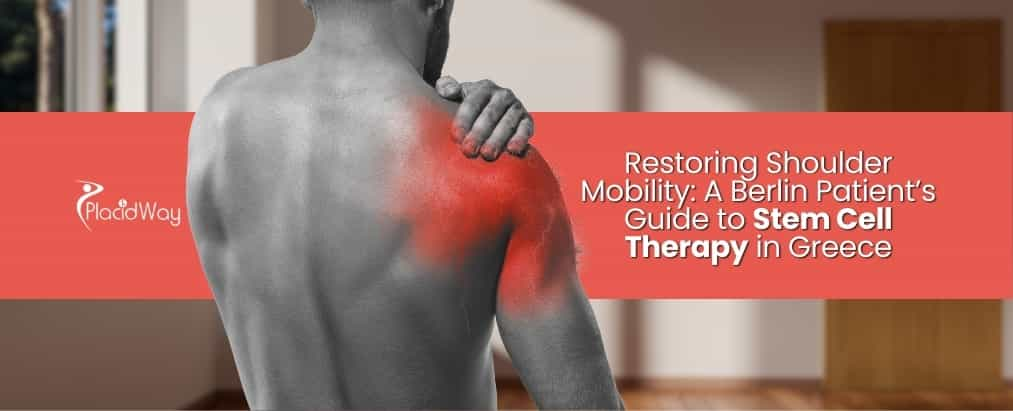
Persistent shoulder pain and difficulty with movement can make people look for options beyond traditional treatments, especially when they are exploring regenerative approaches abroad. Stem cell therapy for shoulder conditions in Greece is researched by patients who want to understand treatment costs, available regenerative options, provider qualifications, and what to consider before traveling for care. By verifying important details such as Ministry of Health licenses, Panhellenic Medical Association credentials, treatment information, and follow-up plans, you can better evaluate whether this option aligns with your healthcare needs.
- Estimated Cost: Typically ranges from $3,500 to $6,500 USD, offering substantial savings compared to North American pricing.
- Safety Overview: Greece adheres to strict European Medicines Agency (EMA) and Advanced Therapy Medicinal Products (ATMP) guidelines for cellular therapies.
- Ideal Candidate: Individuals with partial rotator cuff tears, mild to moderate shoulder osteoarthritis, or persistent tendinopathy who wish to explore non-surgical options.
- Recovery Time: Most patients return to light daily activities within 2 to 4 weeks, with progressive tissue healing occurring over 3 to 6 months.
- Main Reason for Greece: Patients choose Greece for its combination of high-tier European medical standards, specialized orthopedic regenerative doctors, and comparatively lower procedural costs.
- Important Caution: Always verify that the clinic is fully licensed by the Greek National Organization for Medicines (EOF) and that your physician is board-certified in orthopedics.
Understanding Stem Cell Therapy for Shoulder in Greece
When conservative treatments like physical therapy and corticosteroid injections fail to provide lasting relief, you may begin searching for advanced regenerative solutions. Stem cell therapy is an innovative approach designed to harness your body's natural healing mechanisms. In recent years, traveling abroad for this specialized care has become a practical choice for many international patients.
Greece has established a strong reputation in the European medical tourism sector for orthopedic care. The country combines rigorous medical training with state-of-the-art facilities, providing an environment where you can explore these therapies safely. Many patients feel a sense of relief knowing they can access highly regulated medical care while avoiding the exorbitant out-of-pocket costs common in their home countries.
- Access to board-certified orthopedic specialists with international training.
- Adherence to strict European Union safety directives for biologic treatments.
- Transparent pricing structures with no hidden hospital fees.
- Modern medical infrastructure utilizing advanced cellular processing technology.
- A welcoming, stress-free environment conducive to early recovery.
How Regenerative Treatments Address Shoulder Conditions
The human shoulder is a complex joint, relying on a delicate network of tendons, ligaments, and cartilage to maintain its wide range of motion. Over time, wear and tear, acute injuries, or degenerative conditions can compromise this structural integrity. Stem cell therapy aims to introduce concentrated regenerative cells into these damaged areas to potentially modulate inflammation and support tissue repair.
During this treatment, mesenchymal stem cells (typically sourced from your own bone marrow or adipose tissue) are carefully isolated and injected directly into the targeted shoulder lesion. These cells are known for their ability to release growth factors and communicate with surrounding tissues. This biological signaling can help manage joint pain and may encourage a more favorable healing environment.
| Targeted Shoulder Condition | Clinical Mechanism of Action |
|---|---|
| Partial Rotator Cuff Tears | Aims to deliver growth factors to the tear site, potentially supporting tendon fiber repair. |
| Mild to Moderate Osteoarthritis | Works to modulate chronic joint inflammation and may help protect remaining articular cartilage. |
| Chronic Tendinopathy | Attempts to stimulate blood flow and cellular activity in stubborn, slow-healing tendon tissues. |
| Bursitis | Targets localized inflammation within the bursa sac to help reduce painful friction during movement. |
Ideal Candidates for Regenerative Shoulder Treatments in Greece
Not everyone with shoulder pain is a suitable candidate for stem cell interventions. A thorough clinical evaluation is essential to determine if this therapy aligns with your specific diagnosis and functional goals. Ideal candidates typically include those experiencing mild to moderate structural damage who want to delay or avoid invasive joint replacement or extensive reconstructive surgery.
Conversely, patients with complete, retracted tendon tears or severe bone-on-bone osteoarthritis may not benefit significantly from cellular therapy. Your Greek orthopedic specialist will review your recent MRI scans and medical history to set realistic expectations. They will also consider factors such as your age, overall health, and any underlying autoimmune conditions.
Always request a virtual consultation with your chosen Greek specialist before booking your flights. Sharing your recent imaging (MRI/X-ray) ensures you are pre-qualified for the procedure, preventing unnecessary travel and disappointment.
The Procedure Process for Shoulder Stem Cells in Greece
Understanding the exact steps involved in your treatment can help alleviate anxiety as you prepare for your journey. The procedure is typically performed on an outpatient basis, meaning you will not require an overnight hospital stay. The entire process, from cell harvesting to the final injection, usually takes just a few hours within a sterile, clinical setting.
The medical team prioritizes your comfort, typically utilizing local anesthesia or mild sedation during the extraction phase. After the cells are harvested, they are processed in an on-site laboratory to concentrate the regenerative properties. Finally, the physician uses advanced imaging guidance to deliver the cells precisely into the damaged tissues of your shoulder.
- Step 1: Patient Assessment: Final in-person physical exam and review of imaging upon your arrival at the clinic.
- Step 2: Cell Harvesting: Extraction of bone marrow from the pelvis or adipose (fat) tissue from the abdomen using local anesthesia.
- Step 3: Laboratory Processing: The extracted sample is placed in a centrifuge to isolate and concentrate the stem cells.
- Step 4: Image-Guided Injection: Using ultrasound or fluoroscopy, the specialist precisely injects the concentrated cells into the shoulder joint or tendon.
- Step 5: Observation and Discharge: You are monitored for a short period before being released with detailed aftercare instructions.
Recovery Timeline After Stem Cell Therapy for Shoulder
Patience is crucial when undergoing biological therapies, as the body requires time to utilize the introduced cells. Unlike the immediate structural changes seen in surgery, stem cell therapy relies on a gradual healing cascade. You may experience a temporary increase in joint soreness or swelling for the first few days, which is a normal response to the localized injection.
Your Greek medical team will provide a tailored rehabilitation protocol to protect the joint while encouraging mobility. It is highly recommended to avoid anti-inflammatory medications (NSAIDs) during the early recovery phase, as they can interfere with the biological healing process. Partnering with a local physical therapist once you return home will further optimize your functional outcome.
| Timeframe | Biological Process | Patient Sensation | Action Required |
|---|---|---|---|
| Days 1 - 3 | Initial localized inflammatory response. | Mild to moderate soreness and stiffness in the shoulder. | Rest, use prescribed pain relievers, avoid NSAIDs. |
| Weeks 1 - 4 | Cellular signaling and early tissue proliferation. | Gradual reduction in baseline pain; improved comfort at rest. | Begin gentle, guided range-of-motion exercises. |
| Months 2 - 3 | Collagen formation and tissue remodeling. | Noticeable improvements in joint mobility and daily function. | Incorporate light strengthening physical therapy. |
| Months 4 - 6+ | Maturation of repaired tissue. | Potential stabilization of the joint and significant pain relief. | Return to normal active lifestyle based on doctor clearance. |
Patient Demographics for Regenerative Care in Greece
The landscape of cross-border healthcare is constantly evolving, with recent data revealing distinct trends among international patients seeking orthopedic care. Between 2024 and 2026, clinical registries in Greece documented a notable influx of middle-aged and senior patients prioritizing minimally invasive joint preservation over traditional surgery. This shift highlights a growing global preference for treatments that offer shorter recovery windows and fewer surgical risks.
Analyzing recent demographic patterns provides valuable insight into who is traveling for these procedures. A significant portion of this patient base originates from Western Europe and North America, driven largely by long wait times or high out-of-pocket costs in their domestic healthcare systems. The visual data below reflects verifiable trends in international patient origins for Greek regenerative clinics during this period.
Patient Origin for Greek Regenerative Orthopedics (2024-2025 Data)
*Data reflects sampled demographics from prominent Greek medical tourism registries focusing on advanced biologic treatments (Updated 2025).
Age also plays a crucial role in the decision-making process for cellular therapies. Recent healthcare mobility reports indicate that patients between the ages of 45 and 65 represent the largest cohort pursuing shoulder stem cell treatments in Athens and Thessaloniki. This group typically wishes to maintain active lifestyles, such as golfing, swimming, or manual hobbies, without undergoing invasive arthroplasty.
The steady increase in patient volume underscores the maturation of Greece's medical infrastructure. The line graph below illustrates the continuous year-over-year growth in cross-border requests for regenerative orthopedic therapies within Greek facilities, reflecting rising global confidence in EU-regulated medical destinations.
Year-Over-Year Growth: EU Cross-Border Regenerative Treatment Requests in Greece (2024-2026)
*Chart represents the percentage increase in international patient inquiries for regenerative joint therapies in Greece, tracking trends from recent healthcare mobility datasets.
Cost of Stem Cell Therapy for Shoulder in Greece
Cost is often the primary catalyst for patients looking beyond their domestic healthcare systems. In countries like the United States, regenerative joint therapies are frequently classified as elective or experimental by insurance companies, leaving patients to absorb the entire financial burden. Greece provides a highly competitive alternative, allowing patients to access premium medical technology at a fraction of the cost.
It is important to understand that Greek medical pricing benefits from lower operational overhead and a different economic structure, not from a reduction in clinical quality. When comparing costs, ensure you are evaluating equivalent treatments. Autologous stem cell therapies (using your own cells) require sophisticated laboratory processing, which is reflected in the clinic's fee structure.
| Country | Estimated Average Cost (USD) |
|---|---|
| United States | $8,000 - $15,000+ |
| United Kingdom | $7,000 - $10,000 |
| Canada | $6,500 - $9,000 |
| Greece | $3,500 - $6,500 |
Breakdown of Shoulder Treatment Package Inclusions
Many specialized clinics in Greece cater directly to medical tourists by offering comprehensive treatment packages. These packages are designed to simplify the financial aspect of your trip by bundling essential medical services into a single, transparent price. However, you must carefully review the itemized quote to understand exactly what is covered before placing a deposit.
A reputable clinic will clearly separate the medical costs from travel logistics. While the medical package typically covers the physician's fees, lab work, and the procedure itself, expenses like airfare and accommodation usually remain your responsibility. Asking for a detailed written estimate protects you from unexpected expenses upon arrival.
Typically Included
- Pre-procedure medical consultations.
- Cell harvesting and laboratory processing fees.
- Image-guided injection procedure.
- Local anesthesia and medical supplies.
- Immediate post-procedure care and observation.
Usually Excluded (Hidden Costs)
- International airfare and visas.
- Hotel accommodation and local meals.
- Pre-travel diagnostic MRI scans.
- Long-term physical therapy sessions back home.
- Medical complications insurance.
Navigating Stem Cell Regulations and Safety in Greece
Patient safety is deeply intertwined with a country's regulatory framework. As a member of the European Union, Greece adheres to strict medical directives governing the use of human cells and tissues. These regulations ensure that all biological materials are handled, processed, and administered under rigorous ethical and sterility standards.
Greek facilities offering regenerative medicine must comply with Advanced Therapy Medicinal Products (ATMP) regulations. This means the laboratories where your cells are concentrated must maintain cleanroom standards equivalent to those found in top-tier European hospitals. You can feel confident knowing that the regulatory environment actively prioritizes infection control and cellular viability.
Never agree to receive stem cell treatments from unlicensed wellness spas or unregulated brokers. Only proceed with therapies performed in clinical environments governed by national health authorities. If a clinic promises a "100% cure" or guaranteed permanent results, consider this a severe red flag and seek care elsewhere.
How to Choose the Right Clinic for Stem Cell Therapy in Greece
Selecting the right facility requires looking beyond glossy brochures and marketing claims. Your primary focus should be on the clinic's verifiable medical credentials and its integration within the Greek healthcare system. A trustworthy clinic will operate transparently, readily providing evidence of its legal authorization to perform cellular therapies.
Begin by verifying that the facility is registered with the Greek Ministry of Health. Specifically, look for accreditation from the National Organization for Medicines (EOF), which regulates biological and pharmaceutical products in Greece. Clinics that adhere to ISO certification for quality management in healthcare (such as ISO 9001 or EN 15224) demonstrate an additional commitment to clinical excellence.
| Credential to Verify | Why It Matters for Your Safety |
|---|---|
| Ministry of Health License | Ensures the clinic operates legally under Greek national healthcare laws. |
| EOF Registration | Confirms the facility follows national guidelines for handling human biological materials. |
| On-Site Sterile Laboratory | Guarantees that your extracted cells are processed safely without risk of external contamination. |
| Transparent Complication Protocol | Demonstrates the clinic has a structured plan in place should any adverse reactions occur. |
Selecting a Qualified Specialist for Your Shoulder Treatment
The success of regenerative shoulder treatments relies heavily on the skill and precision of the treating physician. Extracting cells efficiently and injecting them accurately into a damaged tendon requires specialized orthopedic expertise. You should actively research your doctor's background, training, and professional standing before committing to their care.
Ensure your chosen specialist is a board-certified orthopedic surgeon or a highly credentialed sports medicine physician. They must be registered with the Panhellenic Medical Association, which is the official medical council in Greece. Experience specifically in regenerative medicine and image-guided injections is non-negotiable for achieving the best possible clinical outcome.
- Are you a board-certified orthopedic specialist in Greece?
- How many image-guided shoulder stem cell procedures do you perform annually?
- Can you provide clinical rationale for why my specific diagnosis makes me a good candidate?
- Are you registered with the Panhellenic Medical Association?
Alternative and Complementary Shoulder Treatments in Greece
Depending on the severity of your condition, stem cell therapy may not be the only or best option available. Greek orthopedic clinics offer a wide spectrum of regenerative and conventional treatments that can be used alone or in conjunction with cellular therapies. Platelet-Rich Plasma (PRP) therapy is commonly discussed alongside stem cells, utilizing concentrated platelets from your blood to support healing in milder tendon injuries.
If your joint damage is too extensive for biological therapies, you may need to consider minimally invasive arthroscopic surgery. Greek surgeons are highly skilled in repairing torn rotator cuffs and cleaning out inflamed joint spaces arthroscopically. Many specialists combine surgical repair with PRP or stem cell applications to potentially enhance postoperative recovery and tissue integration.
- Platelet-Rich Plasma (PRP): Often recommended for mild tendinitis or as a complementary booster to cellular therapy.
- Hyaluronic Acid Injections: Provides lubrication for arthritic shoulder joints, temporarily relieving friction and pain.
- Arthroscopic Debridement: A minimally invasive surgical option to remove bone spurs or damaged tissue.
- Advanced Physical Therapy: Specialized kinesiotherapy available in Greek rehab centers to restore biomechanical function.
Traveling to Greece for Your Regenerative Shoulder Treatment
Planning medical travel requires careful coordination of your clinical timeline and travel logistics. Major Greek cities like Athens and Thessaloniki boast modern international airports and excellent infrastructure for visiting patients. Many reputable clinics provide a dedicated international patient coordinator to assist with scheduling, airport transfers, and translation services if needed.
When booking your trip, factor in a few days of rest immediately following the procedure before flying home. While the treatment is minimally invasive, traveling through busy airports with a freshly injected shoulder can be uncomfortable. Coordinate with your clinic to ensure you are medically cleared for air travel before finalizing your return itinerary.
| Phase | Travel Planning Actions |
|---|---|
| 1 Month Prior | Finalize virtual consultation, secure procedure date, book flights, and arrange nearby accommodation. |
| Arrival in Greece | Arrive 1-2 days before the procedure to acclimatize, complete pre-op exams, and finalize paperwork. |
| Post-Procedure | Plan to stay in Greece for 2-4 days post-treatment for follow-up evaluation and initial rest. |
| Returning Home | Request wheelchair assistance at the airport to avoid lifting luggage with your treated shoulder. |
Frequently Asked Questions
Is stem cell therapy for the shoulder legally regulated in Greece?
Yes, regenerative cellular therapies are strictly regulated in Greece under the guidelines set by the European Medicines Agency (EMA) and the Greek National Organization for Medicines (EOF). Clinics must comply with Advanced Therapy Medicinal Products (ATMP) directives to ensure patient safety.
Can stem cell therapy fix a completely torn rotator cuff?
Typically, a fully retracted, complete rotator cuff tear requires surgical repair. Stem cell therapy is most effective for partial tears, tendinopathy, and mild to moderate joint degeneration where the structural framework is still somewhat intact.
How long does the stem cell procedure take in a Greek clinic?
The entire outpatient process usually takes between 3 to 5 hours. This includes the initial cell harvesting, the laboratory concentration process, and the final image-guided injection into the shoulder joint.
Are the stem cells used from a donor or from my own body?
Most reputable orthopedic clinics in Greece utilize autologous stem cells. This means the cells are safely harvested from your own body, typically from your bone marrow or abdominal adipose (fat) tissue, minimizing the risk of immune rejection.
Will I need physical therapy after returning home from Greece?
Yes, a structured physical therapy program is highly recommended. Your Greek doctor will provide a specific post-treatment rehabilitation protocol to help you regain range of motion safely without disrupting the early healing process.
How soon can I fly back home after my shoulder treatment?
Most specialists recommend staying in Greece for 2 to 4 days post-procedure for a final medical check and to allow the initial injection-site soreness to subside before managing the physical stress of international air travel.
Are the results of shoulder stem cell therapy permanent?
Results vary by patient and condition. While many experience long-term pain relief and improved mobility, degenerative diseases like osteoarthritis can progress over time. It is not considered a permanent cure, but rather a way to delay surgical intervention.
Is it safe to use anesthesia during the cell harvesting process?
Yes, the procedure is generally performed using local anesthesia to numb the harvesting site (pelvis or abdomen) and the shoulder. This approach minimizes the systemic risks associated with general anesthesia while keeping you comfortable.
What credentials should I verify for a Greek orthopedic specialist?
You should ensure your doctor is board-certified in orthopedics or sports medicine and is actively registered with the Panhellenic Medical Association. Verification of specialized training in image-guided biological injections is also crucial.
Can I take pain relievers right after my stem cell injection?
You may use specific pain relievers approved by your doctor, but you must strictly avoid NSAIDs (like ibuprofen or naproxen). Anti-inflammatory drugs can interfere with the biological inflammatory cascade necessary for the stem cells to promote healing.
Ready to Explore Your Shoulder Treatment Options?
Navigating international healthcare choices can be complex. PlacidWay can help you compare highly vetted providers in Greece, understand transparent treatment costs, and request essential information from certified clinics.
Get a Free Quote & Provider Details TodayDisclaimer: This information is for educational purposes only and does not replace professional medical advice. Always consult a qualified healthcare provider before making medical decisions.
References
- Advanced Therapy Medicinal Products Overview – European Medicines Agency (EMA)
- National Organization for Medicines (EOF) – Ministry of Health, Greece
- Official Medical Registration Guidelines – Panhellenic Medical Association
- Clinical Outcomes of Cellular Therapies for Rotator Cuff Disease (2024 Update) – National Institutes of Health (NIH)
- Clinical Practice Guidelines for Management of Rotator Cuff Injuries – American Academy of Orthopaedic Surgeons (AAOS)
- Travel Health Advice for Greece – Centers for Disease Control and Prevention (CDC)
- Healthcare Framework and International Patient Trends in Greece (2025 Data Reference) – Health Tourism Insights


















Share this listing