


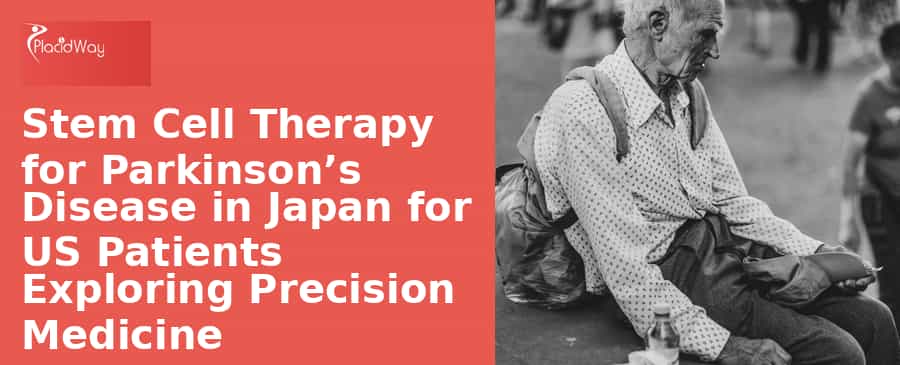
Japan has established itself as the global epicenter for regenerative medicine and stem cell innovation, driven by Nobel Prize-winning research and a unique regulatory framework. For US patients battling Parkinson’s disease, Japan offers access to advanced cellular therapies that are often unavailable or strictly limited in the United States, providing a new avenue of hope for halting neurodegeneration.
By combining meticulous Japanese medical standards with cutting-edge precision medicine, clinics in Tokyo and Osaka are delivering therapies designed to repair damaged neural networks. This guide explores the legal safety, cost benefits, and treatment pathways for Americans seeking world-class stem cell therapy in Japan.
Key Takeaways: Stem Cell Therapy in Japan
- ? Global Innovation Hub: Japan is the birthplace of induced Pluripotent Stem (iPS) cells, leading the world in clinical applications for neurological disorders.
- ? Government-Regulated Safety: All therapies are strictly regulated under the Act on the Safety of Regenerative Medicine (ASRM), ensuring facility hygiene and cell purity.
- ? Cost vs. Quality: While premium priced ($20k–$45k), packages often include comprehensive testing, cell culturing, and hospital stays, offering higher value than unverified US clinics.
- ? Average Costs:
- Japan: $20,000 – $45,000 (Comprehensive Protocol)
- USA: $25,000 – $60,000+ (Variable quality, limited FDA approval)
- Mexico: $8,000 – $18,000 (Cost-effective alternative)
Why Japan is the Global Leader in Stem Cell Innovation
Japan’s strategic investment in regenerative medicine has created a unique ecosystem where scientific breakthroughs translate rapidly into patient care.
Japan’s dominance in the field of regenerative medicine is not accidental. Following Professor Shinya Yamanaka’s discovery of iPS cells (induced Pluripotent Stem cells) at Kyoto University—which earned him the Nobel Prize—the Japanese government aggressively funded the sector. Unlike the US, where regulatory hurdles can stall therapies for decades, Japan introduced the "Sakigake" designation, a fast-track review system for innovative medical products.
For a patient from the US, this means access to stem cell therapies for Parkinson’s that are produced in high-tech, Good Manufacturing Practice (GMP) certified laboratories. The focus in Japan is on "Precision Medicine"—tailoring the cell count and delivery method (often intravenous or intrathecal) specifically to the patient’s neurological condition, rather than a one-size-fits-all approach.
Understanding the "Act on the Safety of Regenerative Medicine"
Safety is the primary concern for international patients; Japan’s legal framework provides a level of oversight unmatched by other medical tourism destinations.
In 2014, Japan implemented the Act on the Safety of Regenerative Medicine (ASRM). This groundbreaking law allows medical institutions to provide stem cell therapies as "medical practice" (not just clinical trials) if they meet rigorous safety standards and obtain Ministry of Health approval. Therapies are classified into three risk levels:
- Class I (High Risk): iPS and embryonic stem cells (mostly university trials).
- Class II (Medium Risk): Adipose-derived mesenchymal stem cells (ADSCs), commonly used for Parkinson’s treatment in private clinics.
- Class III (Low Risk): PRP and somatic cell processing.
This framework ensures that when you visit a licensed clinic in Tokyo or Osaka, the facility is regularly inspected, and the cells are processed in sterile environments to prevent contamination—a crucial factor for immunocompromised Parkinson’s patients.
The ASRM law mandates that every clinic providing stem cell therapy must submit detailed treatment plans to a "Certified Special Committee for Regenerative Medicine." This committee reviews the scientific basis and safety protocols before a single patient can be treated, ensuring that US patients are not test subjects for unverified science.
Types of Stem Cell Therapies Available for Parkinson’s
While research headlines focus on iPS cells, currently available treatments focus on repairing neural pathways using potent Mesenchymal Stem Cells.
Adipose-Derived Mesenchymal Stem Cells (ADSCs)
This is the most common therapy available to international patients. Doctors harvest a small amount of fat tissue from the patient (autologous), extract the Mesenchymal Stem Cells (MSCs), and expand them in a culture lab to reach therapeutic numbers (often 100 million to 200 million cells). These cells are known for their ability to modulate inflammation and secrete neurotrophic factors (like BDNF and GDNF) that support neuron survival.
Stem Cell Culture Supernatant (Exosomes)
Some Japanese clinics offer therapies using the "supernatant"—the solution surrounding cultured stem cells. This fluid is rich in cytokines and exosomes (messenger particles) that can cross the blood-brain barrier more easily than whole cells, potentially reducing neuroinflammation associated with Parkinson’s disease.
Detailed Cost Comparison: Japan vs. The World
Understanding the investment is critical; Japan offers a premium service with high safety assurances compared to other regions.
The cost of stem cell therapy in Japan reflects the high cost of living, advanced technology, and strict regulatory compliance. However, packages are often all-inclusive (excluding flights), covering the expensive cell expansion process.
| Destination | Procedure | Estimated Cost (USD) | What's Typically Included |
|---|---|---|---|
| Japan (Tokyo/Osaka) | Autologous MSCs (Cultured) + Exosomes | $20,000 – $45,000 | Cell culture (4-6 weeks), 1-3 IV/Spinal infusions, hospital stay (1-2 nights), medical translation. |
| United States | Bone Marrow Concentrate (Uncultured) | $15,000 – $50,000+ | Often outpatient only. FDA restricts cell culturing, so cell counts are significantly lower. |
| Mexico (Tijuana) | Allogenic (Donor) MSCs | $8,000 – $18,000 | Donor cells (no harvest needed), hotel stay, ground transport. |
| Germany | Stem Cells + Laser Blood Therapy | $18,000 – $28,000 | Treatment, specialized rehabilitation, consultation. |
"The primary difference between treatment in the US and Japan is the cell count. In the US, regulations often prohibit expanding cells in a lab, meaning patients receive a 'soup' of bone marrow with relatively few stem cells. In Japan, clinics are licensed to culture your cells, multiplying them into the hundreds of millions. For a neurodegenerative condition like Parkinson’s, this high dosage is critical for any potential efficacy."
Step-by-Step Treatment Journey for US Patients
Navigating a foreign medical system can be daunting; here is the typical pathway for a seamless experience.
Step 1: Remote Assessment
Patients submit recent neurological reports, MRI scans, and a video of their movement (to assess tremors and gait) to the Japanese clinic via a secure portal. A specialist determines eligibility.
Step 2: Visa Support
Once approved, the clinic issues a "Treatment Plan" and a "Certificate of Eligibility." These documents allow the patient (and caregivers) to apply for a Visa for Medical Stay if the treatment duration exceeds visa-waiver limits or requires multiple visits.
Step 3: Arrival & Harvesting
Upon arrival in Japan, the patient undergoes a mini-liposuction (usually abdominal) to harvest fat tissue. This is a quick, minimally invasive procedure.
Step 4: Cultivation Period
The patient may return home or travel while the lab cultures the cells for 3-5 weeks. Some clinics offer "Allogenic" (donor) options to skip this wait, though autologous is preferred for safety.
Step 5: Infusion & Rehabilitation
The patient returns for the infusion. Administration methods vary but often include intravenous (IV) drip for systemic benefits and sometimes intrathecal (spinal) injection to bypass the blood-brain barrier.
Eligibility & Pre-Treatment Protocols
Not every patient is a candidate; strict medical criteria ensure safety and the highest chance of success.
Japanese clinics maintain strict exclusion criteria. Generally, candidates for stem cell therapy for Parkinson's must:
- Have a confirmed diagnosis of Parkinson's Disease (not Parkinsonism caused by drugs).
- Be free of active cancer or history of cancer in the last 5 years.
- Have controlled blood pressure and no severe heart disease.
- Be able to travel (fit to fly).
Patients are often advised to stop blood thinners (under doctor supervision) prior to the harvesting procedure.
Risks, Outcomes, and Realistic Expectations
Transparency is key in medical tourism; understanding what stem cells can and cannot do.
It is vital for patients to understand that stem cell therapy is currently not a cure for Parkinson’s. It is a regenerative therapy aimed at:
- Slowing Progression: Protecting remaining dopamine-producing neurons.
- Reducing Symptoms: Improving gait, reducing rigidity, and enhancing speech clarity.
- Lowering Medication Dosage: Helping L-DOPA medications work more effectively.
Risks in Japan are mitigated by the ASRM law but can include infection at the injection site or temporary fever. Because the cells are usually the patient's own, rejection risk is minimal.
Logistics: Medical Visa & Travel
Seamless travel planning is essential for patients with mobility challenges.
While US citizens can visit Japan for up to 90 days as tourists, those undergoing medical procedures are encouraged to use the Visa for Medical Stay. This visa covers the patient and accompanying persons (caregivers). It also allows for multiple entries if the treatment plan requires returning for booster infusions. PlacidWay’s partners assist with the necessary "Reference Guarantee" required by the Japanese Ministry of Foreign Affairs.
Frequently Asked Questions
Is stem cell therapy for Parkinson's FDA approved?
No, stem cell therapy for Parkinson's is not yet FDA approved in the United States and remains considered experimental. This is why many US patients travel to Japan, where the regulatory framework (ASRM) allows for advanced, safe access to these therapies.
How soon will I see results after treatment?
Response times vary significantly. Some patients report increased energy levels within weeks, while improvements in motor function (like reduced tremors or better balance) typically take 3 to 6 months as the cells work to repair neural tissue.
Can I combine this with my current Parkinson's medication?
Yes, patients are generally advised to continue their prescribed medications (like Levodopa) initially. As the therapy takes effect, a neurologist may slowly adjust dosages, but this must be done under strict medical supervision.
Is the procedure painful?
The procedures are minimally invasive. Fat harvesting is done under local anesthesia with minimal discomfort. Intravenous infusions are painless, and intrathecal injections are performed by specialists to ensure patient comfort.
Why is Japan more expensive than other countries?
Japan’s costs reflect the use of GMP-certified laboratories, high-tech cell culturing methods, and strict government oversight. You are paying for verified cell viability and safety, which is not always guaranteed in less regulated destinations.
Are English-speaking staff available?
Yes, clinics that cater to international medical tourists in Tokyo and Osaka have dedicated international departments with translators and English-speaking medical staff to ensure clear communication.
What happens if complications arise after I return to the US?
Reputable clinics provide follow-up protocols and can coordinate with your local physician. While serious complications are rare, it is important to have a local neurologist who is aware of your treatment.
How many stem cells will I receive?
Dosages depend on the protocol but typically range from 100 million to 300 million cells per session. Japanese clinics prioritize "cell viability" (percentage of live cells) over just raw numbers, ensuring higher potency.
Can I bring a caregiver?
Absolutely. It is highly recommended that Parkinson's patients travel with a companion. The Japanese "Visa for Medical Stay" specifically allows for accompanying persons to travel with the patient.
Take the Next Step in Your Health Journey
Don't let Parkinson's define your future. PlacidWay connects you with Japan's top-rated, government-licensed regenerative medicine clinics. Gain access to safe, precision-based stem cell protocols tailored to your needs.
Get a personalized treatment plan, cost estimate, and visa assistance today.
Get a Free Quote for Treatment in Japan





.png)
.png)


-(7).png)
-(10).png)
-(5).png)
-(11).png)








Share this listing