


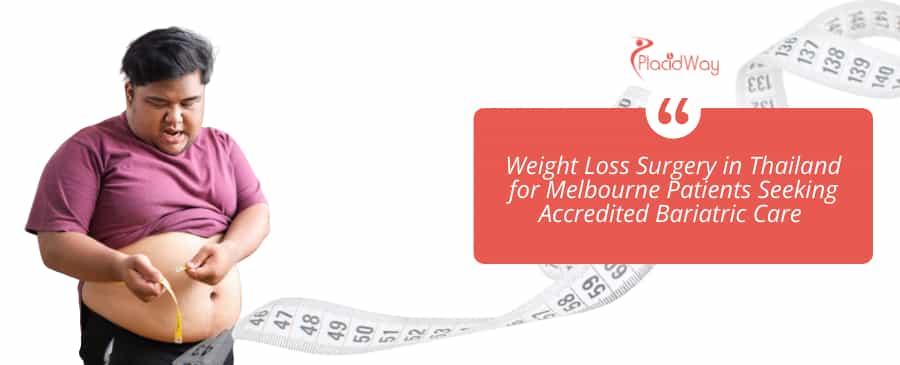
Facing high out-of-pocket costs and extended wait times at home, many Australians are looking overseas for solutions. Weight Loss Surgery in Thailand has become the preferred choice for Melbourne residents seeking affordable, high-quality bariatric care in JCI-accredited hospitals. This guide covers everything from costs and packages to using your Superannuation for funding.
Key Takeaways for Melbourne Residents
For many Australians struggling with obesity, the long waiting lists in the public system and the prohibitive out-of-pocket costs in the private sector make effective treatment feel out of reach. Thailand offers a viable, safe, and high-quality alternative just a direct flight away.
- Significant Savings: Melbourne patients can save 50% to 70% on procedures like Gastric Sleeve and Bypass compared to Australian private prices.
- All-Inclusive Packages: Thai packages typically bundle the surgery, hospital stay (3-4 nights), nursing, and airport transfers, eliminating hidden costs.
- Superannuation Access: Eligible Australians can apply for early release of Superannuation to fund their surgery and travel costs.
- Direct Access: With direct flights from Melbourne to Bangkok (approx. 9 hours) and Phuket, travel is manageable even for surgical patients.
- Estimated Costs:
- Gastric Sleeve: $9,000 – $13,000 AUD (Thailand) vs. $18,000+ AUD (Australia)
- Gastric Bypass: $13,000 – $17,000 AUD (Thailand) vs. $25,000+ AUD (Australia)
The journey to a healthier weight is often fraught with financial and logistical hurdles. For residents of Melbourne, the choice typically lies between years-long waiting lists in the public health system or facing out-of-pocket expenses exceeding $20,000 in private clinics. Weight Loss Surgery in Thailand has emerged as a premier solution, combining world-class medical expertise with affordability. With JCI-accredited hospitals in Bangkok and Phuket catering specifically to international patients, Australians can access life-changing bariatric care without the financial stress.
This comprehensive guide explores why thousands of Victorians are flying north for treatment, detailing the costs, the procedure options, and the step-by-step journey from Melbourne Tullamarine to a new, healthier life.
Why Melbourne Patients Choose Thailand for Bariatric Surgery
Beyond the holiday appeal, Thailand’s medical infrastructure offers advanced robotic surgery, English-speaking staff, and rigorous safety standards that rival Western institutions.
Thailand is not just a holiday destination; it is a global hub for medical tourism, welcoming over 2 million international patients annually. For a patient traveling from Melbourne, the appeal of Weight Loss Surgery in Thailand is threefold: proximity, price, and quality. Unlike other low-cost destinations that might require complex travel itineraries involving multiple layovers, Thailand is accessible via direct flights.
World-Class JCI Accredited Hospitals
The most common misconception about medical tourism is a compromise in quality. However, Thailand boasts more than 60 JCI (Joint Commission International) accredited hospitals—the gold standard in global healthcare. Major facilities in Bangkok and Phuket are essentially "medical cities," equipped with dedicated international wings, interpreters, and bariatric centers of excellence. Surgeons here are often board-certified and have undergone fellowship training in countries like Australia, the USA, or the UK, ensuring they are familiar with Western medical protocols.
Thailand was the first country in Asia to achieve JCI accreditation for an individual hospital. Today, its top private hospitals utilize the same advanced technology found in Melbourne, including da Vinci robotic surgical systems and 3D laparoscopic equipment, ensuring minimally invasive procedures with faster recovery times.
Direct Flights & Ease of Travel from Victoria
For bariatric patients, minimizing travel stress is crucial. Melbourne (MEL) offers direct flights to both Suvarnabhumi Airport (BKK) in Bangkok and Phuket International Airport (HKT). With a flight time of approximately 9 hours, patients can board a plane in the morning and arrive in Thailand by evening. This accessibility is superior to traveling to Europe or the Americas, which requires significantly longer travel times and layovers that can be physically taxing post-surgery.
Popular Weight Loss Procedures Available
From the restrictive Gastric Sleeve to the metabolic Gastric Bypass, Thai hospitals offer the full spectrum of modern bariatric interventions tailored to your BMI and health profile.
Gastric Sleeve (Sleeve Gastrectomy)
The Laparoscopic Sleeve Gastrectomy is the most sought-after procedure for international patients in Thailand. It involves removing approximately 80% of the stomach, leaving a banana-shaped "sleeve." This restricts the amount of food you can eat and reduces the production of ghrelin, the "hunger hormone." It is ideal for patients with a BMI between 30 and 40 who want a procedure with a lower risk of malabsorption issues.
Gastric Bypass (Roux-en-Y)
For patients with a higher BMI (over 45) or those suffering from severe Type 2 diabetes and acid reflux, the Roux-en-Y Gastric Bypass is often recommended. This procedure creates a small stomach pouch and reroutes the small intestine, providing both restrictive and malabsorptive weight loss. Thai surgeons are highly skilled in this complex procedure, often performing it laparoscopically to reduce scarring and hospital stay.
Revision Bariatric Surgery
Patients who have had previous surgeries (like the older Lap-Band) that resulted in complications or insufficient weight loss often travel to Thailand for revision surgery. Converting a Lap-Band to a Gastric Sleeve or Bypass is a technical procedure requiring high surgical expertise, which is readily available at Thailand's specialized bariatric centers.
Comprehensive Cost Comparison: Melbourne vs. Thailand
Understanding the financial breakdown is key. While Australian private health insurance covers some hospital costs, the 'gap' fees for surgeons and anesthetists can still be thousands of dollars.
The table below illustrates the estimated cost differences for uninsured patients or those facing high gap payments in Australia compared to all-inclusive packages in Thailand.
| Procedure | Avg. Cost in Melbourne (AUD) | Avg. Cost in Thailand (AUD) | Potential Savings |
|---|---|---|---|
| Gastric Sleeve | $18,000 - $25,000 | $9,000 - $13,000 | ~50% ($9,000+) |
| Gastric Bypass | $25,000 - $35,000 | $13,000 - $17,000 | ~55% ($12,000+) |
| Mini Gastric Bypass | $22,000 - $30,000 | $11,000 - $15,000 | ~50% ($11,000+) |
| Recovery Time | 2-3 Days Hospital | 3-4 Days Hospital + 5 Days Hotel | Comprehensive Care |
Note: Prices are estimates and vary by currency exchange rates and specific hospital choices. Australian prices reflect total out-of-pocket costs for uninsured patients.
"The 'hidden' value in Thai packages is the extended hospital stay. In Australia, patients are often discharged 48 hours post-op to free up beds. In Thailand, standard packages include 3 to 4 nights in a private room with 24/7 nursing care. This extended monitoring significantly reduces anxiety and ensures any immediate post-op complications are managed before the patient even leaves the hospital."
Financing Your Surgery: Using Superannuation
For many Australians, the key to affording this life-changing surgery lies in their Superannuation fund. The 'Compassionate Release of Super' program is a legal pathway to fund medical treatments overseas.
Under Australian law, you may be able to access your preserved superannuation benefits early on "compassionate grounds" for financing your Weight Loss Surgery in Thailand. This provision applies to medical treatment for life-threatening conditions or conditions that cause acute, chronic pain or mental illness—criteria that severe obesity often meets.
How the Process Works
- Eligibility: You must usually have a BMI over 40 (or >35 with comorbidities like sleep apnea or diabetes) and certification from two medical practitioners stating that the treatment is necessary to alleviate acute, chronic pain or mental disturbance.
- Application: Applications are submitted online via the ATO (Australian Taxation Office) through your myGov account.
- Funds Release: Once approved by the ATO, your Super fund releases the money. This can be used to pay for the surgery, flights, and accommodation for you and a carer.
- Tax Implications: Be aware that the withdrawn amount is typically taxed as a lump sum (usually between 17% and 22%), so you must apply for enough to cover the tax and the surgery costs.
PlacidWay can connect you with facilitators who specialize in helping patients organize the necessary paperwork for Superannuation release applications.
Step-by-Step Patient Journey: Melbourne to Thailand
Navigating medical tourism requires careful planning. Here is a typical timeline for a Melbourne patient, from the first click to the flight home.
Phase 1: Virtual Consultation & Assessment
Before you book a flight, you will undergo a comprehensive virtual assessment. You will submit a medical questionnaire and recent blood work to the Thai medical team. The surgeon will review your history, BMI, and comorbidities to recommend the best procedure (Sleeve vs. Bypass).
Phase 2: Booking & Preparation
Once approved, you will secure your surgery date. Most patients book their flights 4-6 weeks in advance. You will begin a "pre-op diet" (usually high protein, low fat) 2 weeks before departure to shrink the liver, making the surgery safer.
Phase 3: Arrival in Thailand
Upon landing at BKK or HKT, a hospital representative will greet you for a private transfer to your hotel or the hospital. You will typically arrive 1-2 days before surgery for final on-site tests (EKG, chest X-ray, blood work) and an in-person consultation with your surgeon and anesthetist.
Phase 4: Surgery & Hospital Stay
The surgery is performed under general anesthesia and typically takes 1-2 hours. You will spend 3-4 nights in the hospital. The first day involves rest, while day 2 begins with gentle walking to promote circulation. Nurses monitor your vitals and pain levels constantly.
Phase 5: Recovery & "Fit to Fly"
After discharge, you will move to a nearby hotel for another 5-7 days. During this time, you will return to the hospital for wound checks and a final consultation. Once the surgeon confirms your healing is on track, you are issued a "Fit to Fly" certificate.
Candidate Eligibility: Are You a Good Fit?
Not everyone is a candidate for bariatric surgery. Thai surgeons adhere to international ASMBS guidelines to ensure patient safety when performing Weight Loss Surgery in Thailand.
- BMI Criteria: Generally, a BMI of 35+ with comorbidities (diabetes, hypertension, sleep apnea) or a BMI of 40+ without comorbidities is required.
- Age: Most clinics accept patients between 18 and 65. Patients over 65 require additional cardiac clearance.
- Commitment: You must be committed to long-term lifestyle changes. Surgery is a tool, not a cure.
Top Destinations: Bangkok vs. Phuket
Bangkok: The Medical Metropolis
Bangkok is home to the largest and most prestigious hospitals in the region, such as Bumrungrad and Samitivej. It is the best choice for high-risk patients or those requiring complex multidisciplinary care. The city offers urban luxury, world-class shopping, and 5-star hotels connected directly to hospitals.
Phuket: Healing by the Sea
Phuket offers a more relaxed pace. Bangkok Hospital Phuket is a leader in medical tourism, offering top-tier care in a resort setting. The serene environment, fresh sea air, and slower pace can be mentally beneficial during the initial recovery phase.
Recovering in Phuket often costs less than recovering in Melbourne. Luxury hotels in Phuket suitable for post-op recovery (with room service and adjustable beds) can cost as little as $80-$120 AUD per night, a fraction of the cost of similar accommodation in Australia.
Life After Surgery: What to Expect
Returning to Melbourne does not mean your journey ends. The first month post-op is critical for healing and adaptation.
- Week 1 (In Thailand): Liquid diet only. Clear broths, water, and apple juice. Focus on hydration.
- Week 2 (Back Home): Full liquids. Protein shakes, yogurt, and strained soups.
- Week 3: Pureed foods. Scrambled eggs, mashed soft fruits, and blended fish.
- Week 4: Soft foods. Well-cooked vegetables, soft chicken, and cheese.
Frequently Asked Questions
Common queries from Australian patients considering overseas surgery.
Yes, provided you choose a JCI-accredited hospital. These facilities adhere to rigorous international standards for safety, hygiene, and patient care, comparable to top Western hospitals.
You can expect to save between 50% and 70%. While a gastric sleeve might cost $20,000+ out-of-pocket in Melbourne, packages in Thailand often start around $9,000 AUD.
Yes. Under the "Compassionate Release of Super" program, eligible Australians can access funds for overseas medical treatment if they meet specific health criteria (chronic pain, life-threatening obesity).
No. Major international hospitals in Thailand have English-speaking surgeons and dedicated medical interpreters to ensure clear communication throughout your stay.
You should inform your local GP before you travel. Upon discharge in Thailand, you will receive full medical records to share with your Australian doctor for seamless follow-up care.
Most surgeons require you to stay in Thailand for 7-10 days post-surgery. This allows for follow-up checks and ensures you are healing well enough to handle cabin pressure.
Usually, standard pre-op tests (blood work, EKG, X-ray) are included. However, specialized tests for complex cases may incur extra charges, which will be discussed during your consultation.
Absolutely. Most patients bring a partner or friend. While the hospital room is private, your companion will likely need to stay in a nearby hotel during your 3-4 nights of admission.
Success rates align with global averages, with patients typically losing 60-70% of their excess weight within 12-18 months, provided they follow the post-op lifestyle guidelines.
Ready to Restore Your Mobility?
Don't let high costs or long waiting lists in Melbourne hold you back from the healthy life you deserve. PlacidWay partners with the top JCI-accredited hospitals in Thailand to bring you safe, affordable, and comprehensive weight loss packages.
Get a free, no-obligation quote and speak directly with our medical care team to plan your journey to recovery.
Get a Quote for Surgery in Thailand



.png)

.jpg)

.jpg)








Share this listing