

If you are living with breast cancer and researching immunotherapy in Mexico after treatment in the United States or Canada, the most important question is not simply whether a clinic offers “immunotherapy.” You need to know exactly what treatment is being proposed, whether it fits the biology of your cancer, who is supervising it, and whether the approach is established treatment or still investigational.
This distinction matters especially for triple-negative breast cancer, where pembrolizumab-based treatment has an established role in specific situations. Other immune-based approaches offered internationally may have very different levels of evidence. Before traveling, ask for the exact treatment name, your biomarker requirements, the oncologist's Mexican professional credentials, the facility's applicable COFEPRIS authorization, the emergency plan, and a complete written cost estimate.
Quick Summary: Breast Cancer Immunotherapy in Mexico
- Who may benefit: Immunotherapy has its clearest established breast-cancer role in defined triple-negative breast cancer situations. Your stage, PD-L1 testing, previous treatment, pathology and overall health can affect whether it is appropriate.
- Estimated cost: A reliable nationwide 2026 USD price for breast cancer immunotherapy in Mexico is not available. Costs depend heavily on the drug, combination therapy, testing, number of cycles and facility. Request an itemized written quote.
- Mexico regulation: Verify the healthcare facility's applicable COFEPRIS authorization or operating documentation and ask for the regulatory status of every drug or investigational protocol being proposed.
- Doctor credentials: Check the oncologist's professional and specialty credentials through Mexico's Registro Nacional de Profesionistas and, when applicable, certification through the Consejo Mexicano de Oncología.
- Important distinction: A treatment being legally available in Mexico does not automatically mean it is established standard therapy for your type of breast cancer.
- Main caution: Do not postpone potentially effective standard treatment while evaluating an experimental immune therapy without discussing the consequences with a qualified breast medical oncologist who knows your case.
What Does Breast Cancer Immunotherapy in Mexico Actually Mean?
Breast cancer immunotherapy uses the immune system, or modifies immune responses, to help recognize and attack cancer cells. In established breast-cancer care, the most important current example is the immune checkpoint inhibitor pembrolizumab. It blocks the PD-1 pathway, reducing one mechanism that tumors can use to suppress immune activity.
The phrase “immunotherapy in Mexico” can describe very different treatments. One clinic may be discussing a recognized checkpoint inhibitor used according to evidence-based breast-cancer criteria. Another may be proposing dendritic-cell therapy, personalized cancer vaccines, natural-killer-cell products, cytokine-based treatment or another experimental immune approach.
| Type of approach | What patients should understand | Question to ask before traveling |
|---|---|---|
| Checkpoint inhibitor | Pembrolizumab has defined evidence-based roles in certain triple-negative breast cancers. | “Which indication makes me eligible and what biomarker or staging evidence supports it?” |
| Cell-based immune therapy | Evidence and regulatory status vary considerably by product and protocol. | “Is this standard care, an authorized clinical study or another form of investigational treatment?” |
| Cancer vaccine | Cancer vaccines for breast cancer should not automatically be considered established treatment. | “What published human evidence supports this specific vaccine for my breast-cancer subtype?” |
| Integrative immune support | Supportive interventions are different from therapies shown to control breast cancer. | “Is this intended to treat the cancer itself or to support symptoms and wellbeing?” |
Which Breast Cancer Patients May Be Candidates for Immunotherapy?
Whether immunotherapy makes clinical sense depends much more on the biology and stage of your breast cancer than on the country where you receive treatment. Triple-negative breast cancer, or TNBC, is currently the subtype in which checkpoint immunotherapy has its most established breast-cancer role.
Triple-negative means the tumor does not express estrogen receptors, progesterone receptors or HER2 in the way that would make hormone therapy or standard HER2-targeted treatments useful. That biological profile is why chemotherapy, antibody-drug conjugates, immunotherapy and other systemic approaches can become especially important.
| Clinical situation | Possible immunotherapy role | What should be confirmed |
|---|---|---|
| High-risk early-stage TNBC | Pembrolizumab may form part of a chemotherapy-based treatment plan before surgery and may continue after surgery in appropriate patients. | Stage, tumor size, lymph nodes, pathology and overall treatment sequence. |
| Unresectable locally advanced or metastatic TNBC | PD-1-directed treatment can be relevant in defined settings, often depending on PD-L1 expression and the proposed combination regimen. | PD-L1 result, previous systemic treatment and exact drug combination. |
| Hormone receptor-positive breast cancer | Immunotherapy is not automatically a routine treatment simply because disease is advanced or has returned. | Molecular testing, prior endocrine therapies, HER2 status and evidence supporting the proposed regimen. |
| HER2-positive breast cancer | HER2-targeted treatments generally remain central; an immune therapy proposal requires a specific evidence-based rationale. | HER2 testing, previous HER2-directed treatments and why immunotherapy is being proposed. |
| Experimental immune-cell or vaccine therapy | Clinical benefit may be uncertain and should not be assumed from the word “immunotherapy.” | Clinical-trial status, regulatory authorization, ethics oversight and published evidence. |
Standard Versus Experimental Breast Cancer Immunotherapy in Mexico
The most important safety check for a patient considering Mexico is determining whether the proposed treatment is recognized therapy being delivered in Mexico or an investigational intervention that is not part of established breast-cancer care.
Mexico has its own regulatory system. COFEPRIS is the federal health-risk regulator responsible for areas that include medicines, healthcare establishments and clinical research. FDA authorization applies to the United States; it does not itself authorize medical practice in Mexico. Likewise, receiving a treatment in Mexico does not mean that the treatment has FDA or Health Canada approval.
Established Treatment
The treatment has a defined clinical indication supported by evidence, and the oncologist can explain why your diagnosis matches that indication.
Clinical Research
The therapy is being studied under a research protocol. Ask for the protocol identifier, investigator, ethics oversight, COFEPRIS authorization and informed-consent documentation.
Unclear or Unsupported Offering
The provider cannot clearly explain regulatory status, clinical evidence, protocol details or why the treatment fits your tumor biology. This requires additional scrutiny before you travel or pay.
Questions That Expose the Difference
- What is the generic name of every cancer treatment I will receive?
- Which part of my pathology or biomarker profile makes me a candidate?
- Is this standard treatment for my diagnosis or investigational?
- If investigational, what is the COFEPRIS-authorized research protocol?
- Which registered research ethics committee reviewed the protocol?
- Where is the evidence specifically involving breast-cancer patients?
- What treatments would an oncologist in the United States or Canada normally consider at this point?
- What happens if my disease progresses while I am receiving this therapy?
Who Is Researching Breast Cancer Treatment in Mexico from the USA and Canada?
Reliable national statistics specifically showing the age, sex, diagnosis and home region of American or Canadian breast-cancer patients traveling to Mexico for immunotherapy are not publicly available. It would therefore be misleading to publish a percentage breakdown of “medical tourists” without a validated dataset.
What current cancer statistics can show is the population from which many international-treatment searches arise. In the United States, the American Cancer Society estimates 321,910 new invasive female breast-cancer cases in 2026. In Canada, the Canadian Cancer Society estimates 32,400 new cases among women and 300 among men in 2026.
2026 U.S. Female Breast Cancer Cases by Broad Age Group
The ACS estimates 53,100 cases among people aged 0–49, 99,390 among those aged 50–64 and 169,420 among those aged 65 and older.
2026 U.S. Breast Cancer Age Distribution Histogram
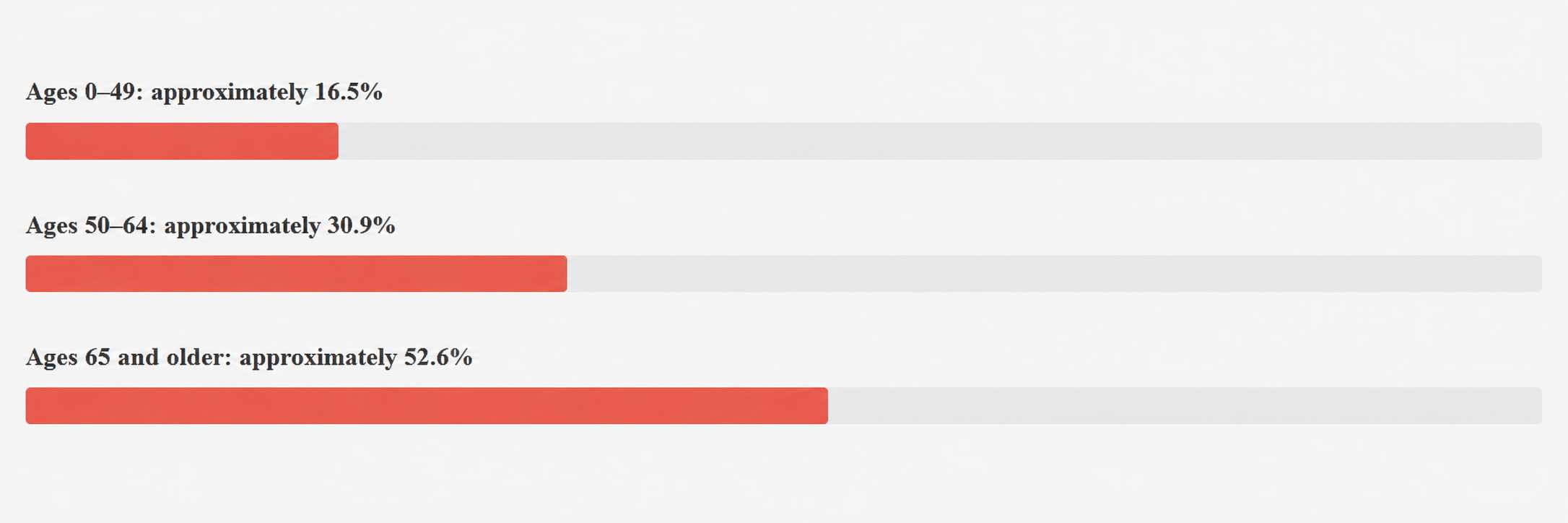
Data note: These figures describe estimated breast-cancer diagnoses, not medical-tourism volumes. The American Cancer Society states that its 2026 estimates are model-based. They should not be presented as a count of people traveling to Mexico.
Why a Patient May Consider Mexico
- A second opinion after progression, recurrence or disagreement about the next treatment step.
- Interest in private oncology consultations outside the patient's home healthcare system.
- Geographic proximity, particularly for patients living in the southern or western United States.
- Research into investigational treatments that are not routinely available at home.
- Interest in integrating symptom management, rehabilitation, nutrition or other supportive services with oncology care.
- Cost concerns when treatment is self-funded or insurance coverage is limited.
How Much Does Breast Cancer Immunotherapy Cost in Mexico?
There is no reliable nationwide 2026 USD price that can accurately represent breast cancer immunotherapy in Mexico. A clinically meaningful quote depends on the exact drug or experimental product, treatment schedule, chemotherapy or other combination therapy, pathology review, biomarker testing, imaging, laboratory monitoring and length of care.
This is particularly important with cancer treatment because a low initial quote may represent one infusion or one component rather than the complete treatment plan.
| Cost category | Mexico private care | United States | Canada |
|---|---|---|---|
| Reliable single USD national price | Information not available; individualized quote required. | No single patient price; insurance contracts, deductibles and self-pay arrangements vary. | No single patient price; public coverage depends on indication and provincial arrangements, while private or overseas care differs. |
| Drug expense | Ask whether each medication and infusion is included. | Coverage and patient responsibility depend on the health plan and indication. | Funding and access can vary by province and clinical indication. |
| Testing | Pathology review, PD-L1 testing, imaging and laboratory work may be separate. | Insurance and network rules may affect patient cost. | Testing pathways depend on the provincial cancer system and clinical plan. |
| Travel-related expense | Flights, lodging, local transport, companion expenses and repeated visits should be budgeted. | Usually less relevant when treatment is local. | Relevant when leaving Canada for private treatment abroad. |
Ask for These Items in the Mexican Treatment Quote
- Medical oncologist consultation and pathology review
- Exact treatment names and number of planned cycles
- Drug acquisition and infusion charges
- PD-L1 or other molecular testing
- Blood tests before each treatment
- CT, PET/CT, MRI or other imaging when clinically required
- Management of infusion reactions or treatment complications
- Emergency hospital admission costs
- Follow-up appointments and remote consultations
- Additional chemotherapy, supportive medicines or procedures
How to Choose a Hospital or Cancer Clinic in Mexico for Immunotherapy
Start with regulatory status and clinical capability rather than hotel-style amenities or testimonials. Cancer immunotherapy can produce complications that require rapid laboratory testing, imaging, specialist assessment and occasionally hospitalization.
| What to verify | Why it matters | What to request |
|---|---|---|
| COFEPRIS documentation | Confirms applicable regulatory documentation for healthcare operations. | Current license or operating authorization appropriate to the services being delivered. |
| Oncology capability | Immunotherapy should be integrated with pathology, systemic therapy and disease monitoring. | Oncology team structure, laboratory access, imaging arrangements and multidisciplinary review. |
| Emergency capability | Serious immune-related or chemotherapy complications may require urgent treatment. | 24/7 contact number, emergency hospital pathway, ICU access or transfer agreement. |
| Pharmacy controls | Biologic cancer medicines require appropriate sourcing, storage, preparation and administration. | Drug manufacturer, product identification and infusion-pharmacy process. |
| Research oversight | Investigational treatment should have clearly documented oversight. | COFEPRIS protocol authorization and ethics-review information when applicable. |
International accreditation such as JCI or another recognized system can provide additional information about institutional quality processes when genuinely applicable. It should be treated as an extra signal rather than a substitute for Mexican licensing, oncology expertise or treatment-specific evidence.
How to Verify a Breast Cancer Oncologist in Mexico
You should be able to independently verify that the doctor proposing systemic breast-cancer treatment is legally credentialed and appropriately trained. A clinic biography alone is not enough.
- Ask for the doctor's full legal name. Names should match professional records and treatment documents.
- Verify the cédula profesional. Mexico's Registro Nacional de Profesionistas, administered by the Secretaría de Educación Pública, provides professional credential information.
- Verify specialty training. Confirm the doctor holds the appropriate oncology specialty credential rather than only a general medical qualification.
- Check oncology certification. The Consejo Mexicano de Oncología maintains information about certified specialists in medical oncology and related oncology specialties.
- Ask about breast-cancer practice. General oncology experience is useful, but the doctor should be familiar with contemporary breast pathology, biomarkers and systemic treatment sequencing.
- Ask who manages complications. Know whether the oncologist personally supervises immune-related adverse events and where you would be admitted if hospital care becomes necessary.
Planning Travel to Mexico During Breast Cancer Immunotherapy
Immunotherapy is usually not comparable to traveling for a single outpatient procedure. Depending on the regimen, treatment may involve repeated infusions, ongoing laboratory monitoring and additional chemotherapy or systemic therapy. That can make continuity of care more important than the initial trip itself.
| Timeframe | Clinical process | What you may experience | Activity level | Action required |
|---|---|---|---|---|
| Before travel | Pathology, imaging and treatment history reviewed. | No treatment-related change yet. | Depends on current cancer symptoms. | Confirm eligibility before buying non-refundable travel. |
| Pre-treatment evaluation | Examination, laboratory testing and treatment confirmation. | Generally related to existing disease rather than immunotherapy. | Individual. | Resolve discrepancies in pathology or treatment plan. |
| Treatment period | Infusion and monitoring; other systemic treatments may be given. | Fatigue and other side effects vary widely. | Plan conservatively around treatment days. | Know how to contact the clinical team after hours. |
| Between cycles | Monitoring for toxicity and treatment response. | Symptoms can change between visits. | Based on blood counts, symptoms and accompanying therapy. | Do not assume that feeling well means laboratory monitoring is unnecessary. |
| After returning home | Ongoing oncology follow-up and toxicity surveillance. | New symptoms should be reported promptly. | Individual. | Give your local doctor the complete Mexico treatment record. |
Documents to Carry Across the Border
- Pathology and biomarker reports
- Recent imaging reports and accessible imaging files
- Complete chemotherapy, immunotherapy and radiation history
- Medication and allergy list
- Mexico treatment protocol and infusion dates
- Generic and brand names of administered medications
- Laboratory results
- Oncologist's contact details
- Emergency treatment instructions
Breast Cancer Immunotherapy Side Effects and Emergency Planning in Mexico
Checkpoint immunotherapy can activate the immune system against healthy tissues as well as cancer. Common problems can include fatigue, rash and diarrhea, while less common immune-related reactions can involve the lungs, liver, endocrine glands, intestines or other organs.
When immunotherapy is combined with chemotherapy, patients may also face chemotherapy-associated problems. Your risks therefore depend on the complete regimen, not simply the immunotherapy component.
| Symptom | Why it deserves attention | Travel implication |
|---|---|---|
| New or worsening shortness of breath | Respiratory symptoms may require urgent evaluation. | Do not rely solely on remote messaging if symptoms are significant. |
| Persistent or severe diarrhea | Can signal significant gastrointestinal toxicity and can lead to dehydration. | Know which hospital will assess you urgently. |
| Chest pain, severe weakness or confusion | These symptoms require medical assessment rather than routine tourism planning. | Emergency care should take priority over flights or hotel arrangements. |
| Fever during combination treatment | Chemotherapy or other treatment can alter infection risk. | Follow the emergency instructions provided by your oncology team. |
Mexico vs USA and Canada for Breast Cancer Immunotherapy
The strongest reason to compare countries is not to decide which healthcare system is universally “better.” It is to determine whether a specific treatment plan is medically justified, appropriately regulated, financially understandable and safe to continue once you cross the border again.
| Decision factor | Mexico | United States | Canada |
|---|---|---|---|
| Health-product regulator | COFEPRIS | FDA | Health Canada |
| Private self-pay treatment | Common for international patients. | Possible, although insurance arrangements strongly affect payment. | Core cancer care is generally organized provincially; privately purchased treatment abroad follows a different pathway. |
| Experimental treatment | Verify whether the intervention is being provided under authorized clinical research and appropriate ethics oversight. | Clinical trials operate under U.S. regulatory and research oversight. | Clinical trials operate under Canadian regulatory and research oversight. |
| Continuity after treatment | Must be planned across borders before treatment begins. | Easier when the entire oncology team is within the same system. | Patients returning from private overseas care should ensure their Canadian team receives complete records. |
The Most Useful Comparison Is Your Actual Treatment Plan
Ask both your home oncologist and the Mexican provider to address the same question: What would you recommend for my exact pathology, stage, previous treatment and biomarkers, and what evidence supports that choice? Differences between those answers can reveal whether you are comparing reasonable medical alternatives or fundamentally different levels of evidence.
Frequently Asked Questions About Breast Cancer Immunotherapy in Mexico
Is immunotherapy available for breast cancer in Mexico?
Yes, some Mexican oncology providers offer immunotherapy, but the exact treatment matters. Pembrolizumab has an established role in defined triple-negative breast cancer settings. Other therapies marketed as immune-cell therapy, personalized vaccines or immune activation may be investigational and should be evaluated separately.
Does FDA approval apply to breast cancer treatment received in Mexico?
No. The FDA regulates medicines and medical products in the United States, while Mexico uses its own regulatory framework led by COFEPRIS. FDA approval can provide useful evidence context, but you should separately verify whether the treatment and healthcare facility meet applicable Mexican requirements.
Which breast cancer subtype is most commonly treated with immunotherapy?
Checkpoint immunotherapy currently has its clearest established role in triple-negative breast cancer. The appropriate use depends on whether disease is early-stage or advanced, previous treatment and, in some metastatic settings, PD-L1 testing. Immunotherapy should not be assumed appropriate for every breast-cancer subtype.
Do I need PD-L1 testing before traveling to Mexico for immunotherapy?
PD-L1 testing can be important for some advanced triple-negative breast cancer treatment decisions, but requirements differ by clinical setting and regimen. Ask the oncologist to explain whether PD-L1 testing applies to your proposed treatment and which validated test was used.
Is breast cancer immunotherapy cheaper in Mexico than in the USA?
There is no reliable nationwide USD price that allows a responsible blanket comparison. Mexican private treatment may have different facility and professional fees, but drug costs, repeated cycles, laboratory monitoring, scans, travel and complication management must all be included before comparing total expenditure.
How can I check whether a cancer clinic in Mexico is properly regulated?
Ask the facility for its applicable COFEPRIS healthcare authorization or operating documentation and verify the information independently. If experimental therapy is offered as research, request the clinical protocol authorization, research-ethics information, principal investigator details and written informed-consent documents.
How do I verify an oncologist in Mexico?
Request the oncologist's full legal name and professional credential numbers. Check professional credentials through Mexico's Registro Nacional de Profesionistas and look for appropriate specialty training. Certification through the Consejo Mexicano de Oncología can provide an additional oncology-specific credential to verify.
How long should I stay in Mexico for breast cancer immunotherapy?
There is no universal stay length because immunotherapy is often part of a repeated treatment schedule rather than a one-time procedure. The appropriate plan depends on the regimen, laboratory monitoring, combination chemotherapy, side effects and whether subsequent cycles will occur in Mexico or at home.
Can my oncologist in the USA or Canada continue my care after treatment in Mexico?
Continuity is possible in many situations, but it should be discussed before you travel. Give your home oncology team the exact drug names, doses, infusion dates, laboratory results, pathology, imaging and adverse-event history so they can understand what treatment you received.
What is the biggest warning sign when comparing experimental immunotherapy clinics in Mexico?
Be cautious if a clinic promises broad effectiveness without reviewing your pathology, cannot explain whether treatment is standard or experimental, relies primarily on testimonials, avoids discussing progression or complications, or cannot provide verifiable regulatory, physician and research-oversight information.
Compare Breast Cancer Treatment Options Before You Travel
If you are considering breast cancer treatment in Mexico, PlacidWay can help you request information from providers, compare treatment plans and costs, and identify questions to discuss with qualified oncology teams. A provider comparison should support—not replace—medical evaluation by an oncologist familiar with your diagnosis.
Submit Your Request







.png)
.png)

















Share this listing