


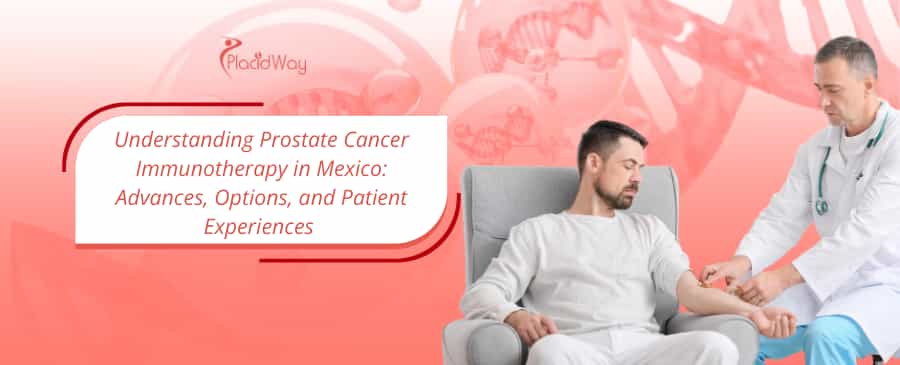
For many patients facing advanced or metastatic disease, prostate cancer immunotherapy in Mexico offers a vital lifeline. While standard treatments like surgery and radiation remain common, Mexico has emerged as a global leader in integrative oncology, providing access to cutting-edge immune therapies that may be unavailable, prohibitively expensive, or restricted to clinical trials in the United States and Canada.
Clinics in hubs like Tijuana, Mexico City, and Guadalajara specialize in combining conventional medical science with advanced immunological protocols. By harnessing the body's own immune system to identify and destroy cancer cells, these treatments offer new hope with often fewer side effects than traditional chemotherapy. From FDA-approved checkpoint inhibitors to personalized Dendritic Cell Therapy, Mexico provides a comprehensive landscape for patients seeking effective alternative therapies.
Key Takeaways: Treatment & Costs
Mexico has become a preferred destination for prostate cancer patients seeking high-quality care without the financial toxicity of the US healthcare system. Patients can access comprehensive 3-4 week protocols that include state-of-the-art immunotherapy, nutritional support, and continuous monitoring.
- Significant Savings: Save 50% to 70% on immunotherapy protocols compared to US prices.
- Advanced Access: Immediate availability of Dendritic Cell Vaccines and Checkpoint Inhibitors without waiting for domestic clinical trial acceptance.
- Integrative Care: Packages often combine immunotherapy with hyperthermia and detox therapies for enhanced efficacy.
Estimated Cost Breakdown by Country (Full Immunotherapy Protocol):
- Mexico: $18,000 – $35,000 USD
- USA: $100,000 – $150,000+ USD
- Turkey: $12,000 – $20,000 USD
Why Choose Mexico for Prostate Cancer Immunotherapy?
Choosing Placidway medical tourism in Mexico for prostate cancer is rarely just about the price tag. It is about access to medical innovation. In the US, therapies like Sipuleucel-T (Provenge) are approved but come with massive price tags and strict eligibility criteria. In Mexico, similar and often more personalized autologous dendritic cell vaccines are widely available at a fraction of the cost.
Furthermore, Mexican oncology centers are renowned for their patient-centric approach. Doctors in cities like Tijuana and Cancun frequently spend 45-60 minutes per consultation, contrasting sharply with the 15-minute average in Western systems. This allows for the creation of truly personalized protocols that may include intravenous (IV) Vitamin C, ozone therapy, and hyperthermia alongside the immunotherapy, creating a hostile environment for cancer cells while boosting the immune response.
Tijuana is known as the "Medical Device Capital of North America," but it is also a global hub for biotechnology. This proximity to major supply chains allows clinics to source high-quality medical reagents and pharmaceuticals at domestic prices, savings that are passed directly to international patients seeking affordable prostate cancer treatment.
Types of Immunotherapy Available in Mexico
1. Dendritic Cell Therapy (The "Vaccine")
This is the cornerstone of immunotherapy in Mexico. Dendritic cells are the "generals" of the immune system; they identify threats and tell the soldier cells (T-cells) what to attack. In this procedure, a patient's blood is drawn, and the dendritic cells are isolated and "trained" in a lab using specific prostate cancer antigens. When re-infused, these super-charged cells instruct the body to hunt down prostate cancer cells specifically. This is highly effective for metastatic castration-resistant prostate cancer (mCRPC).
2. Checkpoint Inhibitors (PD-1/PD-L1)
Drugs like Keytruda (pembrolizumab) and Opdivo (nivolumab) are available in top Mexican hospitals. Cancer cells often disguise themselves to avoid detection. Checkpoint inhibitors essentially "rip the mask off" the cancer cells, allowing the immune system to recognize and kill them. In Mexico, these are often administered at 40-50% lower cost than in the US due to pharmaceutical pricing regulations.
3. Cytokine Therapy (IL-2)
Cytokines are signaling proteins that help control inflammation and immune response. High-dose Interleukin-2 (IL-2) therapy can supercharge the production of cancer-fighting white blood cells. While effective, it requires careful monitoring, which is standard in inpatient Mexican oncology programs.
"The advantage of seeking treatment in Tijuana or Guadalajara is the 'synergistic protocol.' We rarely use immunotherapy in isolation. By combining Checkpoint Inhibitors with local Hyperthermia (heating the tumor), we can increase the drug's absorption by up to 300%, significantly improving outcomes for advanced prostate cancer patients."
Cost of Prostate Cancer Immunotherapy: Mexico vs. USA
| Treatment / Procedure | Avg. Cost in USA | Avg. Cost in Mexico | Potential Savings |
|---|---|---|---|
| Dendritic Cell Therapy (Full Course) | $93,000 - $120,000 | $18,000 - $35,000 | 70% |
| Checkpoint Inhibitors (Per Infusion) | $12,000 - $25,000 | $5,000 - $8,000 | 60% |
| Comprehensive 3-Week Inpatient Program | $150,000+ | $30,000 - $45,000 | 75% |
| Prostate Cancer Consult & Biopsy | $5,000 - $10,000 | $1,500 - $2,500 | 75% |
*Note: Prices are estimates and vary based on the specific clinic, cancer stage, and patient health status.
Step-by-Step Treatment Journey
Step 1: Evaluation & Pre-Assessment
The journey begins remotely. You will submit your recent PSA levels, Gleason score, and MRI/CT scans to the clinic via a secure portal. An oncologist reviews your case to determine if you are a candidate for immunotherapy.
Step 2: Arrival & Logistics
Most patients fly into San Diego International Airport (for Tijuana clinics) or Mexico City International Airport. Clinics typically provide free shuttle services that pick you up directly from the arrival terminal and drive you across the border to the facility or your hotel.
Step 3: The Treatment Protocol
A typical stay lasts 3 to 6 weeks. Your days will be structured: morning blood work, IV nutritional therapy, the primary immunotherapy infusion (or vaccine administration), followed by supportive therapies like oxygen chambers or hyperthermia. Evenings are usually free for rest.
Step 4: Aftercare & Monitoring
Immunotherapy continues to work long after you leave. You will return home with a 3-month supply of oral medications or supplements. Follow-up consultations are conducted via video call to monitor PSA trends and immune system markers.
Safety and Accreditation: Is it Safe?
Top-tier hospitals in Mexico operate under strict federal regulations enforced by COFEPRIS (the Mexican equivalent of the FDA). Furthermore, many facilities catering to international patients hold JCI (Joint Commission International) accreditation, the gold standard in global healthcare.
It is crucial to verify that your chosen facility uses certified biological labs for cell culturing. Reputable clinics will openly share their certification numbers and allow you to tour their onsite laboratories where the dendritic vaccines are prepared.
Many oncologists in Mexico's top medical tourism centers received their fellowship training in the US or Europe. This means they are fluent in English and fully versed in the latest Western medical protocols, bridging the gap between standard care and alternative prostate cancer therapies.
Frequently Asked Questions
Is immunotherapy for prostate cancer available in Mexico?
Yes, Mexico offers a wide range of immunotherapies for prostate cancer, including FDA-approved checkpoint inhibitors and advanced Dendritic Cell vaccines that may be restricted or in clinical trials elsewhere.
How much does Dendritic Cell Therapy cost in Mexico?
A full course of Dendritic Cell Therapy in Mexico typically ranges from $18,000 to $35,000 USD. This usually covers 3-6 weeks of treatment, whereas similar treatments in the US can exceed $100,000.
Are Mexican cancer clinics regulated and safe?
Top Mexican cancer centers are regulated by COFEPRIS (the Mexican equivalent of the FDA). Many hold international ISO or JCI accreditations, ensuring safety standards comparable to Western facilities.
Can I travel to Mexico for treatment if I have Stage 4 prostate cancer?
Yes, many patients with advanced Stage 4 or metastatic prostate cancer travel to Mexico for integrative treatments that focus on extending survival and improving quality of life when standard options fail.
What is included in a prostate cancer treatment package in Mexico?
Packages usually include medical consultations, all immunotherapy sessions (IVs, vaccines), blood work, nutritional support, and often ground transportation. Accommodation is sometimes included depending on whether the program is inpatient or outpatient.
How long do I need to stay in Mexico for immunotherapy?
Most immunotherapy protocols require a stay of 3 to 6 weeks. Some clinics offer "outpatient" options where you stay in a nearby hotel, while others provide inpatient hospital care for more intensive monitoring.
Does insurance cover cancer immunotherapy in Mexico?
Most US and Canadian private insurance plans do not cover medical tourism procedures directly. However, some patients are able to use HSA/FSA funds or utilize financing plans offered by medical tourism facilitators.
What is the difference between standard chemotherapy and immunotherapy?
Chemotherapy attacks all rapidly dividing cells, often causing severe side effects like hair loss and nausea. Immunotherapy trains your body's specific immune cells to recognize and destroy only the prostate cancer cells, typically resulting in fewer side effects.
Which cities in Mexico are best for prostate cancer treatment?
Tijuana is the leading hub due to its proximity to the US border and concentration of integrative clinics. Mexico City, Guadalajara, and Cancun also have world-class accredited oncology hospitals serving international patients.
Take Control of Your Cancer Journey
You don't have to navigate a prostate cancer diagnosis alone, nor do you have to accept limited options. PlacidWay partners with the most reputable, JCI-accredited oncology centers in Mexico to bring you advanced immunotherapy packages.
Get a free, no-obligation quote today. Our medical care team will help you review your medical records and connect you with top oncologists in Tijuana and Mexico City.
Get a Quote for Immunotherapy




















Share this listing