

Lung cancer immunotherapy in Mexico is moving beyond the idea that one immune medicine fits every patient. Current research involving Mexican thoracic oncology teams increasingly focuses on PD-L1 testing, genomic context, perioperative immunotherapy, resistance mechanisms, digital pathology and ways to improve access to immune checkpoint inhibitors.
If you are considering treatment in Mexico, your most important questions involve your exact lung cancer subtype, stage, molecular profile, PD-L1 result and whether the proposed immunotherapy is established care or part of a clinical study. Costs vary significantly, so request an itemized USD quotation and verify the oncology team, healthcare facility and applicable COFEPRIS authorization before treatment.
Quick Summary of Lung Cancer Immunotherapy in Mexico
- Main approach: Immune checkpoint inhibitors target signals such as PD-1, PD-L1 or CTLA-4 that cancer can use to suppress immune responses.
- Who may qualify: Eligibility depends on whether you have NSCLC or SCLC, cancer stage, PD-L1 expression, molecular alterations, previous treatment and overall health.
- Important Mexican research trend: Investigators associated with Mexico's Instituto Nacional de Cancerología are contributing to research on perioperative immunotherapy, genomic influences on immune response and improved PD-L1 assessment.
- 2026 diagnostic research: A Latin American PD-L1 artificial-intelligence study involving an INCan collaborator evaluated 141 NSCLC biopsies and reported 97% concordance between automated and expert pathologist tumor proportion scoring.
- Emerging access trend: A 2026 national Mexican physician survey documented interest in lower-dose checkpoint inhibitor strategies because of cost barriers, but the authors emphasized that stronger evidence and formal guidance are still needed.
- Safety: Immunotherapy can cause immune-related inflammation involving the lungs, bowel, liver, endocrine glands, kidneys, skin, heart or nervous system.
- Cost: No authoritative standardized national USD price exists for lung cancer immunotherapy in Mexico. Drug choice, treatment duration, diagnostics, hospital setting and insurance or self-pay arrangements substantially affect cost.
- Important caution: Innovative does not automatically mean clinically proven. Verify whether a treatment is standard care, off-label therapy or an authorized clinical research protocol.
How Is Lung Cancer Immunotherapy Changing Cancer Care in Mexico?
Lung cancer immunotherapy is increasingly being selected according to tumor biology rather than diagnosis alone. Mexican academic thoracic oncology research reflects the broader international move toward integrating pathology, genomic testing, PD-L1 expression and disease stage before choosing an immune checkpoint inhibitor.
This matters because immunotherapy works very differently across lung cancers. A patient with metastatic NSCLC and high PD-L1 expression may face a different treatment decision from someone with an actionable EGFR alteration, resectable stage III disease or extensive-stage small cell lung cancer.
Checkpoint inhibitors are increasingly incorporated before surgery or across the perioperative treatment period in selected resectable NSCLC.
PD-L1, molecular alterations and other biological features help identify patients more or less likely to benefit from particular immune strategies.
Researchers are examining why some tumors resist checkpoint inhibition despite appearing immunologically suitable.
Mexican investigators are also studying affordability and alternative dosing questions, although reduced-dose strategies are not automatically standard care.
How Do Immune Checkpoint Inhibitors Treat Lung Cancer in Mexico?
Immune checkpoint inhibitors work by reducing inhibitory signals that can prevent immune T cells from attacking cancer. The best-established lung cancer checkpoint targets include PD-1 and PD-L1, while CTLA-4 inhibition may be incorporated into selected combination strategies.
These medicines do not directly kill cancer in the same way as conventional chemotherapy. Instead, they change immune regulation so the patient's immune system can recognize and attack malignant cells more effectively.
| Immunotherapy Strategy | Potential Lung Cancer Role | Important Consideration |
|---|---|---|
| PD-1 inhibition | Used across several NSCLC treatment settings and selected SCLC pathways. | Eligibility varies by stage, biomarker profile and combination strategy. |
| PD-L1 inhibition | Can be used in defined locally advanced or metastatic lung cancer settings. | Specific medicine and indication must be verified. |
| Dual checkpoint blockade | Combines immune checkpoint targets in selected advanced NSCLC strategies. | May increase immune toxicity compared with single-agent therapy. |
| Chemo-immunotherapy | Established for many patients whose tumors do not have a preferred actionable driver. | Chemotherapy remains clinically important in many immunotherapy-containing regimens. |
| Perioperative immunotherapy | Used around surgery in selected resectable NSCLC treatment pathways. | Surgical planning and multidisciplinary coordination remain essential. |
Why Is Perioperative Immunotherapy an Important Lung Cancer Trend in Mexican Centers?
Perioperative immunotherapy has become one of the most important recent changes in treatment for selected resectable NSCLC. Instead of reserving checkpoint inhibition only for metastatic disease, immune therapy may now be incorporated before surgery, after surgery or across both periods according to the treatment strategy.
A 2026 American Society of Clinical Oncology review coauthored by a thoracic surgical oncologist from Mexico's Instituto Nacional de Cancerología describes neoadjuvant and perioperative immunotherapy as having reshaped management of selected early-stage and locally advanced resectable NSCLC.
| Treatment Stage | What May Happen | Why the Multidisciplinary Team Matters |
|---|---|---|
| Diagnosis and staging | Biopsy, PET/CT or other staging, brain imaging when appropriate and biomarker testing | Determines whether the tumor is truly resectable and whether systemic therapy should precede surgery. |
| Neoadjuvant period | Systemic treatment may include checkpoint inhibition with chemotherapy. | The team monitors response without unnecessarily delaying potentially curative surgery. |
| Surgery | Tumor and appropriate lymph-node tissue are removed when technically and medically feasible. | Pathological response and final stage influence additional care. |
| Postoperative period | Additional systemic treatment may be considered depending on the chosen protocol and pathology. | Risk-benefit decisions need surgical, oncology and pathology input. |
How Are Mexican Researchers Improving PD-L1 Testing for Lung Cancer Immunotherapy?
One current research trend is improving how consistently PD-L1 is measured. PD-L1 tumor proportion score can influence immunotherapy decisions in NSCLC, but manual interpretation may vary because staining can be heterogeneous and assessment depends partly on pathology interpretation.
A 2026 Latin American study with participation from an Instituto Nacional de Cancerología thoracic oncology investigator evaluated an artificial-intelligence framework using 141 digitized NSCLC biopsies. The automated tumor proportion score showed 97% concordance with manual expert pathology evaluation.
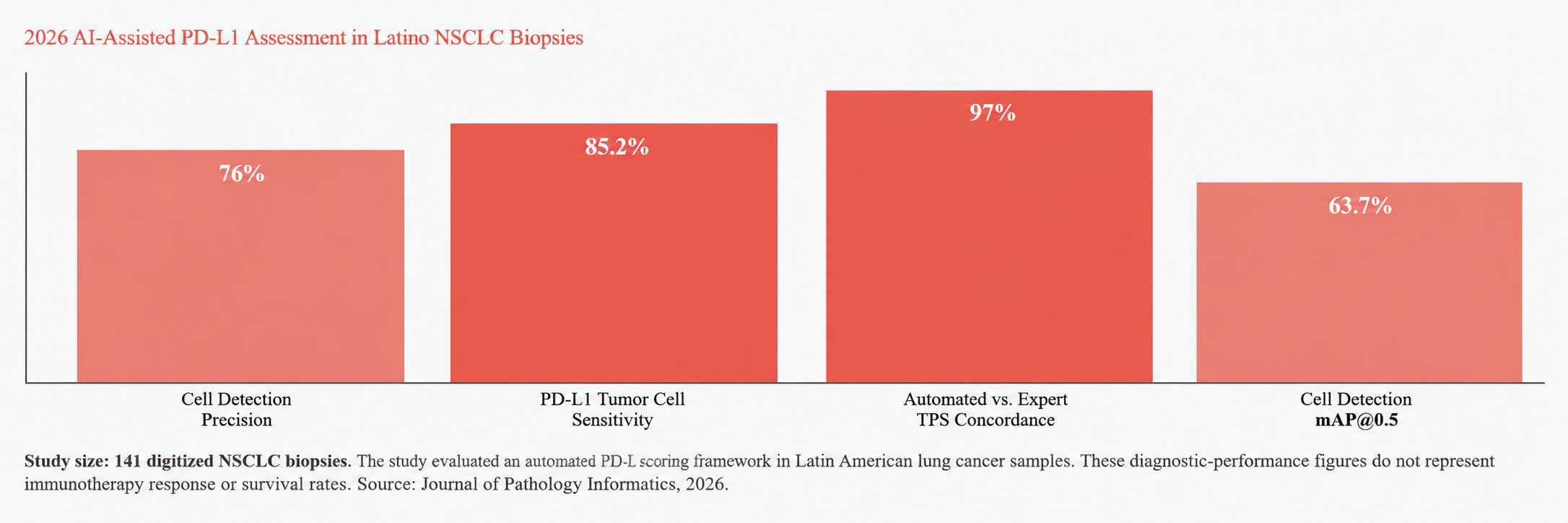
This research does not mean AI pathology should replace specialist review. Instead, it illustrates a trend toward digital tools designed to improve reproducibility and help oncologists make more consistent biomarker-based decisions.
Why Do Genomic Alterations Affect Lung Cancer Immunotherapy Decisions in Mexico?
PD-L1 alone does not provide the full immunotherapy picture. Research from the Personalized Medicine Laboratory and Thoracic Oncology Unit at Mexico's Instituto Nacional de Cancerología emphasizes that oncogenic alterations can change the tumor immune environment and influence responsiveness to checkpoint inhibitors.
Some driver-defined cancers have established targeted treatments that may be preferred before immunotherapy in the relevant clinical setting. Other molecular alterations may create more complex immune phenotypes, making treatment selection increasingly dependent on both genomic and immunological information.
| Test or Finding | Why It Can Matter Before Immunotherapy |
|---|---|
| PD-L1 expression | Helps guide use of checkpoint inhibitor monotherapy or combination treatment in defined settings. |
| EGFR alteration | Appropriate EGFR-targeted therapy may take priority in advanced driver-positive disease. |
| ALK rearrangement | ALK-directed treatment can be more clinically relevant than checkpoint inhibitor monotherapy in appropriate advanced disease. |
| ROS1, RET, MET, BRAF, NTRK, KRAS or HER2 findings | Can identify targeted-treatment opportunities or alter the overall systemic treatment strategy. |
| Tumor immune environment | Research increasingly examines immune infiltration and signaling rather than relying on a single biomarker. |
What Does Mexico's 2026 Low-Dose Immunotherapy Research Actually Show?
A notable Mexican immunotherapy trend involves research into whether lower checkpoint inhibitor doses could help address affordability and access. This is an access and research question, not evidence that every patient should receive a reduced dose.
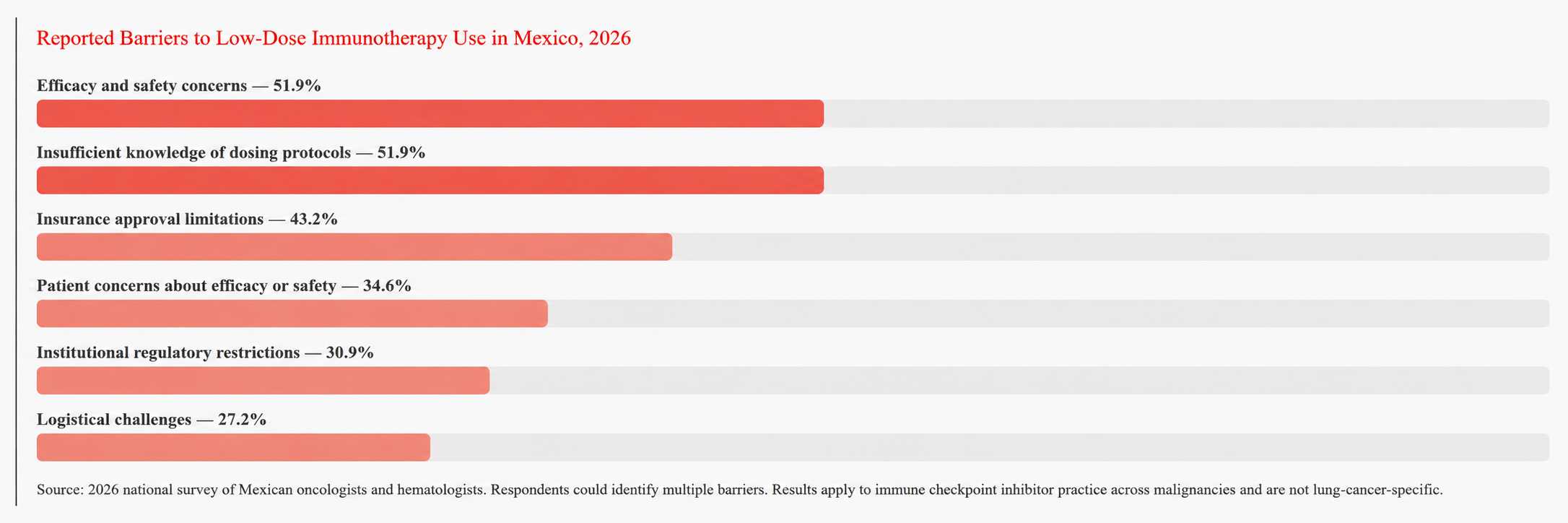
A national survey published in June 2026 included 81 Mexican oncologists and hematologists. Among respondents, 71.6% identified economic limitations and lack of coverage as barriers to checkpoint inhibitor access, while 45.7% reported having treated at least one patient with a low-dose immune checkpoint inhibitor.
The study was conducted across cancer practice generally and was not limited to lung cancer. Its relevance here is that checkpoint inhibitors including nivolumab and pembrolizumab are important lung cancer therapies, while affordability can influence access in Mexico.
Mexican Physician Confidence in Low-Dose Immunotherapy, 2026
Red line: Curative setting Teal line: Palliative setting
Source: 2026 Mexican national survey, N=81 complete responses to the primary low-dose ICI question. Percentages reflect physician confidence in reduced-dose checkpoint inhibitor efficacy and should not be interpreted as clinical response rates.
What New Lung Cancer Immunotherapy Strategies Are Mexican Researchers Watching?
Current innovation increasingly focuses on improving patient selection and overcoming resistance rather than simply adding more checkpoint inhibitors. Researchers associated with Mexican thoracic oncology programs are contributing to international work on oncogenic signaling, immune resistance, perioperative therapy and digital biomarkers.
| Emerging Direction | What Researchers Are Trying to Improve | Current Status |
|---|---|---|
| AI-assisted PD-L1 scoring | Improve reproducibility of a clinically important immune biomarker. | Research and diagnostic-development area; specialist pathology remains essential. |
| ctDNA-guided treatment | Use circulating tumor DNA to better detect residual disease or monitor molecular changes. | Rapidly developing research area; clinical use depends on the specific context. |
| Immune-resistance biomarkers | Identify why tumors fail to respond despite checkpoint blockade. | Investigational and increasingly multiomic. |
| New checkpoint combinations | Target additional immune-suppression mechanisms beyond PD-1/PD-L1. | Some combinations are established; many newer combinations remain in trials. |
| Personalized perioperative therapy | Determine who needs preoperative therapy, postoperative therapy or both. | Active clinical and translational research area. |
| Lower-dose checkpoint inhibitor research | Potentially reduce financial barriers and drug waste. | Not a universal guideline-endorsed alternative; requires rigorous evaluation. |
Some emerging strategies may eventually change standard treatment, while others may not show enough benefit to justify routine use. If an international patient is offered an experimental combination in Mexico, the provider should be able to identify the clinical trial, research authorization and evidence supporting participation.
What Are the Risks of Lung Cancer Immunotherapy in Mexico?
The main distinctive risk of checkpoint immunotherapy is immune-related toxicity. By removing immune inhibition, treatment can sometimes cause the immune system to attack normal tissues.
Most adverse events can be managed when they are recognized early, but some can become severe or life-threatening. Patients should receive written instructions explaining whom to contact when new symptoms develop.
| Possible Immune-Related Problem | Possible Symptoms | Why It Matters |
|---|---|---|
| Pneumonitis | New cough, shortness of breath, chest discomfort or worsening oxygen needs | Particularly important in patients who already have lung disease or thoracic radiation history. |
| Colitis | Persistent diarrhea, abdominal pain or blood in stool | Severe bowel inflammation can lead to dehydration or other complications. |
| Hepatitis | May initially appear through abnormal blood tests rather than obvious symptoms | Routine laboratory monitoring helps identify liver inflammation. |
| Endocrine inflammation | Fatigue, weakness, headache, blood-pressure changes or hormonal abnormalities | Thyroid, pituitary and adrenal problems may require long-term management. |
| Kidney inflammation | May first appear as changes in kidney-function laboratory tests | Early identification can affect whether treatment continues. |
| Rare cardiac or neurological toxicity | Chest symptoms, weakness, confusion, unusual neurological changes or severe fatigue | Rare complications can become medically urgent. |
What Should Patients Expect During Lung Cancer Immunotherapy in Mexico?
Checkpoint inhibitor treatment is often delivered through scheduled oncology visits rather than requiring recovery from a single major procedure. Your experience depends on whether immunotherapy is given alone, with chemotherapy, before surgery or after another treatment.
| Timeframe | Biological or Clinical Process | Possible Patient Experience | Activity Level | Action Required |
|---|---|---|---|---|
| Before treatment | Pathology, staging, biomarkers and baseline organ function are reviewed. | Testing and specialist consultations | Usually based on current health | Provide full records and medication history. |
| Treatment day | Checkpoint inhibitor is administered according to the prescribed regimen. | Some patients feel relatively well; others may experience fatigue or infusion-related symptoms. | Varies | Report symptoms occurring during administration. |
| Between visits | Immune effects continue after the infusion period. | Fatigue, skin, bowel, endocrine or respiratory changes may occur. | Individualized | Contact the treatment team for new or worsening symptoms. |
| Response assessment | Imaging and clinical evaluation assess cancer behavior. | Often no specific sensation | As medically tolerated | Attend scheduled imaging and oncology reviews. |
| After treatment ends | Immune-related effects can occasionally appear after the final treatment. | Many patients require continued surveillance. | Depends on cancer and treatment response | Maintain follow-up with the oncology team. |
How Are Immunotherapy and Clinical Trials Regulated in Mexico?
COFEPRIS is Mexico's federal health-risk regulator and oversees relevant medicines and clinical research. Experimental immunotherapy should not be confused with routine treatment simply because it is delivered by a cancer center.
COFEPRIS updated its clinical-trial information in July 2026 and explains that human research protocols are subject to scientific, ethical and regulatory review. Mexico's National Clinical Trials Registry, RNEC, provides public information on authorized protocols.
| What to Verify in Mexico | What You Should Request |
|---|---|
| Checkpoint inhibitor | Generic name, manufacturer and current Mexican registration status for the relevant product. |
| Experimental combination | Clinical trial identifier and applicable COFEPRIS authorization. |
| Research center | Institutional research and ethics oversight information. |
| Treating oncologist | Mexican professional license and relevant oncology specialist credentials. |
| Healthcare facility | Applicable sanitary authorization and emergency-support capability. |
Who Travels to Mexico for Lung Cancer and Oncology Care?
There is no authoritative 2026 national dataset identifying the origin, age and diagnosis of international patients traveling specifically to Mexico for lung cancer immunotherapy. Presenting such a demographic profile would require assumptions.
Official Baja California data provide useful context for Mexico's border healthcare market. In 2026, the state reported approximately 2.8 million annual health and wellness visitors across multiple specialties, including oncology. Of these health-tourism patients, 81% were reported to come from the United States and 16% from Canada.
Origin of Health-Tourism Patients Visiting Baja California
United States — 81%
Canada — 16%
Other origins — approximately 3%
Source: Secretaría de Turismo de Baja California, 2026. These figures represent health and wellness tourism overall and should not be interpreted as lung cancer immunotherapy patient statistics.
Patients may consider Mexican cancer centers because of geographic access, private specialist consultations, second opinions, diagnostic testing or interest in clinical research. None of these reasons means that treatment abroad is automatically more suitable than care available at home.
How Much Does Lung Cancer Immunotherapy Cost in Mexico?
There is no authoritative standardized national USD price for lung cancer immunotherapy in Mexico. The total cost depends on the specific checkpoint inhibitor, combination regimen, treatment duration, hospital, laboratory monitoring, imaging and management of side effects.
The 2026 Mexican national physician survey reinforces why cost transparency matters: 71.6% of respondents identified economic limitations and lack of coverage as barriers to checkpoint inhibitor access. The same survey reported a median estimate that 15% of immunotherapy patients paid out of pocket, although this figure varied by practice setting and is not lung-cancer-specific.
| Cost Component | Mexico | United States | Canada |
|---|---|---|---|
| Pathology and PD-L1 testing | Patient-specific USD quote required | Laboratory and insurance dependent | Provincial testing pathways and eligibility vary |
| Comprehensive molecular testing | Provider and laboratory dependent | Coverage and laboratory dependent | Provincial availability and eligibility dependent |
| Checkpoint inhibitor medicine | Exact drug and schedule determine cost | Insurance and treatment-site dependent | Provincial formulary and indication dependent |
| Chemotherapy if combined | Patient-specific quote required | Coverage dependent | Public treatment pathway dependent |
| Imaging and laboratory monitoring | May or may not be included in treatment quote | Facility and coverage dependent | Provincial pathway dependent |
| Treatment of immune toxicity | Often unpredictable and may add significant cost | Coverage dependent | Public-care pathway generally differs from private self-pay comparison |
How Should You Choose a Lung Cancer Immunotherapy Center in Mexico?
Choose a center according to thoracic oncology capability, regulatory transparency and emergency support rather than novelty claims. Immunotherapy requires more than access to an infusion chair because accurate pathology, biomarker testing and toxicity management directly affect treatment decisions.
Verify the Mexican Cancer Center
- Applicable sanitary authorization
- Issuing regulatory authority
- Oncology infusion capability
- 24/7 emergency plan
- Hospital or ICU access
- Laboratory and imaging availability
- Thoracic pathology capability
- PD-L1 testing pathway
- Molecular testing pathway
- Clinical-trial authorization when applicable
Verify the Lung Cancer Oncologist in Mexico
- Mexican professional license
- Medical oncology specialization
- Relevant specialty certification where applicable
- Experience with NSCLC and SCLC
- Experience managing checkpoint inhibitor toxicity
- Ability to interpret PD-L1 testing
- Knowledge of genomic-driven treatment pathways
- Clear follow-up responsibility
- Communication with your home oncologist
- Transparent written treatment rationale
International accreditation can provide additional institutional information when present, but it does not replace Mexican government licensing, physician credentials or demonstrated thoracic oncology expertise.
What Should International Patients Plan Before Immunotherapy in Mexico?
You should arrange continuity of oncology care before traveling, not after treatment has started. Checkpoint inhibitor toxicity can develop between infusions or after you return home, so your local oncologist needs complete treatment information.
Before Traveling for Immunotherapy in Mexico
- Send your complete pathology report.
- Provide PD-L1 results.
- Provide genomic testing.
- Send staging scans and imaging files.
- Document all previous cancer therapy.
- Provide autoimmune and medication history.
- Verify the exact immunotherapy drug.
- Verify regulatory status.
- Request an itemized USD quote.
Before Returning Home After Immunotherapy in Mexico
- Obtain exact drug and treatment dates.
- Request laboratory results.
- Obtain updated imaging.
- Record any immune-related adverse events.
- Obtain emergency instructions.
- Confirm the next treatment or scan date.
- Send records to your home oncologist.
- Know how to contact the Mexican team.
- Clarify responsibility for delayed toxicity.
Frequently Asked Questions About Lung Cancer Immunotherapy in Mexico
Is immunotherapy available for lung cancer in Mexico?
Checkpoint inhibitors are used in modern lung cancer care, but availability depends on the medicine, indication, provider and healthcare setting. Patients should verify the exact drug, Mexican registration status and whether the proposed use represents standard treatment or clinical research.
Who is most likely to qualify for lung cancer immunotherapy?
Eligibility depends on whether you have NSCLC or SCLC, stage, PD-L1 expression, molecular alterations, previous treatment and medical history. A high PD-L1 score can support particular strategies, but PD-L1 alone should not determine every treatment decision.
Do I need PD-L1 testing before immunotherapy in Mexico?
PD-L1 testing is important in several NSCLC treatment decisions, particularly when checkpoint inhibitor monotherapy is being considered. Its role varies by stage and regimen, so testing should be interpreted alongside pathology, molecular results and the overall clinical situation.
Can immunotherapy replace chemotherapy for lung cancer?
Sometimes, but not universally. Selected advanced NSCLC patients may receive checkpoint inhibitor monotherapy, while many others benefit from chemo-immunotherapy. In resectable disease, current perioperative strategies also frequently combine checkpoint inhibition with platinum-based chemotherapy.
Does an EGFR mutation change the immunotherapy plan?
Yes, potentially. An actionable driver alteration can make a molecularly targeted medicine more appropriate than checkpoint inhibitor monotherapy in certain advanced NSCLC settings. Comprehensive genomic testing should therefore be reviewed before choosing systemic treatment.
What is perioperative immunotherapy for lung cancer?
Perioperative treatment incorporates systemic therapy around lung cancer surgery. Depending on the regimen, checkpoint inhibition may be given before surgery, after surgery or across both phases, usually within a coordinated multidisciplinary treatment pathway.
Is low-dose immunotherapy standard treatment in Mexico?
No universal guideline makes reduced-dose checkpoint inhibitors a standard replacement for approved regimens. A 2026 Mexican physician survey documented real-world interest, mainly because of affordability, while also identifying substantial concerns about evidence, safety and dosing guidance.
Can artificial intelligence choose my lung cancer immunotherapy?
AI is being studied to support tasks such as PD-L1 quantification, but it does not independently determine treatment. A 2026 Latin American study demonstrated high agreement between automated and expert PD-L1 scoring, while specialist pathological and oncological interpretation remained necessary.
What is the most concerning lung-related immunotherapy side effect?
Pneumonitis, or immune-mediated inflammation of lung tissue, is particularly important. New or worsening cough, breathlessness or oxygen requirements during checkpoint treatment should be reported promptly because symptoms can resemble infection, cancer progression or other lung conditions.
How much does lung cancer immunotherapy cost in Mexico?
There is no standardized national price. Total cost depends on the checkpoint inhibitor, treatment schedule, combination therapy, biomarker testing, imaging, hospital services and duration. Patients should request an itemized USD estimate covering both routine treatment and likely additional expenses.
How can I verify an experimental immunotherapy trial in Mexico?
Ask for the protocol identifier, sponsoring institution, ethics information and applicable COFEPRIS authorization. Mexico's National Clinical Trials Registry provides public information about authorized protocols, helping patients distinguish regulated research from commercially described experimental treatment.
Should I get a second opinion before traveling to Mexico for immunotherapy?
An independent thoracic oncology review can be valuable, particularly when the proposed treatment differs from your current plan. Provide pathology, PD-L1 results, genomic testing, imaging and previous treatment records so the reviewing oncologist can assess the recommendation accurately.
Compare Lung Cancer Immunotherapy Options in Mexico With PlacidWay
If you are considering lung cancer immunotherapy in Mexico, PlacidWay can help you request information from healthcare providers, compare proposed treatment approaches, understand estimated costs and organize questions about PD-L1 testing, molecular profiling, regulatory status and specialist credentials.
Before changing an established oncology plan or entering an experimental program, discuss the proposed treatment with a qualified thoracic oncologist familiar with your pathology, biomarkers and previous therapy.
Medical Disclaimer for Lung Cancer Immunotherapy
Disclaimer: This information is for educational purposes only and does not replace professional medical advice. Always consult a qualified healthcare provider before making medical decisions.
References for Lung Cancer Immunotherapy in Mexico
- Non-Small Cell Lung Cancer Treatment (PDQ) – National Cancer Institute
- Side Effects of Cancer Immunotherapy – National Cancer Institute
- Navigating Multimodality Therapy in NSCLC: Perioperative Immunotherapy – ASCO Educational Book, 2026
- Automatic PD-L1 Expression Evaluation in Latino NSCLC Patients – Journal of Pathology Informatics, 2026
- Oncogenic Alterations and Immunotherapy in NSCLC – Cancer and Metastasis Reviews, 2025
- Low-Dose Immune Checkpoint Inhibitors: National Survey in Mexico – ecancermedicalscience, 2026
- Clinical Trials and National Clinical Trials Registry – COFEPRIS, 2026
- Health and Wellness Tourism in Baja California – Secretaría de Turismo de Baja California, 2026



























Share this listing