
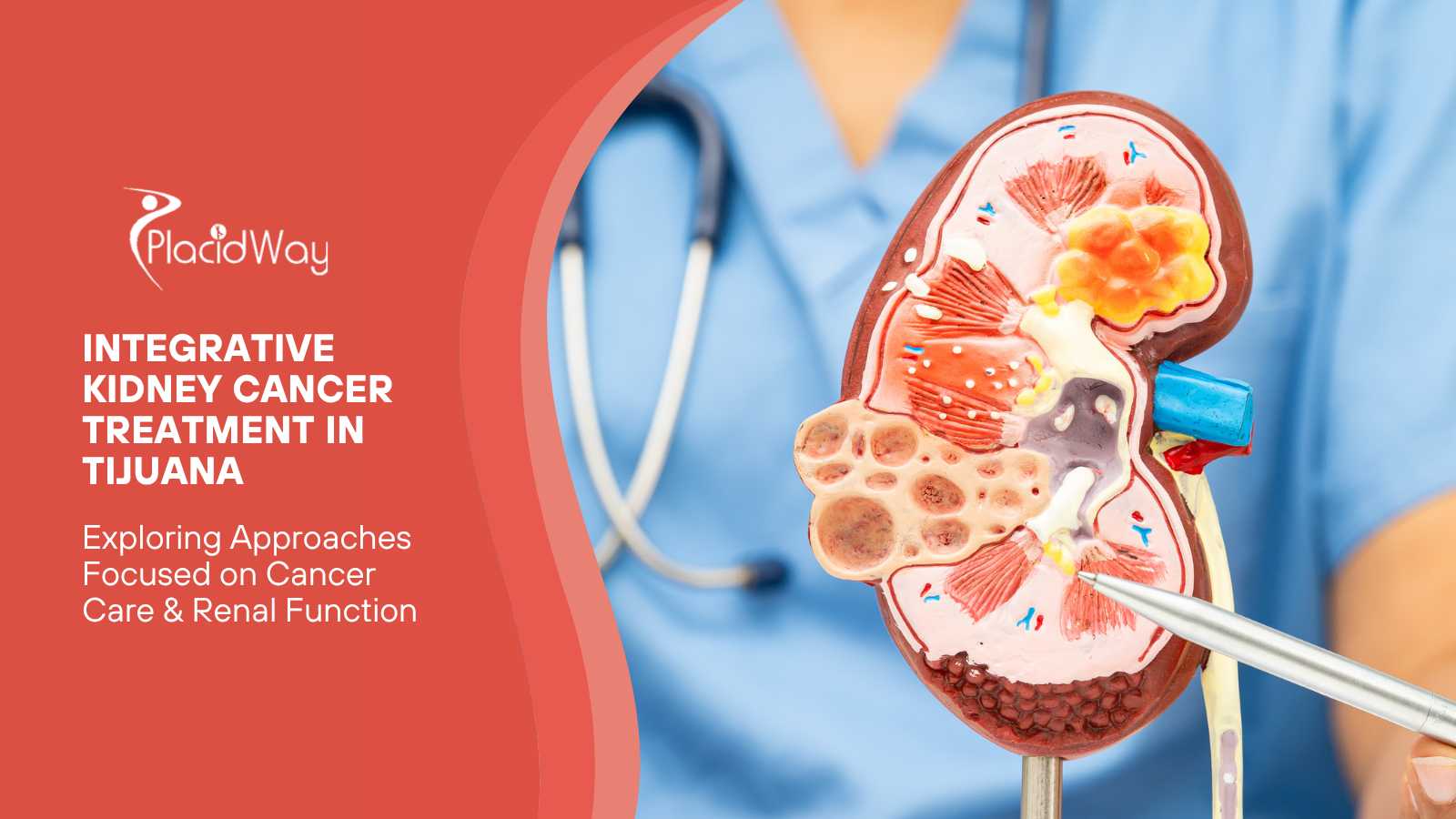
When you are told that a kidney tumor needs treatment, removing the cancer is only part of the discussion. You may also be asking how much healthy kidney can be preserved, whether partial nephrectomy or ablation is possible, how systemic treatment may affect kidney function, and whether supportive therapies can help without interfering with oncology care. For patients considering integrative kidney cancer treatment in Tijuana, Mexico, the safest approach combines evidence-based cancer treatment with renal-function monitoring and supportive care. Verify the facility's applicable COFEPRIS authorization, current Mexican hospital certification where available, and specialist certification through CONACEM-recognized urology, oncology, and nephrology councils before traveling.
Quick Summary: Kidney Cancer Treatment in Tijuana With Renal Function in Mind
- Main treatment goal: Control or remove the kidney cancer while preserving as much useful kidney function as medically possible.
- Kidney-sparing option: Partial nephrectomy removes the tumor while leaving part of the kidney. In appropriately selected localized renal cell cancers, it can preserve more renal function than removing the entire kidney.
- Alternatives for selected patients: Cryoablation, other thermal ablation techniques, and stereotactic radiation may be considered when surgery is not appropriate or in carefully selected localized tumors.
- Advanced kidney cancer: Treatment may involve immunotherapy, targeted drugs, surgery in selected situations, radiation for particular sites, or clinical trials rather than conventional chemotherapy alone.
- Integrative care: Nutrition support, rehabilitation, symptom management, psychological care, exercise guidance, and selected complementary methods can be used alongside oncology treatment when medically appropriate. They should not be presented as substitutes for proven kidney cancer therapy.
- Estimated Tijuana cost: Information not available as one reliable standardized USD figure. Costs depend on pathology, imaging, tumor complexity, surgery or ablation, systemic medicines, hospital stay, complications, and follow-up.
- Facility checks: Ask which COFEPRIS sanitary authorization applies to surgery, imaging, radiation, dialysis, or other services. Check whether the hospital has current certification through Mexico's Consejo de Salubridad General when applicable.
- Doctor credentials: Confirm the physician's cédula profesional and current specialist certification through CONACEM-recognized councils such as the Consejo Nacional Mexicano de Urología, Consejo Mexicano de Oncología, or Consejo Mexicano de Nefrología.
- Important caution: Herbal products, high-dose supplements, detoxification protocols, and other complementary treatments can affect kidney function or interact with anticancer drugs. Discuss every product with your oncology and renal-care teams.
What Integrative Kidney Cancer Treatment in Tijuana Should Actually Mean
Integrative kidney cancer care should combine evidence-based oncology with supportive treatments that address symptoms, nutrition, mobility, emotional wellbeing, and kidney health. It should not replace surgery, ablation, immunotherapy, targeted treatment, or other proven cancer-directed therapy with unproven alternatives.
This distinction matters particularly for renal cell carcinoma, the most common form of kidney cancer. Kidney cancer can sometimes be cured when it is localized, and delaying effective treatment in favor of an unsupported approach may allow the tumor to grow or spread.
Evidence-Based Cancer Treatment
Surgery, ablation, radiation, immunotherapy, targeted medicines, active surveillance in selected tumors, and clinical trials according to stage and tumor biology.
Integrative Support
Nutrition, rehabilitation, symptom control, psychological support, sleep management, physical activity, and selected complementary approaches that do not interfere with cancer treatment.
Why preserving kidney function matters during cancer treatment
Your kidneys remove waste and excess fluid from blood, help regulate electrolytes and blood pressure, and contribute to red blood cell production and bone health. Losing functioning kidney tissue can reduce renal reserve, particularly if you already have chronic kidney disease, diabetes, hypertension, or disease in the other kidney.
Renal preservation does not mean keeping kidney tissue at any cost. The priority remains safe cancer control. The clinical question is whether cancer can be treated effectively while avoiding unnecessary loss of functioning kidney tissue.
Kidney-Sparing Treatment Options for Renal Cell Cancer in Tijuana
Partial nephrectomy is one of the most important kidney-preserving treatments for localized renal cell cancer. Instead of removing the entire kidney, the surgeon removes the tumor and a margin of surrounding tissue while preserving functioning renal tissue.
National Cancer Institute guidance notes that partial nephrectomy can provide cancer outcomes comparable with radical nephrectomy in appropriately selected stage I patients while preserving greater renal function. Partial nephrectomy can also be considered in selected stage II tumors when technically feasible.
| Treatment | Kidney preservation | When it may be considered | Important limitation |
|---|---|---|---|
| Partial nephrectomy | Preserves part of the affected kidney. | Many small localized tumors and selected larger tumors when technically possible. | Tumor location, vascular involvement, complexity, surgeon experience, and patient health affect feasibility. |
| Radical nephrectomy | Removes the affected kidney. | Large, invasive, technically unsuitable, or other tumors where partial removal is not considered safe or adequate. | Greater loss of renal tissue. |
| Cryoablation | Destroys the tumor without removing the kidney. | Selected localized tumors, particularly when surgery carries higher risk. | Not appropriate for every tumor size or location; follow-up imaging is essential. |
| Thermal ablation | Treats the tumor while retaining surrounding kidney. | Selected small localized tumors or patients who are poor surgical candidates. | Suitability depends on anatomy, tumor size, and treatment expertise. |
| Stereotactic radiation | Avoids surgical removal of kidney tissue. | Selected localized tumors when surgery or ablation is unsuitable. | Requires specialized radiation planning and is not the standard choice for every operable patient. |
| Active surveillance | Avoids immediate treatment-related renal loss. | Selected small renal masses or patients where treatment risk may outweigh immediate benefit. | Requires disciplined imaging and clinical follow-up; tumor growth can change the treatment plan. |
When radical nephrectomy may still be the safer cancer operation
Preserving renal tissue is desirable only when cancer can still be treated adequately. A large central tumor, major vascular involvement, extensive replacement of the kidney, or anatomy making partial surgery unsafe may lead the surgical team to recommend complete kidney removal.
If radical nephrectomy is proposed, ask whether your case has been reviewed by a urologic surgeon experienced in complex partial nephrectomy before concluding that kidney-sparing surgery is impossible.
Kidney Cancer Diagnosis, Staging, and Renal Function Tests Before Treatment in Tijuana
A renal-preserving treatment plan depends on more than tumor size. Your doctors need to understand tumor location, spread, kidney function, the condition of the opposite kidney, medical history, and whether pathology confirms renal cell carcinoma or another kidney tumor.
Contrast-enhanced CT or MRI commonly provides detailed information about the kidney mass and surrounding structures. Chest imaging and other tests may be used when staging requires evaluation for distant spread.
| Assessment | What it tells your team | Why it matters for renal preservation |
|---|---|---|
| Contrast CT or MRI | Tumor size, location, vessels, local invasion, lymph nodes, and other anatomy. | Helps determine whether partial nephrectomy or ablation is technically possible. |
| Serum creatinine and eGFR | Estimates current filtration function. | Baseline kidney function affects surgical and medication decisions. |
| Urinalysis and urine protein | Can identify protein loss, blood, or other kidney-related abnormalities. | Underlying renal disease can make nephron preservation more important. |
| Pathology | Identifies tumor type and grade where tissue is obtained. | Tumor biology influences treatment urgency and systemic options. |
| Blood pressure, diabetes, cardiovascular history | Identifies conditions associated with future kidney-function decline. | Helps estimate long-term renal vulnerability after treatment. |
Do all kidney tumors need a biopsy?
Not always. Some renal tumors proceed directly to surgery based on imaging and clinical assessment, while biopsy becomes more useful before ablation, when imaging is uncertain, before systemic therapy, or when knowing the tumor type would change management.
How Kidney Cancer Treatment in Tijuana Changes When Disease Is Advanced
When renal cell carcinoma has spread beyond the kidney, preserving one organ is no longer the only treatment goal. Your oncology team must address cancer throughout the body while still monitoring kidney function, blood pressure, liver function, immune toxicity, and treatment-related complications.
Modern metastatic renal cell cancer treatment commonly relies on immunotherapy, targeted medicines that affect tumor signaling or blood-vessel growth, or combinations of these therapies. Conventional cytotoxic chemotherapy has a limited role in the common clear-cell form of renal cell carcinoma, although treatment differs for rarer histologies.
| Cancer situation | Treatment approaches that may be considered | Renal-function consideration |
|---|---|---|
| Localized kidney cancer | Partial nephrectomy, radical nephrectomy, ablation, surveillance, or selected stereotactic radiation. | Preserve functional renal tissue when oncologically appropriate. |
| Higher-risk resected disease | Surgery followed by additional systemic treatment in selected patients according to current evidence. | Monitor renal function and immune-related complications. |
| Metastatic clear-cell RCC | Immunotherapy combinations and/or VEGF-targeted medicines, depending on clinical factors. | Blood pressure, urine protein, kidney function, and treatment-specific toxicities require monitoring. |
| Limited metastatic sites | Systemic treatment plus surgery or targeted radiation may be considered in selected cases. | Treatment should be coordinated across urology, oncology, and radiation oncology. |
| Progression after initial systemic treatment | Different targeted agents, immune-based approaches, local treatment, or clinical trials depending on previous therapy. | Cumulative toxicity and baseline renal reserve become increasingly important. |
The exact medicine should always be identified by generic name. If a Tijuana program describes a treatment only as “immune therapy,” “biological therapy,” or “precision therapy,” ask for the product, approved indication, regulatory status, and evidence relevant to your kidney cancer subtype.
Integrative Therapies During Kidney Cancer Treatment in Tijuana: What Helps and What Needs Caution
Integrative treatment can be valuable when it addresses a clearly defined supportive-care need. Examples include improving nutrition during treatment, rebuilding strength after surgery, treating anxiety, managing sleep problems, or helping patients cope with pain and fatigue.
However, the National Cancer Institute distinguishes complementary approaches used alongside conventional treatment from alternative therapies used instead of it. Supplements and herbal products can interact with cancer medicines, and “natural” does not mean kidney-safe.
| Integrative approach | Potential supportive role | Kidney cancer caution |
|---|---|---|
| Oncology nutrition | Support calorie, protein, hydration, weight, and symptom needs. | Diet may need adjustment for reduced kidney function, potassium abnormalities, diabetes, or treatment-related effects. |
| Physical rehabilitation | Restore mobility and strength after surgery or prolonged cancer treatment. | Activity should account for surgical healing, bone metastases, anemia, and cardiovascular status. |
| Meditation, counseling, relaxation | May support coping, sleep, stress management, and emotional wellbeing. | Supportive only; should not be presented as tumor-directed treatment. |
| Acupuncture | May be considered for selected symptoms when medically appropriate. | Check blood counts, infection risk, anticoagulants, and practitioner qualifications. |
| Herbs and supplements | No supplement has been proven to cure kidney cancer. | Some may interact with anticancer medicines or worsen kidney or liver injury. |
| Detoxification or high-dose infusions | Disease-control benefit for renal cell carcinoma should not be assumed. | Ask for exact ingredients, clinical indication, kidney risks, regulatory status, and kidney-cancer-specific evidence. |
Be cautious with “kidney detox” claims during renal cancer care
Your kidneys already perform filtration and waste-removal functions. A treatment described as detoxifying the kidneys does not establish that it preserves nephrons, improves glomerular filtration, or treats renal cell carcinoma.
If a clinic recommends IV nutrients, botanical compounds, ozone-related interventions, hyperthermia, supplements, or another complementary modality as a cancer treatment, ask for human renal cell carcinoma evidence showing objective tumor-control outcomes rather than testimonials.
2025-2026 Kidney Cancer Statistics and Patient Demographics
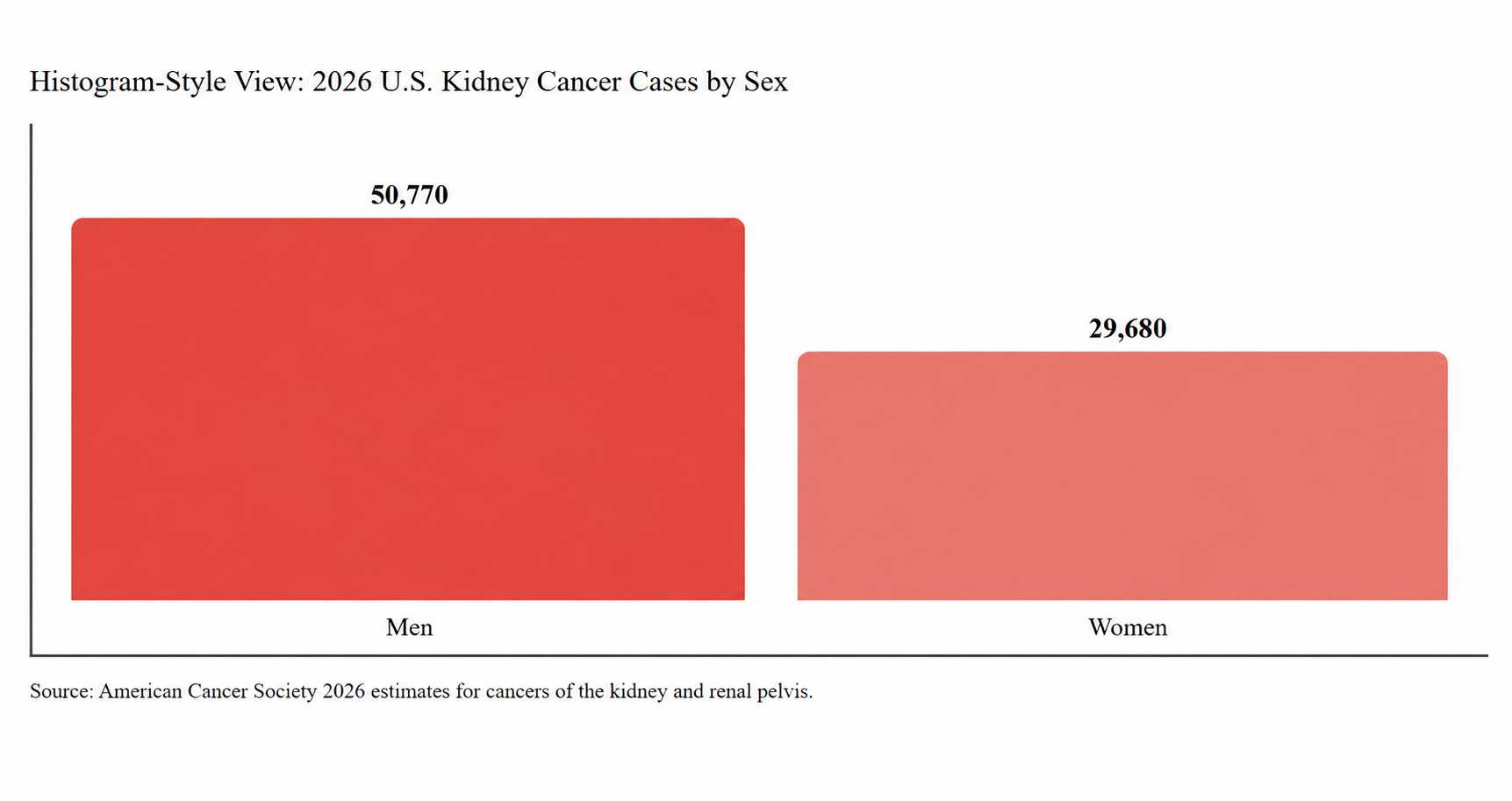
The American Cancer Society estimated 80,980 new kidney and renal pelvis cancer cases in the United States for 2025. Its 2026 projection is 80,450 new cases and approximately 15,160 deaths.
For 2026, approximately 50,770 new cases are projected among men and 29,680 among women. The average age at diagnosis is approximately 65, and most patients are diagnosed between ages 55 and 74.
Line Graph: Projected U.S. Kidney and Renal Pelvis Cancer Cases
Source: American Cancer Society, Cancer Facts & Figures 2025 and 2026. These annual projections should not be interpreted as Tijuana medical-tourism statistics.
Who travels to Tijuana for kidney cancer treatment?
Tijuana's location directly across the U.S.-Mexico border makes it geographically accessible to patients from Southern California and other parts of the western United States. However, no authoritative current dataset was identified showing the number, age, sex, cancer stage, renal function, or home state of patients traveling specifically to Tijuana for kidney cancer treatment.
Medical-tourism demographics should therefore not be invented from general tourism statistics. Your suitability for treatment abroad depends on your tumor and medical condition, not on the profile of other travelers.
Kidney Cancer Treatment Costs in Tijuana Compared With the United States
There is no reliable single price for kidney cancer treatment in Tijuana because patients may need very different care. A small tumor treated with percutaneous ablation has a different cost structure from robotic partial nephrectomy, open radical nephrectomy, or months of systemic immunotherapy and targeted treatment.
Authoritative public sources do not publish a standardized 2026 USD price covering complete kidney cancer care in Tijuana. Any specific comparison should therefore use an individualized written treatment plan rather than a generic procedure price.
| Cost component | Tijuana, Mexico | United States |
|---|---|---|
| Complete treatment price | Information not available as one authoritative national or Tijuana-specific figure. | No single comparable amount; insurance, network, hospital, and treatment plan affect patient responsibility. |
| Imaging and diagnosis | Request separate costs for CT/MRI, pathology, laboratory tests, and specialist review. | Patient cost depends on insurance and provider network. |
| Partial or radical nephrectomy | Clarify surgeon, anesthesia, operating room, hospital stay, pathology, and complication charges. | Costs differ substantially by hospital, surgical approach, insurance, and complexity. |
| Ablation | Confirm interventional radiology, anesthesia, imaging guidance, pathology, and follow-up imaging. | Coverage and patient responsibility depend on medical indication and insurance. |
| Systemic treatment | Exact drug, number of cycles, pharmacy, infusion, and laboratory fees should be itemized. | Drug costs and patient responsibility vary greatly by coverage and treatment setting. |
| Integrative services | Ask which supportive services are medically indicated and whether they are optional. | Coverage varies by service and insurance plan. |
What should be included in a Tijuana kidney cancer quote?
- Urology and medical-oncology consultations.
- Radiology review and staging studies.
- Pathology review or biopsy.
- Kidney-function and laboratory testing.
- Surgeon, anesthesiologist, operating room, and surgical equipment.
- Hospitalization and nursing care.
- Ablation or radiation charges when applicable.
- Exact immunotherapy or targeted medicines.
- Treatment of complications.
- Follow-up imaging and kidney-function monitoring.
- Optional integrative or supportive services.
- Travel, accommodation, caregiver costs, and extended stays.
How to Choose a Tijuana Hospital for Kidney Cancer Treatment
A kidney cancer facility should be selected according to what it can safely do, not the length of its treatment menu. Partial nephrectomy, complex renal surgery, ablation, systemic oncology, radiation, and integrative support each require different staff and infrastructure.
COFEPRIS states that health establishments performing surgical procedures and other specified higher-risk services require appropriate sanitary authorization. Mexico's Consejo de Salubridad General also maintains current lists of healthcare establishments certified under national quality and patient-safety processes.
| Hospital check | Question to ask | Why it matters |
|---|---|---|
| COFEPRIS authorization | “What current sanitary authorization applies to the surgery or other services I will receive?” | Surgical facilities and certain specialized services are subject to Mexican health regulation. |
| CSG certification | “Does the hospital hold a current certificate from the Consejo de Salubridad General?” | Provides an additional national quality and patient-safety signal when applicable. |
| Renal surgery capability | “Do you regularly perform partial nephrectomy for tumors with anatomy similar to mine?” | Preserving kidney tissue can require advanced surgical judgment and technique. |
| Interventional radiology | “Is renal cryoablation or another ablation option available and appropriate for my tumor?” | Selected patients may have a kidney-sparing nonsurgical option. |
| Nephrology access | “Can a nephrologist review me if my baseline kidney function is reduced?” | Important for patients with chronic kidney disease or high renal risk. |
| Emergency and ICU care | “Is 24/7 emergency and intensive-care support available on site?” | Major surgery and systemic cancer treatment can produce serious complications. |
International accreditation can be considered as an additional institutional signal when genuinely applicable, but it should not replace Mexican sanitary authorization, national certification, specialist credentials, surgical experience, emergency capability, or kidney-cancer-specific expertise.
How to Verify a Kidney Cancer Surgeon, Oncologist, and Nephrologist in Mexico
Complex kidney cancer care may involve several specialists. Verify each doctor's role rather than assuming one physician should manage every aspect of surgery, systemic therapy, and renal-function preservation.
CONACEM provides a public search for current Mexican specialist certification. Its recognized specialty councils include the Consejo Nacional Mexicano de Urología, Consejo Mexicano de Oncología, and Consejo Mexicano de Nefrología.
Urologic Surgeon
Ask about current specialist certification and experience with open, laparoscopic, and robotic partial nephrectomy, including tumors of similar size and complexity.
Medical Oncologist
Important for metastatic or high-risk disease, systemic immunotherapy, targeted treatment, toxicity monitoring, and coordination with your home oncologist.
Nephrologist
Particularly relevant when you have reduced eGFR, proteinuria, diabetes, hypertension, a solitary kidney, or concern about treatment-related renal injury.
Interventional Radiologist
May evaluate whether image-guided ablation is appropriate for a small renal tumor when surgery is undesirable or higher risk.
Questions to ask the kidney cancer team in Tijuana
- What is my exact kidney cancer subtype and clinical stage?
- Can my tumor be treated with partial rather than radical nephrectomy?
- What makes my tumor technically simple or complex?
- What are my current creatinine, eGFR, and urine-protein results?
- Should a nephrologist be involved before treatment?
- Is ablation a reasonable alternative to surgery?
- What treatment is intended to control the cancer, and what care is supportive only?
- Do any supplements or integrative therapies in the program interact with my cancer medicines?
- How will kidney function be monitored after treatment?
- How will you coordinate follow-up with my doctors after I return home?
Travel, Recovery, and Kidney Function Follow-Up After Treatment in Tijuana
Recovery depends on whether you undergo minimally invasive surgery, open surgery, ablation, radiation, or systemic therapy. Travel plans should remain flexible because kidney function, pain control, bleeding, infection, blood pressure, and other complications may affect when it is safe to return home.
If you receive treatment abroad, arrange follow-up before leaving home. Your local physician should know exactly what procedure, medication, or supportive therapy you received and what laboratory monitoring is required.
| Timeframe | Clinical process | Patient sensation | Activity level | Action required |
|---|---|---|---|---|
| Before travel | Imaging, pathology, renal-function and treatment review. | Depends on cancer and existing kidney function. | Individual. | Send medical records and obtain travel guidance from your treating team. |
| Early after surgery | Pain control, urine output, bleeding, kidney function, breathing, and mobility monitoring. | Pain, fatigue, and reduced stamina can occur. | Short walks and gradual activity according to surgical guidance. | Follow wound, lifting, hydration, and medication instructions. |
| After ablation | Observation for bleeding, pain, and treatment-related complications. | Often less recovery than major surgery, but individual experience varies. | Increase gradually as directed. | Keep scheduled follow-up imaging to confirm local control. |
| During systemic therapy | Blood pressure, kidney tests, blood counts, liver tests, and toxicity monitoring. | Highly drug-dependent. | Individual. | Know who to contact for new symptoms and abnormal laboratory results. |
| After returning home | Cancer surveillance and long-term renal-function assessment. | Recovery continues according to treatment. | Individualized. | Transfer pathology, imaging, medication, operative, and laboratory records to your home team. |
Symptoms requiring prompt medical attention after kidney cancer treatment
- Fever or shaking chills after surgery or during systemic treatment.
- Increasing abdominal, flank, or surgical-site pain.
- Heavy bleeding, fainting, or marked weakness.
- Severe reduction in urine output or inability to urinate.
- New shortness of breath or chest pain.
- Persistent vomiting, diarrhea, or dehydration.
- Any severe or rapidly worsening symptom identified by your oncology or surgical team as an emergency.
Frequently Asked Questions About Integrative Kidney Cancer Treatment in Tijuana
Can kidney cancer be treated without removing the whole kidney?
Yes, in appropriately selected patients. Partial nephrectomy removes the tumor while preserving part of the affected kidney. Small localized tumors may also be considered for ablation or, in selected situations, surveillance or stereotactic radiation. Tumor anatomy, stage, kidney function, and overall health determine suitability.
Is partial nephrectomy better for preserving renal function?
Partial nephrectomy preserves more functioning kidney tissue than removing the entire kidney. NCI guidance notes that appropriately selected localized kidney cancer patients can have cancer outcomes comparable with radical nephrectomy while retaining greater renal function. It is not technically suitable for every tumor.
What does integrative kidney cancer treatment in Tijuana mean?
Integrative care should combine established kidney cancer treatment with supportive approaches such as nutrition, rehabilitation, symptom management, psychological care, and selected complementary methods. It should not replace evidence-based surgery, ablation, immunotherapy, targeted therapy, radiation, or other medically appropriate cancer treatment.
Can cryoablation treat kidney cancer while preserving the kidney?
Cryoablation destroys selected kidney tumors by freezing them while leaving the kidney in place. It can be considered for some localized tumors, particularly when surgery carries higher risk. Tumor size and location are important, and follow-up imaging is needed to assess local tumor control.
Are supplements or herbal treatments proven to cure kidney cancer?
No dietary supplement, herb, vitamin, special diet, or detoxification program has been proven to cure renal cell carcinoma. Some products can also affect kidney function or interact with cancer medicines. Discuss every supplement with your oncology team before taking it during treatment.
How much does kidney cancer treatment in Tijuana cost?
There is no authoritative standardized USD price for an entire kidney cancer treatment episode in Tijuana. Costs vary with imaging, pathology, surgical approach, hospital stay, ablation, medications, complications, and follow-up. Request an itemized quote based on your actual treatment plan.
How do I verify a kidney cancer surgeon in Tijuana?
Request the doctor's full legal name, cédula profesional, registered specialty, and current certification. CONACEM provides public specialist verification, including certification through the Consejo Nacional Mexicano de Urología. Ask specifically about experience with partial nephrectomy and tumors similar to yours.
What should I verify about a Tijuana hospital before kidney surgery?
Ask which COFEPRIS sanitary authorization applies to surgical care, whether the hospital holds current national certification when applicable, and whether it has experienced urology, anesthesia, pathology, imaging, blood services, nephrology access, emergency care, and intensive-care capability.
Do I need a nephrologist during kidney cancer treatment?
Not every patient needs a nephrologist, but consultation may be useful if you have reduced kidney function, protein in the urine, diabetes, hypertension, a solitary kidney, bilateral tumors, or treatment-related renal problems. Your urologist or oncologist can determine when renal specialist input is appropriate.
What is used to treat metastatic kidney cancer?
Metastatic renal cell carcinoma is commonly treated with immune checkpoint therapy, targeted medicines that affect tumor signaling or blood-vessel growth, or combinations of these approaches. Surgery, radiation, and other local treatments can still have roles in selected patients depending on disease distribution.
Can I continue follow-up in the United States after treatment in Tijuana?
Yes, and continuity is important. Obtain your operative report, pathology, imaging, medication record, laboratory results, discharge summary, and treatment recommendations before returning home. Your U.S. doctors need complete information to monitor kidney function, detect recurrence, and manage delayed complications.
What records should I send before requesting a kidney cancer second opinion in Tijuana?
Send recent CT or MRI images and reports, pathology or biopsy results if available, current creatinine and eGFR, urinalysis, treatment history, medication list, medical conditions, and previous kidney surgery records. The specialist may request additional testing after reviewing your case.
Compare Kidney Cancer Treatment Options in Tijuana
If you are considering kidney cancer care in Tijuana, PlacidWay can help you request information, compare proposed treatments and costs, and prepare questions about kidney-sparing surgery, ablation, oncology therapy, physician credentials, facility authorization, supportive care, and follow-up. Provider comparison should support—not replace—medical advice from qualified specialists who understand your diagnosis and kidney function.
Disclaimer for Kidney Cancer Treatment Information
Disclaimer: This information is for educational purposes only and does not replace professional medical advice. Always consult a qualified healthcare provider before making medical decisions.
References
- Renal Cell Cancer Treatment (PDQ®), Health Professional Version – National Cancer Institute
- Renal Cell Cancer Treatment (PDQ®), Patient Version – National Cancer Institute
- Key Statistics About Kidney Cancer – American Cancer Society
- Survival Rates for Kidney Cancer – American Cancer Society
- Cancer Therapy Interactions With Foods and Dietary Supplements – National Cancer Institute
- Licencia Sanitaria de Servicios de Salud – COFEPRIS, Government of Mexico
- Certified Healthcare Establishments – Consejo de Salubridad General, Government of Mexico
- Public Search for Certified Medical Specialists – CONACEM









.png)
.png)





.png)


.jpg)








Share this listing