
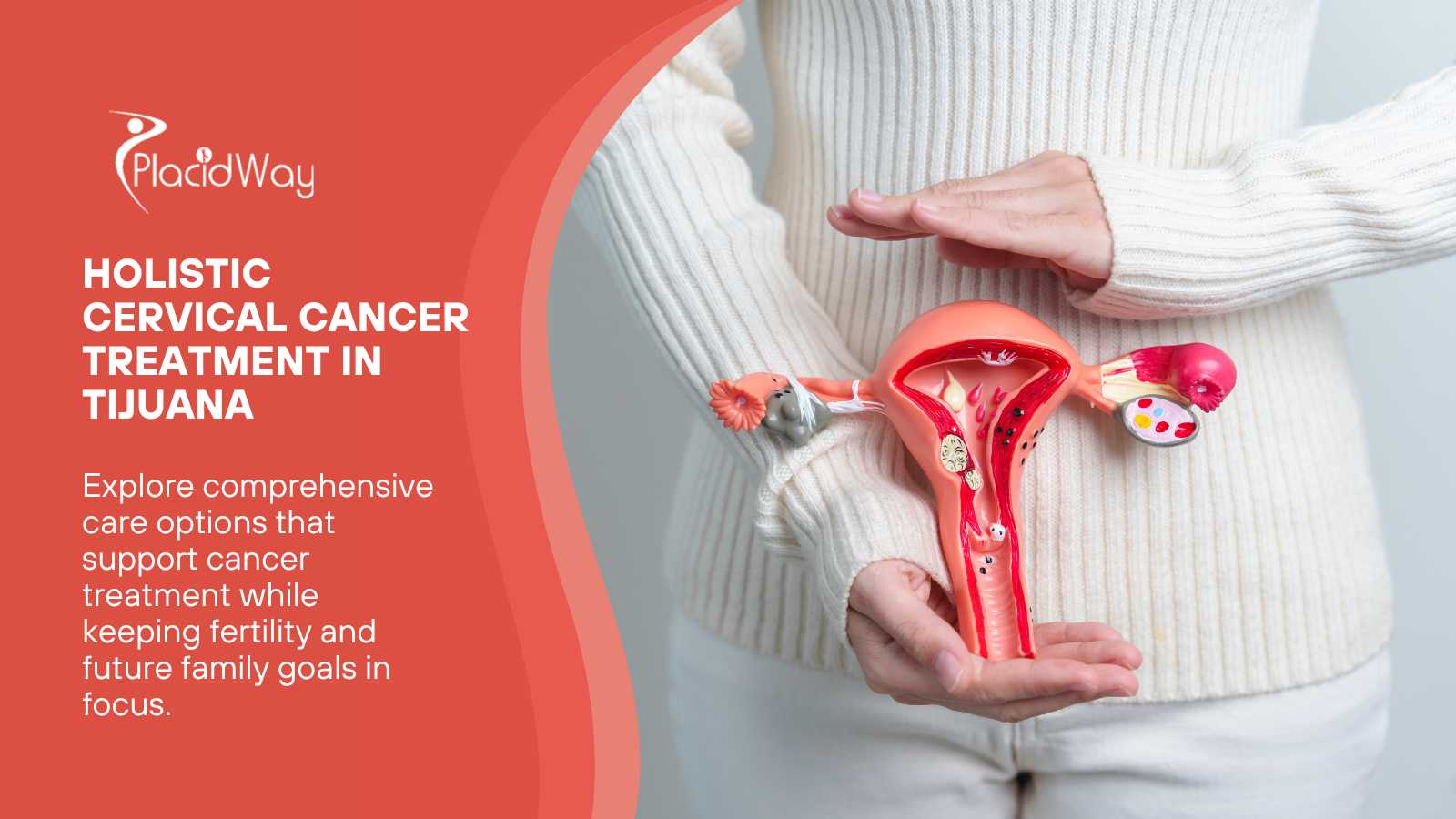
If preserving fertility matters to you, ask about it before cervical cancer treatment begins—not after the plan is finalized. In Tijuana, a safe holistic cervical cancer treatment plan should combine stage-appropriate oncology with evidence-informed support for nutrition, symptoms, emotional health, sexual health, and future family-building. A quote cannot be compared responsibly without the exact surgery, pathology review, imaging, fertility services, and aftercare. Verify the facility’s applicable COFEPRIS authorization, the physician’s Mexican professional and specialty credentials, current board certification, and access to emergency hospital care.
Quick Summary: Holistic Cervical Cancer Treatment in Tijuana
- Estimated cost in USD: A validated Tijuana-wide total is not available. Request an itemized quote covering pathology review, staging, surgery or chemoradiation, fertility care, hospitalization, supportive care, and follow-up.
- Safety: Cancer control must remain the priority. Supportive holistic services may complement standard treatment but should not replace surgery, radiation, chemotherapy, immunotherapy, or targeted therapy when indicated.
- Ideal fertility-sparing candidate: Usually someone with carefully staged, small, early cervical cancer, favorable pathology, no demonstrated spread, and a strong preference to preserve fertility. Eligibility is highly individual.
- Recovery: Timing ranges from days after a diagnostic procedure to weeks after fertility-sparing surgery and months during combined treatment. Pregnancy timing requires separate oncology and reproductive advice.
- Why some patients consider Tijuana: Proximity to Southern California, cross-border access, second-opinion availability, and interest in coordinated supportive care. Verified destination-specific patient-volume data are not available.
- Credentials: Check the facility’s applicable COFEPRIS authorization, the doctor’s SEP professional and specialty cédulas, current CONACEM-recognized certification, and hospital privileges.
- Important caution: “Natural,” “integrative,” or “holistic” does not mean proven to treat cancer. Ask the oncology team to review every supplement and therapy for interactions or treatment delays.
What holistic cervical cancer treatment in Tijuana should mean
Holistic cervical cancer care should treat the cancer while supporting your physical, reproductive, emotional, and practical needs.
Integrative medicine combines conventional cancer treatment with complementary practices that have reasonable evidence for safety and symptom support. Examples may include oncology nutrition, psychological counseling, pelvic-floor rehabilitation, gentle activity, mindfulness, sexual-health care, and selected acupuncture for symptoms. These services do not remove cancer or replace staging.
Evidence-aligned holistic cervical cancer support
- Gynecologic oncology treatment
- Fertility consultation before treatment
- Symptom and pain management
- Nutrition assessment
- Mental-health and sexual-health care
- Rehabilitation and survivorship planning
Holistic cervical cancer claims needing caution
- Detoxification presented as tumor treatment
- Special diets promised to cure cancer
- Unidentified injections or immune products
- Supplements used without interaction review
- Plans that omit pathology or imaging
- Pressure to delay standard oncology
How cervical cancer diagnosis and staging guide treatment in Tijuana
Accurate pathology and staging determine whether fertility preservation is oncologically reasonable.
Cervical cancer begins in the cervix, the lower part of the uterus. Persistent high-risk human papillomavirus, or HPV, causes most cases. A biopsy confirms invasive cancer; imaging and clinical evaluation assess tumor size, local extension, lymph nodes, and distant spread. Precancer is not the same as invasive cancer and follows a different pathway.
| Cervical cancer assessment | What it clarifies | Fertility implication |
|---|---|---|
| Pathology review | Cancer type, invasion depth, grade, and adverse features | Some aggressive or uncommon types may make conservative treatment unsuitable |
| Pelvic examination and imaging | Tumor size, cervical confinement, nearby-organ involvement | Small, cervix-confined disease is more likely to qualify for fertility-sparing review |
| Lymph-node assessment | Whether cancer has reached regional nodes | Positive nodes can change the plan toward chemoradiation |
| Reproductive assessment | Ovarian reserve, family-building goals, time, and pregnancy history | Supports coordinated decisions before treatment begins |
Ask whether an independent gynecologic pathologist reviewed the biopsy and whether staging uses the current FIGO system. Bring the original pathology report, slides or blocks, imaging files, cervical procedures, pregnancy history, medications, and previous HPV or screening records.
Stage-based cervical cancer treatment options in Tijuana
Standard cervical cancer treatment depends primarily on stage, pathology, lymph nodes, overall health, and previous therapy.
| Clinical situation | Possible evidence-based approach | Fertility discussion |
|---|---|---|
| Selected stage IA1 | Cold-knife conization may treat some very small cancers; other cases require hysterectomy | Conization can preserve the uterus, but margins and risk features must be acceptable |
| Selected early invasive disease | Radical trachelectomy with lymph-node assessment, or hysterectomy in other cases | Trachelectomy preserves the uterus but carries recurrence and pregnancy-related considerations |
| Locally advanced disease | External-beam radiation, brachytherapy, and concurrent chemotherapy are commonly central | Pelvic radiation usually prevents carrying a pregnancy; urgent fertility consultation may identify preservation options |
| Persistent, recurrent, or metastatic disease | Systemic therapy, immunotherapy, targeted therapy, radiation, surgery in selected cases, trials, and palliative care | Cancer control and symptom relief may limit fertility-sparing choices; family-building counseling remains appropriate |
Radiation for cervical cancer normally includes brachytherapy, which delivers radiation close to the tumor. If a proposal omits brachytherapy when chemoradiation is recommended, ask a radiation oncologist to explain why.
Fertility-sparing cervical cancer surgery in Tijuana
Fertility-sparing surgery may be considered only for carefully selected early-stage cervical cancers.
Conization removes a cone-shaped portion of the cervix and may be sufficient for certain very small cancers with satisfactory margins. Radical trachelectomy removes the cervix, nearby tissues, and part of the upper vagina while retaining the uterine body; lymph nodes are also assessed. Keeping the uterus does not guarantee pregnancy or eliminate recurrence risk.
| Fertility-sparing check | Why it matters | What to ask |
|---|---|---|
| Tumor size and confinement | Larger or extended disease has different recurrence risk | What imaging and examination confirm that disease is limited? |
| Histology and risk features | Cancer subtype, invasion, margins, and lymphovascular invasion affect selection | Was pathology reviewed by a gynecologic pathologist? |
| Lymph nodes | Detected spread can end a fertility-sparing operation and change treatment | How are nodes assessed, and what is the contingency if cancer is found? |
| Pregnancy after treatment | Cervical surgery can affect fertility and pregnancy management | When may pregnancy be attempted, and which high-risk obstetric team follows it? |
Fertility preservation before cervical cancer treatment in Tijuana
A reproductive endocrinology consultation should happen before fertility-damaging surgery, chemotherapy, or pelvic radiation whenever timing allows.
Egg or embryo freezing may preserve a future path to biological parenthood. Ovarian tissue freezing is another option in selected circumstances. Ovarian transposition moves the ovaries away from the radiation field and may reduce exposure, but it does not preserve the uterus from pelvic radiation or guarantee ovarian function.
| Fertility option | What it may preserve | Important limitation |
|---|---|---|
| Egg freezing | Unfertilized eggs for possible future IVF | Requires ovarian stimulation and retrieval; timing and response vary |
| Embryo freezing | Embryos for possible future transfer | Requires sperm and IVF; legal, storage, and consent details matter |
| Ovarian tissue freezing | Ovarian tissue for possible later reimplantation | Suitability depends on cancer, timing, local expertise, and individual risk |
| Ovarian transposition | Reduced ovarian radiation exposure | Does not assure fertility and does not enable uterine pregnancy after damaging pelvic radiation |
Ask oncology and fertility teams to agree in writing on whether preservation would delay cancer treatment, how long is available, where specimens are stored, annual storage fees, transport rules, success uncertainty, and future pregnancy or gestational-carrier considerations.
Integrative supportive care during cervical cancer treatment in Tijuana
Supportive therapies may improve comfort and coping when they are coordinated with your oncology plan.
Nutrition support can address weight loss, diarrhea, constipation, reduced appetite, and hydration. Psycho-oncology can help with fear, body-image changes, fertility grief, and relationships. Pelvic-floor therapy and sexual-health counseling may support recovery after treatment, while palliative care can manage symptoms at any cancer stage.
| Supportive cervical cancer service | Potential role | Safety checkpoint |
|---|---|---|
| Oncology nutrition | Maintain intake and adapt food choices to symptoms | Reject fasting or restrictive diets presented as cancer treatment |
| Mindfulness and counseling | Support stress, sleep, adjustment, and decision-making | Use licensed mental-health professionals for significant distress |
| Acupuncture or massage | May help selected symptoms for some patients | Avoid unsafe sites or timing with low blood counts, infection, or bleeding risk |
| Supplements and herbs | No supplement is proven to cure cervical cancer | Pharmacist and oncologist must review ingredients and interactions |
Who may qualify for fertility-conscious cervical cancer care in Tijuana
Every patient can receive fertility counseling, but not every cancer can be treated with a fertility-sparing operation.
Factors supporting cervical cancer fertility review
- Strong wish for future biological parenthood
- Confirmed early-stage, limited disease
- Favorable tumor size and pathology
- No demonstrated nodal or distant spread
- Ability to complete intensive surveillance
- Understanding of recurrence and pregnancy considerations
Factors that may change cervical cancer options
- Larger or locally advanced tumor
- Positive nodes or distant spread
- Aggressive histologic subtype
- Unfavorable margins or invasion features
- Previous pelvic radiation or surgery
- Urgent disease needing prompt treatment
Age alone does not settle the decision. Ovarian reserve, other medical conditions, previous fertility, pregnancy goals, and the safety of delaying treatment also matter.
Cervical cancer treatment risks and emergency signs in Tijuana
Cervical cancer treatment can cause serious complications, so your plan needs named emergency contacts and hospital access.
| Treatment area | Possible complications | Risk-reduction question |
|---|---|---|
| Conization or trachelectomy | Bleeding, infection, narrowing, pregnancy loss or preterm birth concerns, need for additional treatment | Who manages hemorrhage and unexpected pathology? |
| Hysterectomy or nodal surgery | Bleeding, infection, clots, urinary or bowel injury, lymph swelling, loss of uterine fertility | What is the blood, ICU, urology, and complication plan? |
| Chemoradiation | Low blood counts, infection, nausea, diarrhea, bladder or bowel effects, fatigue, vaginal changes, ovarian failure | How are brachytherapy, fertility, organs, and late effects addressed? |
| Systemic or immune therapy | Infusion reactions, infection, organ inflammation, blood clots, bleeding, and treatment-specific toxicities | Which symptoms require stopping therapy or emergency evaluation? |
Recovery after cervical cancer treatment in Tijuana
Recovery depends on whether you undergo a cervical procedure, major surgery, radiation, systemic therapy, or combined treatment.
| Timeframe | Biological or clinical process | Patient sensation | Activity level | Action required |
|---|---|---|---|---|
| First 24–72 hours | Anesthesia recovery, bleeding and pain monitoring | Fatigue, cramping, nausea, or incision discomfort | Assisted walking as directed | Follow discharge instructions; report emergency signs |
| First 2 weeks | Early tissue healing or active treatment effects | Discharge, bowel changes, appetite changes, or fatigue | Light activity; restrictions vary | Attend pathology and wound review; avoid unapproved travel |
| Weeks 3–8 | Continued surgical healing or cumulative chemoradiation effects | Energy and pelvic symptoms can fluctuate | Gradual increase with team approval | Coordinate oncology, fertility, sexual-health, and home follow-up |
| Months and years | Surveillance and management of recurrence or late effects | Possible bowel, bladder, sexual, hormonal, fertility, or emotional changes | Individualized rehabilitation | Keep scheduled examinations and symptom-triggered reviews |
Do not schedule a flight or long road journey solely from a package calendar. The treating team should clear travel based on bleeding, infection, clot risk, blood counts, pain control, mobility, and access to follow-up.
Recent cervical cancer statistics relevant to fertility planning
Current U.S. registry data show that cervical cancer affects many patients during reproductive and working ages, making early fertility discussion clinically relevant.
SEER projects 13,490 U.S. cervical cancer diagnoses and 4,200 deaths in 2026. Its current data report a median diagnosis age of 50, with the largest share of new cases among ages 35–44. These population figures do not predict one person’s outcome or prove anything about treatment quality in Tijuana.
Cervical cancer line graph: recent U.S. incidence rates
Observed SEER 12 age-adjusted new-case rates per 100,000 females, 2019–2023. The current SEER page was consulted in 2026.
Cervical cancer histogram: percentage of new cases by age
U.S. SEER 21, 2019–2023. Percentages may not total exactly 100 because of rounding.
Patient demographics and cervical cancer travel to Tijuana
Reliable public data describing cervical cancer patients traveling specifically to Tijuana by origin, age, or procedure are not available.
The practical audience may include residents of California and other U.S. states seeking a second opinion, faster consultation, family proximity, bilingual coordination, integrative support, or a different self-pay option. Patients from Canada or other countries may also inquire, but no verified dataset establishes their volume or outcomes.
Second opinion, fertility review, surgery, radiation, systemic therapy, or supportive care
Cross-border proximity, scheduling, family support, language, or self-pay planning
Pathology, staging, guideline fit, facility authority, specialist credentials, and outcome definitions
Emergency access, records, home oncologist, fertility storage, surveillance, and complication responsibility
- Do not infer suitability from age or nationality.
- Do not treat testimonials as outcome evidence.
- Ask whether results include everyone evaluated or only selected treated patients.
- Plan how pathology, imaging, and fertility records cross the border.
Cost of holistic cervical cancer treatment in Tijuana
A validated, comprehensive Tijuana price range for cervical cancer care is not available from a suitable public source.
Your total depends on stage, pathology review, imaging, procedure, anesthesia, hospital level, radiation schedule, medicines, fertility preservation, complications, and follow-up. A procedure-only price cannot be compared with a complete episode. U.S. or Canadian insurance coverage and Mexican self-pay quotes also use different billing structures.
| Cervical cancer cost component | Request in the written USD quote | Common exclusion to clarify |
|---|---|---|
| Diagnosis and staging | Pathology review, imaging, laboratory tests, examinations, tumor board | Repeat biopsy, outside-slide review, contrast, translation |
| Surgery and hospital | Surgeon, anesthesia, operating room, pathology, nodes, room, medicines | Extra nights, blood, ICU, complications, additional surgery |
| Radiation and medicines | Planning, external beam, brachytherapy, professional fees, chemotherapy or other drugs | Sedation, imaging, ports, supportive medicines, missed sessions |
| Fertility preservation | Consultation, stimulation, retrieval, laboratory, freezing, initial storage | Medicines, annual storage, future transfer, specimen transport |
| Travel and aftercare | Lodging, caregiver, local transport, follow-up, emergency access, records | Border delays, extended stay, readmission, home-country treatment |
How to choose a cervical cancer hospital in Tijuana
Choose a facility by legal authority and clinical capability before amenities, testimonials, or package design.
| Tijuana facility check | Evidence to request | Red flag |
|---|---|---|
| Government authorization | Applicable COFEPRIS health-facility authorization, responsible clinician, exact legal name and address | A general office document is presented as authority for surgery, radiation, or infusions |
| Cancer capability | Gynecologic pathology, imaging, tumor board, operating room, radiation and brachytherapy access | No documented staging or multidisciplinary review |
| Emergency support | Blood bank, ICU or transfer agreement, emergency imaging, pharmacy, 24/7 contact | Complications are referred to an unnamed or distant hospital |
| Quality certification | Current CSG certification if claimed; JCI or another international accreditation only as supplemental evidence | Expired or unrelated certificates are used as proof of oncology quality |
Ask for annual procedure-specific volume, margin and complication definitions, unplanned transfer process, pathology turnaround, after-hours response, and follow-up completion. Accreditation does not guarantee an individual outcome.
How to verify a cervical cancer specialist in Tijuana
Your lead surgeon should have verifiable Mexican credentials and focused experience in gynecologic cancer.
- Verify the professional cédula: Search the SEP Registro Nacional de Profesionistas using the doctor’s complete legal name.
- Verify specialty training: Confirm the specialty cédula and training relevant to gynecology, oncology, surgery, radiotherapy, pathology, or reproductive medicine.
- Verify current certification: Use the CONACEM specialist search and confirm the recognized council and current status. For oncology care, the Consejo Mexicano de Oncología may be relevant.
- Verify hospital privileges: Ask where the physician can perform the proposed procedure and manage complications.
- Verify specific experience: Request annual cervical cancer and fertility-sparing case volume, not total years in medicine.
Planning cross-border cervical cancer care in Tijuana
Cross-border cancer care requires continuity before, during, and after treatment—not only travel reservations.
| Planning point | Before Tijuana treatment | Before returning home |
|---|---|---|
| Clinical records | Send pathology, imaging, treatment history, medications, allergies, fertility goals | Receive operative, pathology, radiation, medication, and discharge records |
| Emergency plan | Name the Tijuana hospital and 24/7 contact | Name the home emergency department and oncology contact |
| Border and lodging | Check current entry documents, mobility needs, caregiver, medicines, and route | Obtain medical clearance and plan for delays without missing treatment |
| Fertility continuity | Confirm laboratory, consent, ownership, storage, and timing | Secure storage records, contacts, fees, and future transport rules |
Questions to ask before cervical cancer treatment in Tijuana
A useful consultation should connect every recommendation to your pathology, stage, fertility goals, and safety plan.
- What is my exact cancer type, FIGO stage, tumor size, and lymph-node status?
- Which treatment is standard for this diagnosis, and what alternatives are reasonable?
- Am I eligible for conization or radical trachelectomy, and why?
- Can I meet a reproductive endocrinologist before treatment starts?
- Which holistic services have evidence for my symptoms, and which might interact?
- Who treats bleeding, infection, urinary injury, bowel injury, or treatment toxicity?
- What exactly is included in the USD quote and complication policy?
- How will my home oncology team receive records and continue surveillance?
Frequently asked questions about holistic cervical cancer treatment in Tijuana
Can holistic treatment cure cervical cancer in Tijuana?
No holistic diet, supplement, detoxification program, or complementary therapy is proven to cure cervical cancer. Evidence-informed supportive care may help symptoms and coping when used with stage-appropriate oncology. Ask a gynecologic oncologist to review any proposed therapy for evidence, interactions, and delay risk.
Can cervical cancer be treated without removing the uterus?
Sometimes. Selected small, early cancers may be treated with conization or radical trachelectomy, which preserves the uterine body. Pathology, tumor size, stage, lymph nodes, cancer subtype, margins, and recurrence considerations determine eligibility. Preserving the uterus does not guarantee future pregnancy.
Who qualifies for radical trachelectomy in Tijuana?
Candidates generally need carefully staged early disease confined to the cervix, favorable tumor features, no demonstrated spread, and a strong fertility preference. Criteria vary by case and center. A gynecologic oncologist should document why trachelectomy is oncologically reasonable and explain the contingency for unexpected findings.
Should fertility preservation delay cervical cancer treatment?
Do not delay treatment without oncology approval. A reproductive endocrinologist and oncologist should determine whether time exists for egg or embryo freezing, ovarian tissue preservation, or ovarian transposition. Disease stage, urgency, ovarian reserve, planned therapy, and the time required for preservation affect the decision.
Can I become pregnant after radical trachelectomy?
Pregnancy may be possible after radical trachelectomy, but fertility and pregnancy outcomes vary. Cervical surgery can create conception and pregnancy-management challenges. Ask when pregnancy may be attempted, whether assisted reproduction may be needed, and which maternal-fetal medicine team would manage a future pregnancy.
Does ovarian transposition preserve fertility during radiation?
Ovarian transposition moves ovaries away from the planned radiation field and may reduce exposure, but it cannot guarantee ovarian function. It also does not protect the uterus from pelvic radiation. Discuss egg or embryo freezing and future gestational options alongside the procedure.
How much does cervical cancer treatment cost in Tijuana?
A validated Tijuana-wide total is not available. Your quote should separate pathology, staging, surgery, anesthesia, hospitalization, radiation, brachytherapy, medicines, fertility services, supportive care, complications, travel, and follow-up. Compare identical clinical scopes in USD and obtain written exclusions, refund terms, and plan-change policies.
How can I verify a cervical cancer doctor in Tijuana?
Search the physician’s professional and specialty cédulas in Mexico’s SEP registry, then check current specialist certification through CONACEM. Confirm hospital privileges, gynecologic cancer training, annual procedure-specific volume, fertility-sparing experience, complication arrangements, and the named clinicians responsible for pathology, radiation, medicine, and aftercare.
Are supplements safe during cervical cancer treatment?
Not automatically. Herbs, vitamins, teas, powders, and injectable products may affect bleeding, anesthesia, liver function, radiation response, or cancer medicines. Give your oncologist and pharmacist the exact brand, ingredients, dose, and schedule before using any product. Stop only as directed by your clinical team.
When can I travel home after cervical cancer treatment in Tijuana?
Travel timing varies with the procedure, bleeding, pain control, mobility, infection risk, blood counts, treatment schedule, and border conditions. Obtain written clearance rather than following a package date. Carry records, medicines, emergency contacts, and a confirmed appointment with the clinician continuing care at home.
Compare cervical cancer treatment questions for Tijuana
PlacidWay can help you request information, compare provider responses and costs, and organize questions about oncology, fertility preservation, credentials, and aftercare. It does not replace an independent medical evaluation.
Holistic cervical cancer treatment disclaimer
Disclaimer: This information is for educational purposes only and does not replace professional medical advice. Always consult a qualified healthcare provider before making medical decisions.
Holistic cervical cancer treatment references
- Cervical Cancer Treatment by Stage – National Cancer Institute
- Female Fertility and Cancer Treatment – National Cancer Institute
- Complementary and Alternative Medicine – National Cancer Institute
- Cervical Cancer Stat Facts – National Cancer Institute SEER
- Health Services Facility Authorizations – COFEPRIS, Government of Mexico
- Specialist Certification Search – CONACEM
- Medical Tourism – CDC Yellow Book

























Share this listing