


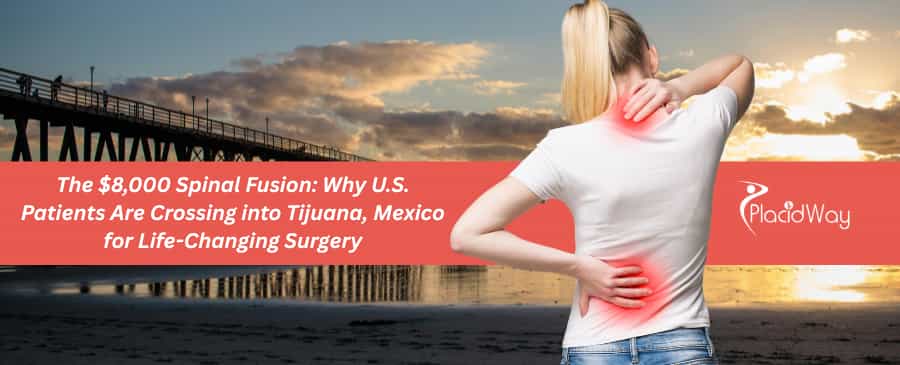
For patients suffering from chronic, debilitating back pain, finding an effective medical solution can be a daunting and expensive endeavor in the United States. Spinal fusion in Tijuana, Mexico, has rapidly emerged as a highly sought-after alternative, offering world-class medical care at a fraction of the domestic price. This surgical procedure involves joining two or more vertebrae to eliminate motion between them, providing stability and significantly reducing nerve irritation.
The rise of medical tourism in Mexico is not merely a trend based on cost, but rather a reflection of the high-quality orthopedic care accessible just south of the U.S. border. Modern medical centers in Tijuana boast state-of-the-art diagnostic imaging, internationally trained medical staff, and advanced surgical theaters tailored specifically to international standards of care.
More than a million U.S. citizens travel to Mexico annually for healthcare services, making it one of the leading global destinations for cross-border medical care.
- The procedure aims to mimic the natural healing process of broken bones.
- Bone grafts or synthetic materials are utilized to stimulate bone growth.
- Hardware such as screws, plates, and rods are typically used to hold the spine steady.
- The primary goal is to relieve chronic pain and restore quality of life.
Why U.S. Patients Choose Medical Tourism in Tijuana
Faced with exorbitant healthcare premiums and astronomical out-of-pocket deductibles, numerous North Americans are re-evaluating their options for major orthopedic surgeries. Exploring affordable spine surgery abroad is often prompted by the realization that an uninsured or underinsured patient could face financial ruin simply by seeking relief from chronic back pain in their home country. Tijuana, geographically situated just minutes from San Diego, California, presents the ultimate convenience for cross-border patients.
Beyond the undeniable geographical advantages, the caliber of specialized medical care drives the influx of patients. International healthcare standards are strictly upheld in many top-tier Mexican facilities, giving international patients peace of mind. Patients are finding that combining high safety protocols with a warm, patient-centric culture results in an exceptional healing environment.
Patients traveling to Tijuana for complex orthopedic surgeries report saving up to 70% compared to average U.S. hospital pricing, without compromising on surgical quality or implant materials.
- Proximity to major U.S. airports (San Diego International Airport).
- Substantial cost savings that alleviate financial distress.
- Shorter wait times for initial consultations and surgical scheduling.
- Access to bilingual medical staff dedicated to international patient care.
Types of Spinal Fusion Procedures Available in Mexico
Modern spinal medicine recognizes that no two cases of chronic back pain are identical, which is why orthopedic procedures in Baja California encompass a broad spectrum of surgical techniques. Surgeons carefully evaluate a patient's spinal anatomy, medical history, and specific pathology before recommending the most appropriate fusion approach. The objective is to achieve maximum stability while minimizing surgical trauma.
Patients consulting with specialized specialists will learn about various anterior, posterior, and lateral approaches. Thanks to continuous education and investment in modern medical equipment, Mexican clinics are fully equipped to perform both traditional open surgeries and highly sought-after minimally invasive techniques, depending on what the patient's condition requires.
Minimally invasive spinal fusion techniques generally result in less blood loss, reduced muscle damage, and faster post-operative mobilization compared to traditional open back surgery.
- Anterior Lumbar Interbody Fusion (ALIF): The surgeon accesses the spine through the abdomen, avoiding major back muscles.
- Posterior Lumbar Interbody Fusion (PLIF): The spine is approached from the back, allowing direct access to the nerve roots.
- Transforaminal Lumbar Interbody Fusion (TLIF): A variation of PLIF that generally involves less manipulation of the nerve tissues.
- Cervical Spinal Fusion: Focuses on the neck region to address herniated discs or cervical instability.
Affordable Spinal Fusion Cost in Tijuana Compared to the U.S.
Understanding the spinal fusion cost in Tijuana is often the deciding factor for many medical travelers. In the United States, a standard fusion surgery can easily surpass $40,000, and complex multi-level fusions can exceed $100,000 when factoring in hospital stays, anesthesia, and surgeon fees. These costs are frequently prohibitive, leaving many individuals suffering indefinitely.
Conversely, the robust medical tourism in Tijuana infrastructure allows hospitals to offer comprehensive, bundled pricing. These transparent packages generally include the surgeon's fees, operating room costs, anesthesia, hospital stays, and high-quality surgical implants. Below is a detailed cost comparison demonstrating the realistic market ranges for these life-changing procedures.
| Procedure Name | Average Cost in Tijuana, Mexico | Average Cost in the USA |
|---|---|---|
| Single-Level Lumbar Fusion | $8,000 - $11,000 | $35,000 - $50,000 |
| Multi-Level Lumbar Fusion | $12,000 - $16,000 | $55,000 - $85,000 |
| Anterior Cervical Discectomy & Fusion (ACDF) | $7,500 - $10,500 | $30,000 - $45,000 |
| Minimally Invasive Spinal Fusion | $9,000 - $13,000 | $40,000 - $65,000 |
When reviewing quotes for spine surgery abroad, always ask for an itemized breakdown. Ensure the quote covers the specific titanium or PEEK implants required for your procedure to avoid unexpected charges.
Evaluating Top Spinal Fusion Clinics in Tijuana
Selecting the right medical facility is a critical step in your journey to recovery. The top spinal fusion clinics in Tijuana differentiate themselves through international accreditations, strict adherence to global safety protocols, and a strong track record of successful orthopedic outcomes. Prospective patients must conduct thorough due diligence to verify the credentials of the institution.
A reputable clinic catering to international patients will typically offer transparent communication, comprehensive virtual consultations, and modern, hygienic recovery suites. Furthermore, these centers often invest heavily in sophisticated sterilization equipment and advanced surgical suites designed specifically to handle complex neurosurgical and orthopedic cases safely.
Patient Experience: Restoring Mobility
"After years of debilitating sciatica, I found an accredited clinic in Tijuana that treated me with the utmost professionalism. The diagnostic process was meticulous, and the facility rivaled the best hospitals I've seen back in Texas. It gave me complete confidence in my decision."
- Verify accreditation from recognized health authorities (e.g., Joint Commission International or Mexican General Health Council).
- Look for modern facilities utilizing high-grade diagnostic imaging tools like MRI and CT scanners.
- Assess the hospital's dedicated intensive care units (ICU) for handling rare post-operative complications.
- Check for dedicated patient coordination teams that handle language translation and medical records.
Qualifications of Spine Surgeons in Mexico
One of the most reassuring aspects of traveling for care is discovering the exceptional expertise of spine surgeons in Mexico. Many of the leading specialists attending to international medical tourists have undergone rigorous academic and practical training. It is not uncommon to find surgeons who have completed specialized fellowships in the United States, Canada, or Europe.
These physicians continuously engage in continuing medical education and frequently attend global orthopedic conferences. Their deep understanding of complex spinal anatomy, combined with extensive hands-on experience, ensures that patients receive evidence-based, high-quality surgical interventions tailored to their specific medical profiles.
Board certification in Mexico requires rigorous examinations by national councils, and many top-tier surgeons also hold active memberships in prestigious international societies, such as the North American Spine Society (NASS).
- Thorough training in both orthopedic surgery and neurosurgery disciplines.
- Active memberships in recognized international spinal and orthopedic associations.
- Bilingual proficiency to ensure flawless communication with English-speaking patients.
- Extensive portfolios of successful case studies and verifiable patient outcomes.
The Patient Journey for Spinal Surgery in Tijuana
Embarking on a cross-border medical journey requires a structured and well-coordinated approach. The patient experience for spinal fusion in Tijuana, Mexico, is meticulously designed to reduce stress and promote healing. The process usually begins well before the patient crosses the border, starting with a comprehensive remote medical evaluation involving the exchange of imaging files and medical history.
Upon arrival in Baja California, patients are typically greeted by hospital representatives who assist with localized transit. The pre-operative days involve in-person diagnostic tests, physical examinations, and final consultations with the surgical team. This highly organized sequence ensures that every medical parameter is optimized prior to entering the operating room.
Patient Experience: A Seamless Journey
"From the initial video consultation to the moment I arrived at the clinic, the coordination was flawless. I met with the anesthesiologist, the lead surgeon, and the nursing staff on day one, which entirely put my pre-surgery anxiety to rest."
- Initial virtual consultation and review of MRI/X-ray imaging.
- Arrival in San Diego and seamless border transfer to the medical facility.
- Comprehensive pre-surgical bloodwork, cardiac evaluations, and physical exams.
- Detailed post-operative discharge planning and localized physical therapy sessions.
Pre-Operative Preparation for Spine Surgery Abroad
Adequate preparation is a vital component of a successful surgical outcome. Patients considering affordable spine surgery abroad must commit to a strict pre-operative protocol guided by their surgical team. This typically involves lifestyle adjustments, medication management, and securing medical clearances from local primary care physicians to ensure fitness for anesthesia.
Nutrition and physical conditioning play a significant role in how well a body responds to major surgery. Patients are often advised to engage in approved, light core-strengthening exercises, cease smoking entirely, and manage underlying conditions like diabetes or hypertension stringently in the weeks leading up to their departure.
Cease the use of all nicotine products at least four to six weeks prior to your surgery. Nicotine severely inhibits bone growth, which is absolutely critical for a spinal fusion to heal properly.
- Obtain a comprehensive cardiac clearance if required by your medical history.
- Discontinue the use of anti-inflammatory medications (NSAIDs) and blood thinners as directed.
- Prepare your home environment for your eventual return (e.g., removing trip hazards).
- Ensure all travel documents and medical files are safely organized in a physical folder.
Typical Recovery Process After Spinal Fusion
Recovery is a gradual and deliberate process, requiring patience and strict adherence to medical advice. Following orthopedic procedures in Baja California, patients typically spend 2 to 4 days in the hospital, depending on the complexity of the fusion. During this initial phase, dedicated nursing staff focus on pain management, infection prevention, and early mobilization techniques.
Once discharged from the hospital, patients generally transition to a comfortable nearby hotel or recovery boutique for an additional week. This allows the surgeon to conduct critical follow-up examinations and remove surgical drains before the patient undertakes the journey back home. Most patients experience steady improvement over several months, with complete bone fusion taking up to a year.
Patient Experience: The Road to Healing
"The physical therapy team in Mexico had me walking the day after my lumbar fusion. It was challenging, but their guidance gave me the confidence I needed. Three months later, I am virtually pain-free and back to my daily gardening."
- Early mobilization, often walking within 24 hours post-surgery, is highly encouraged.
- Wearing a customized back brace may be required to stabilize the spine during healing.
- A structured physical therapy program is crucial once cleared by the surgeon.
- Lifting, bending, and twisting motions are strictly prohibited in the early recovery phases.
Understanding Risks and Contraindications for Spine Surgery
While the benefits can be profoundly life-changing, spinal surgery is a major medical intervention and inherently carries certain risks. Transparent disclosure is paramount for patient safety. Reputable surgeons evaluating candidates for medical tourism in Mexico will clearly articulate that complications, though generally rare when proper protocols are followed, can occur and must be understood before consent is given.
Furthermore, there are strict contraindications for this procedure. Individuals with severe osteoporosis, active systemic infections, profound obesity, or those who refuse to cease smoking are typically not viable candidates. Most patients experience successful outcomes, but careful patient selection remains the cornerstone of safe orthopedic surgery.
Spinal fusion is a permanent structural alteration to your body. Patients with uncontrolled severe medical conditions or unrealistic expectations regarding chronic pain elimination should consult extensively with multiple specialists before proceeding.
- Potential risk of surgical site infection or delayed wound healing.
- Risk of nonunion (pseudarthrosis), where the bones fail to fuse adequately over time.
- Possibility of hardware malfunction, requiring further surgical intervention.
- Adjacent segment disease, wherein stress transfers to vertebrae above or below the fusion.
Advanced Technology Used in Mexican Orthopedic Centers
The success rates of complex spinal operations are heavily influenced by the surgical technology at the physician's disposal. The top spinal fusion clinics in Tijuana consistently invest in cutting-edge medical equipment to enhance surgical precision and patient safety. Advanced intraoperative imaging allows surgeons to visualize the spinal column in real-time, ensuring optimal placement of implants.
Furthermore, the integration of neuromonitoring technology has become a standard of care in many specialized facilities. This technology monitors nerve function continuously throughout the surgery, alerting the team immediately to any potential neural compromise. Such advancements bridge the gap between international and domestic healthcare quality.
The utilization of real-time 3D fluoroscopy and advanced neuro-navigation systems in modern spinal surgeries has been shown to increase implant placement accuracy to over 95%, significantly reducing the need for revision surgeries.
- Utilization of intraoperative CT navigation systems for pin-point accuracy.
- Continuous somatosensory evoked potentials (SSEP) to protect nerve integrity.
- High-powered surgical microscopes utilized in minimally invasive decompression techniques.
- Use of high-grade, biocompatible titanium and polyetheretherketone (PEEK) implants.
Preparing for Your Medical Travel to Baja California
Logistical preparation is just as crucial as medical preparation when planning for an affordable spinal fusion cost in Tijuana. Patients must familiarize themselves with border crossing protocols, ensuring they possess valid passports and understand visa requirements. San Diego serves as the perfect gateway, with many medical tourists flying into the city before taking a short, medically-coordinated shuttle ride across the border.
It is highly advisable to travel with a dedicated companion. A trusted friend or family member provides essential emotional support and practical assistance during the immediate post-operative phase. Coordinating finances, notifying your bank of international travel, and packing loose, easily removable clothing will significantly smooth the journey.
Tijuana features a dedicated "Medical Lane" (Fast Pass) at the international border crossing, specifically designed to expedite the return journey into the United States for medical tourists, drastically reducing wait times.
- Secure a valid U.S. or Canadian passport well in advance of your scheduled surgical date.
- Arrange for a supportive travel companion to assist you during the initial recovery days.
- Pack slip-on shoes, loose-fitting garments, and a grabber tool to avoid bending over.
- Communicate with your local primary care physician to establish a post-return care plan.
How PlacidWay Assists Your Spinal Fusion Medical Tourism Journey in Tijuana
Navigating the complex landscape of international healthcare can be overwhelming for patients already dealing with severe pain. Partnering with a trusted medical travel facilitator streamlines the process, ensuring you connect with highly vetted healthcare providers. PlacidWay acts as your dedicated bridge to premium healthcare options globally.
Our goal is to empower patients with transparent information, verified facility accreditations, and direct access to esteemed medical professionals. By focusing on quality and patient safety, we help individuals make highly informed decisions regarding their medical care.
Patient Experience: A Guiding Hand
"Using a medical facilitator completely changed my perspective on cross-border healthcare. They provided detailed clinic profiles, transparent pricing estimates, and facilitated my virtual consultation seamlessly. I never felt like I was navigating the process alone."
- Connecting you with internationally accredited medical centers and board-certified surgeons.
- Providing transparent, comprehensive cost estimates to aid in financial planning.
- Facilitating secure transmission of your medical records and diagnostic imaging.
- Assisting in scheduling pre-operative virtual consultations with specialist physicians.
- Offering dedicated, multi-lingual patient support throughout your decision-making process.
Frequently Asked Questions About Spine Surgery in Mexico
Is spinal fusion in Tijuana safe for international patients?
Yes, when performed at accredited facilities by board-certified orthopedic surgeons, the procedure is generally safe. Medical tourism in Tijuana features modern hospitals that typically adhere to stringent international healthcare and safety standards.
How much does spinal fusion cost in Tijuana?
The affordable spinal fusion cost in Tijuana generally ranges from $8,000 to $12,000, depending on the complexity and number of spinal levels involved. This represents a significant saving compared to the U.S. average of $35,000 to $50,000.
Do spine surgeons in Mexico speak English?
Most prominent spine surgeons in Mexico who cater to international patients are highly proficient in English. Many have completed fellowships or specialized medical training in the United States or Europe.
How long do I need to stay in Tijuana after my spinal surgery?
Patients are typically advised to remain in the area for 7 to 10 days post-surgery. This allows your surgical team to closely monitor your initial recovery, manage pain, and perform the first follow-up evaluations.
What documents do I need for medical travel to Baja California?
U.S. and Canadian citizens generally need a valid passport to cross the border into Mexico. Additionally, you should carry a complete copy of your medical records, MRI scans, and any relevant physician clearances.
Can I use my U.S. health insurance for surgery in Mexico?
Standard U.S. domestic health insurance plans typically do not cover elective procedures performed internationally. However, patients often pay out-of-pocket because the self-pay rate in Mexico is a fraction of the cost.
What type of implants are used during Mexican orthopedic procedures?
Top spinal fusion clinics in Tijuana utilize FDA-approved or internationally certified titanium and PEEK implants. These are often the exact same high-quality brands utilized by top orthopedic surgeons globally.
How painful is the recovery after spine surgery abroad?
Post-operative discomfort is a normal part of the healing process, though most patients experience manageable pain levels. Mexican clinics typically provide comprehensive pain management plans to ensure patient comfort.
Will I need physical therapy after returning home?
Yes, physical therapy is almost always a required component of a successful recovery from spinal fusion. You will receive detailed post-operative instructions to share with a physical therapist in your home country.
How soon can I return to work after lumbar fusion?
Return-to-work timelines depend heavily on your occupation and the surgical approach used. Patients with desk jobs generally resume work in 4 to 6 weeks, while those with physical labor requirements may need 3 to 6 months.
Medical Disclaimer: This article is for informational purposes only and is not medical advice. Always consult a qualified healthcare provider before any medical decisions. Results may vary. Read Full Disclaimer here.
References
- Mayo Clinic. Spinal Fusion - Overview, Risks, and Results. https://www.mayoclinic.org/tests-procedures/spinal-fusion/about/pac-20384523
- Centers for Disease Control and Prevention (CDC). Medical Tourism: Travel for Medical Care. https://wwwnc.cdc.gov/travel/page/medical-tourism
- American Academy of Orthopaedic Surgeons (AAOS). Spinal Fusion. https://orthoinfo.aaos.org/en/treatment/spinal-fusion/
- North American Spine Society (NASS). Patient Education - Minimally Invasive Spine Surgery. https://www.spine.org/Portals/0/assets/downloads/Education/Agendas/MIS-NonMIS-Series-Activity-Packet.pdf







.png)
.png)
.png)


.png)
.png)
.png)
.png)








Share this listing