Knee Cartilage Damage
Articular cartilage lacks a direct blood supply, limiting spontaneous repair. Lesions impair pivot movements, running mechanics, and joint shock absorption, leading to localized pain and mechanical catching.

German athletes and other international patients researching regenerative medicine for sports injuries may consider CellCenter, a provider for Stem Cell Therapy for Sports Injuries in Slovakia. The clinic lists musculoskeletal conditions and sports injury-related applications among its areas of focus, making it a provider to investigate when exploring treatment options for tendon and ligament injuries, joint problems, and other musculoskeletal concerns. Before arranging treatment, athletes should request a personalized medical assessment to determine whether the clinic offers a suitable protocol for their specific injury and whether the proposed procedure is supported by reliable clinical evidence.
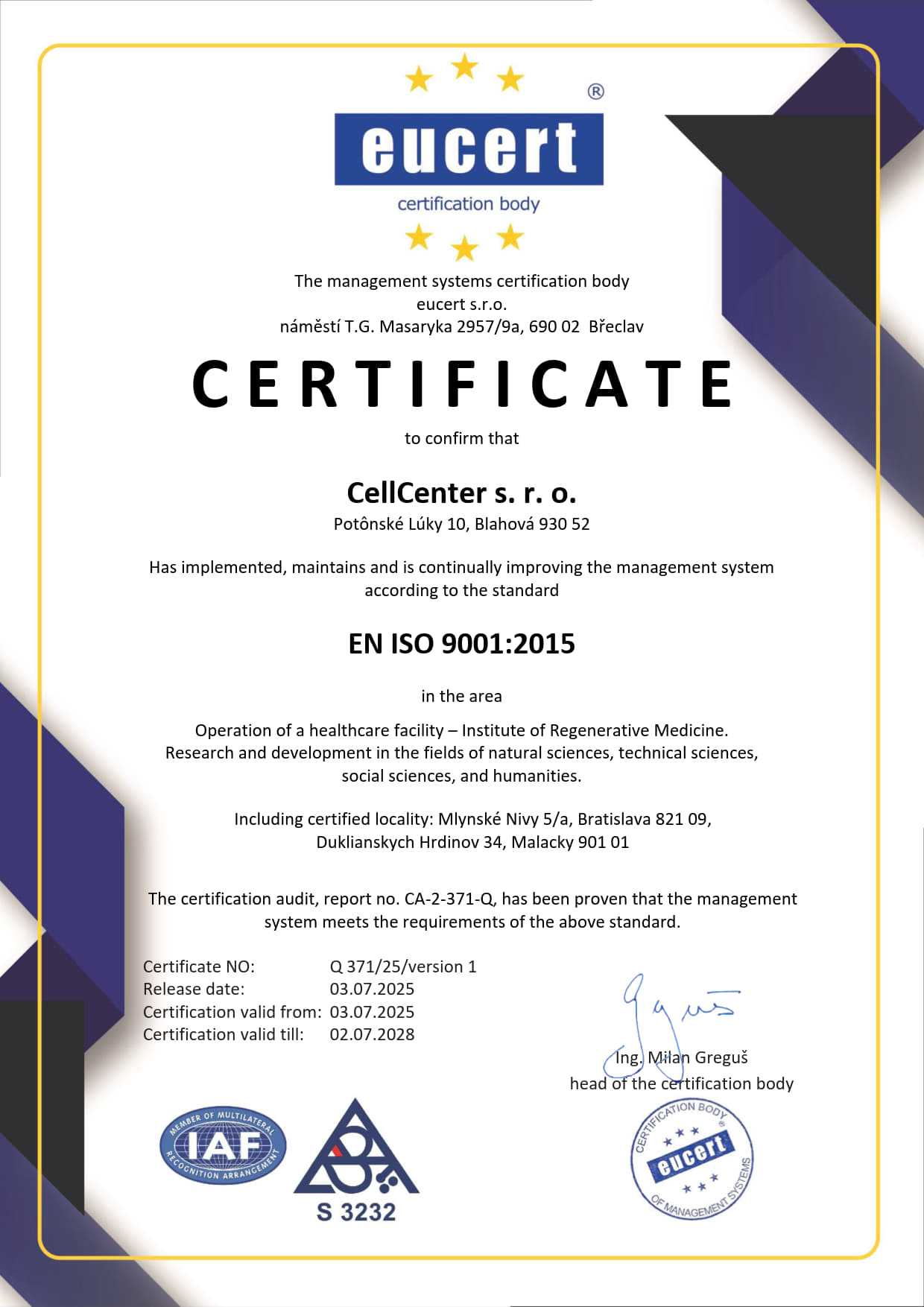
Facility Authorization & Quality
Certified Quality Framework
Verified Regulatory StatusFor competitive athletes, physical injuries represent far more than temporary discomfort. An extended absence from training directly impacts competition schedules, national team selection opportunities, sponsorship commitments, and long-term athletic performance. When an injury occurs, time away from the playing field creates substantial career pressure.
This timing imperative drives many German athletes to explore specialized regenerative medicine options beyond their domestic borders. In searching for options across Central Europe, Stem Cell Therapy for Sports Injuries in Slovakia has become a subject of active medical inquiry among sports professionals seeking structured clinical evaluations.
The central question facing athletes and team physicians is whether cell-based interventions offer tangible biological benefits beyond established orthopedic treatments, surgical repair, and standard physical therapy.
Athletes face strict timing windows for tournament qualifications, league rosters, and contract renewals.
Biological treatments target cellular signaling to support natural musculoskeletal tissue repair pathways.
Clinical decisions require distinguishing demonstrated therapeutic outcomes from theoretical cell mechanisms.
Sports injuries differ fundamentally in tissue composition, vascular supply, and healing potential. Clinicians evaluate biological treatments based on the specific anatomical structure affected:
Articular cartilage lacks a direct blood supply, limiting spontaneous repair. Lesions impair pivot movements, running mechanics, and joint shock absorption, leading to localized pain and mechanical catching.
Anterior cruciate ligament (ACL) and collateral ligament disruptions compromise joint stability. Complete tears frequently require surgical reconstruction before any biological adjuvant is evaluated.
High-velocity muscle tears in hamstrings or quadriceps cause scar tissue formation. Proper management is necessary to prevent recurrent strains during maximum exertion.
Clinical Principle: Every sports injury requires a precise tissue diagnosis. Regenerative procedures should never be viewed as a universal cure for distinct orthopedic conditions.
The initial phase following acute trauma dictates the long-term recovery trajectory. Immediate evaluation by a qualified sports medicine physician establishes structural integrity and prevents further tissue degradation.
Comprehensive clinical management progresses through diagnostic imaging (MRI, high-resolution ultrasound), load modification, mechanical stabilization, and targeted pain control. Treatment pathways depend strictly on biological tissue healing phases, functional progress, and structural severity rather than an arbitrary calendar timeline.
| Recovery Phase | Clinical Assessment Focus | Primary Management Goal |
|---|---|---|
| Acute Phase (Days 1–7) | Physical exam, MRI imaging, swelling evaluation | Inflammation control, structural diagnosis, joint protection |
| Subacute Phase (Weeks 2–6) | Range of motion, tissue repair response, weight-bearing tolerance | Load modification, progressive mobility, cellular remodeling support |
| Rehabilitation Phase (Weeks 6+) | Functional strength, neuromuscular control, biomechanics | Targeted strengthening, sport-specific movement reconditioning |
Regenerative orthopedics encompasses distinct biological modalities. It is crucial to differentiate between stem cells, mesenchymal stromal cells (MSCs), platelet-rich plasma (PRP), and hyaluronic acid formulations.
Researchers study MSCs primarily for their paracrine activity—releasing growth factors and cytokines that modulate localized inflammation and encourage host tissue repair environment rather than directly morphing into dense structural ligament or tendon tissue immediately.
Peer-reviewed clinical trial registrations and published observational datasets reflect growing international research activity evaluating biologic applications in sports orthopedics over recent years.
Published Clinical Research Studies on Orthopedic Cell Therapies (2020–2025)
Source: U.S. National Institutes of Health (NIH) ClinicalTrials.gov Registry & PubMed Medline Database (2025 Analysis).
Clinical evidence varies widely across musculoskeletal indications. Sports medicine professionals evaluate published research according to specific injury categories:
Studies demonstrate consistent reports of joint pain reduction and functional score improvements. However, distinguishing symptomatic improvement from complete structural cartilage regeneration requires serial MRI imaging analysis.
Research focuses on chronic Achilles and patellar tendinopathy. While biological injections may support matrix remodeling, progressive mechanical loading remains the cornerstone of tendon rehabilitation.
Restoring mechanical joint stability after complete ligament disruption requires structural integrity. Biologics are investigated as surgical adjuncts rather than standalone replacements for ligament reconstruction.
Geographic proximity makes Slovakia convenient for athletes based in southern or eastern Germany. Direct travel via highway or regional flights allows athletes to undergo clinical consultations without long-haul travel fatigue.
Key factors influencing athlete inquiries include direct specialist access, bilingual clinical teams, structured consultation schedules, and seamless medical record sharing between Slovak clinics and German home physicians.
Short travel distances from Munich, Dresden, or Vienna facilitate easy travel for diagnostic appointments.
Slovak medical centers frequently coordinate diagnostic imaging and rehabilitation plans directly with German team specialists.
During an initial consultation at a qualified sports medicine facility, an athlete should ask specific diagnostic and clinical operational questions:
Financial planning for medical travel requires evaluating total package inclusions rather than procedure headline prices alone. All financial calculations for international care should be evaluated in USD ($).
| Expense Category | What to Confirm? | Indicative USD Planning Range |
|---|---|---|
| Initial Assessment | Specialist sports medicine consultation & physical exam | $200 – $450 |
| Imaging & Diagnostics | High-resolution MRI, ultrasound, blood panels | $350 – $800 |
| Biologic Procedure | Precise cell-based or biological intervention fee | $1,800 – $6,500 |
| Rehabilitation Session | Supervised physical therapy & functional testing | $100 – $250 / session |
| Travel & Accommodation | Hotel lodging, local travel, flexible transit arrangements | $600 – $1,500 |
Financial Advice: Always obtain an itemized written quotation in USD specifying consultation, facility, image processing, procedure, and medication charges before confirming medical travel bookings.
Symptom relief alone does not indicate that injured joint tissue, tendons, or ligaments have recovered structural integrity sufficient for maximum competitive exertion.
Medical authorization to return to play relies on objective clinical parameters rather than an arbitrary calendar timeframe:
Slovakia operates within the European Union (EU) legal framework governing Advanced Therapy Medicinal Products (ATMPs) and medical devices. Athletes must distinguish between a clinic's general healthcare operating license and specific product authorizations.
Patients should exercise caution when encountering promotional messaging promising "guaranteed rapid recovery," "permanent cartilage regeneration," or "return to sport in a fixed number of days." All cell-based products require clear documentation regarding regulatory status and scientific evidence.
Seamless cross-border continuity of care ensures long-term recovery safety. Athletes traveling from Germany should establish clear communication channels between treating Slovak specialists and home medical teams before undergoing procedures.
Coordination Checklist: Secure translated medical discharge summaries, high-resolution diagnostic DICOM image files, exact biologic procedure notes, and a structured rehabilitation protocol written for your German physiotherapist.
Injured athletes should utilize a structured decision-making framework before committing to cross-border biological interventions:
German athletes investigate Slovakian clinics due to geographic proximity, direct access to specialized sports medicine consultations, structured regenerative medicine protocols, and efficient cross-border care coordination.
Clinicians evaluate cell-based procedures primarily for knee articular cartilage defects, chronic tendinopathies (Achilles, patellar), partial ligament sprains, and localized muscle tissue injuries.
No. Complete ligament disruptions causing joint instability typically require surgical reconstruction. Biologic treatments are studied as surgical adjuncts rather than standalone replacements for structural ligament repair.
PRP concentrates blood platelets to release growth factors that stimulate local healing. Stem cell or mesenchymal stromal cell (MSC) preparations involve isolated cellular components evaluated for paracrine signaling and tissue remodeling support.
Biological procedure costs in Slovakia typically range from $1,800 to $6,500 USD depending on the injury complexity, cell preparation methodology, required diagnostic imaging, and included physical therapy sessions.
Yes. Supervised physical rehabilitation and progressive mechanical loading are essential to restore muscle strength, joint range of motion, biomechanical stability, and athletic performance following biological procedures.
Return-to-sport decisions rely on objective functional metrics, including limb symmetry testing (>90%), strength assessments, balance testing, sport-specific movement drills, and psychological readiness—not pain relief alone.
Slovakia operates under European Union (EU) regulations governing Advanced Therapy Medicinal Products (ATMPs) and tissue establishments, overseen by national health authorities to ensure facility licensing and product safety.
Yes. Reputable Slovak sports medicine centers provide translated medical records, procedure notes, DICOM imaging files, and post-treatment protocols to coordinate care with an athlete's German team physician or physiotherapist.
Risks include incomplete post-treatment follow-up, unrealistic recovery expectations, travel fatigue following procedures, and lack of continuity if rehabilitation instructions are not aligned across borders.
PlacidWay connects athletes and patients with certified specialists for Stem Cell Treatment for Sports Injuries in Slovakia, transparent treatment pricing, facility credentials, and medical coordination services across Europe. Consult with qualified specialists to review your diagnostic records, treatment options, and personalized rehabilitation plan before deciding.
Request Medical InformationEducational Disclaimer: This article is provided for educational and informational purposes only and does not constitute formal medical advice, diagnosis, or treatment recommendations. Athletes suffering from musculoskeletal injuries should consult a qualified sports medicine physician or orthopedic specialist before undertaking any biological procedure or altering their rehabilitation program.

Discover the ultimate Sports Medicine packages designed to meet your health and wellness goals. Choose the perfect fit for your journey.

Price starting from $4,599
CellsTime Clinique Tijuana
Tijuana, Mexico
Price starting from $7,000
BioStemCells - Stem Cell Clinic in Puerto Vallarta, Mexico
Puerto Vallarta, Mexico
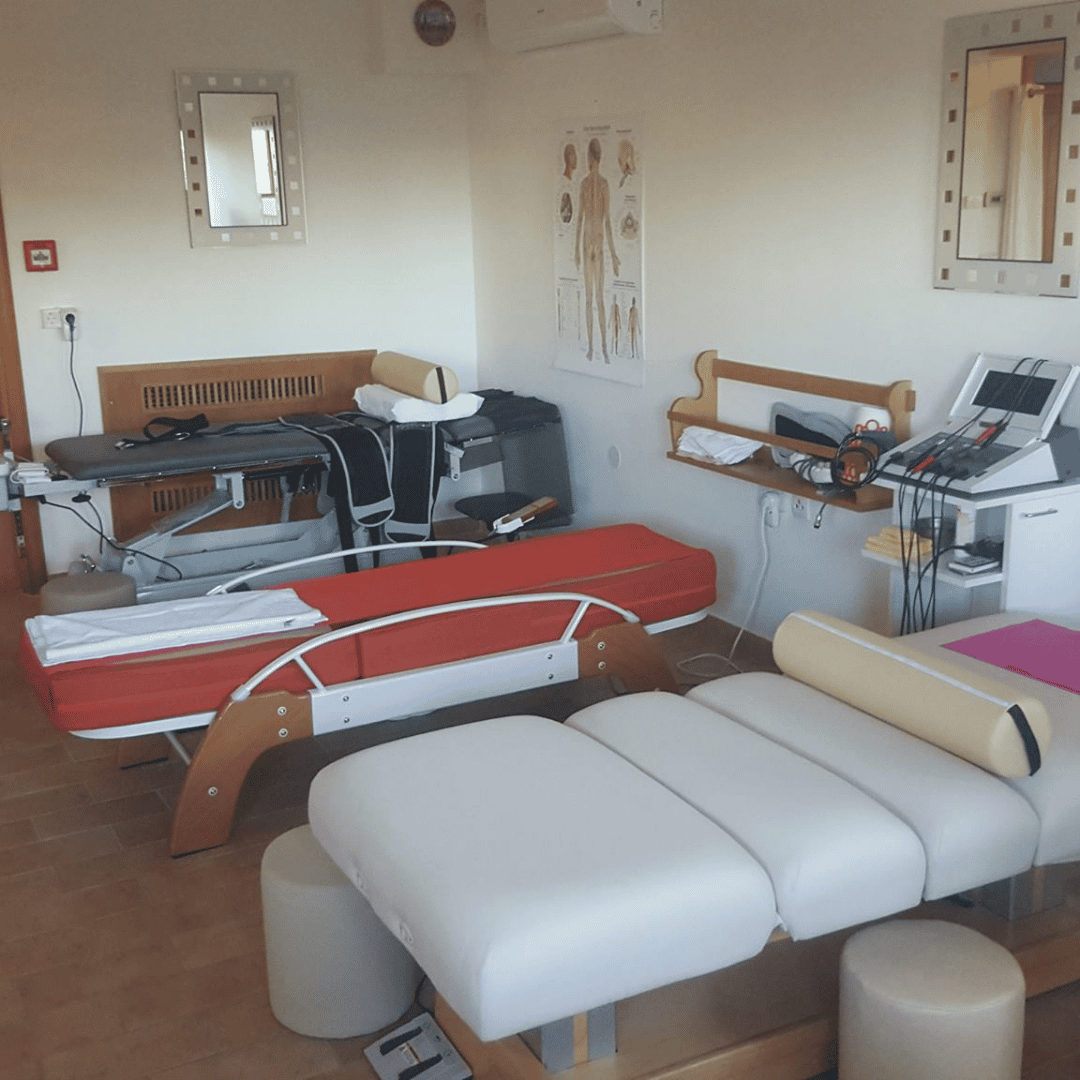
Polyclinic Markov
Murter, Croatia
-Diagnosis-and-Integrated-Management-Package-in-Beijing,-China-by-AMCare.jpg)
Price starting from $147
AMCare - Orthopedic & Sports Medicine China
Beijing, China
Discover how Sports Medicine is transforming lives at leading medical centers in , Slovakia. Dive into center profile, specialties, doctors, reviews, etc. and explore the best options tailored to your needs in this region.
Istanbul, Turkey
Istanbul,Bursa, Turkey
Mannheim, Germany
Antalya, Turkey
Discover the power of Sports Medicine through compelling patient experiences. Uncover detailed insights into procedures, recovery journeys, and life-changing results.

Price starting from $4,599
Tijuana, Mexico

Price starting from $4,400
Dominican Republic
Watch in-depth videos covering everything from Sports Medicine success stories to detailed procedure explanations. Learn what to expect and hear from real patients.
Sports Medicine
China
Sports Medicine
Turkey
Sports Medicine
Turkey
Sports Medicine
Turkey
Take a look at these interesting articles, stories and research that will help you learn more about Sports Medicine.

PlacidWay Medical Tourism
Slovakia


KCM Clinic - Multispecialty Center in Jelenia Gora, Poland
Poland
.jpg)
PlacidWay Medical Tourism
Mexico
We collaborate with internationally accredited hospitals and clinics to ensure the highest standards of safety, quality, and patient care.

Joint Commission International

International Organization for Standardization

COFEPRIS (Federal Commission for Sanitary Risk Protection - Mexico)

Turkey Ministry of Health

Dubai Healthcare City Authority (DHCC)

NABH (National Accreditation Board for Hospitals & Healthcare Providers - India)

Korea Ministry of Health & Welfare (MOHW)

PlacidWay Virtual Assistant
We're here to help you 24/7
Call Now Hang UpProvide info, PlacidWay calls at your time.

Share this listing