

Patient Profile
Name: Lauren Mitchell
Age: 32
Condition: Gluteal hypoplasia and body disproportion
Treatment: Brazilian Butt Lift (BBL) with autologous fat grafting
Destination: Medellin, Colombia
Journey at a Glance
Main problems: Flat or underdeveloped buttocks unresponsive to targeted exercise; Gluteal asymmetry or disproportionate hip-to-glute ratio; Loss of skin elasticity and projection in the buttock area; Desire for curves that match aesthetic ideals promoted in…
Previous care: Targeted glute-building workout programs (Peloton, ClassPass, personal training); Dermal fillers or non-surgical gluteal augmentation attempts; Researching US surgeons and obtaining in-person consultations ($500–$1,500 per consultation)
Travel driver: Medellin has become the global center for high-volume, specialized cosmetic surgery, particularly BBL procedures. Surgeons there perform 50–100+ BBLs weekly with published outcome data, charge $3,500–$5,500 (50–60% less than US pricing), offer 3–5…
Treatment explored: Brazilian Butt Lift (BBL) with autologous fat grafting
Personal goal: Feel comfortable in fitted clothing and full-body photographs while making a safety-led surgical decision.
You stop wearing certain jeans.
You buy longer cardigans that drape past your waist.
You quietly skip the group beach weekend.
You delete full-body photos before anyone else can see them.
You learn to stand at a slight, practiced angle in group pictures.
You cancel social plans when the outfit feels completely wrong.
You spend hours scrolling through specialized fitness apps.
You convince yourself it is superficial to care so deeply about a silhouette.
"You look perfectly fine to me."
"Nobody is looking at that anyway."
"You just need to do more squats."
Your world has quietly become smaller.
The hardest part is not the daily frustration with your reflection, it is the endless waiting for a solution you can actually afford.
Let us meet Lauren Mitchell.
Lauren Mitchell is not a real PlacidWay client.
She is a fictional composite built entirely from the specific situations, anxieties, and questions American women face every day.
She is thirty-two years old and lives in an affluent suburb of Atlanta.
She works as a senior project manager at a logistics firm.
She organizes complex professional timelines without breaking a sweat.
She manages substantial team budgets with precision.
She runs half-marathons on crisp autumn weekends.
She handles her entire adult life with quiet, unmistakable competence.
She told herself it was just a matter of finding the right workout.
She escalated her efforts systematically.
Peloton classes.
Heavy resistance bands.
Weighted lunges.
Personal trainers.
ClassPass memberships.
Targeted hypertrophy programs.
Dermal filler consultations.
The standard remedy for gluteal hypoplasia or disproportion that does not respond to targeted muscle hypertrophy is autologous fat transfer, commonly known as a Brazilian Butt Lift. This surgical intervention is typically considered when patients have sufficient donor fat in the abdomen or flanks and desire enhanced gluteal projection that diet and exercise biologically cannot achieve.
The diagnosis usually boils down to a single clinical word:
"Hypoplasia."
The verdict on her conservative treatments is equally uncompromising:
When?
The national numbers are sobering.
The average cost of a Brazilian Butt Lift in the United States currently varies between USD 8,000 and 12,000, a figure that typically excludes facility fees, anesthesia, and the substantial lost income during a required two-week recovery period. Furthermore, surging domestic demand has created consultation waitlists of six to twelve months for highly regarded, board-certified surgeons in major coastal cities.
But Lauren Mitchell doesn't experience the aesthetic market as a national statistic.
She experiences it in the fitting room while trying on bridesmaid dresses for a summer wedding.
"Nothing sits right on my frame."
She experiences it opening a glossy financing brochure in an Atlanta surgeon's waiting room.
"I cannot justify going into debt for this."
She experiences it scrolling through Instagram at midnight while the house is perfectly quiet.
"Why does everyone else look proportional?"
She has already tried to be patient.
There is a persistent stereotype that women seeking aesthetic surgery are impulsive consumers or careless shoppers.
Lauren Mitchell is neither.
She joined three private patient communities on Facebook.
She downloaded post-operative recovery manuals to study the protocols.
She researched fat embolism risks late into the night until her eyes ached.
She strictly budgeted her discretionary income for eighteen unbroken months.
"I am doing this responsibly."
"I am not rushing into anything."
She replaces her old internal question with a new metric:
"How much of my life am I prepared to organise around it?"
The domestic option sits heavily on the kitchen table.
She has the pristine consultation paperwork from a reputable local clinic spread out before her.
The quoted total, once facility and anesthesia fees are bundled, exceeds USD 14,000.
State plainly that price should not answer a surgical question, and prioritizing cost over medical safety is a compromise she refuses to make.
She looks at the aggressive medical financing terms with her sister.
"I can afford the monthly payment."
"But being able to afford it isn't sensible."
The realization is quiet but firm.
She will not mortgage her future financial security for a physical silhouette.
She isn't searching for Medellin yet.
Her browser history reveals a clear trajectory:
Gluteal asymmetry fixes without surgery.
Why is BBL so expensive in US.
Safe BBL alternatives.
Cost of BBL in Miami.
BBL Colombia results.
The algorithm eventually introduces a specific location:
Medellin.
Her initial reaction is perfectly healthy skepticism.
"I'm not going abroad just because it's cheaper."
Her instinct to prioritize safety over geography is entirely correct.
Why does Medellin keep appearing in her research?
Colombia routinely ranks among the top global destinations for aesthetic procedures, with surgical teams in cities like Medellin performing tens of thousands of body contouring operations annually. This extraordinarily high volume has generated highly specialized surgical facilities, dedicated recovery houses, and clinical teams accustomed to rigorous international patient expectations.
But the framing of the inquiry needs to shift entirely.
The question is never whether a country is good at surgery.
Countries do not perform operations.
Surgeons do, hospitals do, and specialized clinical teams do.
There is always something highly concrete to verify.
Official guidance strongly recommends that patients traveling abroad for medical care arrange a pre-travel consultation with a domestic provider and independently verify the specific international surgeon's credentials.
Her first question naturally revolved around the cost.
The indicative cost for a Brazilian Butt Lift in Medellin commonly ranges from USD 3,500 to 5,500, a figure that moves based on the surgeon's specialized experience, the inclusion of VASER liposuction technology, and the specific clinic's surgical infrastructure.
The initial reaction to international pricing is often pure skepticism:
"If it sounds too good to be true."
She starts looking at the all-inclusive surgical packages.
"What exactly am I getting?"
Does this base quote include the specialized anesthesiologist fee?
Are the mandatory pre-operative cardiac labs handled here or there?
Is the critical post-operative lymphatic massage explicitly included?
How many total massage sessions are provided in the package?
Who provides the medical-grade compression garments?
Are the daily meals in the recovery house tailored specifically to tissue healing?
Does this comprehensive rate cover all airport transfers?
What happens to the logistics if my inbound flight is delayed?
Is there a dedicated, registered nurse on staff during the vulnerable first night?
Are all necessary prescription pain medications part of the initial quote?
What if my body requires an extra day of observation in the clinic?
Does the price include follow-up virtual appointments once I am back in Atlanta?
The advertised number is only the beginning of a much larger operational conversation.
The math begins to matter less than the mechanics.
She abruptly stops looking at the alluring price tags.
She starts looking strictly at the clinical safety protocols.
The numbers fade entirely into the background when physical safety takes precedence.
What does the procedure actually involve?
The clinical reality is highly invasive and demands deep respect.
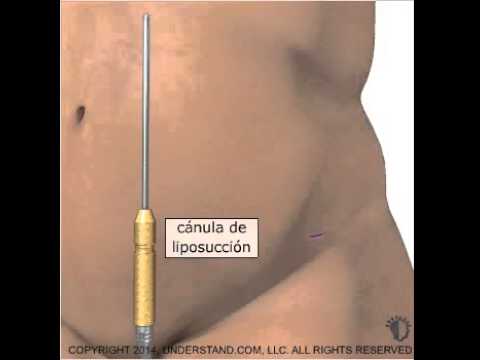
The procedure requires harvesting fat from donor areas via liposuction, processing and purifying that extracted tissue, and carefully injecting it into the subcutaneous layers of the buttocks while strictly avoiding intramuscular injection to minimize the severe risk of fat embolism (ASPS).
It is a serious surgical operation requiring significant physiological resilience and compliance.
Which inevitably leads to the logistics question she hadn't originally considered.
"How do I fly home when I can't sit down?"
The operational reality is rarely put on the front page.
The unglamorous truth of the recovery process is utterly exhausting.
Current guidance states that patients should avoid sitting directly on their buttocks for two to six weeks post-operation, though recommendations vary wildly between individual clinics and surgical societies regarding the permissible use of specialized BBL pillows during air transit.
The variation itself is the most important lesson.
This physical constraint must be rigidly part of the plan before committing, not frantically solved afterward.
"Wait. Does that mean...?"
Possibly, depending heavily on the specific airline's policy and your surgeon's medical clearance.
How do I actually use the small restroom on a commercial plane?
Can I securely kneel on the aircraft seat during turbulence?
Who carries my heavy luggage through the customs line in Miami?
How do I comfortably navigate a bumpy taxi ride from the airport in Medellin?
Will the provided recovery house bed accommodate my necessary prone sleeping position?
How do I shower safely while keeping my fresh incisions dry?
What if I experience sudden, intense nausea from the general anesthesia?
Who translates my immediate needs if the night nurse doesn't speak fluent English?
Is there a documented, rehearsed emergency protocol at the recovery house?
How close in minutes is the nearest fully equipped intensive care unit?
This isn't tourism in any conventional sense of the word.
Her sister isn't just coming along for a vacation.
The invisible second participant bears a surprisingly heavy operational load.
She is the one setting dual alarms for prescription medication at three in the morning.
She is the one communicating urgently with the clinic coordinator via WhatsApp.
She is the one awkwardly packing and carrying the bulky specialized pillows.
She needs to know exactly what steps to take if something goes clinically wrong.
Patients and their travel companions are strongly advised to secure specialized medical complications insurance, as standard consumer travel insurance routinely excludes elective cosmetic surgery complications entirely.
They are an indispensable part of the care system too.
Then comes the uncomfortable conversation about risk.
Honesty requires looking closely and unflinchingly at the worst-case scenarios.
The Brazilian Butt Lift carries known, severe risks including deep infection, hematoma, skin necrosis, and the profound complication of pulmonary fat embolism, which can be instantly fatal if fat is improperly injected into the deep gluteal muscle.
The goal is absolutely not to persuade anyone to ignore these documented facts.
She learns to instantly close browser tabs that contain specific promotional phrases:
"Completely safe."
"No risk."
"Guaranteed success."
Informed consent fundamentally means understanding much more than just the hoped-for aesthetic outcome.
Her consultation questions gradually become better.
She deliberately drops the superficial inquiries about thread counts and catering.
She begins interrogating the clinical safety infrastructure with cold precision.
Are you officially board-certified in plastic surgery within Colombia?
Do you strictly use ultrasound guidance during the fat injection phase?
What is your personal, documented complication rate for this specific procedure?
Do you operate in a fully accredited hospital or a smaller private clinic?
Who specifically monitors my vital signs during the first twenty-four hours?
What exactly happens logistically if I require an emergency blood transfusion?
Do you perform multiple intensive surgeries on the same day?
How long have you continuously worked with your current anesthesiologist?
What is the formal protocol if I develop a severe infection after returning to the US?
What specific medical red flag would you see that would make you tell me not to proceed?
They don't only want a surgeon eager and willing to do it.
They desperately want a professional willing not to.
Has she truly exhausted her options at home?
The domestic route still requires a definitive, rational conclusion.
US patients maintain the absolute right to request comprehensive outcome data, alternative non-surgical treatment plans, and unbiased second opinions from their domestic providers before pursuing any elective procedure abroad.
She prepares a final, pragmatic list for her local Atlanta clinic.
Can we achieve a moderate, acceptable improvement with far less invasive grafting?
Is there an internal payment structure that doesn't rely on high-interest medical credit cards?
Are there unpredictable cancellation spots that might drastically reduce the waitlist?
Can we lower the prohibitive facility fee if I use an alternative local surgical center?
What is the absolute minimum surgical intervention required to effectively address the asymmetry?
She establishes a fundamental rule for her comparison process:
Medellin should be compared with Lauren Mitchell's real alternatives, not with a worst-case assumption about the home system.
The night before the decision looks entirely different.
The kitchen table is no longer covered in frustrating financing brochures.
It is covered in detailed spreadsheets comparing US clinic fees to Colombian all-inclusive packages.
It holds printed medical journals regarding the efficacy of ultrasound-guided injection techniques.
It features a heavily annotated checklist of uncompromising questions for the WhatsApp consultation tomorrow morning.
"I feel like I'm studying for an exam."
"You're studying for your own safety."
The exhaustive research didn't make her more afraid.
It made her substantially more capable of deciding.
What she actually wants isn't the procedure itself.
The core motivation driving all this logistical effort is intensely private.
"Why are you really doing this?"
"I just want to look better in clothes."
THE ABILITY TO WALK INTO A ROOM WITHOUT OBSESSIVELY THINKING ABOUT HER POSTURE.
She wants to permanently stop untagging herself in casual vacation photos.
She wants to feel structurally proportional in her own skin without daily effort.
She wants to end the exhausting mental loop of constant, critical body assessment.
Not the surgery.
Not the autologous fat transfer.
Not the luxury recovery house in El Poblado.
Not the geographic financial discount.
The core motivation underneath all the planning is remarkably simple:
Relief.
And underneath that:
Peace.
Medellin might be the answer, or it might not be.
The decision matrix is complex and highly personal.
She might decide the severe logistical hurdle of flying internationally post-operation is simply too high.
She might unexpectedly secure a domestic cancellation slot at a highly favorable, workable rate.
She might objectively realize the clinical surgical risks vastly outweigh her persistent aesthetic distress.
She might decide to continue aggressively saving her income for another full year.
She might choose to step away from the cosmetic market entirely and embrace radical acceptance.
She might logically decide that the Colombian clinical data and robust logistical support finally meet her strict safety threshold.
Choosing medical care based solely on geography or a perceived discount is a fundamental strategic error.
The informed-yes path requires looking at the realities of the surgical trauma, the flight logistics, and the costs, and consciously accepting them all.
Any of those specific outcomes can be a profoundly informed decision.
The goal isn't to persuade anyone to undergo surgery, it is to make absolutely sure that sheer frustration doesn't quietly make the decision for them.
You are standing at the same crossroads.
Maybe you've tentatively filled out three different medical financing applications.
Maybe you've temporarily deleted your Instagram app just to stop comparing yourself to filtered realities.
Maybe you've absentmindedly memorized the direct flight schedules from Atlanta to Medellin.
Maybe you've watched dozens of raw, unedited recovery vlogs on YouTube.
Maybe you've drafted the difficult text message to your family a hundred different times.
You do not need to decide today.
Am I running away from domestic prices or running toward a verified medical team?
Do I have the robust emotional support necessary for an isolated international recovery?
Have I independently verified the specific board credentials of the targeted surgeon?
Am I truly prepared for the stark reality of the physical discomfort?
Does my careful budget include dedicated emergency contingency funds?
Who will effectively advocate for me when I am physically vulnerable and exhausted?
Is this genuinely the right time in my life to pause everything else?
You are ultimately researching far more than just surgical prices.
You are researching viable paths forward.
Hope isn't the promise that everything will be fixed.
Hope isn't a digitally guaranteed physical outcome.
Hope isn't the sudden acquisition of a flawless Instagram aesthetic.
Hope isn't the complete, magical erasure of all your deep-seated insecurities.
Hope is simply having enough verifiable information to make a medical decision that feels authentically yours.
You can independently verify international credentials.
You can aggressively interview clinical teams across borders.
You can demand absolute transparency regarding complication rates.
You can confidently walk away from the negotiation at any time.
You can define your own strict medical boundaries.
She replaces her old resignation with a new demand:
"What other informed options do I have?"
PlacidWay — Your Way to Hope.
PlacidWay helps patients systematically explore global medical options, compare international facility credentials, meticulously understand logistical requirements, and prepare the critical questions needed for independent medical consultations.
We do not provide clinical advice, and we absolutely do not deliver surgical outcomes.
For someone in Lauren Mitchell's position, Medellin isn't a medical promise, it is simply one structured route deeply worth understanding.
Your Way to Hope.
This article is strictly educational and does not recommend that any individual undertake a Brazilian Butt Lift or travel abroad for medical procedures. Individual physical suitability and surgical risk require direct professional assessment. The reader should always consult their own primary clinician or independent domestic adviser, verify current international regulatory status, and obtain appropriate specialized medical complications insurance before making any healthcare decisions.
.png)
.png)
.png)

.png)



.png)
.jpg)

.png)
.jpg)
.jpg)
.jpg)
.jpg)








Share this listing