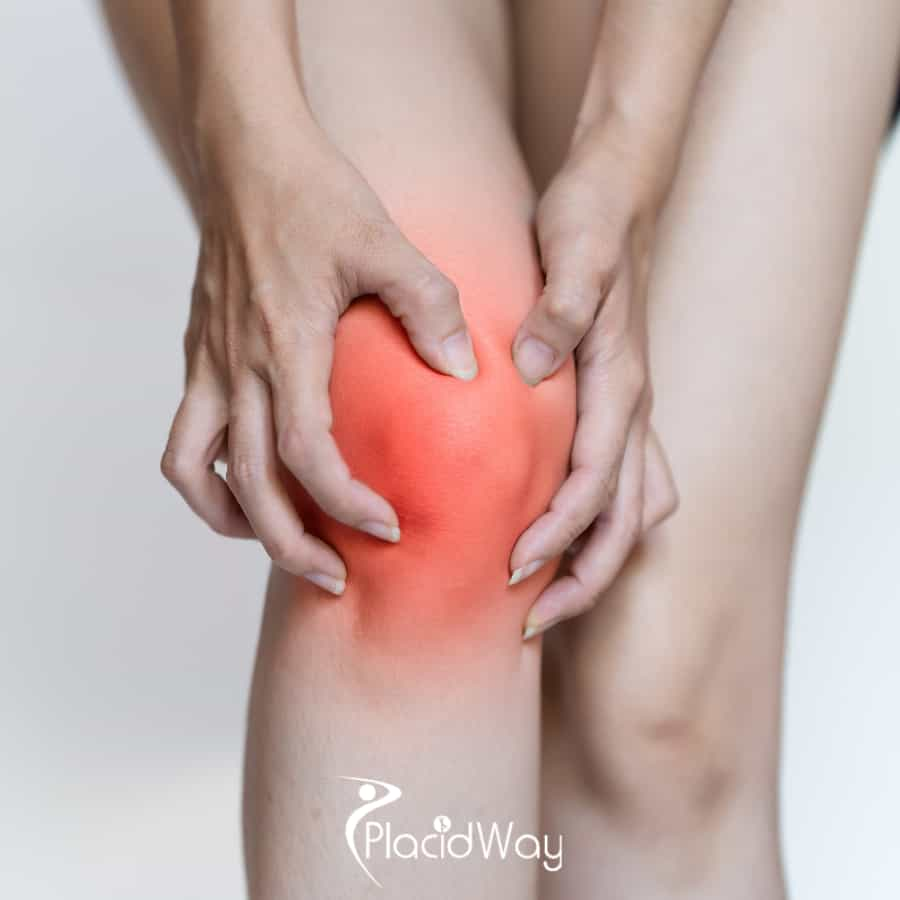
The School Day He Could No Longer Stand Through: Joseph Mwangi’s Knee Osteoarthritis Knee Replacement Story from Kenya to India

Publish date: Modified date: Medically reviewed by: Dr. Raul Valenzano on Sep 01, 2026 Author: Aamina Bibi

Joseph Mwangi’s Knee Osteoarthritis Knee Replacement Story 

Patient Profile

Name: Joseph Mwangi

Age: 52

Condition: End-stage knee osteoarthritis

Treatment: Total or partial knee replacement with postoperative rehabilitation

Destination: New Delhi, India

Journey at a Glance

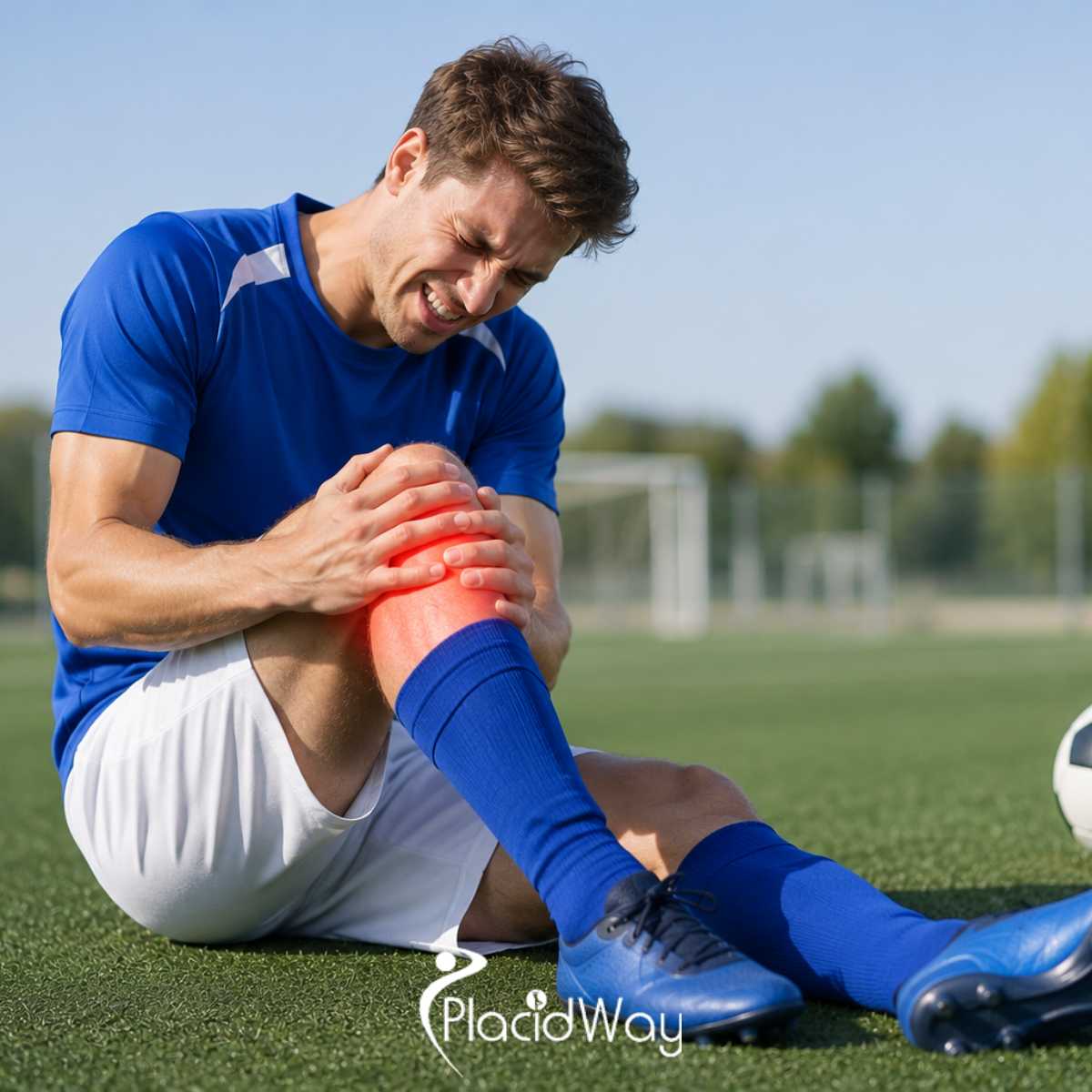
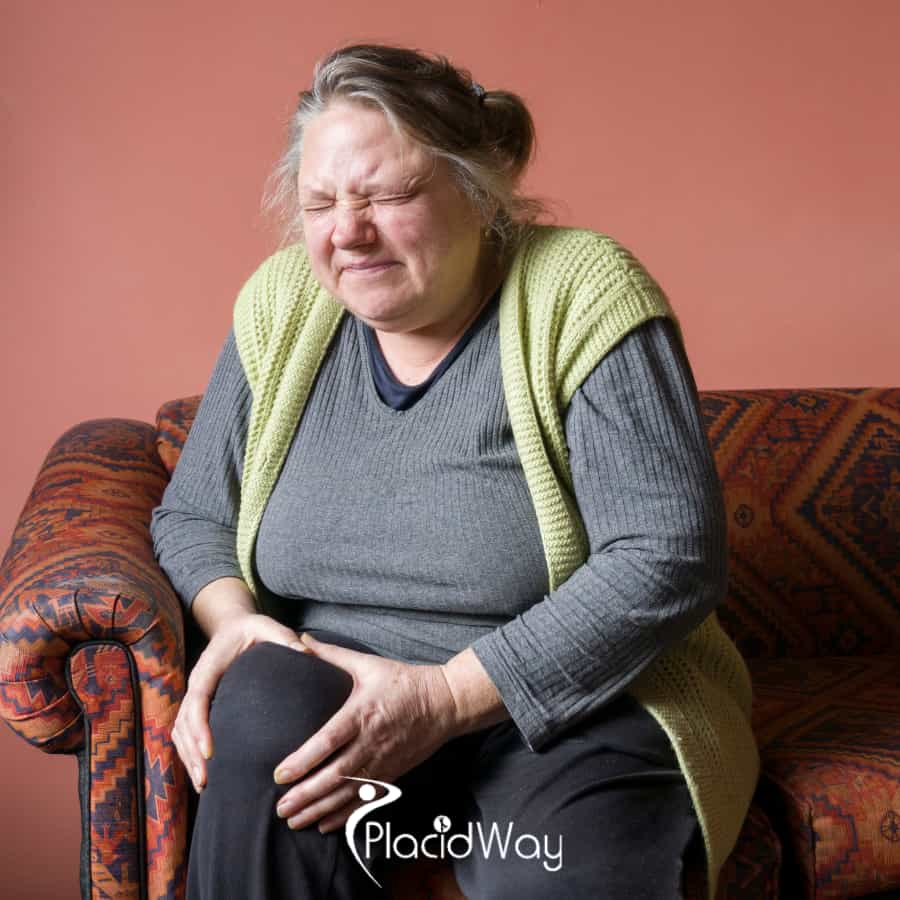
Main problems: Severe knee pain (7–10/10 on pain scale), especially with weight-bearing, walking, or climbing stairs; Morning stiffness lasting 30+ minutes; Swelling and inflammation in the knee joint; Significant loss of mobility and range of motion

Previous care: Extended courses of NSAIDs (ibuprofen, naproxen) with diminishing effect; Physical therapy and strengthening exercises over 6–12 months with minimal improvement; Corticosteroid or hyaluronic acid injections (1–3 rounds) with temporary or no relief

Travel driver: Seeking timely specialist evaluation and a clearly coordinated care pathway in New Delhi, India

Treatment explored: Total or partial knee replacement with postoperative rehabilitation

Personal goal: Stand through a school day, walk reliably and protect his ability to earn an income.

You stopped taking the stairs two years ago.

Then you stopped walking the extra distance to the market.

Then you gave up the morning shifts that required standing.

You buy thicker foam insoles.

You take stronger tablets with breakfast.

You shift your weight entirely to your right leg while talking.

You pretend you just prefer sitting down.

You ignore the heat and swelling in the joint at the end of the day.

"You need to rest that leg properly."

"We can manage the shop without you today."

"Don't push yourself so hard, Mama."

Your world has quietly become smaller.

You realize the hardest part is not the daily physical pain or the rising cost of temporary treatments, but the endless waiting.

Let's meet Joseph Mwangi.

Joseph Mwangi is not a real PlacidWay patient.

He is a fictional composite built from the specific situations and questions East African families face every day.

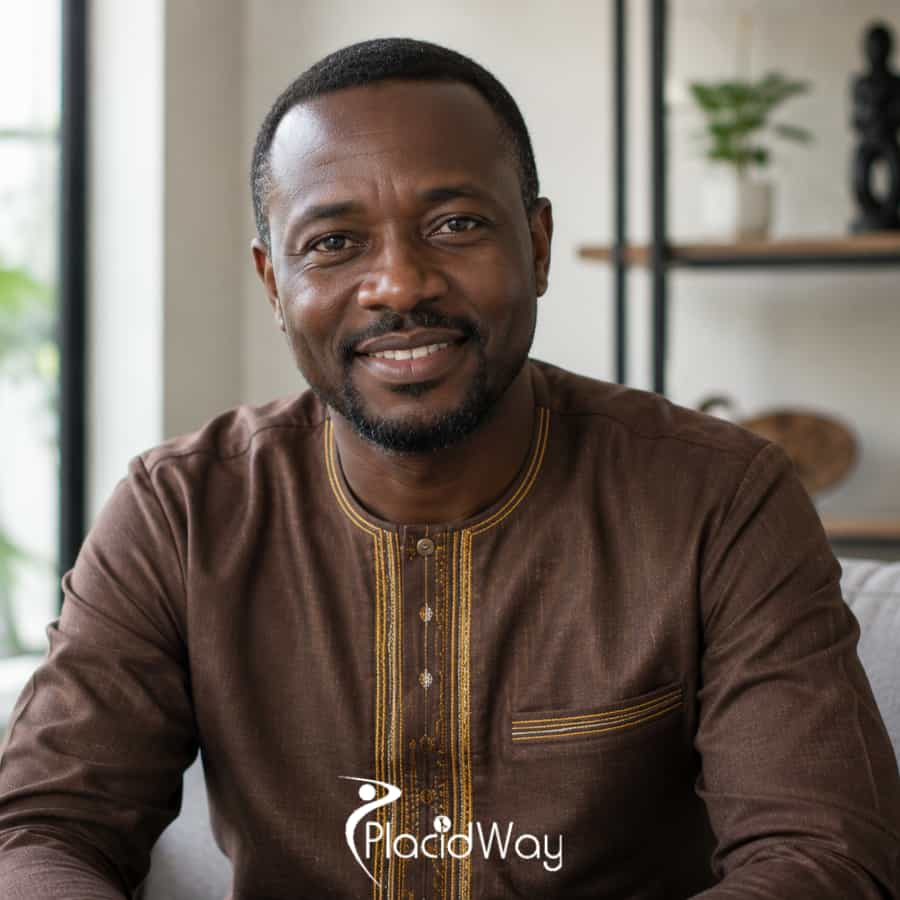
Joseph Mwangi is fifty-two years old and lives in Nairobi.

He teaches mathematics at a crowded secondary school.

He used to pace the classroom floor for six hours straight.

He knelt beside wooden desks to explain algebra to his students.

He carried tall stacks of heavy exercise books across the campus without a second thought.

He managed his small plot of farmland on the weekends with steady, unthinking movement.

How did a slight stiffness become a daily crisis?

He told himself it was just a lingering strain from slipping during the rainy season.

Rest.

Ice.

Ibuprofen.

Naproxen.

Physiotherapy.

Corticosteroid injections.

Knee braces.

Walking sticks.

Knee osteoarthritis is a progressive degenerative joint disease where the protective cartilage wears away entirely, meaning conservative management eventually ceases to provide meaningful relief once the condition reaches an advanced stage.

The orthopedic specialist examines the x-rays, frowns, and delivers the inevitable conclusion:

"You need a total knee replacement."

When?

What happens when the system simply has no room?

Wait times for elective orthopedic surgeries in public health systems across East Africa frequently exceed 18 to 24 months due to severe infrastructure pressures, limited operating theater access, and specialist shortages.

But Joseph Mwangi doesn't experience the healthcare system as a national statistic.

He experiences it at the front of a classroom when his left leg suddenly gives way.

"Sit down, Mr. Joseph Mwangi, we can read it ourselves."

He experiences it in the parking lot when he cannot press the clutch pedal of his car.

"Let me drive you home today."

He experiences it in the humid consultation room holding a scheduling card dated for two years from now.

"That is the earliest we can offer."

He is not an impatient man demanding immediate fixes.

He has already tried to be intensely patient.

He lost the ten kilograms they told him to lose.

He did the painful strengthening exercises until the joint was too inflamed to bend.

He endured the thick needle injections that eventually only worked for a single month.

"I just have to bear it."

"There are people much worse off than me."

Then the internal question shifts:

From "Can I tolerate this?" to a much harder realization.

How much of my life am I prepared to organise around it?

Are there faster options closer to home?

There are highly regarded private clinics in Nairobi and Dar es Salaam that can perform the surgery next week.

The diagnostic equipment is modern, and the local surgeons are exceptionally qualified.

However, the out-of-pocket quotes often range from USD 8,000 to USD 12,000 once all hospital fees, implants, and physical therapy sessions are fully tallied.

Joseph Mwangi has modest savings tucked away, but draining them entirely would leave his eldest daughter's university fees unpaid for the coming year.

"We have the money in the account."

"Having it is not the same as being able to afford it."

Where does a sensible person look next?

He isn't searching for international medical travel yet.

Severe knee pain walking upstairs.

How long does cartilage injection last?

Private knee replacement cost Kenya.

Knee replacement India price.

Is it safe to get surgery in New Delhi?

The internet algorithms immediately begin suggesting specialized orthopedic hospitals in India.

"I'm not going abroad just because something is cheaper."

He is entirely right to rely on that instinct.

Why does this alternative keep appearing in the research?

India's medical infrastructure processes a massive volume of complex orthopedic cases annually, driven heavily by strategic national healthcare corridors and a vast network of highly specialized joint-replacement centers.

But the essential reframe is this:

The question is never whether a specific country is good at medicine.

Countries do not perform operations.

Surgeons do. Hospitals do. Clinical teams do.

There is something concrete, measurable, and highly specific to verify.

Official advisories explicitly recommend that anyone considering cross-border care must undertake independent research, verify facility accreditation, and consult comprehensively with a domestic healthcare professional before making any commitments.

What is the actual financial difference?

His very first question was about the numbers.

An indicative package for a total knee replacement in New Delhi typically ranges between USD 6,500 and USD 8,500, varying considerably based on the specific implant brand, the hospital's tier, and the required length of inpatient stay.

He remembers a strict rule from his father:

"Cheap is expensive in the long run."

"What exactly am I getting?"

Twelve things the advertised price may or may not cover.

Does the initial quote include the lead surgeon's full fee?
Does it cover the specialist anesthetist?
Which exact brand of titanium or cobalt-chromium implant is being utilized?
Are all the necessary pre-operative blood tests and imaging scans included?
How many days of inpatient hospital care are explicitly covered?
What happens financially if I need to remain in the intensive care unit for an extra night?
Are the crucial post-operative physiotherapy sessions part of the package?
Does it include the hotel accommodation required before I am cleared to fly?
Are the specialized airport transfers arranged with an appropriate vehicle?
Who handles the formal medical visa invitation documentation?
Does the total cost cover daily meals for my accompanying family member?
What is the financial protocol if a surgical site infection occurs?

The advertised number is only the beginning of the conversation.

What does joint replacement actually involve?

Total knee replacement is an operation that involves removing the damaged cartilage and bone from the surface of the knee joint and replacing them with highly engineered metal and medical-grade plastic surfaces.

It is a major orthopedic intervention requiring significant, painful rehabilitation to restore adequate range of motion and weight-bearing capacity.

"How do I actually manage the logistics of getting home?"

The part the sales brochures rarely put on the front page.

The unglamorous operational reality is the flight back to East Africa.

Medical guidelines for flying after major orthopedic surgery vary significantly, with some authorities recommending avoiding long-haul flights for up to four weeks to mitigate deep vein thrombosis risks, while others allow travel sooner with strict medical clearance and appropriate blood thinners.

The variation itself is the most important lesson.

This logistical constraint must be thoroughly calculated as part of the plan before committing, not afterward.

"Wait. Does that mean I might be stuck in a foreign hotel for weeks?"

Possibly, depending entirely on your surgeon's specific clearance protocol.

Who will change my surgical dressings in the hotel room?

How do I safely get in and out of a standard hotel shower with a rigid leg?

Are the pathways to the hotel dining room flat and accessible for a walker?

Can I physically tolerate a six-hour flight back to Nairobi?

Will I need to pay for an upgrade to premium economy just to keep my leg straight?

Who will lift my heavy bags onto the airport trolley?

What happens the moment I land back home?

Who removes the metal staples or sutures once I am back in my own house?

Will my local doctor agree to take over my post-operative care without hesitation?

How soon can I begin formal local physiotherapy?

This isn't tourism in the usual sense.

Who is holding everything together behind the scenes?

His wife, Sarah, isn't just coming along for the ride.

She will be the one holding the dense discharge papers and the complex medication schedules.

She will be the one communicating with the hotel staff when Joseph Mwangi cannot get out of bed.

She will be the one who notices if he looks too pale or if the long incision site feels unnaturally warm.

She needs to know exactly what to do and whom to call if a medical complication arises in a massive foreign city.

Standard travel insurance routinely excludes coverage for complications arising from planned medical procedures abroad, necessitating specialized medical complications insurance to protect the family from sudden financial ruin.

She is part of the care system too.

Then comes the uncomfortable conversation about risk.

All surgical procedures carry inherent risks of infection, excessive bleeding, blood clots, and implant failure, which are complicated further by the physiological stress of international travel.

Joseph Mwangi learns to actively distrust certain phrases from online coordinators:

Completely safe. No risk. Guaranteed success.

Informed consent means understanding far more than just the hoped-for outcome.

How do you interview a surgeon thousands of miles away?

Joseph Mwangi's questions become noticeably better.

He stops asking if New Delhi is cheap and starts asking if this specific hospital is appropriate.

How many total knee replacements does this specific surgeon perform weekly?
What is the hospital's documented infection rate for this specific orthopedic ward?
Is the facility currently accredited by the Joint Commission International?
Will I meet the actual operating surgeon before the morning of the operation?
Who is financially responsible if the implant needs immediate revision?
What specific physical therapy protocols are used in the first 48 hours?
How do you handle language barriers on the bustling nursing floor?
Can you provide a detailed, itemized breakdown of what is excluded from the package?
Will my primary care doctor at home receive a full surgical report in English?
What would you see in my preliminary scans that would make you tell me not to proceed?

He doesn't only want someone willing to do it.

He wants someone willing not to.

Have I truly exhausted my options at home?

Patients often have the right to formally request a review of their waiting list status or seek a second domestic opinion if their mobility deteriorates significantly while waiting.

Is there a fast-track cancellation list I can join at the local public hospital?

Does my employer's health scheme cover more than I initially realized?

Can we negotiate a structured payment plan with the private clinic in Nairobi?

Are there regional visiting surgeon programs scheduled for later this year?

What exactly happens to my joint if I delay surgery by one more year?

New Delhi should be compared with Joseph Mwangi's real alternatives, not with a worst-case assumption about his home system.

The night before making the call.

The dining table is heavily covered in scattered documents.

Printed email threads with the international patient coordinator.

A dense spreadsheet comparing direct flight costs against indirect routes.

A formal clearance letter from his local physician.

A printed PDF of the implant manufacturer's technical specifications.

"I actually understand what they are going to do."

"You are ready to choose."

The research didn't make him more afraid; it made him more capable of deciding.

What does Joseph Mwangi actually want?

What he actually wants isn't a joint replacement.

"What are you hoping to get out of this?"

"I want to walk without pain."

TO STAND AT THE CHALKBOARD FOR A DOUBLE PERIOD.

He wants to walk his daughter down the aisle next year without leaning heavily on a cane.

He wants to drive his tractor across the uneven fields.

He wants his independence back.

Not the surgery.

Not the titanium implant.

Not the medical package.

Not the trip to India.

Not the surgery. Not the titanium implant. Not the medical package. Not the trip to India.

Mobility.

And underneath that:

Dignity.

Is this the right path?

New Delhi might be the answer.

It might not be.

He might secure a medical loan for the local private clinic instead.

He might discover a visiting surgical team in Mombasa.

He might find out his minor heart condition precludes him from flying safely.

He might decide the logistical burden on his wife is simply too heavy right now.

He might simply need more time to prepare the family finances.

If he proceeds, he does so knowing exactly what the days ahead will demand of him.

Any of those can be an informed decision.

The fundamental goal isn't to persuade anyone to fly, it is to make sure sheer frustration doesn't make the decision for them.

Where does this leave you?

Maybe you have stared at the ceiling at 2:00 AM, waiting for the painkillers to work.

Maybe you have run the numbers on your retirement savings five different times.

Maybe you have practiced walking without a limp just to prove to your family you are fine.

Maybe you are exhausted from managing the pain instead of living your life.

Maybe you are ready to look at alternatives with clear eyes.

You do not need to decide today.

What is my actual clinical diagnosis?

What is the true physical cost of waiting?

What can I realistically afford without risking my family's stability?

Who can help me interpret these overseas medical quotes objectively?

Who will manage my recovery when I return?

Am I traveling for the right reasons?

What if I just say no?

You are not just comparing prices.

You are comparing paths forward.

How do you move from frustration to action?

Hope isn't the promise that the pain will instantly vanish.

Hope isn't the promise that the journey will be effortless.

Hope isn't the promise of a perfect medical outcome.

Hope is having enough information to make a decision that feels entirely yours.

You are capable of reading the fine print. You are capable of asking difficult questions to authoritative figures. You are capable of weighing risk against reward. You are capable of walking away from a bad offer. You are capable of taking control of your own care.

The sentence quietly changes:

From: "I suppose I'll just have to keep waiting."

To:

"What other informed options do I have?"

PlacidWay — Your Way to Hope.

PlacidWay helps patients globally explore cross-border healthcare options, compare accredited international facilities, and prepare the rigorous questions necessary for making deeply informed medical decisions.

We do not provide clinical advice, and we do not guarantee medical outcomes.

For someone facing the realities of Joseph Mwangi, seeking care in New Delhi isn't a promise, it is simply one route worth understanding.

Your Way to Hope.

Medical disclaimer

This article is for educational purposes only and does not recommend that any individual undertake travel for medical procedures. Individual suitability and surgical risks require rigorous professional assessment. Readers must consult their own local clinician or medical adviser, verify the current regulatory and accreditation status of any foreign facility independently, and obtain appropriate medical complications insurance before committing to care abroad.
The School Day He Could No Longer Stand Through: Joseph Mwangi’s Knee Osteoarthritis Knee Replacement Story from Kenya to India

About Article

  • Treatment: Orthopedic/Knee Surgery
  • Country: India
  • Overview This educational overview follows Joseph Mwangi, a composite Kenyan patient exploring Knee Replacement in New Delhi, India. It summarizes daily-life effects, previous care and why treatment abroad is being considered. Candidacy, safety, recovery and follow-up remain central to informed decision-making.

Trusted Medical Tourism Platform Since 2007

60+
Countries
2k+
Clinics
19.5k+
Reviews
2.5k+
Qualified Doctors
1.1M+
Patients Served Since 2007