Amina Yusuf Could No Longer Reach the Stockroom Shelf — A Nigerian Patient’s Rotator Cuff Repair Surgery in Mumbai

Publish date: Modified date: Medically reviewed by: Dr. Raul Valenzano on Sep 11, 2026 Author: Aamina Bibi

Nigerian Patient’s Rotator Cuff Repair Surgery in Mumbai 

Patient Profile

Name: Amina Yusuf

Age: 48

Condition: Full-thickness rotator cuff tear

Treatment: Arthroscopic rotator cuff repair

Destination: Mumbai, India

Journey at a Glance

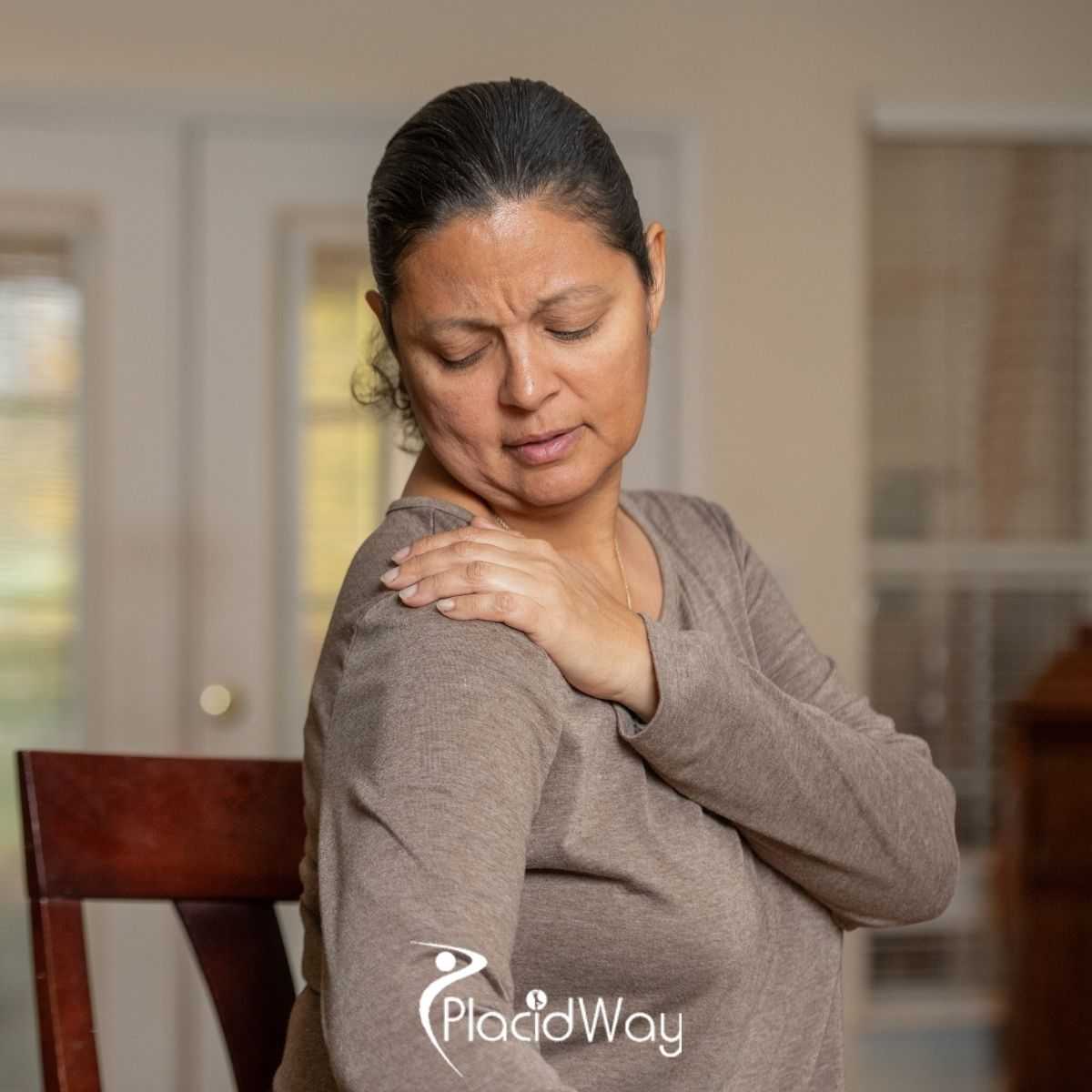
Main problems: Chronic shoulder pain, inability to lift inventory, progressive weakness, and interrupted sleep.

Previous care: Over-the-counter pain management, private physiotherapy with minimal structural improvement, and placement on an 18–24 month public hospital surgical waitlist.

Travel driver: Avoiding permanent functional decline and loss of livelihood while waiting for public healthcare.

Treatment explored: Minimally invasive orthopedic surgery combined with structured postoperative rehabilitation.

Personal goal: Return to work within 8 weeks of surgery and regain full shoulder strength within 4 months.

You start by making small adjustments that feel like common sense.

You reach for the high shelves with your left arm instead of your right.

You slide heavy boxes across the floor rather than lifting them.

You learn to sleep flat on your back to avoid putting weight on the joint.

You start wearing shirts that button up the front instead of pulling over your head.

You stop carrying your youngest niece.

You ask your vendors to load your vehicle for you.

You wave away their concern with a polite smile.

"Let me grab that for you."

"You shouldn't be lifting that."

"Just rest it another week."

Your business has quietly become smaller.

You realize that the most difficult part of a failing shoulder is not the sharp physical pain, but the indefinite waiting for a solution.

Meet Amina Yusuf.

Amina is not a real PlacidWay patient.

She is a fictional composite built from the actual situations, clinical delays, and hard choices that West African patients face every day.

Amina is forty-eight years old and lives in Accra, Ghana.

She runs a successful wholesale trading business.

Before the pain settled in, her days were defined by physical momentum.

She hauled inventory across crowded markets.

She stacked crates of textiles in her warehouse.

She negotiated with suppliers while moving pallets of stock.

She possessed the kind of quiet, reliable strength that entire extended families depend upon.

The pain did not arrive all at once.

At first, she explained it away as simple fatigue from a heavy shipment.

Then it became a dull, persistent ache that woke her at three in the morning.

She began the familiar ritual of coping.

Rest.

Ice packs.

Over-the-counter ibuprofen.

Traditional herbal liniments.

Private physiotherapy sessions.

Six months of careful stretching yielded modest improvements in comfort, but the deep mechanical weakness remained.

A rotator cuff tear involves the tearing of the tendons that connect the humerus to the shoulder blade, and while physical therapy can strengthen surrounding muscles, a full-thickness tear often requires arthroscopic surgical repair to restore structural integrity .

When the MRI results were finally reviewed by a local orthopedic specialist, the clinical verdict was delivered:

"You have a full-thickness tear that requires surgical repair."

Amina asked the only question that mattered: "When?"

The system is overwhelmed by necessity.

Public hospital waitlists for elective orthopedic procedures across many parts of West Africa commonly stretch between 18 and 24 months due to severe capacity constraints and a shortage of surgical specialists .

But Amina doesn't experience the healthcare system as a national statistic.

She experiences it when she tries to lift a ten-kilogram box of fabric and drops it on the concrete floor.

"Leave it, I will sweep it up."

She experiences it when she has to ask her sister to help her tie her own wrap.

"You need to see a better doctor."

She experiences it when she calculates how much revenue she will lose if she cannot manage the warehouse for another two years.

"We cannot afford to slow down."

She has already tried to be patient.

Amina is not an impatient consumer demanding instant gratification.

She has paid her taxes, supported her family, and followed the conservative advice of her local general practitioner.

She has completed her prescribed physical therapy.

She has modified her daily movements to protect her joint.

She has endured the clicking, the popping, and the nights spent staring at the ceiling.

I just need to push through this.

It will heal if I give it time.

But tendons do not spontaneously reattach themselves to bone.

The daily reality of her declining function forced a shift in her thinking:

From "Can I tolerate this?" to:

"How much of my life am I prepared to organise around it?"

The nearer alternatives were out of reach.

Ghana has excellent private orthopedic surgeons capable of performing arthroscopic repairs.

The barrier is not a lack of domestic talent.

The barrier is that private surgical care often demands upfront out-of-pocket payments that can instantly drain a family's working capital.

Amina and her sister Ama sat at the kitchen table with a ledger of their trading business.

They looked at the cost of checking into a premium private facility in Accra.

"We have the money in the business account."

"Having it and being able to spend it are different things."

Liquidating their operating cash would mean losing their supplier contracts for the upcoming season.

The domestic private option was physically close, but economically impossible.

She isn't searching for international surgery yet.

Amina's initial research on her smartphone late at night was modest.

Shoulder pain won't go away.

Rotator cuff tear healing time without surgery.

Private orthopedic surgeon cost Accra.

How to fix torn shoulder tendon abroad.

Orthopedic surgery wait times India.

The algorithm began surfacing clinics in Mumbai offering rapid access to arthroscopic repair.

Her initial reaction was defensive.

"I'm not going abroad just because something is cheaper."

That instinct is entirely correct.

Price should never be the metric that answers a complex medical question.

Why does Mumbai keep appearing in her research?

India has deliberately built a medical infrastructure designed to attract international patients, supported by government visa policies and investments in private healthcare technology .

Many of the leading private facilities hold Joint Commission International accreditation, matching global standards for clinical safety and infection control.

But Amina had to reframe how she evaluated the destination.

The question is never whether India is good at surgery.

Countries do not perform operations.

Individual surgeons perform operations, supported by specific clinical teams in specific hospitals.

That means there are concrete credentials, outcomes, and track records that can be independently verified.

Patients considering overseas care are strongly advised to consult with their domestic specialists and thoroughly vet their chosen international provider .

Her first question was the most practical one.

Indicative costs for rotator cuff repair in India generally range from USD 3,000 to USD 4,800, compared to USD 8,500 to USD 13,000 in European private clinics .

The final price fluctuates based on the severity of the tear, the type of anchors required, the length of the hospital stay, and the specific surgeon's fees.

Amina remembered her father's old rule for the marketplace:

"A cheap price is often an expensive trick."

"What exactly am I getting?"

Twelve things the advertised price may or may not cover.

Does this price include the preliminary MRI?
Does it cover the pre-anesthesia consultations?
Are the surgical anchors made of titanium or bio-absorbable materials?
How many nights in the hospital ward are covered?
Is the anesthesiologist's fee billed separately?
Does the package include airport transfers?
Are postoperative physical therapy sessions included before I fly home?
What happens if I need to stay an extra three days due to fever?
Is my sister's accommodation in the patient room included?
Will I be discharged with my required medications or do I buy them locally?
Who is responsible for removing my stitches?
How do I communicate with the surgeon once I return to Accra?

The advertised number on a clinic's website is only the beginning of a much longer conversation.

What does the procedure actually involve?

Arthroscopic rotator cuff repair is a minimally invasive procedure where a surgeon inserts a small camera and specialized tools through tiny incisions to reattach the torn tendon to the head of the humerus .

It preserves more of the surrounding tissue than traditional open surgery, which typically results in less postoperative pain and a faster initial recovery.

But the surgery itself only represents half of the medical intervention.

The other half is the grueling, disciplined rehabilitation required to restore movement to the repaired joint.

"Wait. How do I manage the recovery?"

The brochures rarely put the operational reality on the front page.

Official guidance on flying after joint surgery varies significantly, with some airlines requiring medical clearance and a minimum wait of several weeks to mitigate the risk of deep vein thrombosis .

That variation itself is the lesson.

The logistical constraints of traveling with a freshly repaired shoulder must be part of the plan before committing to the journey, not treated as an afterthought.

"Wait. Does that mean I cannot fly home immediately?"

Possibly, depending on your surgeon's specific clearance protocols and the airline's medical regulations.

How will you manage a heavy suitcase with one functional arm?

How will you handle a long layover in Addis Ababa or Dubai while wearing a shoulder immobilizer?

Are you prepared to sleep upright in an economy seat while managing postoperative discomfort?

Have you arranged for a trusted physiotherapist in Accra to take over your rehabilitation protocol?

Will the Indian hospital provide your surgical notes in a format your local doctor can immediately use?

How will you wash yourself in the hotel room in Mumbai during the first week?

Who will help you dress?

How will you navigate the local food if the hospital cafeteria menu does not suit you?

Do you have a comfortable place to stay in Mumbai for the required recovery period before your fit-to-fly certificate is issued?

You must reframe your expectations entirely:

This is not tourism in the usual sense.

Ama isn't just coming along for the ride.

Amina's sister is the invisible second participant in this clinical journey.

She will be the one carrying the bags, interpreting the medication schedules, and waking up at night to help Amina adjust her ice packs.

She will notice if Amina looks unusually pale or if an incision site seems inflamed.

She needs to know exactly who to call if something goes wrong in the hotel room.

International patients are highly encouraged to secure specialized medical travel insurance that covers complications, extended stays, or emergency evacuation, as standard travel insurance frequently excludes planned elective surgery .

Ama is not just a companion.

She is a critical component of the postoperative care system.

Then comes the uncomfortable conversation about risk.

Rotator cuff repair carries inherent risks, including infection, nerve damage, stiffness, and the possibility that the tendon fails to heal properly to the bone .

During her video consultations with overseas coordinators, Amina learned to distrust certain phrases entirely:

Completely safe. No risk at all. Guaranteed success. Better than your doctors at home.

True informed consent means understanding the specific failure rates of the procedure, not just visualizing the hoped-for outcome.

You should never ignore clinical risks simply for the sake of securing a cheaper deal.

Amina's questions began to evolve.

She moved past her initial queries about cost and logistics.

She started asking the kind of questions that demonstrate clinical maturity.

How many arthroscopic rotator cuff repairs do you perform each month?
What is your specific protocol if an infection develops after I leave the hospital?
Do you use double-row or single-row anchor techniques for a tear of my size?
Who exactly will be administering my anesthesia?
Can I speak to a former patient from West Africa who underwent this procedure with you?
What happens if the MRI under-represented the damage and you need to switch to an open surgery?
How detailed is the rehabilitation plan you will send back to my local physiotherapist?
Are your infection rates published and audited by an external body?
If a surgical revision is required, who bears the cost of the second procedure?
What would you see on my scans that would make you tell me not to proceed?

Amina realized she didn't just want a surgeon willing to operate on her.

She wanted a surgeon who possessed the integrity to refuse the operation if it wasn't appropriate.

The goal is never to be sold to.

Has she truly exhausted her local options?

Patients have the right to request second opinions within their domestic health system and to ask about alternative funding models or cancellation waitlists .

Before buying a flight, Amina needed to press her local providers.

Can I be placed on a priority cancellation list?
Are there payment installment plans available at the local private hospital?
Is there a visiting surgical mission scheduled that I might qualify for?
Would a different type of steroid injection buy me another year of function?
What is the worst-case scenario if I delay this repair by another twelve months?

The option of going to Mumbai should be compared with Amina's real alternatives, not with a worst-case assumption about her home system.

The night before making the deposit.

The same kitchen table that once held the business ledger was now covered in printed documents.

A translated medical itinerary from a hospital in Mumbai. A printed list of physical therapy milestones. A quote for specialized medical travel insurance. A pre-approval letter for their Indian medical visas.

"You know everything that could go wrong now."

"Yes, but I also know exactly how we will handle it."

The research had not removed the inherent risks of surgery.

The research had made them capable of deciding despite those risks.

What Amina actually wants isn't an imported surgery.

When her brother called to ask why she was going through all this trouble, she didn't talk about titanium anchors or JCI accreditations.

She told him her small concrete goal:

She wanted to return to the warehouse within eight weeks and be able to lift a crate by the new year.
She wants to sleep through the night without waking up in agony.
She wants to tie her own clothes without asking her sister for help.
She wants to hold her niece again.
Not a medical vacation. Not a cheap overseas deal. Not a hospital bed in a foreign city. Not a package tour.

Function.

And underneath that:

Autonomy.

Mumbai might be the answer, but it might not be.

You might decide the flight is too long and the logistics too daunting.

You might secure a local loan and pay for the surgery in Accra to stay close to home.

You might adapt your business entirely to accommodate your physical limitations.

You might find a spot on a cancellation list at the public hospital.

You might decide the risks of infection outweigh the benefits of a cheaper procedure.

You might choose to travel, accept the discomfort of the journey, and commit fully to the rehabilitation protocol.

Any of those can be an informed decision.

The goal of this information is not to persuade you to board an airplane.

The goal is to ensure that frustration and pain do not make the decision for you.

The next steps belong to you.

Maybe you've stopped picking up your grandchildren because your shoulder won't allow it.

Maybe you've watched your business slow down because you cannot move inventory.

Maybe you've been told to simply rest a joint that is structurally broken.

Maybe you're tired of balancing your livelihood against a two-year hospital waitlist.

Maybe you're ready to look at alternatives with a critical, unromantic eye.

You do not need to decide today.

Who can I ask to review my MRI locally?

What is my actual budget for resolving this problem?

Who will help me manage my recovery if I have surgery?

How long can my business survive if I lose the use of this arm?

What evidence do I need to trust an international surgeon?

Am I prepared for the discipline of a four-month physical therapy regimen?

What happens if I do nothing?

You are no longer just comparing prices.

You are comparing paths forward.

Hope isn't the promise of a perfect shoulder.

Hope is not a guarantee that surgery will be completely painless.

Hope is not pretending that traveling for medical care is easy or glamorous.

Hope is not a shortcut around the hard work of physical rehabilitation.

Hope is possessing enough clear, factual information to make a choice that feels entirely like your own.

It is the ability to ask demanding questions. It is the refusal to accept permanent decline quietly. It is the courage to evaluate risks without panicking. It is the clarity to know what your body needs to reclaim its independence. It is the transition from a mindset of passive endurance to one of active management.

You are moving away from the old resignation:

From:

"I suppose I'll just have to keep waiting."

And stepping forward into something much stronger:

"What other informed options do I have?"

PlacidWay — Your Way to Hope.

We exist to help you explore your global medical options, compare international providers, and prepare the difficult questions you need to ask. We do not deliver clinical outcomes or provide medical advice.

For someone in Amina's position, traveling abroad for orthopedic surgery is not a promise of a perfect result, but rather one concrete route worth understanding fully.

Medical disclaimer

This article is strictly for educational purposes and does not recommend that any individual undertake medical travel or undergo surgical procedures. Individual suitability and clinical risk require personalized professional assessment. The reader should always consult their own domestic clinician or medical adviser, independently verify the current regulatory status and credentials of any facility or surgeon, and obtain appropriate medical travel protection or insurance before making any healthcare decisions.

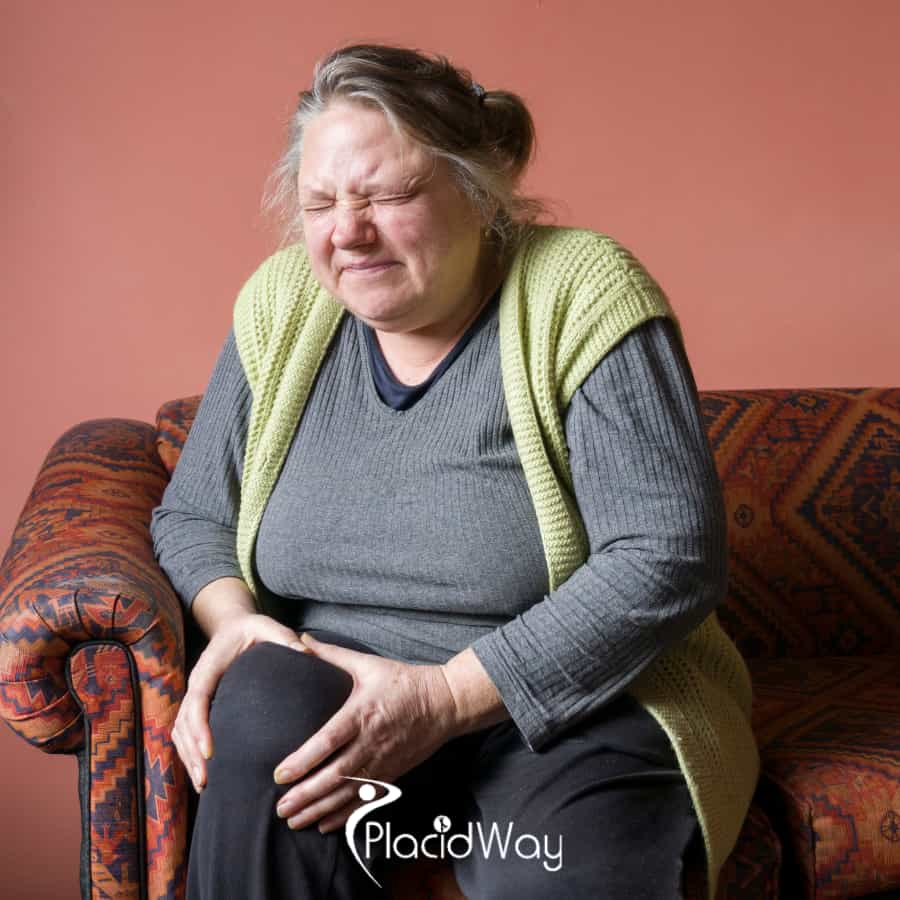
Amina Yusuf Could No Longer Reach the Stockroom Shelf — A Nigerian Patient’s Rotator Cuff Repair Surgery in Mumbai

About Article

  • Treatment: Orthopedic/Knee Surgery
  • Country: India
  • Overview Amina Yusuf’s shoulder tear now interferes with sleep, work and basic lifting. Facing an 18- to 24-month public surgical wait, she examines arthroscopic repair in Mumbai as a way to protect her livelihood. Before choosing a surgical route, she needs clarity on tear size and reparability, surgeon experience, anesthesia, postoperative immobilization, physiotherapy access, return-to-work timing and care if healing is delayed.

Trusted Medical Tourism Platform Since 2007

60+
Countries
2k+
Clinics
19.5k+
Reviews
2.5k+
Qualified Doctors
1.1M+
Patients Served Since 2007