
Patient Profile
Name: Gareth Pritchard
Age: 48
Condition: Androgenetic alopecia
Treatment: FUE or FUT hair transplantation
Destination: Istanbul, Turkey
Journey at a Glance
Main problems: Progressive hair loss (androgenetic alopecia); Visible thinning at crown and temples; Receding hairline; Reduced hair density
Previous care: Minoxidil (Rogaine) for 2–3 years with marginal results; Finasteride (Propecia) with side-effect concerns or inconsistent compliance; Hair fibers or concealers for temporary confidence boosts
Travel driver: Cost arbitrage (60–70% savings) combined with no NHS funding, private UK pricing perceived as excessive, and Istanbul's established reputation as the world leader in hair transplant volume and specialization
Treatment explored: FUE or FUT hair transplantation
Personal goal: Appear in photographs and professional settings without persistent anxiety about visible hair loss.
You stopped standing directly under the bathroom spotlight.
You adjusted the rear-view mirror to hide your forehead.
You bought a thicker, matte styling clay.
You spent an extra ten minutes in front of the glass before leaving the house.
You untagged three recent photographs on Facebook.
You wore a baseball cap indoors at the weekend.
You started sitting with your back to the wall in restaurants.
You cancelled a summer swimming trip with friends.
You laughed off a colleague's joke about your age.
You stopped looking at the top of your head entirely.
"It's just a bit thin on top."
"You still look exactly the same to me."
"Nobody is even looking at your hairline."
Your world has quietly become smaller.
You have learned the quietest lesson of all:
The hardest part is not the shame, but the waiting.
Meet Gareth Pritchard.
Gareth Pritchard is not a real PlacidWay client.
He is a fictional composite built from the situations and questions British men face today.
He is forty-eight years old and lives in London.
He manages a regional logistics team.
He commutes on the Jubilee line.
He coaches Sunday league football.
He used to towel his hair dry in three seconds and walk straight out the door.
The escalation happened slowly, until it didn't.
He blamed the harsh fluorescent lighting in the office lift.
He assumed he was just stressed about the quarterly targets.
Then he started trying things.
Caffeine shampoos.
Thickening sprays.
Minoxidil for two years.
Finasteride, until the side-effect warnings made him too anxious to continue.
Concealing powders for a family wedding.
A grade-two buzzcut that he immediately rejected.
Standard medical guidance states that male pattern baldness is a hereditary condition affecting around half of all men by age fifty, driven by a combination of genetics and hormones. Because it does not typically affect physical health, surgical hair restoration is rarely funded by the state, leaving patients to navigate the private market if they wish to pursue treatment.
His general practitioner summarised the reality with a brief remark:
"This is just cosmetic."
When?
The system sees a demographic, but he sees a mirror.
The domestic private market for hair transplantation often quotes anywhere from GBP 8,000 to GBP 15,000, depending on the clinic's postcode, the surgeon's profile, and the extent of the restoration required. Demand for these procedures has grown steadily, yet the cost remains a prohibitive barrier for many average-earning professionals.
But Gareth Pritchard doesn't experience the private healthcare sector as a national statistic.
He experiences it at a summer barbecue when a relative makes a passing observation.
"Catching the sun a bit up top, eh?"
He experiences it when setting up his laptop for a video call.
"I need to angle this camera down slightly."
He experiences it when getting dressed for his twentieth anniversary dinner.
"I just look tired all the time."
He has already tried to be patient.
He is not an impulsive shopper looking for a quick fix.
He spent three years reading medical forums late at night.
He tracked his hairline regression using monthly photographs stored in a hidden folder on his phone.
He requested three domestic quotes.
He attended a free consultation on Harley Street.
He stalled entirely when they handed him a finance agreement that rivalled his car loan.
"I can't justify spending this much on vanity."
"But I also cannot stop thinking about it."
The internal debate shifted from endurance to logistics:
From "Can I tolerate this?" to:
"How much of my life am I prepared to organise around it?"
The nearer alternative feels completely out of reach.
The domestic option fails not on clinical merit, but on a rigid financial barrier.
He has sufficient savings, but spending that sum on his own appearance feels like a profound betrayal of his working-class sensibility.
He sits at the kitchen table with his wife Sarah, looking at a glossy clinic brochure.
"We have the money in the account, Gareth Pritchard."
"Having it isn't the same as being able to afford it."
He isn't searching for medical tourism yet.
His late-night internet searches begin as quiet attempts to understand his symptoms and local alternatives.
Why is my hair thinning at the crown
How to stop receding hairline UK
NHS hair transplant criteria
Private hair transplant London cost
Cheapest hair transplant Europe
Hair transplant Istanbul reviews
Istanbul enters the feed as an algorithmic inevitability.
His immediate reaction is highly defensive:
"I'm not going abroad just because it's cheaper."
That instinct is entirely correct.
Price should not answer a medical question, and the goal of this process is not to persuade anyone to cross a border.
Why does Istanbul keep appearing in the research?
Turkey has deliberately built a centralized medical tourism infrastructure, handling hundreds of thousands of cosmetic procedures annually and creating a dense concentration of surgical expertise.
The reframe is crucial.
The question is never whether Turkey is generally good at hair transplants.
Countries do not perform surgery.
Surgeons do, hospitals do, and clinical teams do.
There is something concrete to verify.
The UK government advises individuals seeking medical treatment abroad to thoroughly research the specific clinic and surgeon, warning against relying solely on private company brochures and recommending consultation with a domestic professional first.
His first question was: "How much?"
Indicative costs for a Follicular Unit Extraction procedure in Istanbul commonly range between GBP 2,500 and GBP 4,500, varying significantly based on the surgeon's direct involvement, the facility's accreditation, and the number of grafts required.
"If something looks too good to be true, it usually is."
"What exactly am I getting?"
Thirteen things the advertised price may or may not cover.
Does this price include flights?
Am I paying extra for hotel transfers?
Is the accommodation actually near the clinic?
Who performs the initial physical assessment?
Will the lead surgeon extract the follicles?
Will a technician do the incisions?
Is an interpreter guaranteed to be in the operating room?
Are the surgical instruments single-use?
Does the fee cover post-operative medications?
What happens if I need a special shampoo for a month?
Am I insured if I slip in the clinic corridor?
Is my aftercare handled by someone in London?
Will I just be given a WhatsApp number and a generic manual?
The advertised number is only the beginning of the conversation.
He needs to understand the mechanics of the surgery.
Gareth Pritchard realises he needs to understand the mechanics of the surgery.
He stops looking at price tags and starts looking at medical diagrams.
The physical reality of the procedure dictates everything else.
What does Follicular Unit Extraction actually involve?
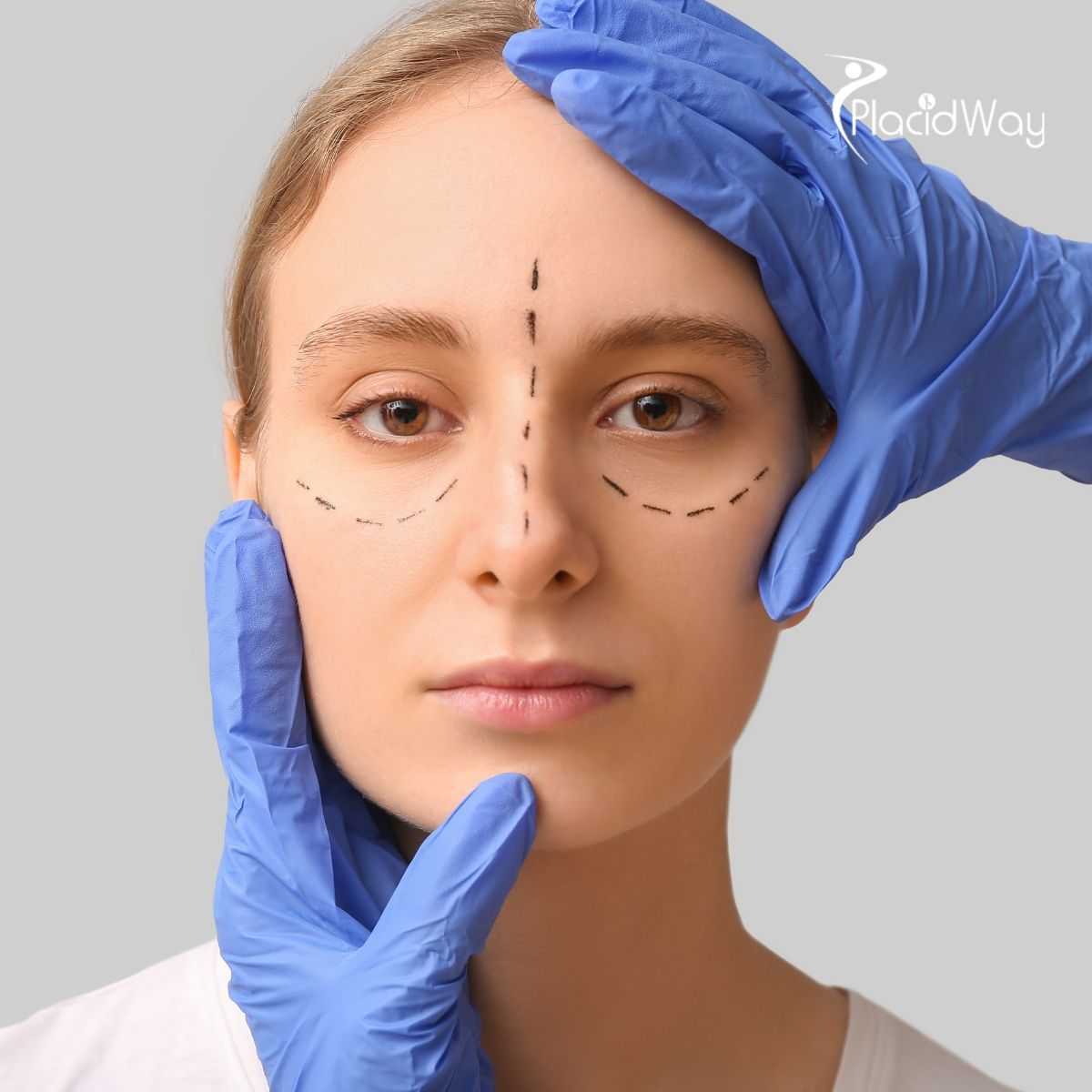
FUE involves removing individual hair follicles from a donor area at the back of the scalp using a micro-punch tool.
These follicles are then meticulously implanted into the thinning areas at the front or crown.
It is a lengthy, minimally invasive surgical procedure performed under local anaesthetic, requiring precise angulation to ensure a natural growth pattern.
"How do I actually get home with a newly operated scalp?"
The part the sales decks rarely put on the front page.
The immediate aftermath of a hair transplant is highly visible and physically delicate.
Guidance on flying after a transplant varies significantly between clinics, with some allowing travel after two days and others advising a week of rest to avoid altitude-induced swelling.
The variation itself is the lesson.
This constraint must be part of the plan before committing, not afterward.
"Wait. Does that mean I have to walk through Heathrow with a bloody, bandaged head?"
Possibly, depending on the clinic's washing protocols and your chosen timeline.
How do I sleep on an aeroplane without dislodging grafts?
What happens if I bump my head getting into a Turkish taxi?
Can I wear a loose hat through airport security?
Will the cabin pressure affect the swelling?
What if the airline staff ask for a medical certificate?
How do I wash it on the third day?
Who changes the dressings if they weep?
Can I use normal painkillers?
Will the swelling drop down into my face?
How many days of annual leave do I actually need to take?
This isn't tourism in the usual sense.
Sarah isn't just coming along for a city break.
The invisible second participant carries a significant burden.
She will be the one managing the logistics while Gareth Pritchard is heavily sedated.
She will remember the post-op instructions when he is groggy.
She will notice if a bandage looks too tight.
She will be responsible for navigating a foreign pharmacy if they need extra gauze.
She needs to know exactly what their specialized medical travel insurance covers in the event of an unexpected complication.
They are part of the care system too.
Then comes the uncomfortable conversation about risk.
Like any surgical procedure, hair transplantation carries risks of infection, scarring, uneven growth, and necrosis of the scalp tissue if performed poorly.
He learns to identify and reject the language of false confidence:
Completely safe. No risk. Guaranteed success.
Informed consent means understanding more than the hoped-for outcome.
Gareth Pritchard's questions become better.
He used to ask how cheap it was and how fast he could get it done.
What is the maximum number of grafts you can safely extract in one session?
Who precisely will be operating the punch tool on the day?
Can you show me your complication rates for the last twelve months?
What is your protocol if an infection develops after I return to the UK?
Are you registered with the International Society of Hair Restoration Surgery?
How do you handle patients with poor donor area density?
What magnification equipment do your technicians use?
How many procedures does this specific surgeon perform in a single day?
Will you provide a written, legally binding breakdown of all costs?
What happens if I require a corrective procedure next year?
He replaces his financial focus with a clinical boundary:
"What would you see that would make you tell me not to proceed?"
They don't only want someone willing to do it.
They want someone willing not to.
Have I exhausted my options at home?
Patients always have the right to request a formal consultation and alternative treatment plans from a domestic specialist before making a cross-border commitment.
Can a UK clinic offer a localized, smaller session?
Is there a payment plan that makes domestic care viable?
Have I truly given non-surgical therapies enough time?
Could a dermatologist prescribe a different formulation?
What is the true cost difference when travel and insurance are added?
Istanbul should be compared with Gareth Pritchard's real alternatives, not with a worst-case assumption about the home system.
The night before the decision.
The kitchen table is covered again.
A printout of a surgeon's medical licence. A drafted list of questions for the video consultation. An insurance policy wording document.
"I think I know exactly what I am going to ask him tomorrow."
"You sound like yourself again."
The research didn't make them more afraid; it made them more capable of deciding.
What Gareth Pritchard actually wants isn't the transplant.
"Why do you want to go through all this trouble?"
He could say it is to look younger.
What he actually wants is to book a consultation with a reputable Istanbul clinic and complete a procedure within three months.
He wants to look in the mirror without analyzing angles.
He wants to sit in a brightly lit meeting room without distraction.
He wants to walk through the wind without reaching for his hat.
Not the surgery. Not the extracted follicles. Not the luxury hotel package. Not the destination.
Control.
And underneath that:
AGENCY.
Istanbul might be the answer, but it might not be.
He might discover his donor area is insufficient for the coverage he wants.
He might decide the logistical burden of flying post-surgery is too high.
He might realize he is actually ready to just shave his head completely.
He might find a domestic clinic willing to negotiate a phased payment plan.
He might book the flight and feel completely at peace with the process.
Choosing to proceed based on verified data, clear boundaries, and realistic expectations is the only successful outcome.
Any of those can be an informed decision.
State plainly that price should not answer a strategic question, and that the goal is not to persuade.
The goal is to make sure frustration doesn't make the decision for you.
The decision belongs entirely to you.
Maybe you've hovered over the contact button on a clinic's website.
Maybe you've calculated the flight times to Sabiha Gökçen.
Maybe you've wondered if anyone at work will notice the redness.
Maybe you've debated the ethics of medical travel.
Maybe you're just tired of thinking about your hair.
You do not need to decide today.
Am I reacting to price, or responding to expertise?
Do I understand the exact medical steps involved?
Who is managing my care when I land back home?
Have I checked the surgeon's independent credentials?
What is my absolute budget, including contingency funds?
Can I accept a less-than-perfect result?
Am I prepared to follow strict recovery rules for a month?
You are no longer just comparing prices.
You are comparing paths forward.
Hope isn't the promise that everything will be fixed.
Hope is not a guaranteed full head of hair.
Hope is not a risk-free medical procedure.
Hope is not a cheap flight to a miraculous outcome.
Hope is having enough information to make a decision that feels like yours.
You can read the clinical guidelines.
You can demand transparent pricing.
You can interrogate the sales pitch.
You can walk away if the answers are vague.
You can take control of the timeline.
The narrative finally shifts:
You are capable of evaluating medical credentials. You are capable of asking difficult questions. You are capable of protecting your future. You are capable of saying no.
Your question has fundamentally changed.
From "I suppose I'll just have to keep waiting." to:
"What other informed options do I have?"
PlacidWay — Your Way to Hope.
PlacidWay helps individuals explore international healthcare options, compare provider credentials, understand treatment pathways, and prepare the right questions for consultations. We do not provide clinical advice, endorse specific medical outcomes, or replace the expertise of a qualified physician. For someone like Gareth Pritchard, seeking a hair transplant in Istanbul isn't a promise, it is one route worth understanding thoroughly.
Your Way to Hope.
Medical disclaimer
This article is provided for educational purposes only and does not recommend that any individual undertake medical travel or specific surgical procedures. Individual medical suitability, surgical viability, and risk profiles require direct professional assessment. Readers should always consult their own primary care clinician or an independent medical adviser, verify the current regulatory status of any foreign clinic, and obtain appropriate specialized medical travel insurance before committing to treatment abroad.


























Share this listing