The Shadow on Susan Mitchell’s Scan Turned Every Week into a Question About Breast Cancer Treatment in Istanbul from the UK

Publish date: Modified date: Medically reviewed by: Dr. Orhan Sencan on Sep 11, 2026 Author: Aamina Bibi

Breast Cancer Treatment in Istanbul from the UK 

Patient Profile

Name: Susan Mitchell

Age: 54

Condition: Breast Cancer (early to intermediate stage)

Treatment: Rapid-access oncology consultation and breast cancer surgery (lumpectomy/mastectomy)

Destination: Istanbul, Turkey

Journey at a Glance

Main problems: Receiving a confirmed cancer diagnosis but facing a 12–16 week NHS wait for surgery; daily erosion of confidence; fear of disease progression during delays.

Previous care: Multiple GP appointments pushing for clinical escalation; exploring private UK oncology only to find coverage limits exhausted and cash prices prohibitive.

Travel driver: Accessing a specialist oncology consultation within 1–2 weeks and surgery within 3–4 weeks to halt the psychological and clinical damage of waiting.

Treatment explored: Comprehensive surgical oncology in Turkey with diagnostic imaging review and coordinated follow-up planning.

Personal goal: Regain control over the treatment timeline and stop organising daily life around a postponed medical appointment.

Breast Cancer Treatment in Turkey: Why UK Patients Are Choosing Istanbul for Faster Oncology Care

You stopped planning holidays for next year.

You stopped looking too closely in the bathroom mirror.

You began waking up at three in the morning to check your phone for messages that would not arrive.

You started hiding your hospital letters in a drawer under your jumpers.

You learned how to breathe shallowly when the postman walked up the drive.

You told your sister it was just a backlog.

You told your manager you might need some flexibility in the autumn.

You told yourself that an overwhelmed system is still a functioning system.

"They wouldn't make you wait if it was dangerous."

"The doctors know exactly what they are doing."

"You just need to stay positive."

Your world has quietly become smaller.

You have realised that the hardest part of this diagnosis is not the physical symptom, nor the prospect of surgery, but the silent, heavy weight of the waiting.

Susan Mitchell is not a real patient on a brochure.

She is a fictional composite, built carefully from the exact situations, clinical delays and desperate questions faced by women across the UK every day.

She is 54 years old and lives in a semi-detached house in Leeds.

Before the ultrasound, she managed the accounts for a local primary school.

She walked her dog along the canal every evening.

She batch-cooked meals on Sundays and booked train tickets to see her daughter in London.

She handled the ordinary machinery of life with quiet competence.

Then came the shadow on the scan.

She told herself the lump was just a cyst.

She blamed hormonal changes.

She pressed her fingertips against her collarbone and looked away.

She booked a GP appointment.

She waited.

She attended the two-week referral clinic.

She waited.

She underwent a core biopsy.

She waited again.

In the UK, the official target states that patients should begin their first treatment within 31 days of a decision to treat . Yet, owing to severe capacity constraints across regional trusts, many women with non-emergency presentations face actual waiting times for surgical intervention extending to 12 or 16 weeks.

She sat in a windowless consultation room and listened to the consultant.

"Invasive ductal carcinoma."

When?

The system sees a manageable queue.

National health statistics commonly indicate that delays of this length may not significantly alter survival outcomes for early-stage hormone-receptor-positive tumours, provided treatment eventually occurs . This data informs surgical triaging, allowing more aggressive presentations to take priority in the theatre schedule.

But Susan Mitchell doesn't experience the health service as a national statistic.

She experiences it staring at the kitchen kettle.

"I just need a date for the diary."

She experiences it putting her phone on silent during work meetings.

"Please don't let it be a withheld number."

She experiences it folding laundry while her husband watches the evening news.

"I feel like I am carrying a bomb."

She has already tried to be the perfect patient.

People in this situation are rarely impulsive buyers seeking a medical shortcut.

She has called the hospital bookings team twice a week.

She has asked her GP to write an expedition letter.

She has logged into the NHS app daily hoping a digital appointment has appeared.

She has downloaded mindfulness audiobooks to stop her heart racing at night.

I just need to hold my nerve.

Other women have waited longer than this.

But as week eight drifted into week ten, she noticed a shift:

She was managing a waiting list, not an illness.

The question had changed.

From "Can I tolerate this?"

To "How much of my life am I prepared to organise around it?"

The domestic alternatives offer little relief.

She looked into private care in Yorkshire.

Her workplace health insurance covered the initial diagnostic scans, but she quickly hit her policy limit before a surgical plan was even drafted.

Self-funding a mastectomy and lymph node biopsy privately in the UK requires between GBP 12,000 and GBP 18,000 upfront.

Even with the funds secured, the private hospitals often rely on the same consultant oncologists working their NHS shifts, meaning access is still bottlenecked.

She sat with David at the dining table, looking at a printed quotation from a local clinic.

"We could remortgage or use the pension lump sum."

"We can afford the money, but we can't afford what losing it does to our retirement."

She isn't searching for Istanbul yet.

Her search history evolved slowly.

private breast cancer surgery near me how fast does invasive ductal carcinoma spread in 3 months self pay lumpectomy cost uk can i get cancer surgery faster abroad best oncology hospitals in europe

When Turkey first appeared in the search results, she closed the browser tab immediately.

"I'm not going abroad just because something is cheaper."

Her instinct was entirely correct.

Price should never be the mechanism that answers a complex oncological question.

Why does Istanbul keep appearing?

Over the last decade, private healthcare groups in Turkey have heavily invested in oncology infrastructure, seeking and maintaining Joint Commission International (JCI) accreditation to align with Western clinical standards .

The appeal is structural.

They operate on a high-volume, rapid-access model built specifically to capture patients exiting bottlenecked public systems in Northern Europe.

But the vital framing must be maintained:

Countries do not treat cancer.

Individual surgical oncologists perform procedures.

Multidisciplinary tumour boards review pathology.

Specific pathology labs process tissue samples.

The UK government advises that any patient considering planned medical treatment abroad should carry out extensive independent research into the specific provider's regulatory standing and consult their existing domestic medical team beforehand .

Her first question was inevitably financial.

Indicative costs for breast cancer surgery in Istanbul generally range between GBP 6,000 and 10,000, depending heavily on whether reconstruction is performed simultaneously and the extent of axillary node clearance required .

She remembered her father's old warning.

"If you buy cheap, you pay twice."

"What exactly am I getting?"

Does this price include the initial PET-CT scan?

Does it cover the histopathology report on the removed tissue?

Is the anaesthetist's fee billed separately?

How many nights in the high-dependency unit are covered if my blood pressure drops?

Does it include the multidisciplinary team meeting to decide my chemotherapy plan?

Are the hospital transfers factored into this package?

Does this cover the immediate post-operative medications?

What happens if the surgeon finds more extensive spread once they open the tissue?

Does the price change if the surgery takes four hours instead of two?

Are my follow-up consultations done virtually or in person?

Will the medical notes be translated into English by a certified medical translator?

Who pays for my flight home if I am not fit to fly on day eight?

She realised quickly that the advertised package price is never a conclusion.

It is simply the starting point for a forensic conversation.

What does rapid-access oncology actually involve?

In standard clinical practice, surgical treatment for early-stage breast cancer typically involves breast-conserving surgery (lumpectomy) or mastectomy, often accompanied by a sentinel lymph node biopsy to determine if the cancer has spread to the lymphatic system . The physical operation takes several hours under general anaesthetic, followed by drain management and wound care.

The foreign pathway compresses the timeline, scheduling consultations within a week and surgical interventions merely days after imaging reviews.

This requires a patient to shift from waiting passively to acting decisively.

"How do I manage the logistics when I am exhausted?"

The part the sales materials rarely put on the front page.

Recovering from a lumpectomy or mastectomy is rarely linear.

Official guidance on flying after major breast surgery varies significantly between airlines and clinical bodies, with some advising waiting two to four weeks before enduring a pressurised cabin .

This variation itself is the lesson.

The physical recovery environment must be planned before any deposits are paid.

"Wait. Does that mean I am stuck in a hotel room with surgical drains?"

Possibly, depending on your surgeon's specific discharge criteria and the complexity of your wound management.

Who will empty the fluid from the drains each morning?

Is the hotel bathroom equipped with a walk-in shower?

How will you comfortably elevate your arm on unfamiliar pillows?

Can you order plain, easily digestible food to the room when nausea hits?

Who is changing the dressings on day four?

Will a nurse visit the hotel, or must you travel back to the clinic?

How jarring is the taxi ride across Istanbul's traffic when you have fresh chest incisions?

What happens if you develop a fever in the middle of the night?

Who do you call when the English-speaking coordinator is off duty?

This requires a rigid mindset shift:

This is an overseas medical deployment, not a retreat.

David isn't just coming along for the ride.

The companion is the invisible load-bearing wall in this arrangement.

He will carry the heavy luggage through airport security.

He will remember the dosage timing for the oral antibiotics.

He will take notes during the surgeon's ward rounds when she is too groggy to listen.

Standard travel insurance policies routinely invalidate coverage if the primary purpose of the trip is to receive planned medical treatment, meaning specialist medical travel insurance must be procured to protect the companion's logistical costs in the event of extended stays .

The companion is part of the clinical supply chain.

Then comes the uncomfortable conversation about risk.

Any major oncological surgery carries inherent risks of infection, haematoma, poor wound healing, seroma accumulation, or adverse reactions to general anaesthesia .

When navigating foreign healthcare providers, Susan learned to watch for the language of evasion.

Completely safe. No risk at all. Guaranteed success. You will be fine.

True informed consent means understanding exactly how failure is managed, not just staring at the hoped-for outcome.

Susan's questions become clinical.

She stopped asking "Will this hurt?"

She started asking:

Who specifically will translate my pathology results back to my NHS oncologist?
Do you use the same staging protocols as the UK?
How many breast cancer surgeries did this specific consultant perform last month?
If my margins are not clear, am I charged for the second revision surgery?
What is your hospital's current rate of surgical site infections?
Can my UK oncologist speak with your lead surgeon before I fly?
Will I leave with physical copies of all my imaging on a secure drive?
How do you manage prescribing systemic chemotherapy if I return home immediately?
What happens if the airline refuses me boarding due to swelling?
What clinical finding would make you tell me NOT to proceed with surgery today?

She did not want a surgeon who only knew how to say yes.

She demanded one capable of saying no.

Have I genuinely exhausted my options at home?

Under the NHS Constitution, patients have the legal right to ask to be referred to a different hospital or provider if their maximum waiting time target has been breached, though capacity across regions often makes relocation functionally difficult .

Before booking flights, she had to verify her domestic standing.

Where am I on the current list?
Has my case been discussed in a multidisciplinary team meeting yet?
Can I be placed on a short-notice cancellation list?
Will the NHS accept and act on diagnostic scans performed privately abroad?
Who will handle my adjuvant radiation therapy if the surgery happens elsewhere?

This established a fundamental rule of fairness:

Istanbul must be compared against Susan's real, documented domestic options, not against a theoretical worst-case disaster scenario.

The night before the decision.

The dining table was no longer empty.

A printed consultant biographies. A translated sample of a surgical contract. A folder containing flight schedules. A notepad with twenty questions crossed out.

"It feels like we are planning a military operation."

"We are planning your recovery."

The relentless research had not made her more anxious.

It had stripped away the panic and left behind clinical capability.

What Susan actually wants isn't surgery.

David asked her what she was hoping to get out of all this.

The expected answer was physical healing.

The real answer was smaller:

To book a December theatre trip without checking cancellation policies.

To look at her daughter without holding back tears.

To read a novel before bed without her mind drifting to pathology reports.

To take the dog out and just look at the canal.

Not a medical package. Not an international flight. Not a specific hospital bed. Not a Turkish clinic.

Time.

And underneath that:

Autonomy.

Istanbul might be the answer. It might not be.

You might investigate the pathway and find the travel logistics too draining.

You might struggle to secure adequate travel insurance for your specific co-morbidities.

You might successfully press your NHS trust for a cancellation slot.

You might decide that continuity of care at home outweighs the speed of treatment abroad.

You might speak to a foreign coordinator and simply feel unheard.

Or you might review the surgeon's credentials, book the flights, pack the medical records, and take back the schedule.

Any of those can be an informed decision.

The objective of understanding medical travel is not to persuade you to leave the country.

It is to ensure that exhaustion and frustration do not make the choice for you.

The objective of understanding medical travel is not to persuade you to leave the country. It is to ensure that exhaustion and frustration do not make the choice for you.

The next step belongs to you.

Maybe you have stared at the ceiling at 3 AM.

Maybe you have drafted a harsh email to the booking coordinator and deleted it.

Maybe you have avoided your neighbour because you cannot face repeating the story.

Maybe you have looked at your savings account and wondered what the money is actually for.

Maybe you just want someone to look at your file and act.

You do not need to decide today.

What exactly does my diagnosis require in the next 30 days?
Who holds the authority to escalate my case here at home?
What is the financial cost of waiting another month?
What is the psychological cost of waiting another month?
Do I have the energy to manage my own healthcare administration?
Who will support me if I fly?
Who will support me if I stay?

You are no longer just comparing prices.

You are comparing paths forward.

Hope isn't the promise that the cancer will vanish quietly.

It is not a colourful brochure for a private clinic.

It is not a blindly optimistic phrase offered by a well-meaning relative.

It is not the denial of risk.

Hope is possessing enough concrete information to make a decision that belongs entirely to you.

It is knowing how to interrogate a surgeon. It is knowing how to push back against vague assurances. It is understanding your legal rights at home. It is refusing to be managed by a system that has run out of space. It is stepping out of the dark machinery of waiting.

The internal monologue changes.

From "I suppose I'll just have to keep waiting."

To "What other informed options do I have?"

PlacidWay — Your Way to Hope.

We help patients structure their research, compare international clinical facilities, and prepare the rigorous questions required for cross-border medical consultations. We do not provide medical diagnosis, nor do we determine clinical suitability.

For a woman in Susan's position, a flight to Turkey is never a guaranteed fix; it is simply one highly structured route worth interrogating when the domestic timeline breaks down.

Medical Disclaimer

This article is provided for educational and informational purposes only and does not constitute medical advice or a recommendation to undertake treatment abroad. Individual clinical suitability and risk require direct professional assessment. Readers should consult their own registered oncologist or general practitioner in their home system before altering any treatment plan. Always verify the current regulatory status, JCI accreditation, and specific surgical outcomes of any foreign provider independently, and ensure appropriate specialist medical travel insurance is secured prior to departure.

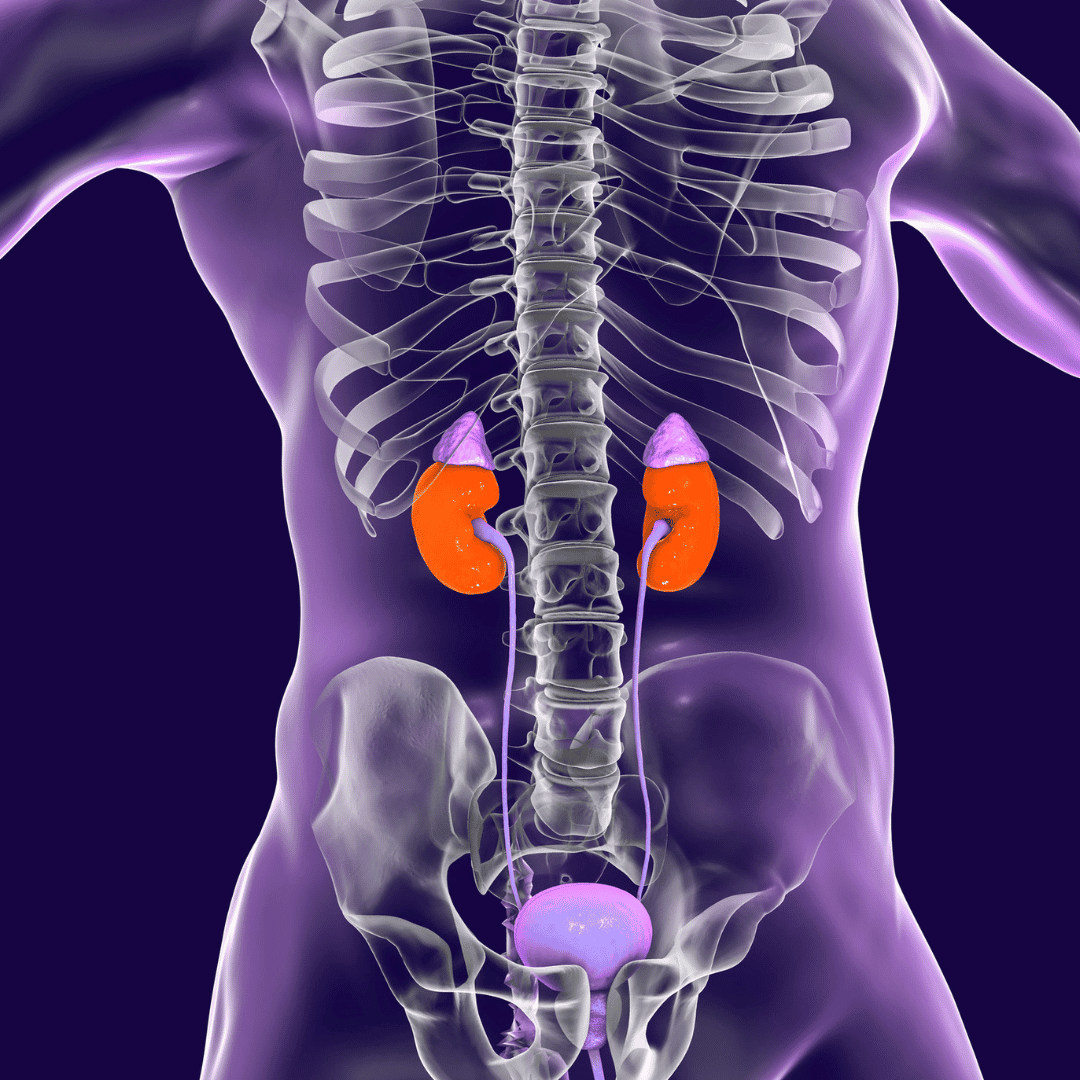
The Shadow on Susan Mitchell’s Scan Turned Every Week into a Question About Breast Cancer Treatment in Istanbul from the UK

About Article

  • Treatment: Cancer Treatment
  • Country: Turkey
  • Overview Susan Mitchell has a confirmed breast cancer diagnosis and finds the waiting period nearly as difficult as the treatment decision. She explores Istanbul for a faster oncology review and possible surgery. Any overseas plan should include complete pathology and imaging review, multidisciplinary discussion, breast-conserving versus mastectomy choices, lymph-node assessment, possible adjuvant treatment and a documented handover to her UK oncology team.

Trusted Medical Tourism Platform Since 2007

60+
Countries
2k+
Clinics
19.5k+
Reviews
2.5k+
Qualified Doctors
1.1M+
Patients Served Since 2007