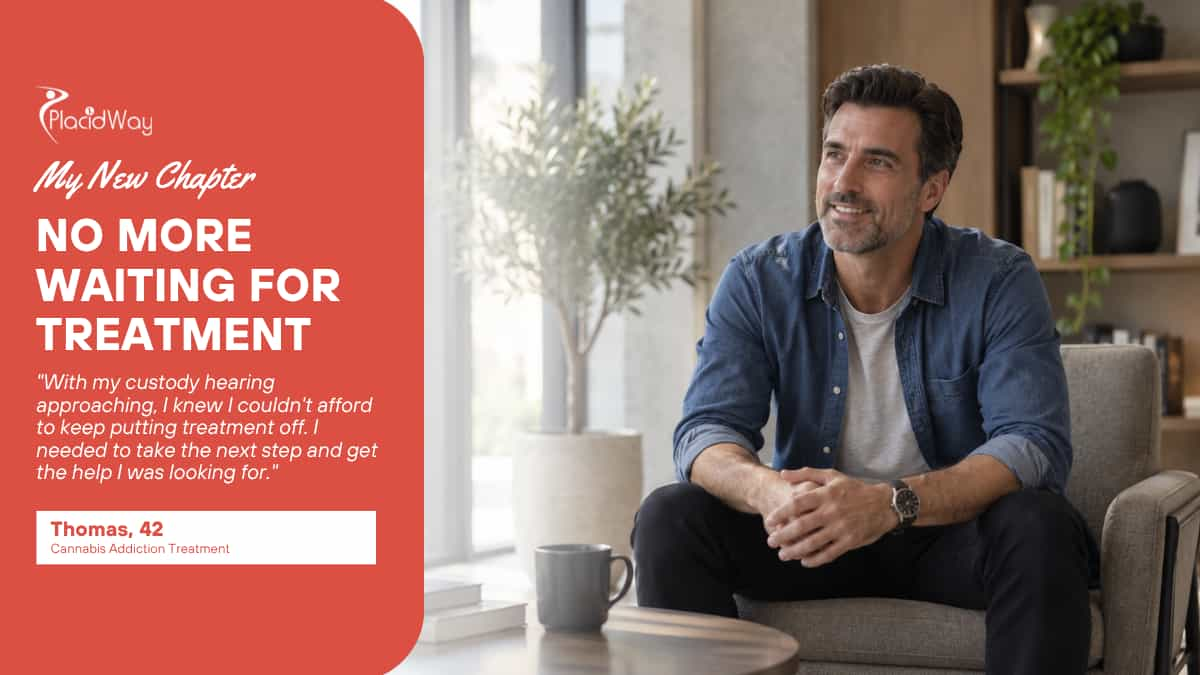
A Custody Hearing Made the Treatment Wait Impossible for Thomas Reed: An American Patient Seeking Cannabis Addiction Treatment in Malaga

Publish date: Medically reviewed by: Dr. Hector Mendoza on Sep 10, 2026 Author: Iqra Naseer

American Patient Seeking Cannabis Addiction Treatment in Malaga 

Patient Profile

Name: Thomas Reed

Age: 42

Condition: Severe Cannabis Use Disorder; psychological dependency

Treatment: Intensive residential addiction treatment (detoxification, CBT, dual-diagnosis support)

Destination: Malaga, Spain

Journey at a Glance

Main problems: Daily cannabis use for 12 years resulting in severe cognitive impairment, lost employment, worsening depression, and imminent threat of losing child custody.

Previous care: Multiple failed self-quit attempts, sporadic AA/NA attendance, and currently stalled on a 16-month NHS waiting list for addiction counseling.

Travel driver: Unaffordable UK private rehab costs (GBP 18,000+) and desperate need for immediate, immersive intervention away from local triggers.

Treatment explored: 28-day structured residential program addressing addiction and underlying trauma in a controlled environment.

Personal goal: Break the cycle of dependency, preserve relationships with his children, and rebuild a functional, independent life.

You start by telling yourself it just takes the edge off.

You restrict it to the evenings after the kids are asleep.

Then the weekends blur seamlessly into the weekdays.

You stop answering texts from friends who do not smoke.

You rationalize the missed deadlines and memory slips as simple fatigue.

You accept morning irritability as a permanent personality trait.

You calculate your daily schedule entirely around securing your supply.

You learn to hide the smell, the stash, and the grinding shame.

You have learned the quietest lesson of all:

You just seem so absent lately.

We need someone fully focused for this role.

I cannot leave the kids with you when you are like this.

Your world has quietly become smaller.

The hardest part is not the daily exhaustion, but the endless waiting for help.

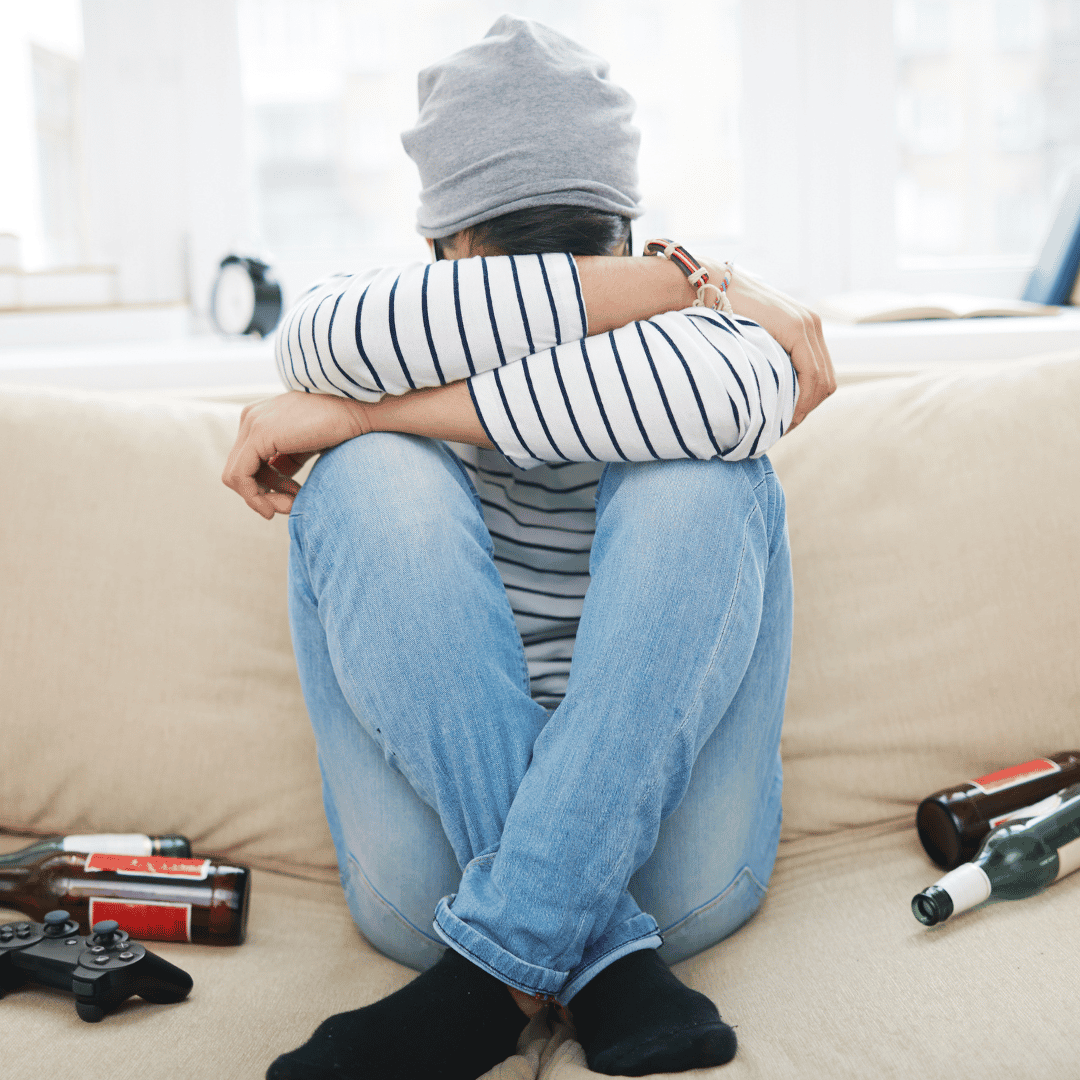
Meet Thomas Reed, a man watching his life collapse in slow motion.

Thomas is not a real patient of any specific clinic, but a fictional composite built entirely from the situations and questions British adults face when grappling with long-term dependency.

He is forty-two years old.

He lives in Manchester.

Before the fog settled permanently, he lived an ordinary, competent life.

He drafted logistics reports.

He coached Sunday football.

He paid his mortgage on time.

The long, quiet escalation of a dependency.

For years, he explained the cognitive fog away as burnout.

He told himself he could stop whenever he wanted to.

Then he tried to stop.

Tapering. Weekend-only rules. Vaping substitutes. Cold turkey. Recovery apps. GP visits. Failure.

Under standard clinical guidelines in the UK, adults presenting with severe cannabis use disorder who have failed community-based interventions are eventually referred to specialist addiction services for structured psychological therapies or residential rehabilitation . However, access to these intensive resources is heavily localized, heavily rationed, and frequently delayed by critical staffing shortages across regional trusts.

His GP finally delivered the verdict:

Waitlisted.

When?

The system is overwhelmed, and the queue is silent.

Recent data indicates that adults seeking specialist substance misuse treatment in England can face waiting times stretching from six to eighteen months depending on the severity of their dual-diagnosis needs and local authority funding .

But Thomas does not experience the healthcare system as a national statistic.

He experiences it as an empty inbox on a Tuesday morning when he has no energy to get out of bed.

They said they would send a letter.

He experiences it as the heavy silence in the car after his ex-partner refuses to let his daughter stay the weekend.

She needs a father, not a shadow.

He experiences it as a polite email from HR terminating his contract due to sustained underperformance.

We wish you well in your recovery.

He has already tried to be profoundly patient.

There is a persistent assumption that people exploring rehabilitation abroad are simply impatient shoppers demanding a quick fix.

Thomas is not careless.

He endured the initial six-week wait just for the primary assessment.

He attended the sporadic peer support groups in a drafty community center.

He filled out the required drinking and drug diaries.

He tried meditating through the intense withdrawal insomnia.

Just hold on a little longer.

Someone will call eventually.

But sixteen months of holding on has hollowed him out.

The daily cycle of use, withdrawal, and crushing guilt has drained his capacity to advocate for himself within a broken framework.

He finally understood what was required:

Action.

His core dilemma transitioned from "Can I tolerate this wait?" to a much heavier reality:

How much of my life am I prepared to lose while I wait?

The nearer alternative is financially impossible.

Going private in the UK is the conventional advice.

He researched residential facilities in the home counties.

The programs are excellent, utilizing evidence-based cognitive behavioral therapy and medically supervised detox.

The price for a standard 28-day admission rarely falls below GBP 18,000, and often exceeds GBP 25,000 once psychiatric assessments and aftercare are invoiced.

Thomas has exactly GBP 11,000 left in his rapidly depleting savings account.

He sat at the kitchen table with his brother, looking at a glossy brochure from a clinic in Surrey.

It costs more than I have.

There is a difference between wanting help and being able to buy it.

He isn't searching for Spain yet.

His late-night internet searches reflect quiet desperation, not a desire for travel.

Severe cannabis withdrawal insomnia relief

How to pass a drug test for child custody

NHS addiction waiting list times Manchester

Affordable private rehab UK payment plans

Residential addiction treatment under 10k

The search algorithms eventually point him toward southern Europe.

Malaga emerges repeatedly as a hub for British expatriates and medical travelers seeking behavioral health support.

His initial reaction is defensive.

I am not going on holiday to get sober.

That skepticism is entirely appropriate.

Geographic distance does not guarantee a cure for psychological dependency.

Why does Malaga keep appearing in the literature?

Spain, and specifically the Costa del Sol, has developed a dense infrastructure of private addiction treatment centers serving an international clientele, regulated by regional health authorities (Junta de Andalucía) and often aligned with European clinical standards .

The distinction he must learn is critical.

Countries do not treat addiction.

Clinical teams treat addiction.

There is a massive difference between a luxury wellness retreat and a licensed psychiatric rehabilitation facility.

There are concrete credentials, staffing ratios, and therapeutic methodologies that can be verified independently.

Health authorities strongly advise that patients seeking substance misuse treatment abroad conduct thorough independent research and consult their primary care physician before committing to any international program .

His first practical question was inevitable.

Indicative costs for a 28-day residential addiction treatment program in Spain generally range between GBP 6,800 and GBP 12,000, depending heavily on the intensity of psychiatric support, the requirement for medical detoxification, and the type of accommodation chosen .

If it looks too cheap, you are paying for it somewhere else.

What exactly am I getting for that price?

Twelve things the advertised price may or may not cover.

Does the fee include an initial psychiatric evaluation?
Are the therapists fully accredited and fluent in English?
How many hours of individual cognitive behavioral therapy are provided each week?
Is group therapy mandated or optional?
Are meals and nutritional rehabilitation included in the base cost?
Does the program cover dual-diagnosis treatment for my underlying depression?
What happens if I require a longer detoxification period than planned?
Are airport transfers securely managed by clinic staff?
Is family therapy available via video link for my children?
What specific trauma-informed care modalities are utilized?
Are there hidden fees for medications prescribed during the stay?
Does the facility provide a structured discharge protocol aligned with UK NHS standards?
How many weeks of remote aftercare are guaranteed once I return home?

The advertised number is only the beginning of a much longer conversation.

A temporary pivot to understanding the methodology.

Residential treatment for cannabis dependency is rarely about physical detoxification alone; it is an intensive psychological restructuring process.

It demands isolation from familiar triggers, daily accountability, and the systematic dismantling of the coping mechanisms that have kept the patient trapped in a cycle of use.

The clinical work is exhausting.

How does being in a different country actually help?

Removing a patient from their enabling environment is a recognized therapeutic strategy.

He is separated from his dealer, his peer network, and the specific physical locations that trigger his cravings.

But that physical separation brings entirely new logistical challenges.

The parts the brochures rarely put on the front page require strict attention.

International medical travel guidelines frequently highlight that continuity of care—specifically what happens on day twenty-nine—is the single greatest variable in long-term addiction recovery success .

The variation in international discharge planning is the lesson itself.

This constraint must be fully integrated into his plan before he pays a deposit, not as an afterthought while packing his bags.

Wait. Does that mean I am on my own the moment I land back in Manchester?

Possibly, depending entirely on the facility you select.

Who coordinates the handover with my UK general practitioner?
Will the clinic provide my medical records in English?
What happens if I experience a severe depressive episode during the first week?
Are there local emergency psychiatric protocols in place at the Spanish clinic?
How is my progress communicated to my family?
What are the rules regarding mobile phone access during the program?
If I decide to leave against medical advice, how is my safe return managed?
Do they offer alumni support groups in the UK?
How do they handle relapses that occur shortly after discharge?
Are local AA or NA meetings integrated into the weekly schedule?

He forces himself to accept the reframe.

This is not a retreat.

This is an acute medical intervention taking place across borders.

His brother is not just driving him to the airport.

The invisible second participant in this journey is his brother, who has agreed to act as the primary emergency contact.

His brother will hold the legal consent forms.

His brother will field the tearful phone calls during the worst days of withdrawal.

His brother will need to coordinate with the ex-partner regarding custody updates.

Standard travel insurance rarely covers psychiatric emergencies or residential addiction treatment complications abroad, requiring specialized medical travel policies to ensure adequate protection.

The family is part of the clinical system too.

Then comes the uncomfortable conversation about risk.

The risk of relapse after any form of addiction treatment is significant, particularly in the first ninety days following discharge.

He learns to read the promotional materials with a hostile, protective eye.

He immediately discards any clinic that uses specific phrases.

Completely safe. 100% success rate. Guaranteed cure. Risk-free recovery.

Informed consent means understanding that his brain will fight the treatment.

It means acknowledging that underlying anxiety or trauma will surface violently once the cannabis is removed.

Thomas's questions become clinical.

He no longer asks if they have a swimming pool.

He asks the intake coordinators the hard questions.

What is your staff-to-patient ratio overnight?
How do you handle patients experiencing acute suicidal ideation?
Are your counselors registered with recognized European psychiatric boards?
Can I speak with a former UK patient about their discharge experience?
What specific trauma modalities do your therapists practice?
How do you integrate family members into the boundary-setting process?
What physical security measures exist to prevent patients from sourcing drugs locally?
How do you manage patients who refuse to participate in group sessions?
What is the protocol if a patient becomes violent during withdrawal?
How is my data protected under European privacy laws?
What would you see in my file that would make you reject my application?

He does not want a clinic that accepts everyone who can pay.

He wants a clinical team willing to tell him no.

Has he truly exhausted his domestic options?

Patients in the UK possess specific rights regarding treatment delays, including the ability to request funding for alternative provisions through their local drug and alcohol partnership if waiting times breach clinical safety thresholds.

He owes it to his future self to verify this.

Can you guarantee an admission date within the next sixty days?
Are there any cancellation lists I can join immediately?
Will the local authority partially fund a private placement due to the delay?
What outpatient support can I access while I continue to wait?
Is there a dual-diagnosis specialist available in my district?

The principle of fairness demands a rigorous comparison. A private clinic in Spain must be compared against his real domestic alternatives, not against a cynical, worst-case assumption about the NHS.

The night before the decision.

The kitchen table is no longer just a place to smoke.

It is covered in printed emails.

It holds the clinic's detailed daily itinerary. It holds the translated credentials of the lead psychiatrist. It holds a signed contract for medical travel insurance. It holds the logistical plan for his children.

Are you actually ready for how hard this will be?

I am ready to stop hiding from them.

The extensive research did not make the prospect of withdrawal any less terrifying.

It simply made him capable of making a choice.

What he actually wants is not a rehab facility.

When a friend asks what he expects to get out of the trip, he gives the polite answer about getting clean.

But the real metric of success is far simpler.

He wants to look his daughter in the eye without feeling like a fraud.
He wants to sleep through the night without sweating through the sheets.
He wants to hold a job where his mind is sharp and present.
He wants to stop living in a state of constant, low-level panic.
Not a luxury villa. Not a Mediterranean climate. Not a discounted medical package. Not an escape from reality.

Agency.

And underneath that:

Respect.

Spain might be the answer, but it might not be.

He might decide that the disruption to his children is too severe.

He might choose to borrow the money for a UK clinic instead.

He might finally receive a call from the local authority with a funded bed.

He might realize he is not psychologically ready to face his underlying trauma without his coping mechanism.

He might decide to stay on the waiting list and keep trying outpatient therapy.

If he proceeds with Malaga, he does so knowing exactly what the program entails, what the risks are, and what will be demanded of him when he returns.

Any of those can be an informed decision.

The goal of exploring international options is not to convince you to fly to Spain. The goal is to ensure that frustration and despair do not make the decision for you.

The reality of your own timeline.

Maybe you have deleted your dealer's number a dozen times.

Maybe you are tired of lying to your partner about why you are so irritable.

Maybe you have researched local private clinics and felt your stomach drop at the prices.

Maybe you are sitting on an NHS waiting list watching the months disappear.

Maybe you are terrified of what happens if you do not change.

You do not need to decide today.

What exactly is keeping me trapped in my current environment?

Can I afford the private care available in my own city?

Am I willing to do the grueling psychological work required in rehab?

Who will hold me accountable when I return home?

What happens if my current situation continues for another year?

Does a clinic abroad offer the specific psychiatric support I need?

Am I choosing a facility based on clinical merit or just the price?

The research is not just about comparing prices.

It is about comparing paths forward.

Hope isn't the promise that the craving will magically disappear.

Hope is not a glossy brochure showing a sunset over the Mediterranean.

Hope is not a sales pitch from an intake coordinator.

Hope is not pretending that recovery will be easy.

Hope is finally having enough accurate information to make a decision that belongs entirely to you.

You are capable of asking the uncomfortable questions. You are capable of demanding transparency from clinical providers. You are capable of facing the reality of your dependency. You are capable of planning for the day after discharge. You are capable of taking the next step.

You stop telling yourself: "I suppose I will just have to keep waiting in the dark."

You start asking:

What actual, informed options do I have to reclaim my life?

PlacidWay — Your Way to Hope.

PlacidWay helps individuals and families explore international medical and rehabilitation options by providing a platform for transparent comparison.

We assist you in understanding the landscape of available facilities, gathering provider credentials, and preparing the rigorous questions necessary for informed consent.

We do not provide clinical advice, and we do not perform medical assessments.

For someone in Thomas's position, a residential clinic in Malaga is never a guaranteed promise of lifelong sobriety; it is simply one highly structured route worth understanding fully.

Your Way to Hope.
Medical disclaimer

This article is for educational and informational purposes only and does not recommend that any individual undertake travel for addiction treatment. Individual suitability for residential rehabilitation and the inherent risks of international medical travel require comprehensive professional assessment. The reader should consult their own licensed clinician, psychiatrist, or local healthcare provider before making any decisions regarding addiction treatment. Always verify the current regulatory status, clinical credentials, and discharge protocols of any facility independently, and ensure you obtain appropriate specialized medical travel protection or insurance.


A Custody Hearing Made the Treatment Wait Impossible for Thomas Reed: An American Patient Seeking Cannabis Addiction Treatment in Malaga

About Article

  • Translations: EN ES
  • Treatment: Addiction Treatment
  • Country: Spain
  • Overview Thomas Reed’s daily cannabis use now affects memory, employment, depression and custody of his child. A long NHS wait and high UK private fees lead him to consider residential care in Malaga. Residential treatment should provide psychiatric assessment, withdrawal support, cognitive behavioral therapy, dual-diagnosis care, safeguarding, family involvement, relapse planning, clear program credentials and continuity with community services after discharge.

Trusted Medical Tourism Platform Since 2007

60+
Countries
2k+
Clinics
19.5k+
Reviews
2.5k+
Qualified Doctors
1.1M+
Patients Served Since 2007