
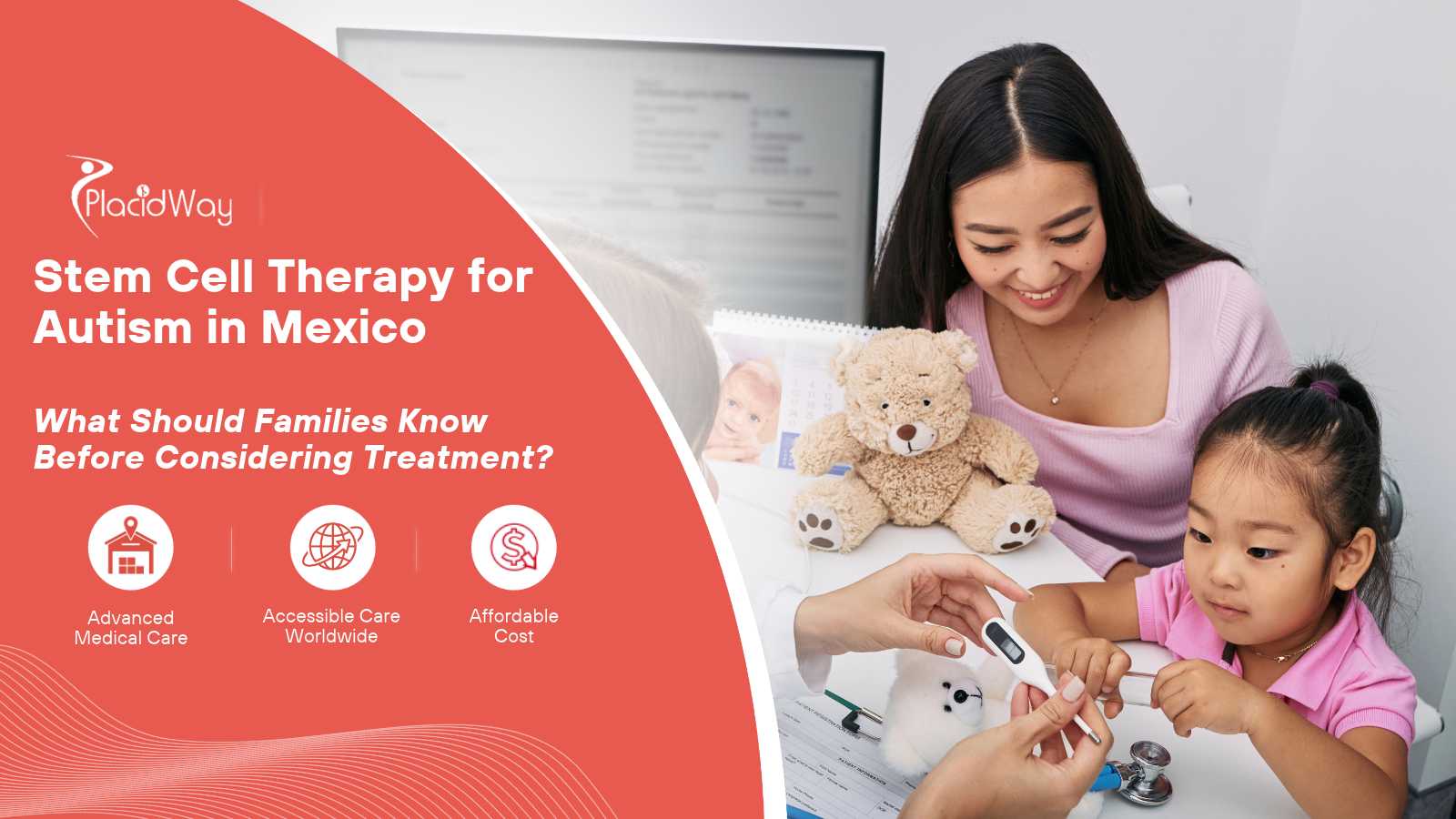
For parents of an autistic child, searching for new ways to support communication, learning, behavior, sleep, sensory regulation, or daily functioning can become a long journey.
After years of developmental therapies, specialist appointments, school programs, medications for co-occurring conditions, and countless hours of research, some families begin looking beyond conventional care in their home country. One area receiving considerable attention online is stem cell and regenerative medicine for autism, particularly in Mexico.
For families in the United States and Canada, Mexico is especially visible because it is nearby, relatively easy to reach, and home to private clinics that advertise regenerative medicine programs. PlacidWay's current marketplace listings include autism-focused regenerative programs in destinations such as Tijuana, Monterrey and Mexico City, illustrating that there is active commercial availability and consumer interest.
But there is an important distinction every family should understand before going further:
Commercial availability does not mean a therapy has been proven effective for autism.
Stem-cell-based interventions for autism remain investigational. The US Food and Drug Administration states that regenerative medicine products have not been approved to treat autism, and the International Society for Stem Cell Research warns that most stem-cell interventions marketed for conditions without established evidence should be considered unproven unless they are being properly evaluated through regulated clinical research.
That does not mean research should be ignored.
It means families need better questions.
Quick Answer
Families are researching stem cell therapy for autism in Mexico because regenerative medicine clinics are accessible there, Mexico is geographically convenient for North Americans, and early clinical studies have created interest in whether cell-based therapies could affect certain biological processes associated with autism.
However, current research is still limited.
Published reviews have reported signals of possible improvement in some autism assessment scores, but the studies are generally small, heterogeneous, use different cell types and administration methods, and do not yet establish stem cell therapy as a proven treatment for autism.
Families considering treatment abroad should therefore investigate:
- What exactly is being administered?
- Where do the cells come from?
- How are they processed?
- What evidence supports that exact protocol?
- Whether outcomes are measured objectively
- What risks are known?
- What regulatory documents does the clinic provide?
- What happens if complications occur?
- Whether the child's existing autism care continues before and after treatment
The goal should not be to answer, “Does stem cell therapy cure autism?”
Current evidence does not support that claim.
The more useful question is:
“What evidence exists for this specific intervention, and is there enough information to justify exposing my child to its cost and risks?”
Why Are Families Looking Beyond Conventional Autism Care?
Autism spectrum disorder is a neurodevelopmental condition with considerable variation from one person to another.
Autistic children may differ substantially in:
- Spoken communication
- Nonverbal communication
- Social interaction
- Sensory processing
- Repetitive behaviors
- Learning
- Attention
- Sleep
- Motor skills
- Independence
- Co-occurring medical or psychological conditions
There is therefore no single autism treatment that addresses every child's needs.
The US Centers for Disease Control and Prevention describes autism support as potentially involving behavioral, developmental, educational, social-relational, psychological and pharmacological approaches.
Importantly, the CDC states that there are currently no medications that treat the core symptoms of autism itself. Medication may instead be used for specific co-occurring concerns such as anxiety, attention difficulties, sleep problems, seizures, or challenging behaviors.
This helps explain part of the interest in experimental approaches.
Families may reach a point where they ask:
- Is there anything else being researched?
- Could another country offer something unavailable at home?
- Are regenerative therapies scientifically plausible?
- Are reported improvements real?
- Why are some clinics offering this if it is still experimental?
- Is there a clinical trial my child could participate in?
- How can we distinguish research from marketing?
Those are reasonable questions.
The problem arises when uncertainty is replaced by promises.
Why Mexico Has Become Part of the Autism Stem Cell Conversation
Mexico appears frequently in international searches for regenerative medicine.
For families from the United States and Canada, several practical factors contribute to that interest.
Mexico Is Geographically Accessible
Tijuana can be reached by ground from Southern California, while other Mexican cities are connected to North America by direct flights.
For a family traveling with an autistic child who may have sensory, routine, or communication needs, shorter travel can matter considerably.
A multi-hour road journey to Tijuana may be more manageable for some families than traveling to Europe or Asia.
Private Regenerative Medicine Programs Are Commercially Available
Current PlacidWay listings show multiple Mexico programs marketed around regenerative medicine for autism, with treatment options currently appearing in Tijuana, Monterrey, Mexico City, Puerto Vallarta and other locations.
This does not establish effectiveness.
It establishes that a market exists.
That distinction is fundamental.
A clinic being willing to administer cells is different from researchers demonstrating that those cells produce meaningful, reproducible clinical benefits.
Families Encounter Powerful Patient Stories Online
Parents researching autism may find:
- Testimonial videos
- Before-and-after behavior descriptions
- Parent interviews
- Social-media posts
- Clinic case studies
- Claims about speech improvements
- Claims about attention or eye contact
- Reports of improved sleep or behavior
These stories can be compelling.
But testimonials cannot determine whether an intervention caused an observed change.
The ISSCR specifically warns patients to be cautious when treatment claims rely heavily on testimonials instead of appropriately controlled clinical studies. Improvements can occur for many reasons, including concurrent therapies, maturation, changes in environment, measurement bias, and natural variability.
A parent's experience can be meaningful to that family.
It is not the same as clinical evidence.
What Exactly Is “Stem Cell Therapy for Autism”?
The phrase is often used as though it describes one standardized procedure.
It does not.
Clinics and research programs may involve very different products.
Families may encounter terms such as:
- Mesenchymal stromal or stem cells
- Umbilical-cord-derived MSCs
- Bone-marrow-derived cells
- Adipose-derived cells
- Cord blood
- Wharton's jelly
- Exosomes
- Extracellular vesicles
These are not interchangeable.
They may differ in:
- Biological source
- Donor screening
- Processing
- Cell characteristics
- Manufacturing
- Storage
- Dose
- Number of administrations
- Administration route
- Sterility testing
- Potency testing
- Proposed biological mechanism
Therefore, asking:
“Do stem cells work for autism?”
is scientifically too broad.
A better question is:
“What evidence exists for this exact cell product, preparation, dose and administration method in children comparable to my child?”
Why Are Researchers Studying Stem Cells in Autism?
Research interest is partly based on hypotheses involving immune regulation, inflammation and signaling between cells.
Some researchers have investigated whether mesenchymal stromal cells or related products might influence immune or inflammatory pathways that could be relevant to subsets of autistic people.
However, biological plausibility is not proof of clinical benefit.
A treatment can have an interesting laboratory mechanism and still fail to improve meaningful patient outcomes.
That is why controlled human studies are necessary.
What Does the Research Actually Show?
This is where families need a balanced answer.
There have been human studies investigating cell-based therapies in autistic children.
A 2022 systematic review and meta-analysis identified five eligible studies. It reported improvement on one commonly used autism rating scale but emphasized major limitations, including:
- Small sample sizes
- Inconsistent dosing
- Different administration methods
- Limitations in diagnostic and outcome tools
- Insufficient long-term follow-up
The authors concluded that more research was needed before effectiveness and safety could be established confidently.
Another systematic review and meta-analysis evaluated 11 trials involving 461 participants. Some assessment scores changed following treatment, but the authors similarly called for additional studies to increase confidence in the results.
The appropriate interpretation is therefore:
There are early research signals worth studying further, but the evidence is not strong enough to establish stem cell therapy as standard treatment for autism.
That is substantially different from saying:
“Stem cells have been proven to improve autism.”
Research Is Still Continuing
Regenerative medicine research related to autism has not stopped.
Researchers continue investigating cell-based and cell-derived approaches.
For example, a currently recruiting study listed on ClinicalTrials.gov is evaluating intranasal exosomes derived from human umbilical-cord mesenchymal cells in young children with autism.
Notably, even this newer investigation is designed specifically to determine whether the intervention is safe and effective; its existence does not mean those questions have already been answered.
Preclinical research is also investigating extracellular vesicles and other cell-derived products.
A recent systematic review of MSC-derived extracellular vesicles reported interesting effects in animal models but emphasized that the evidence remains preclinical and requires further research before translation to routine human treatment.
This difference matters:
Laboratory evidence animal evidence early human study randomized controlled trials replication regulatory review established treatment
are separate stages.
Families should ask which stage a proposed therapy has actually reached.
What Does the FDA Say About Stem Cells for Autism?
The FDA's position is particularly important for families traveling from the United States.
The agency states that regenerative medicine therapies marketed for autism have not been FDA-approved for the treatment of autism.
The FDA has also warned that unapproved regenerative products can involve serious risks and has received adverse-event reports involving complications such as:
- Infection
- Immune or inflammatory reactions
- Contamination
- Inappropriate tissue growth
- Tumor formation
- Failure of the proposed therapy
These warnings apply broadly to unapproved regenerative products rather than proving that every individual product causes these complications.
Families sometimes misunderstand this point.
A clinic may accurately say:
“We are located in Mexico, so this therapy does not require FDA approval in order to be administered here.”
That statement does not answer the scientific question:
Has the therapy been shown to work for autism?
Regulatory jurisdiction and clinical evidence are different issues.
What Does the International Stem Cell Research Community Say?
The International Society for Stem Cell Research draws an important distinction among:
Established stem cell treatments
Treatments supported by sufficient scientific evidence and regulatory authorization for specific conditions.
Investigational treatments
Interventions being studied through appropriately designed clinical trials with research oversight.
Unproven interventions
Products offered clinically or commercially without adequate evidence establishing safety and effectiveness for the proposed condition.
The ISSCR warns that for most conditions for which stem-cell therapies are commercially advertised, evidence remains insufficient to justify routine use.
That framework is extremely useful for families.
Do not ask only:
“Is this legal where it is being offered?”
Ask:
“Which of these three categories does this specific intervention belong to?”
What Should Families Ask a Clinic in Mexico?
This may be the single most important section of the decision.
A reputable provider should be willing to answer detailed questions without rushing the family.
1. What exactly are you administering?
Ask for the exact name of the cellular product.
“Stem cells” are not enough.
Ask:
- What type of cells?
- What tissue are they derived from?
- Are they donor-derived or autologous?
- Are they living cells?
- Is the treatment actually an exosome product rather than cells?
2. Where do the cells come from?
Ask for the source.
Examples might include:
- Umbilical tissue
- Bone marrow
- Adipose tissue
- Another source
For donor-derived products, ask:
- How donors are screened
- How infectious disease risk is assessed
- Who processes the material
- Where processing occurs
3. How is the product manufactured?
This question separates serious scientific discussion from vague marketing.
Ask whether documentation is available concerning:
- Manufacturing facility
- Sterility testing
- Contamination testing
- Cell identity
- Viability
- Batch testing
- Release criteria
- Storage
- Transport
4. What dose will my child receive?
The clinic should be able to explain:
- Total dose
- Dose calculation
- Number of sessions
- Interval between administrations
- Scientific justification
Be cautious if a provider says more cells automatically mean a better result.
5. How will the cells be administered?
Possible methods discussed across regenerative medicine include:
- Intravenous infusion
- Intrathecal administration
- Intranasal delivery
- Other approaches
Different administration routes carry different risks.
Intrathecal administration, for example, is invasive and should not be treated as equivalent to a simple IV infusion.
A systematic review examining intrathecal mesenchymal-cell administration across neurological conditions found differences in adverse-event profiles, reinforcing the importance of evaluating risks associated with the administration method itself.
Ask the Most Important Evidence Question
Families should ask the clinic:
“Please show me published peer-reviewed research evaluating the exact product and protocol you are recommending.”
Then examine whether the study actually matches the proposed treatment.
For example:
Clinic offers:
- Donor umbilical MSCs
- Intravenous administration
- Three doses
- A specific cell concentration
but provides research involving:
- Cord blood
- Different cells
- Intrathecal injection
- One dose
Those are not the same protocol.
Research about one type of stem cell should not automatically be used to validate another.
Ask What Outcome the Clinic Expects to Change
Claims such as:
“Improves autism”
are too vague to evaluate.
Ask what the clinic actually expects to measure.
Possible outcomes could include:
- Receptive language
- Expressive language
- Adaptive functioning
- Social communication
- Repetitive behaviors
- Sensory responses
- Sleep
- Attention
- Irritability
- Daily living skills
Then ask:
How is improvement measured?
A parent's impression can be valuable, but structured research usually requires validated assessment instruments and consistent measurement.
Ask Whether Results Have Been Compared With a Control Group
This is essential in autism research.
Children continue developing over time.
Many also continue:
- Speech therapy
- Occupational therapy
- Behavioral interventions
- Educational programs
- Medications
- Dietary changes
- Other interventions
If a child receives stem cells and shows improvement six months later, that alone cannot establish what caused the change.
Controlled studies help researchers separate:
- Treatment effect
- Natural development
- Concurrent therapy
- Expectation effects
- Measurement differences
This is one reason randomized controlled research carries more weight than testimonials.
“Published Study” Does Not Automatically Mean Strong Evidence
Families may hear:
“There is research proving our approach.”
Ask to see it.
Then examine:
- Number of participants
- Study design
- Randomized or not
- Placebo or control group
- Age of participants
- Cell type
- Administration route
- Outcome measures
- Follow-up duration
- Conflicts of interest
- Whether results were replicated independently
A study involving ten or twenty patients can generate a hypothesis.
It generally cannot settle an important medical question.
What About the Risks?
Risk discussions should be specific to the proposed product and administration route.
Potential considerations with regenerative products can include:
- Infection
- Contamination
- Fever
- Allergic or immune reactions
- Pain
- Headache
- Inflammatory responses
- Procedure-related complications
- Sedation-related risks when sedation is used
- Unknown longer-term effects
The FDA also warns that some unapproved regenerative products have been associated with serious harms.
Parents should ask:
What adverse events have occurred with your exact protocol?
Not simply:
“Is it safe?”
Autism Creates Additional Travel and Procedure Considerations
Medical tourism with an autistic child is different from ordinary medical travel.
Families may need to plan around:
- Sensory sensitivity
- Unfamiliar environments
- Communication preferences
- Food restrictions
- Sleep disruption
- Anxiety
- Waiting-room tolerance
- Blood draws
- IV placement
- Sedation
- Medication schedules
- Seizure history
- Behavioral support
Ask the clinic beforehand:
How do you accommodate autistic children during evaluation and treatment?
A clinic's experience with regenerative medicine does not automatically mean its staff have experience supporting autistic children.
Should Your Child's Regular Doctor Be Involved?
Ideally, yes.
Before traveling, families should consider discussing the proposed intervention with:
- Pediatrician
- Developmental pediatrician
- Pediatric neurologist
- Psychiatrist when relevant
- Other clinician familiar with the child's history
Provide them with:
- Proposed cell product
- Administration method
- Dosage
- Clinic documentation
- Medication plan
- Planned sedation
- Laboratory tests
- Travel dates
A clinician who knows the child may identify issues that an overseas provider has not considered.
Do Not Stop Existing Autism Support Because of Regenerative Treatment
This is another important distinction.
The CDC describes evidence-based autism support as including approaches such as:
- Behavioral interventions
- Developmental therapies
- Speech and language therapy
- Occupational therapy
- Educational interventions
- Psychological care
- Treatment for specific co-occurring conditions
These supports should not automatically be discontinued because a family decides to investigate an experimental intervention.
Any changes should be discussed with the child's existing clinical team.
How Much Does Stem Cell Therapy for Autism Cost in Mexico?
Costs vary considerably.
Current PlacidWay marketplace data for Tijuana shows advertised regenerative medicine options for autism beginning around $4,599, while other listed programs are priced substantially higher.
Current marketplace pricing data shows quotes extending to approximately $25,000, depending on provider and protocol.
These are commercial marketplace prices, not standardized medical fees.
Cost can vary based on:
- Cell source
- Number of cells
- Number of administrations
- Laboratory testing
- Physician consultations
- Additional therapies
- Medications
- Sedation
- Medical monitoring
- Length of stay
- Accommodation
- Transportation
Families should request an itemized quote.
Never Use Price as Proof of Quality
A $20,000 treatment is not necessarily better than a $5,000 treatment.
Likewise, a low price does not automatically mean poor care.
The more meaningful comparison is:
| Question | Why it matters |
|---|---|
| What product is being administered? | Determines what is actually being evaluated |
| What evidence supports it? | Separates research from marketing |
| Who manufactured it? | Relevant to quality and contamination risk |
| Who is the responsible physician? | Establishes medical accountability |
| How is the child evaluated? | Determines whether care is individualized |
| What outcomes are measured? | Helps evaluate whether claimed benefits are meaningful |
| What complications have occurred? | Provides a more realistic safety discussion |
| What emergency support exists? | Essential if something goes wrong |
| What follow-up is provided? | Treatment should not end at clinic discharge |
| What is the full cost? | Prevents misleading package comparisons |
Regulatory Approval Is Not the Same as Proof of Effectiveness
Families often see language such as:
- Licensed clinic
- Regulated laboratory
- Government authorized
- Certified facility
- Registered physician
Those can be relevant verification points.
But none automatically demonstrates that an autism intervention works.
A facility can be legally operating while a particular use of a cell product remains experimental.
Similarly, a physician having a valid license does not establish efficacy for every treatment the physician offers.
Ask separately:
Is the facility authorized?
and
What clinical evidence supports this specific use in autism?
Both questions matter.
Questions to Ask About Mexican Regulatory Documentation
Before traveling, request:
- Clinic's complete legal name
- Physical address
- Responsible physician's full name
- Physician professional-license information
- Relevant facility authorization
- Documentation associated with handling or administering the proposed biological product
- Laboratory information
- Product-manufacturing documentation
- Emergency hospital arrangement
- Written informed-consent documents
For Mexico-based care, families can also ask what documentation the provider maintains under relevant Mexican health-regulatory requirements, including applicable COFEPRIS oversight.
A clinic saying “we are COFEPRIS approved” should not end the discussion.
Ask:
“Approved or authorized for exactly what?”
Red Flags Families Should Take Seriously
Be cautious if a provider:
- Promises a cure
- Guarantees speech development
- Guarantees improvement
- Says the treatment works for every autistic child
- Claims “zero risk”
- Refuses to name the product
- Will not disclose the cell source
- Cannot provide physician credentials
- Relies mainly on testimonials
- Pressures you to pay immediately
- Says clinical trials are unnecessary
- Presents a clinic license as proof the therapy works
- Tells you not to involve your child's regular doctor
- Discourages questions about adverse events
- Offers the same stem-cell protocol for dozens of unrelated diseases without a clear scientific rationale
The ISSCR specifically identifies broad disease claims and testimonial-driven marketing as warning signs families should investigate carefully.
What Is a Better Sign?
More credible providers should be comfortable discussing uncertainty.
A responsible conversation might sound like:
“This approach remains investigational. Here is the research supporting why it is being studied. Here are the limitations. Here are the risks. Here is our protocol. Here is how we measure outcomes. We cannot predict whether your child will improve.”
That may sound less exciting than:
“We have an 85% success rate.”
But scientifically, uncertainty communicated clearly is often a stronger sign than certainty unsupported by evidence.
Ask What “Success Rate” Actually Means
If a clinic quotes a success rate, ask:
Success in what outcome?
For example:
- One additional spoken word?
- Reduced irritability?
- Improvement on a validated autism scale?
- Better sleep?
- Improved communication?
- Parent-reported improvement?
- Clinician-rated change?
Also ask:
- How many patients were included?
- How long were they followed?
- Were all patients counted?
- Was there a comparison group?
- Are the results published?
A percentage without a definition is not very useful.
Should Families Look for Clinical Trials Instead?
Families interested in regenerative medicine may also consider investigating legitimate clinical research.
A registered study can provide useful information about:
- Investigator
- Sponsor
- Intervention
- Eligibility
- Study design
- Endpoints
- Locations
However, registration alone does not prove that a treatment is effective or endorsed by regulators.
ClinicalTrials.gov itself is fundamentally a research registry.
A treatment being listed there means it is being studied, not proven.
The ISSCR similarly distinguishes genuine investigational research from commercially offered unproven interventions.
What About Exosomes for Autism?
Families may increasingly encounter exosome-based treatments.
This is important because exosomes are not simply another name for stem cells.
They are cell-derived extracellular vesicles involved in cellular communication.
Researchers are studying whether products derived from mesenchymal cells could have therapeutic effects.
Current evidence relevant to autism remains early.
A recent systematic review reported interesting findings in animal models, but the authors emphasized the limited and preclinical nature of the evidence.
A human childhood autism exosome study is also currently recruiting, further demonstrating that effectiveness remains a research question rather than an established fact.
The FDA states that there are currently no FDA-approved exosome products.
Mexico vs Staying in the United States or Canada
For families, the decision is not simply:
Mexico vs home country.
It is more accurately:
Experimental commercial intervention abroad vs continued established support and/or participation in regulated research.
Mexico's advantages may include:
- Geographic proximity
- Commercial availability
- Potentially lower costs than some international destinations
- Multiple regenerative medicine centers
- Established medical-tourism infrastructure
But families must weigh these against:
- Uncertain clinical benefit
- Product variability
- Different regulatory environment
- Travel burden
- Possible invasive procedures
- Limited long-term data
- Follow-up challenges
- Cost that may not be reimbursed
- Difficulty obtaining care if complications arise after returning home
What Families Should Know Before Crossing the Border
A useful decision process might look like this.
Step 1: Define the goal
What specific problem are you hoping to address?
Do not accept “improve autism” as the goal.
Step 2: Obtain the proposed protocol
Get the product, source, dose and administration method in writing.
Step 3: Review the evidence
Compare the exact protocol against published research.
Step 4: Ask an independent clinician
Have a physician familiar with the child review the proposal.
Step 5: Verify the clinic and physician
Check professional and facility documentation.
Step 6: Understand the risks
Request written complication and adverse-event information.
Step 7: Understand the cost
Calculate:
treatment + travel + accommodation + testing + follow-up + potential complication costs
Step 8: Protect continuity of care
Plan how developmental, educational and medical support continues before and after travel.
A Parent's 20-Question Checklist Before Choosing an Autism Stem Cell Clinic
Before paying a deposit, ask:
- What exact biological product will my child receive?
- Where does it come from?
- Is it donor-derived or autologous?
- Who processes the cells?
- What quality testing is performed?
- What is the proposed dose?
- Why was this dose selected?
- How will it be administered?
- Is sedation required?
- What published evidence supports this exact protocol?
- Has it been studied in children of my child's age?
- What outcome do you expect to change?
- How will you measure that outcome?
- What adverse events have occurred?
- What regulatory documentation can you provide?
- Who is medically responsible for my child?
- What happens if my child becomes ill during treatment?
- Which hospital handles emergencies?
- What follow-up occurs after we return home?
- What happens if there is no improvement?
If a clinic cannot answer these questions clearly, that itself is useful information.
Frequently Asked Questions
Is stem cell therapy proven to treat autism?
No. Research is ongoing, but current evidence is insufficient to establish stem cell therapy as a proven standard treatment for autism. Published studies have produced preliminary signals, but they are limited by small sample sizes, differing protocols and insufficient long-term data.
Is stem cell therapy for autism FDA-approved?
No. The FDA states that regenerative medicine products have not been approved for treatment of autism.
Why can clinics offer it in Mexico?
Healthcare regulation differs between countries. Commercial availability in another jurisdiction does not mean a treatment has been proven effective or would be approved in the United States.
Are researchers still studying stem cells for autism?
Yes. Cell-based and cell-derived approaches continue to be investigated, including newer research involving exosomes.
Have clinical trials shown improvements?
Some small studies and meta-analyses have reported changes in certain autism assessment scores. However, methodological limitations prevent these results from establishing predictable clinical benefit.
How much does autism stem cell therapy cost in Mexico?
Current PlacidWay marketplace listings in Tijuana range from approximately $4,599 to $25,000, depending on provider and protocol. These are advertised marketplace prices rather than standardized treatment costs.
Does a clinic's COFEPRIS documentation prove that autism stem cell therapy works?
No. Regulatory or facility documentation and clinical effectiveness are different questions. Families should verify both independently.
Should parents stop speech or occupational therapy before regenerative treatment?
Not automatically. Existing developmental and medical support should only be changed in consultation with clinicians familiar with the child. The CDC continues to identify behavioral, developmental, educational and other individualized approaches as central components of autism support.
Can stem cells cure autism?
There is currently no reliable clinical evidence establishing stem cells as a cure for autism. Families should be highly cautious of any clinic using cure guarantees.
Are testimonials reliable evidence?
Testimonials may describe genuine family experiences, but they cannot establish that the treatment caused the reported improvement. Controlled clinical studies provide stronger evidence.
Using PlacidWay to Research Regenerative Medicine Options in Mexico
Families considering regenerative medicine abroad often face a difficult information problem.
The question is not simply finding a clinic that offers stem cells.
Several providers already do.
The harder task is comparing:
- The actual cellular product
- Physician credentials
- Facility documentation
- Proposed protocol
- Evidence
- Administration method
- Price
- Potential risks
- Emergency capability
- Follow-up
PlacidWay can help families identify available international providers and request information from multiple centers so those questions can be compared before making a travel decision.
For autism in particular, that comparison should never be presented as:
“Which clinic can cure my child?”
A more responsible approach is:
“Which provider can clearly explain what is being offered, what evidence supports it, what remains unknown, and how my child will be protected throughout the process?”
That is a considerably higher standard.
And for an investigational field, it is the standard families should expect.
The Bigger Question for Families
The interest in regenerative medicine for autism is unlikely to disappear.
Research is continuing.
Families will continue discovering clinics through Google, YouTube, TikTok, parent groups and patient testimonials.
And some will continue traveling internationally.
That makes access to accurate information especially important.
The discussion should not be reduced to two extremes:
“Stem cells definitely work.”
or
“There is nothing worth researching.”
The more scientifically accurate position is:
Early clinical studies have generated questions worth investigating, but substantial uncertainty remains. Stem-cell-based interventions for autism have not become established standard care, and commercial programs should be evaluated with much greater scrutiny than a conventional proven treatment.
For families considering Mexico, the destination should therefore be the second question.
The first should always be:
What exactly is the proposed intervention, and what quality of evidence supports giving it to my child?
Research Regenerative Medicine Options in Mexico
Contact PlacidWay to request provider information, proposed protocols, supporting research, costs and follow-up details. Review the information with your child's regular clinician before making treatment or travel decisions.
Request InformationMedical Disclaimer
This article is for educational purposes only and should not be interpreted as medical advice, diagnosis, endorsement of stem cell therapy, or a recommendation to travel for treatment. Stem-cell and regenerative medicine approaches for autism remain investigational. Families should discuss any proposed intervention with qualified clinicians familiar with the child's medical and developmental history before changing established therapies or traveling for care.
References
- US Centers for Disease Control and Prevention. Treatment and Intervention for Autism Spectrum Disorder. The CDC describes behavioral, developmental, educational and other individualized approaches to autism support and notes that no medications currently treat autism's core symptoms.
- US Food and Drug Administration. Consumer Alert on Regenerative Medicine Products Including Stem Cells and Exosomes. FDA states regenerative medicine products are not approved to treat autism.
- US Food and Drug Administration. Important Patient and Consumer Information About Regenerative Medicine Therapies.FDA discusses risks reported in connection with unapproved regenerative products.
- International Society for Stem Cell Research. The ISSCR Guide to Stem Cell Treatments. Guidance for patients evaluating investigational and unproven stem-cell interventions.
- Qu J, et al. Efficacy and Safety of Stem Cell Therapy in Children With Autism Spectrum Disorders A Systematic Review and Meta-Analysis. Frontiers in Pediatrics. 2022.
- Stem Cell Therapy in the Treatment of Patients With Autism Spectrum Disorder A Systematic Review and Meta-analysis. Published evidence reviewing 11 trials and 461 participants.
- ClinicalTrials.gov. Prospective Clinical Study on Human Umbilical Cord Mesenchymal Stem Cell-Derived Exosomes for the Treatment of Childhood Autism. Recruiting study updated September 2026.
- PlacidWay. Stem Cell Treatment for Autism in Tijuana, Mexico: What Patients Should Know About Regenerative Care Options. Updated October 2026.
- PlacidWay. Stem Cell Therapy for Autism in Tijuana, Mexico. Current treatment and marketplace information.
- PlacidWay. Stem Cell Treatment for Autism Cost in Tijuana, Mexico. Current marketplace pricing information.

















Share this listing