
PlacidWay patient coordinator thread
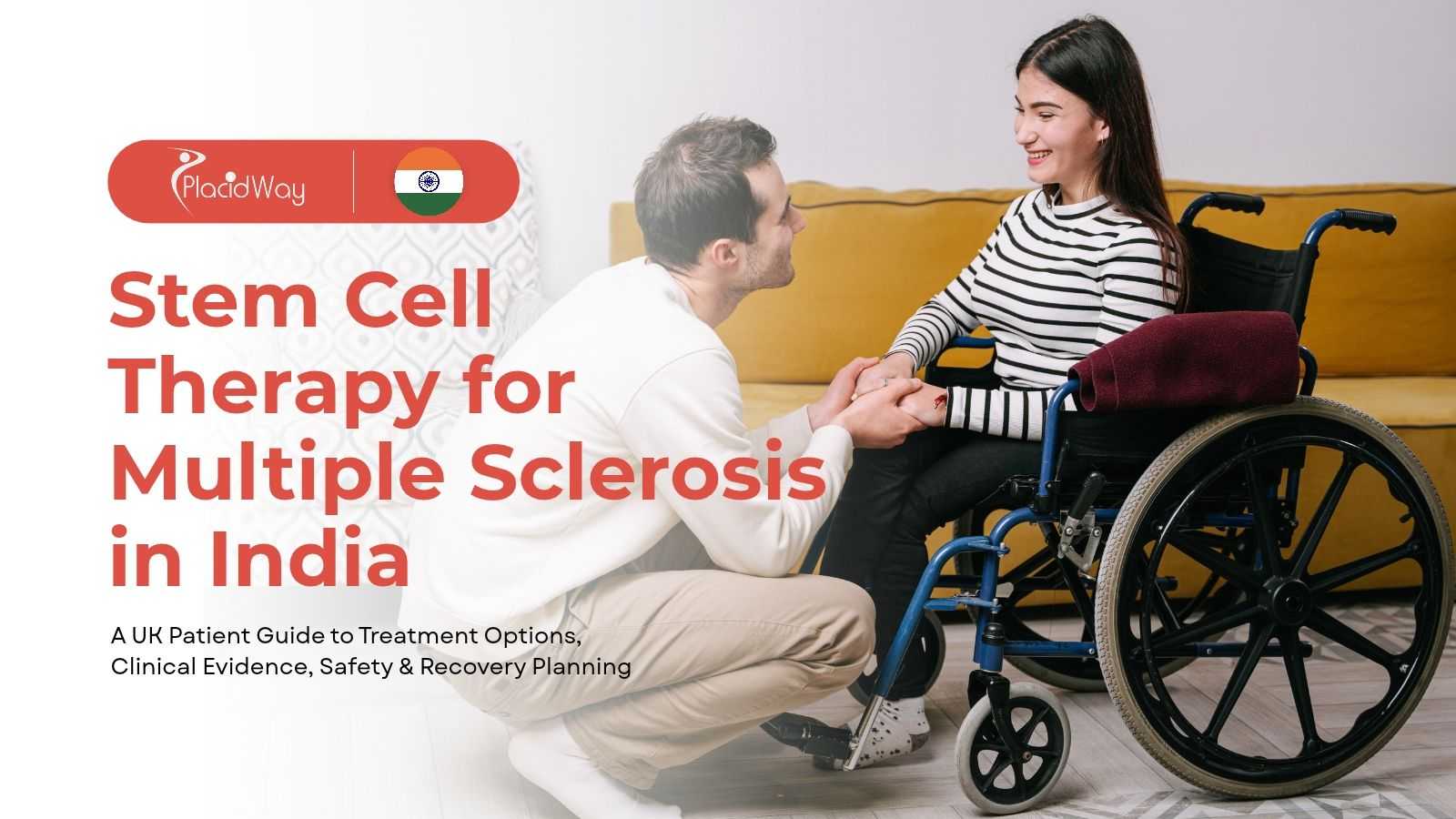
Stem Cell Therapy for Multiple Sclerosis in India: the recovery thread I send every UK patient
Quiet cafés, chemists who speak English, flat walks, what your partner can do while you rest, and the honest bits about clinics, costs and coming home.
Left at the front desk for you
Welcome. You made it.
I've left this with reception because nobody wants a briefing after nine or ten hours in the air from Heathrow. Please drink some water, take your shoes off and ignore everything below until tomorrow if that's what your body is telling you.
When you're ready, the rest is the thread I keep for people coming from the UK for stem cell treatment for MS. It's the stuff that never makes it into a hospital brochure. Where to get a quiet coffee without a flight of stairs. Which chemist will understand you. How far to walk on day three. What your partner can do with themselves while you sleep.
One rule before anything else. Anything medical goes to your treating team, every time. Everything else, ask me. Twice if you like.
— [Coordinator Name], your PlacidWay patient coordinator
Below is our thread, tidied up. Your messages sit on the right in pink, mine on the left in white. The patients and partners who appear in it are composites, bits of many people I've helped blended together so nobody is identifiable.
First, the one everyone asks: is this clinic properly medical?
Honestly my biggest fear is turning up somewhere that looks like a hospital on the website and isn't. I've tried three DMTs, my neurologist has run out of ideas and I can't afford to get this wrong. How do I check?
[Coordinator Name]
That's exactly the right worry to have, and I'd be more concerned if you didn't ask. Here's what I check before I put anyone forward, and what you can check yourself from your sofa.
Hospital accreditation. Look for NABH, which is India's National Accreditation Board for Hospitals and Healthcare Providers. Some large hospitals also hold JCI, the international standard run by Joint Commission International. Indraprastha Apollo in New Delhi and Apollo Hospitals on Greams Road in Chennai are well-known JCI-accredited examples. Accreditation covers the hospital as a whole, not one particular stem cell programme, so ask about the programme too.
The regulation question. In India, stem cell work is shaped by the Indian Council of Medical Research guidelines and overseen by the Central Drugs Standard Control Organisation. In plain English, outside well-established uses such as transplants for blood cancers, stem cell treatments are expected to be given within approved research or approved protocols, with an ethics committee watching over them.
So ask, in writing: is my treatment part of an approved study or protocol, which ethics committee oversees it, and can I read the consent form before I book? Good programmes answer this calmly and quickly. That answer is one of the most useful things you'll get.
Which kind of stem cell treatment it is. Two quite different things get called stem cell therapy for MS, and it matters for your trip.
One is aHSCT, autologous haematopoietic stem cell transplantation. It uses chemotherapy to reset the immune system, then returns your own blood stem cells. It's intensive, it usually means several weeks in hospital, and it's the approach with the most published research behind it. The NHS does offer it to a small group of people with highly active relapsing MS through specialist centres, so it's worth asking your UK neurologist whether you've been assessed for it.
The other is mesenchymal stem cell (MSC) infusion, using cells from your own bone marrow or fat, or from donated tissue. It's shorter and gentler, and it's still considered investigational, which means nobody can promise what it will or won't do for your MS. Most of the packages in the price list further down are MSC packages.
The doctor, by name. Ask who your neurologist will be and who actually prepares and gives the cells. You can look Indian doctors up on the Indian Medical Register through the National Medical Commission website. If a clinic is vague about names, that tells you something.
Should I tell my NHS neurologist and MS nurse? I'm a bit scared they'll be cross.
Please do. In my experience the conversation goes far better before you go than after you come back. They may not recommend the treatment, and that's their honest professional view, but what you really want from them is to keep you on their list.
While you're there, ask for copies of your latest MRI report and images, your most recent clinic letter, and a list of the DMTs you've had with stop dates. The Indian team will want the stop dates, because how long you've been off certain drugs can affect timing. That decision is theirs, not mine.
Five cities, five price ranges, and what usually sits inside them
You asked me to put it all in one place, so here it is. Indian hospitals usually quote international patients in US dollars, so that's the main column. The sterling figures are rough, at around 76p to the dollar, and exchange rates move. Every figure is approximate and drawn from recent publicly available clinic and facilitator information. The only number that counts is the written quote you receive for your own case.
| City | Approx. package (USD) | Roughly in £ | Typically included | Getting there from the UK |
|---|---|---|---|---|
| New Delhi | $6,000–$15,000 | £4,600–£11,400 | Autologous or allogeneic MSC infusion, hospital stay, initial neurological workup | Non-stop from Heathrow, around 8 to 9 hours |
| Mumbai | $7,000–$16,000 | £5,300–£12,200 | Stem cell infusion protocol, inpatient monitoring, consultation fees | Non-stop from Heathrow, around 9 to 10 hours |
| Bangalore | $6,500–$15,000 | £4,900–£11,400 | MSC therapy package, pre-treatment diagnostics, short hospital stay | Non-stop from Heathrow, around 10 to 11 hours |
| Chennai | $6,000–$14,000 | £4,600–£10,600 | Stem cell treatment cycle, baseline MRI and evaluation, follow-up consultation | Non-stop from Heathrow, around 10 hours |
| Pune | $5,500–$13,000 | £4,200–£9,900 | MSC infusion package, basic diagnostics, short-term post-treatment monitoring | No non-stop UK flights, connect via Mumbai, Delhi or a Gulf hub |
| United Kingdom | No comparable price available | MSC therapy for MS is not routinely offered on the NHS and rarely by licensed private UK clinics, which is why most people in your position look abroad | ||
[Coordinator Name]
When I help someone compare these cities, this is roughly how PlacidWay weighs things. It isn't a league table, just the order of what matters.
25% clinical safety and regulatory compliance
20% the doctors and the centre, including accreditation
20% aftercare and follow-up once you're home
15% cost transparency and value
10% how easy it is to reach from the UK
10% track record and what past patients say
My other big fear is the bill. What isn't in those packages?
Fair question. The extras I see most often are flights, hotel nights before and after the hospital stay, a companion's meals, additional infusion cycles, repeat MRI scans, physiotherapy sessions, medicines to take home, visa fees and sometimes airport transfers.
Ask for an itemised quote that states the number of cycles, the number of inpatient nights, which tests are included, and what happens to the price if your stay is extended for medical reasons. Ask too how complications during your stay are billed. Once it's in writing, the surprises mostly disappear.
Landing in the small hours, and the first night
Our flight lands at about 2am local time. I walk with a stick and long airports wipe me out. What actually happens when we land?
A lot of UK flights arrive overnight, so you're in good company. Book special assistance with your airline at least 48 hours before you fly. Heathrow will take you to the gate and the Indian airport team will usually meet you at the aircraft door with a wheelchair, even if you only use it for the long corridors. Nobody will think twice.
For your visa, apply online for the e-Medical Visa through the official Indian government site, and your partner applies for the e-Medical Attendant Visa linked to yours. Use only the official site, as lookalike sites charge extra. On arrival there's a dedicated e-Visa counter where they take fingerprints and a photo.
When the doors open, the warmth hits you, even at night. Your transfer driver, arranged by the hospital or by me, will be holding a sign with your name. Then it's the hotel or the hospital's international patient wing, a cool shower, room service, sleep. That really is the whole plan for night one.
Morning one is usually paperwork at the international patient desk, a meeting with your doctor and baseline tests. Bring your passport, your printed medication list and those NHS letters. And a cardigan, because hospital air conditioning is fierce.
How far to go, day by day
This is the walk ladder I pin for everyone having an MSC infusion package. Each rung only applies once your treating team has said yes. If you're having aHSCT, your stay is much longer and outings wait until your haematology team says your blood counts allow it, so treat this as a picture of later weeks rather than a schedule.
Infusion day and the day after
Room and corridor only. A slow lap of the ward or the hotel lobby with your partner is plenty. Lots of people feel tired or a little flat, and the nurses would much rather you buzz them than wonder.
Days two to three
A short taxi ride to an air-conditioned café or a hotel coffee shop, ten or fifteen minutes there, then back. No pavements yet. This is about changing the scenery, not about steps.
Days four to six
A flat garden or a mall in the cool part of the day. Twenty to thirty minutes with bench stops, a bottle of water and someone beside you. Many people with MS tell me heat knocks them back faster than it does at home, so ask your neurologist how to plan around that, and bring your cooling vest or neck wrap if you own one.
The last day or two before you fly
One gentle outing you'll actually remember, such as a sunset by the sea in Mumbai or a slow morning in a Bangalore park. Then pack, rest and save your energy for the airport.
Where I'd send you for a quiet coffee and a flat walk
We haven't picked the city yet. Can you tell me what being there actually feels like for someone who can't walk far?
New Delhi
Lodhi Garden is my first answer for gentle walks. Wide paved paths, plenty of benches, old tombs under big trees, and early-morning walkers who nod hello. Go early or late afternoon. Khan Market is close by for cafés and a chemist, though many cafés there are up a flight of stairs, so ask the driver to drop you by a ground-floor one.
If you're near Max Saket, Select Citywalk mall is a lifesaver on hot days, with lifts, smooth floors, clean toilets and air conditioning throughout. In the winter months Delhi's air quality can dip, so keep an eye on the daily reading and choose indoor outings when it's poor.
Mumbai
Marine Drive at dusk, honestly. A long flat promenade along the sea wall, a breeze off the water, and you can sit on the wall and watch the city light up. Carter Road in Bandra is a smaller, calmer version with cafés across the road.
Hospitals such as Kokilaben Dhirubhai Ambani in Andheri West and Lilavati in Bandra both have malls and coffee shops within a short taxi ride. From roughly June to September the monsoon brings very heavy rain, so plan indoor rest days and bring shoes with good grip.
Bangalore
If heat is your enemy, Bangalore is kind. It sits high up, and the evenings are often mild enough for a light jumper. Cubbon Park is shady and green, with paths you can take at your own pace, and Lalbagh Botanical Garden is lovely for a slow morning.
For a café, Koshy's on St Marks Road is an old Bangalore institution, unhurried, with waiters who've seen everything and a menu where tea comes the way you like it. Manipal Hospital on Old Airport Road is central, while Narayana Health City is out on the southern edge, so allow for traffic.
Chennai
Chennai is warm and humid most of the year, so it's a city of evenings. Elliot's Beach in Besant Nagar has a flat promenade where families stroll after sunset, with small cafés in the streets behind it.
Near Apollo on Greams Road you'll find Saravana Bhavan branches for simple South Indian food, and Phoenix MarketCity in Velachery when you need cool air and a lift. Try a filter coffee at least once. It's milky, strong and served in a little steel tumbler.
Pune
Pune feels a little slower and a little cooler than Mumbai. Koregaon Park has leafy lanes and plenty of relaxed cafés, and Empress Garden near the racecourse is shady and quiet on weekday mornings. Ruby Hall Clinic and Jehangir Hospital are both fairly central. The trade-off is the journey, as there are no non-stop UK flights, so factor a connection into your energy budget.
Chemists, English and the little blue box problem
Pharmacy staff at the big chains in all five cities generally speak English, and so do hospital pharmacies. These are the names you'll see.
Your hospital pharmacy
Always the first stop. They know your file and your doctor's preferences.
Apollo Pharmacy
Found across all five cities, with some branches open around the clock.
MedPlus and Wellness Forever
MedPlus is common in Bangalore and Chennai, Wellness Forever in Mumbai and Pune.
Bring more than enough of your own medication, in original packaging, plus a letter from your GP or neurologist listing each drug by its generic name. Indian brand names are different, so a box that's blue in Bristol may be green in Bangalore. The generic name on the letter is what the pharmacist needs.
Many medicines are sold over the counter in India that would need a prescription at Boots. Please don't add anything, including supplements, herbal or Ayurvedic remedies, without your treating team's say-so. That includes the everyday stuff too. If your clinic is happy for you to take paracetamol, you'll see it sold as Crocin or Dolo.
Keep every receipt in an envelope. Insurers and your own records will thank you later.
For the person who came with you
Partner
Hi, it's her husband. She's asleep and I'm going stir crazy in this room. Is it bad to leave her for an hour? And where do I even go?
Not bad at all. It's healthy. Let the nurses' station know, keep your phone on loud, and go. Partners who get out for an hour a day are much better company by day five.
A few short trips that don't stray far. In Delhi, Humayun's Tomb is a few minutes from Lodhi Garden and quiet early in the day. In Mumbai, the Gateway of India and the Colaba streets behind it. In Bangalore, Lalbagh. In Chennai, the Kapaleeshwarar Temple in Mylapore, where you'll take your shoes off at the entrance. In Pune, the Aga Khan Palace and its gardens.
Most private rooms in Indian hospitals have a sofa bed for an attendant, and the canteen will feed you. Hotels and hospitals offer laundry, which is far cheaper than you'd guess. Ask at reception.
Keeping everyone at home in the loop. India is five and a half hours ahead of the UK in winter and four and a half when the clocks have gone forward. A short WhatsApp to the family group at your breakfast time lands before they're up, and an evening video call from you is their lunchtime.
One kind thing you can do is be the single person who updates everyone, so she isn't answering twenty messages from the ward.
An honest safety note, plus water, money, phones and getting about
These cities are busy, friendly and very used to international patients. The things that catch people out are rarely dramatic. It's the traffic, the heat and the pace.
Roads. Traffic is heavy and pavements can be uneven or blocked, which is hard work with a stick or a wheelchair. Cross with your driver or partner, and use cabs rather than walking along main roads.
Water. Drink sealed bottled water or the filtered water your hospital provides, and use it to brush your teeth. Skip ice, salads and street food while your immune system is doing its work, unless your team says otherwise.
Money. Hospitals and hotels take cards, and many accept international bank transfers for the package. A travel card such as Wise or Revolut avoids high fees on your UK card. Keep some rupees for auto-rickshaws, tips and small shops. ATMs are everywhere in hospital areas.
Phones. India sits outside most UK roaming bundles, so check your network's charges before you fly. A local SIM or an eSIM is usually cheaper, and the hospital desk can help with the passport and photo checks a local SIM requires. Almost every doctor, driver and coordinator uses WhatsApp.
Transport. Uber and Ola work in all five cities and show the fare upfront. At the airport, use your booked transfer or the official prepaid taxi counter rather than offers in the arrivals hall.
Emergencies. The national emergency number is 112. In practice your first call is your hospital's international patient helpline, so save it in your phone the day you arrive.
Before you book flights. Read the UK government's travel advice for India and register the trip with your insurer.
If something goes wrong out there, and what happens once you're home
Silly question maybe. What if I have a reaction or a relapse while I'm there? My GHIC card won't help, will it?
Not silly at all. You're right, the GHIC only covers state healthcare in Europe and a few other countries, not India. And most standard UK travel policies exclude planned treatment abroad and anything that follows from it. There are specialist medical travel policies that cover complications, so compare a few and read the exclusions about pre-existing conditions carefully.
The reassuring part is that you'll be treated inside a full hospital with neurologists, an intensive care unit and a 24-hour team on site, not in a standalone clinic. Before you book, ask the hospital in writing what happens clinically and financially if you need extra care or an extra night.
And after I fly back? I'm terrified of being on my own with this in Manchester.
You won't be on your own. Here's the leaving pack to ask for before discharge.
A full discharge summary in English describing exactly what was given, the cell source and dose, and any events during your stay.
Copies of every scan and lab result, on a USB stick or a download link.
A written follow-up plan, including how many video consultations are included and over how long.
A named contact and an email address for questions once you're home.
A fit-to-fly letter if your airline asks for one.
Then book a GP appointment for your first week back and send the summary to your MS nurse. Your UK team stays the anchor for your long-term care, and I'll check in with you too.
Rapid-fire little questions
Can I get a normal cup of tea? Yes. Indian chai is sweet and milky, so ask for tea with milk on the side and no sugar. Or pack your own teabags, as everyone from the UK does.
Plugs? Mostly round-pin sockets. Bring a universal adaptor or two.
Does my Blue Badge work? Sadly not, but hospitals, hotels and malls all have drop-off points right at the door.
Is it wheelchair friendly? Hospitals, airports, newer hotels and malls, yes. Older streets and markets, much less so.
Western toilets? In hospitals, hotels and malls, yes. Carry tissues and hand gel when you're out.
Tipping? Appreciated, not expected. A small note for a driver, porter or the ward housekeeper is a nice touch.
What should I wear? Loose cotton, covered shoulders for temples, and slip-on shoes for the temple steps and the scanner.
Pool, alcohol, a massage? All three are questions for your doctor, not me. Infusion sites and medicines change the answer.
Should I pack the cooling vest? If you own one, yes, along with a small fan and a refillable bottle.
Wi-Fi? Free in most hospitals and hotels, though a local data plan is more reliable for video calls.
What about work? Ask your GP or HR early about a fit note and leave. Many people need a couple of weeks off in total, so let your employer know how long you'll be away before you go.
Am I asking too many questions? No. That's my job, and you're very good at it.
When you're ready, you can send PlacidWay your latest MRI report and DMT history and we'll ask accredited hospitals in New Delhi, Mumbai, Bangalore, Chennai and Pune for written, itemised quotes, with follow-up spelled out.
Request my itemised MS stem cell quote from IndiaOne last message before you switch your phone to flight mode
You've lived with MS long enough to know your body better than any brochure does. Trust that while you're away. Rest when it says rest, and speak up when something feels off, to the nurses, to your doctor, to me.
Whatever this treatment does or doesn't do, you'll have looked into it properly, asked the hard questions and come home with your records in hand. That counts for a lot.
Speak soon, and safe flight,
[Coordinator Name]
Patient Coordinator, PlacidWay
A note on this page. The patients and partners quoted in the thread are composite characters drawn from many conversations, not real individuals. Prices are approximate ranges and change with your condition, the number of cycles, the hospital and length of stay, so please confirm everything with a written quote. Nothing here is medical advice. Decisions about your treatment, medicines, activity and travel belong to you and your own clinicians in India and the UK.
Sources
Indian Council of Medical Research, National Guidelines for Stem Cell Research
Central Drugs Standard Control Organisation, India
National Accreditation Board for Hospitals and Healthcare Providers
Joint Commission International
National Medical Commission, Indian Medical Register
MS Society UK, treatments and stem cell information
Government of India e-Visa, including e-Medical and e-Medical Attendant visas
UK Foreign, Commonwealth and Development Office travel advice for India























Share this listing