
Targeting Brain Tissue Precisely: Laser Interstitial Thermal Therapy in Saudi Arabia
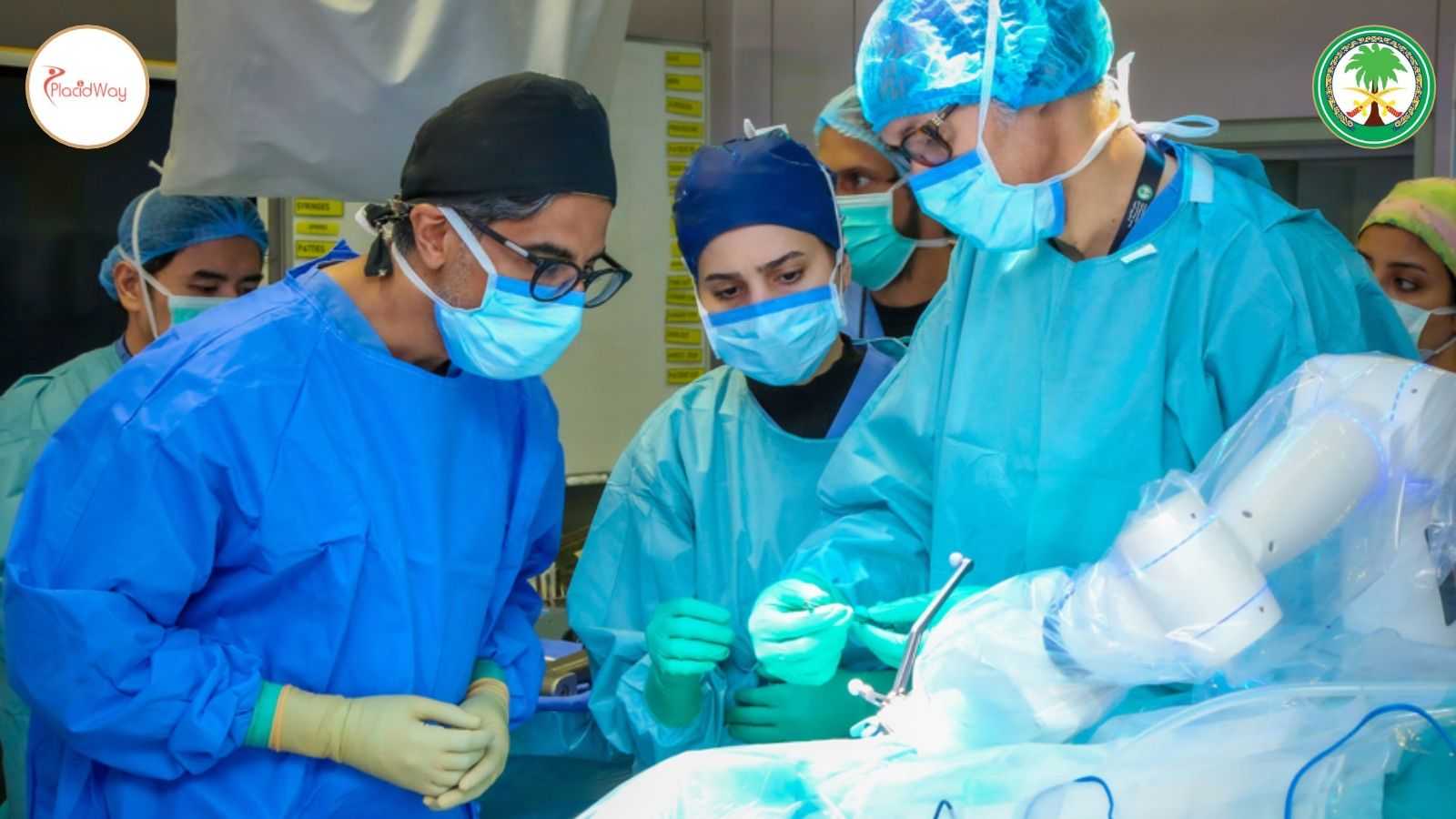
Laser Interstitial Thermal Therapy (LITT) in Saudi Arabia represents an important advancement in minimally invasive neurosurgery for selected patients with complex brain lesions and drug-resistant epilepsy. At King Faisal Specialist Hospital and Research Centre (KFSHRC) in Riyadh, this innovative technique uses a thin laser fiber and real-time magnetic resonance imaging (MRI) guidance to precisely target abnormal brain tissue while helping limit damage to surrounding structures. Compared with conventional open brain surgery, LITT uses a smaller surgical access point and may offer benefits such as reduced surgical trauma and a shorter hospital stay for appropriately selected patients. This milestone highlights the growing role of advanced Minimally Invasive Neurosurgery in Saudi Arabia, supported by multidisciplinary assessment and individualized treatment planning to determine whether LITT is an appropriate option for each patient's neurological condition.

Quick Summary
- Medical Breakthrough: King Faisal Specialist Hospital and Research Centre (KFSHRC) performed Saudi Arabia’s first reported Laser Interstitial Thermal Therapy (LITT) procedure, offering a advanced option for minimally invasive neurosurgery in Saudi Arabia.
- Targeted Conditions: LITT is applied in selected cases of drug-resistant focal epilepsy, low-grade or deep-seated brain tumors, brain metastases, and hypothalamic hamartomas.
- Mechanism: A thin laser fiber is inserted through a keyhole opening in the skull under real-time MRI guidance to deliver controlled thermal ablation to target tissue while sparing surrounding brain structures.
- Patient Outcome: The initial patient treated with laser brain surgery in Saudi Arabia at KFSHRC was discharged within 24 hours with no reported complications, highlighting the potential for shorter hospitalizations.
- Multidisciplinary Evaluation: Candidates undergo comprehensive evaluation by neurosurgeons, neuroradiologists, and epilepsy specialists, including stereoelectroencephalography (SEEG) when required.
- Program Expansion: KFSHRC Saudi Arabia is training specialized clinical teams to expand LITT availability to more eligible patients across the region.
Featured Medical Center Profile
King Faisal Specialist Hospital and Research Centre (KFSHRC)
Riyadh, Saudi Arabia | Leader in Neurological Treatment in Saudi Arabia
KFSHRC is a internationally recognized tertiary healthcare institution equipped with state-of-the-art MRI-guided neurosurgical suites, leading the implementation of laser brain surgery in Saudi Arabia and comprehensive neurological care.
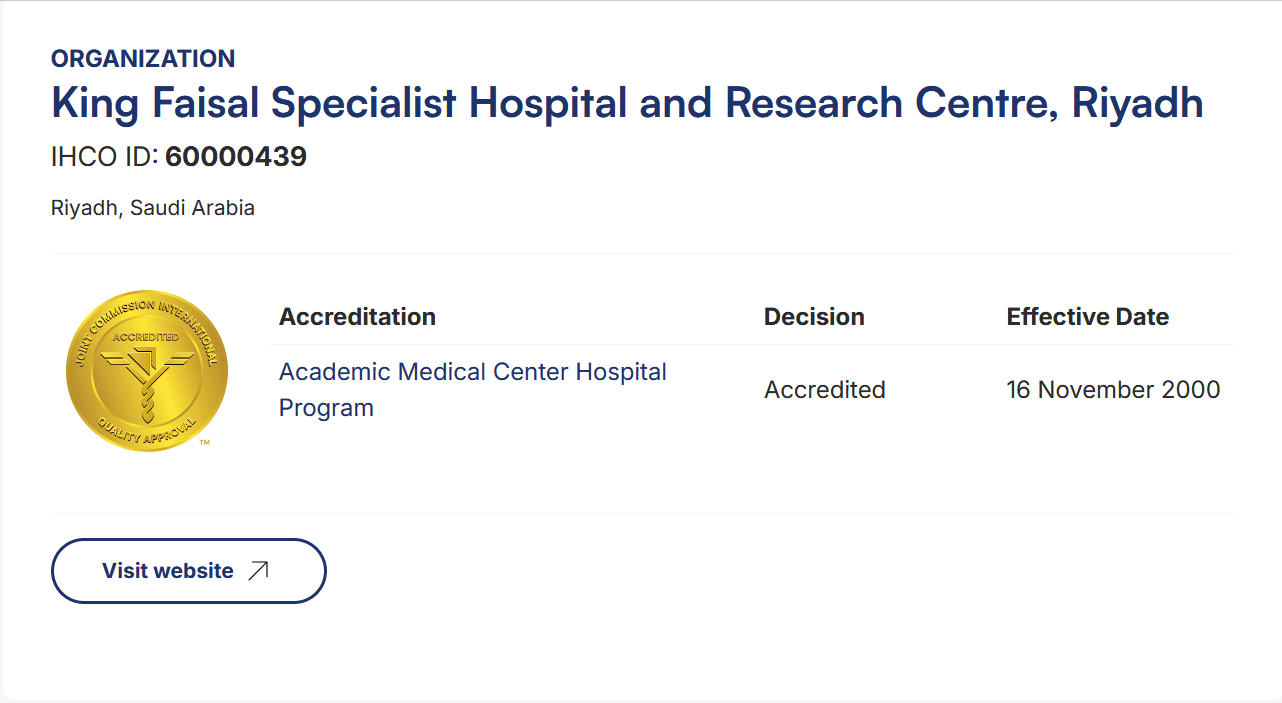
Explore Center ProfileHospital Facility & Accredited Credentials
Understanding Conditions Treated With Laser Interstitial Thermal Therapy
Neurological disorders such as drug-resistant focal epilepsy and deep-seated brain lesions present complex surgical challenges. Traditionally, reaching lesions deep within brain tissue required craniotomy and extensive tissue dissection. The arrival of Laser Interstitial Thermal Therapy in Saudi Arabia introduces a precise option within Minimally Invasive Neurosurgery in Saudi Arabia.
At King Faisal Specialist Hospital and Research Centre, the successful execution of Saudi Arabia’s first reported LITT procedure marks a major advancement in Neurological Treatment in Saudi Arabia. By combining stereotactic navigation with real-time magnetic resonance thermal imaging, medical teams can ablate pathological tissue through a keyhole skull opening.
What Is Laser Interstitial Thermal Therapy (LITT)?
Laser Interstitial Thermal Therapy, often referred to as MRI-guided laser ablation or LITT in Saudi Arabia, is a technique where thermal energy is delivered directly into a targeted lesion. Neurosurgeons place a thin laser catheter (approximately 1.6 to 2 millimeters in diameter) into the brain using stereotactic guidance.
Once positioned inside the target tissue, light energy emitted from the laser tip produces controlled temperatures between 50°C and 90°C, causing coagulation necrosis. Real-time MR thermometry measures temperature changes in surrounding healthy brain structures to minimize collateral thermal injury.
Keyhole Skull Access
Requires a small burr hole (approx. 3-4 mm) rather than a large bone flap removal.
Real-Time MR Thermal Feedback
Continuous color-coded temperature maps allow precise energy control during ablation.
Reduced Tissue Disturbance
Avoids extensive brain retraction, preserving overlying cortical functional areas.
Neurological Symptoms That May Require Advanced Neurosurgical Evaluation
Patients experiencing persistent or worsening neurological deficits should seek specialized diagnostic evaluation at tertiary medical centers such as KFSHRC Saudi Arabia. Key clinical indicators include:
- Seizures that persist despite medication: Drug-resistant or focal epilepsy failing two or more anti-seizure medication regimens.
- Persistent or worsening headaches: Headaches accompanied by nausea, morning exacerbations, or focal neurological signs.
- Changes in memory, concentration, or behavior: Progressive cognitive decline or executive dysfunction related to subcortical or temporal lesions.
- Muscle weakness or coordination difficulties: Hemiparesis, focal motor weakness, or gait ataxia caused by expanding lesions.
- Speech or vision disturbances: Aphasia, dysarthria, visual field cuts, or diplopia indicating path disturbance.
- Neurological symptoms associated with brain lesions: Focal neurological signs linked to radio-recurrent metastases, gliomas, or hamartomas.
How LITT Uses Heat to Target Abnormal Brain Tissue
During laser brain surgery in Saudi Arabia, thermal energy destroys targeted pathological tissue while safeguarding surrounding eloquent structures. The diagram below outlines the step-by-step mechanism of action during an MRI-guided LITT procedure:
Laser Interstitial Thermal Therapy (LITT) Procedure
Sequential stages of MRI-guided laser treatment
Note: The chart illustrates a general LITT workflow. Actual procedural steps, MRI monitoring, laser delivery, and wound closure vary according to the patient's condition and the treating team's protocol.
Which Brain Conditions May Be Considered for LITT?
Indication suitability depends on lesion volume, depth, anatomical location, and patient medical history. Key conditions evaluated for LITT include:
| Condition Category | Targeted Pathology | LITT Role |
|---|---|---|
| Drug-Resistant Epilepsy | Mesial Temporal Sclerosis (MTS), Focal Cortical Dysplasia (FCD) | Ablates epileptogenic focus without requiring open temporal lobectomy. |
| Deep Brain Tumors | Low-grade gliomas, thalamic or basal ganglia tumors | Destroys deep tumor tissue inaccessible via traditional surgical corridors. |
| Brain Metastases | Radio-recurrent brain metastases | Provides alternative local control when stereotactic radiosurgery (SRS) fails. |
| Congenital Lesions | Hypothalamic Hamartomas | Disconnects gelastic seizure foci deep within third ventricle boundaries. |
| Radiation Necrosis | Radiation-induced brain tissue damage | Reduces mass effect and inflammation from post-radiation tissue changes. |
Evaluating Patients for Laser Interstitial Thermal Therapy
Comprehensive patient selection at King Faisal Specialist Hospital and Research Centre involves a multidisciplinary team including neurosurgeons, epileptologists, neuroradiologists, and clinical neurophysiologists. Preoperative evaluation protocols include:
Neuroimaging Mapping
- High-field 3T Structural MRI
- Functional MRI (fMRI) motor/language mapping
- Diffusion Tensor Imaging (DTI) tractography
Epilepsy Workup
- Video-EEG long-term monitoring
- PET/SPECT metabolic localization
- Stereoelectroencephalography (SEEG) when indicated
Clinical Risk Profiling
- Neuropsychological baseline testing
- Anesthesia risk assessment
- Multidisciplinary tumor/epilepsy board consensus
Key Stages of the LITT Procedure
- Trajectory Planning: Utilizing stereotactic software to map a safe path avoiding blood vessels and functional eloquent cortex.
- Surgical Placement: Under general anesthesia, a small burr hole is created, and a stabilizing anchor bolt is secured into the skull.
- Laser Fiber Insertion: The laser catheter is introduced to the target coordinate depth.
- MRI Transfer & Thermal Testing: The patient is imaged to verify fiber placement, followed by low-power test heating.
- Therapeutic Thermal Ablation: Full thermal energy delivery occurs under real-time MR thermometry monitoring.
- Catheter Removal & Wound Closure: The catheter is extracted, anchor bolt removed, and the skin closed with a single suture.
The Role of MRI-Guided Navigation in Precision Neurosurgery
The key component of Minimally Invasive Neurosurgery in Saudi Arabia is real-time visualization. Standard thermal therapies historically carried risks because surgeons could not observe internal tissue heating. Intraoperative MR thermometry provides continuous thermal maps updated every few seconds.
Safety software incorporates automated threshold limits. If thermal energy approaches critical surrounding pathways (such as the internal capsule or optic tract), the system automatically halts laser emission, preserving normal tissue function.
Recovery and Follow-Up After Laser Interstitial Thermal Therapy
Postoperative care following LITT in Saudi Arabia focuses on symptom management and objective neuroimaging validation:
| Recovery Phase | Clinical Care Focus | Expected Outcomes |
|---|---|---|
| First 24 Hours | Neurological exams, pain control, short-course steroid monitoring. | Reported discharge possible within 24 hours in selected uncomplicated cases. |
| Weeks 1 – 4 | Gradual return to daily activities; anti-seizure medication continuation. | Reduced surgical incision discomfort compared to craniotomy. |
| Months 3 – 12 | Contrast-enhanced MRI follow-up; seizure frequency logging. | Assessment of ablation zone evolution and seizure reduction outcome. |
Potential Benefits, Risks, and Limitations of LITT
Potential Benefits
- Minimal skin incision (3-4 mm) and skull entry.
- Lower postoperative pain and reduced narcotic requirements.
- Shorter ICU and total hospital stays.
- Feasible option for deep or surgically difficult lesions.
- May be repeated or followed by open surgery if necessary.
Risks and Limitations
- Post-ablation cerebral edema (swelling).
- Intracranial hemorrhage along catheter track (rare).
- Neurological deficits if heat affects adjacent structures.
- Incomplete ablation in large or irregularly shaped tumors.
- Not suitable for lesions lacking a safe stereotactic trajectory.
Comparing LITT With Traditional Open Neurosurgery
| Surgical Parameter | Laser Interstitial Thermal Therapy (LITT) | Traditional Open Craniotomy |
|---|---|---|
| Skull Access Point | Small burr hole (approx. 3-4 mm) | Surgical bone flap removal (craniotomy) |
| Brain Tissue Dissection | Minimal; catheter passes through linear path | Requires cortical incision and tissue retraction |
| Intraoperative Monitoring | Real-time MRI thermometry tracking thermal dose | Direct visual inspection and neuronavigation |
| Typical Hospital Stay | Often 1 to 2 days in suitable cases | Typically 3 to 7 days or longer |
| Incision Recovery Time | Rapid skin healing with minimal scarring | Requires longer wound healing and stitch removal |
Accessing Advanced Minimally Invasive Neurosurgery in Saudi Arabia
For regional and international patients seeking specialized care, access to Laser Interstitial Thermal Therapy in Saudi Arabia is facilitated through dedicated international medical portals. Institutions like King Faisal Specialist Hospital and Research Centre offer comprehensive international patient coordination.
Medical travel support typically includes pre-arrival neurosurgical case reviews, remote multidisciplinary evaluations, visa documentation support, medical translation, and post-discharge continuity of care coordination.
Frequently Asked Questions
What is Laser Interstitial Thermal Therapy (LITT)?
LITT is a minimally invasive neurosurgical procedure that uses a laser catheter placed under MRI guidance to deliver heat and destroy targeted abnormal brain tissue without requiring a large open skull incision.
Which conditions can be treated with LITT in Saudi Arabia?
LITT may be considered for drug-resistant focal epilepsy, selected low-grade brain tumors, deep-seated brain metastases, hypothalamic hamartomas, and radiation necrosis, subject to specialist evaluation.
How is LITT performed at King Faisal Specialist Hospital and Research Centre?
Neurosurgeons insert a thin laser fiber through a 3-4 mm hole in the skull. Real-time MRI thermal imaging monitors heat distribution to ensure target tissue destruction while protecting healthy surrounding brain structures.
How long does a patient stay in the hospital after LITT?
In suitable, uncomplicated cases, patients treated with LITT may be discharged within 24 to 48 hours post-procedure, though individual recovery times vary depending on clinical factors.
What are the primary benefits of LITT compared to open brain surgery?
Key potential advantages include a much smaller incision, reduced brain tissue manipulation, less postoperative pain, shorter hospital stays, and faster overall recovery in eligible candidates.
Is LITT suitable for all types of brain tumors or epilepsy?
No. Suitability depends on the size, location, boundaries, and anatomical features of the lesion. A multidisciplinary medical board must evaluate each patient's specific imaging and medical history.
What are the risks associated with laser brain surgery?
Potential risks include localized brain swelling, temporary or permanent neurological deficits if adjacent structures are affected, minor risk of bleeding, or incomplete ablation of large lesions.
How do doctors ensure healthy brain tissue is not damaged during LITT?
Real-time MR thermometry measures tissue temperature continuously. Automated software safety cut-offs immediately stop the laser if thermal energy reaches pre-set safety thresholds near critical brain pathways.
What evaluation is needed before undergoing LITT for epilepsy?
Patients undergo comprehensive video-EEG monitoring, high-resolution 3T MRI, fMRI, PET/SPECT scans, and in some cases stereoelectroencephalography (SEEG) to map the exact seizure focus.
How can international patients request a consultation at KFSHRC?
Patients can submit their neurological medical records, recent MRI scans, and diagnostic reports through authorized referral platforms like PlacidWay to receive a pre-arrival case evaluation.
Explore Advanced Neurosurgical Care at KFSHRC
Connect with medical coordinators to review medical records, assess eligibility for Laser Brain Surgery in Saudi Arabia, and receive information regarding treatment at King Faisal Specialist Hospital and Research Centre. Request a personalized evaluation from specialized neurosurgical teams today.
Request Hospital InformationDisclaimer: This content is for educational and informational purposes only and does not constitute formal medical advice, clinical diagnosis, or treatment recommendations. All neurosurgical interventions carry inherent clinical risks. Always consult a qualified neurosurgeon or medical specialist to discuss specific brain conditions and treatment suitability.
References
- World Health Organization (WHO) — Neurological Disorders Information
- American Association of Neurological Surgeons (AANS) — Laser Interstitial Thermal Therapy Overview
- European Association of Neurosurgical Societies (EANS)
- International League Against Epilepsy (ILAE) — Guidelines for Drug-Resistant Epilepsy
- National Center for Biotechnology Information (NCBI PMC) — MRI-Guided Laser Ablation Studies
- Foundation for Advancement of International Medical Education and Research (FAIMER)




















Share this listing