
Treating Two Tumor Sites: Robotic-Assisted Surgery in Saudi Arabia
Explore advances in Robotic Liver Surgery in Saudi Arabia for complex multi-organ cancer cases, where precision, detailed surgical planning, and multidisciplinary expertise are essential. At King Faisal Specialist Hospital and Research Centre (KFSHRC) in Saudi Arabia, a specialist team performed a complex operation to remove synchronous pancreatic and liver tumors during a single procedure. The surgery combined pancreatic tumor removal with partial liver resection and reconstruction of the digestive and biliary pathways. This case highlights how advanced robotic technology and coordinated specialist care can support the treatment of selected complex cancers involving multiple organs, with the surgical approach and expected recovery determined by each patient's individual condition.

Quick Summary: Landmark Surgical Achievement at KFSHRC
- Patient Case: A 74-year-old patient presented with symptoms of cholangitis caused by an obstructing pancreatic head tumor alongside a separate tumor in segment VI of the liver.
- Surgical Innovation: Medical teams at King Faisal Specialist Hospital and Research Centre (KFSHRC) in Jeddah, Saudi Arabia, completed both a pancreaticoduodenectomy (Whipple procedure) and a partial hepatectomy in a single robotic operation.
- Reconstruction: The surgical team successfully reconstructed both digestive and biliary pathways without converting to open surgery.
- Multidisciplinary Care: Required seamless coordination across hepatopancreatobiliary surgeons, anesthesiologists, oncologists, gastroenterologists, radiologists, and critical care teams.
- Robotic Benefits: Precision 3D visualization and articulated robotic instrument control helped minimize surgical trauma, limit blood loss, and support postoperative recovery.
Featured Healthcare Institution & Credential Verification
King Faisal Specialist Hospital and Research Centre (KFSHRC)
Riyadh & Jeddah, Saudi Arabia
Explore KFSHRC ProfileInstitutional Accreditation & Hospital Authorization
Leading center for advanced oncology, robotic liver surgery, and complex hepatopancreatobiliary resections in KFSHRC Saudi Arabia.
Understanding Synchronous Pancreatic and Liver Tumors
Synchronous tumors refer to the simultaneous presence of two or more distinct neoplasms identified in a patient at the time of initial diagnosis. When present in both the pancreas and the liver, these malignancies create a complex surgical challenge involving sensitive anatomical structures, vital blood vessels, and essential digestive pathways.
A clinical breakthrough in robotic-assisted surgery in Saudi Arabia occurred when King Faisal Specialist Hospital and Research Centre (KFSHRC) in Jeddah performed a successful single-stage operation on a 74-year-old patient diagnosed with synchronous pancreatic and liver malignancies. The procedure combined a pancreaticoduodenectomy (Whipple procedure) with a partial hepatectomy for liver tumor removal and pancreatic tumor removal in a single surgical setting.
Clinical Distinction: Synchronous tumors require immediate multidisciplinary evaluation to determine whether the liver lesion is a secondary metastatic spread from the pancreas or an independent second primary tumor, directly influencing whether curative surgical resection is feasible.
How Pancreatic and Liver Tumors Can Affect Overall Health
Both the pancreas and liver play vital roles in digestion, metabolic regulation, hormone synthesis, and toxin clearance. When lesions develop in both organs, metabolic functions can be compromised, leading to biliary obstruction, impaired glucose regulation, and digestive disruption.
Common Symptoms Associated With Pancreatic and Liver Tumors
Patients presenting with synchronous lesions may experience a range of systemic and localized gastrointestinal symptoms, including:
Abdominal Pain & Discomfort
Persistent upper abdominal pain radiating to the back due to pancreatic ductal obstruction or liver capsule tension.
Unexplained Weight Loss
Rapid, unexplained weight loss accompanied by loss of appetite, nausea, and digestive malabsorption.
Fatigue & Digestive Changes
Persistent weakness, fatigue, altered bowel habits, abdominal swelling, and fluid retention.
Why Accurate Diagnosis Is Essential When Two Tumor Sites Are Identified
Identifying lesions in both the pancreas and liver demands comprehensive diagnostic accuracy before establishing a treatment strategy. Surgical intervention is appropriate only when total resection of all visible tumor burden can be safely accomplished while preserving sufficient functional liver and pancreatic tissue.
Determining the Origin of Liver Tumors
Pathological differentiation is critical. In some clinical presentations, liver tumors represent metastatic spread from a primary pancreatic ductal adenocarcinoma. In other instances, patients present with dual primary tumors (e.g., a primary pancreatic neuroendocrine tumor alongside a distinct hepatocellular carcinoma or solitary oligometastasis amenable to resection). Advanced immunohistochemistry and molecular profiling help direct whether combined robotic pancreatic surgery and robotic liver surgery are indicated.
What Is Robotic-Assisted Surgery for Pancreatic and Liver Tumors?
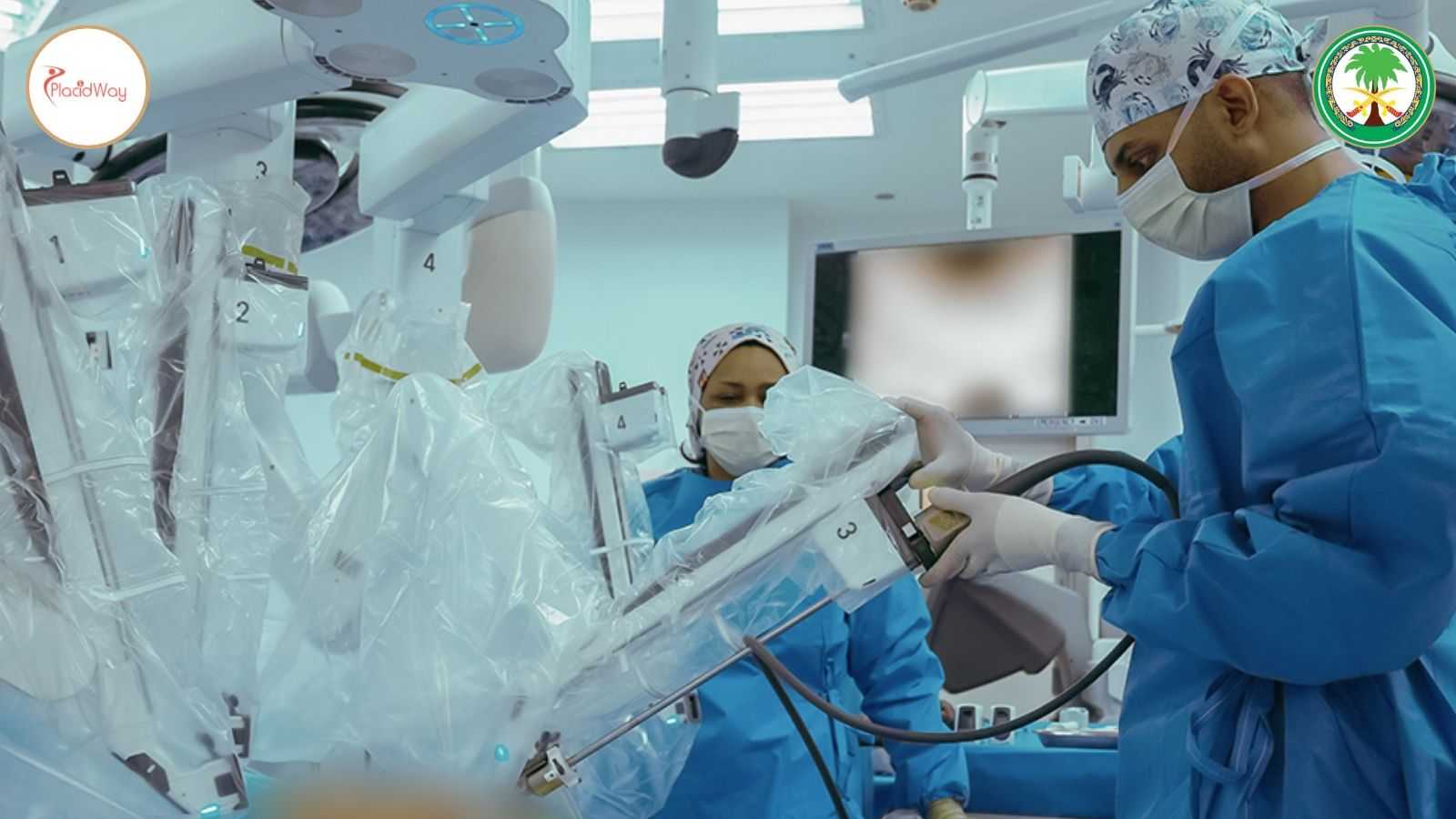
Robotic-assisted surgery utilizes advanced computer-controlled robotic arms operated directly by specialized surgeons from a master console. The platform provides magnified high-definition 3D visualization and wristed instrumentation that replicates human hand movements with enhanced micro-precision within narrow, deep anatomical cavities.
During advanced cancer surgery KFSHRC, the robotic system enabled surgeons to perform both a complex robotic pancreatic surgery (Whipple resecting the head of the pancreas and duodenum) and a robotic liver surgery (partial hepatectomy of segment VI) in a single operation without converting to open abdominal surgery.
Global Adoption Growth of Complex Minimal Access Robotic HPB Procedures (2020–2026)
Source: International HPB Surgery Registry & KFSHRC Surgical Data 2026. Data represents global surgical adoption trends in specialized tertiary medical centers.
Diagnostic Tests Used to Guide Combined Treatment
Precise pre-operative mapping requires multi-modality diagnostic evaluation, including:
- Contrast-enhanced CT scans: Provides high-resolution vascular and structural mapping of the abdomen.
- MRI and specialized liver imaging: Characterizes focal liver lesions and evaluates segment-specific involvement.
- Endoscopic ultrasound (EUS): Evaluates pancreatic head lesions, tissue depth, and surrounding vascular invasion.
- Biopsy and pathological examination: Provides histological confirmation when clinically safe and indicated.
- Blood and tumor marker tests: Assesses liver function tests, bilirubin levels, CA 19-9, and CEA tumor markers.
- Multidisciplinary tumor board review: Integrated examination of imaging findings to confirm surgical feasibility.
Evaluating Candidates for Combined Robotic Surgery
Surgical eligibility at King Faisal Specialist Hospital and Research Centre is established through rigorous criteria:
| Evaluation Parameter | Clinical Objective | Assessment Method |
|---|---|---|
| Anatomical Feasibility | Confirm tumors do not encase unresectable major blood vessels | 3D CT Angiography / MRI |
| Liver Reserve Volume | Ensure remaining liver tissue is sufficient post-hepatectomy | Volumetric CT Analysis |
| Cardiopulmonary Health | Verify tolerance for prolonged anesthesia and pneumoperitoneum | Echocardiogram / Stress Testing |
| Oncologic Staging | Rule out widespread extra-abdominal metastatic disease | Whole-Body PET-CT Scan |
Key Stages of Robotic-Assisted Pancreatic and Liver Surgery
Combining pancreaticoduodenectomy with partial hepatectomy in a single robotic session involves a structured multi-stage surgical sequence:
- Surgical Planning & Port Placement: Establishing precise robotic trocars to enable dual-quadrant access to both the liver and pancreatic regions.
- Abdominal Exploration: Visualizing the peritoneal cavity to confirm the absence of unsuspected disease.
- Pancreatic Dissection (Whipple Procedure): Isolating the head of the pancreas, duodenum, gallbladder, and distal bile duct while preserving major mesenteric vessels.
- Partial Hepatectomy: Resecting the targeted tumor-bearing liver tissue (e.g., segment VI) with clear surgical margins.
- Complex Reconstruction: Re-establishing digestive continuity through pancreaticojejunostomy, hepaticojejunostomy (biliary reconstruction), and gastrojejunostomy.
- Hemostasis & Margin Verification: Checking surgical sites for bleeding or bile leaks before specimen extraction and drain placement.
The Role of Multidisciplinary Teams in Coordinating Complex Cancer Surgery
Executing a complex single-stage double-organ resection relies on collaborative expertise. At KFSHRC Saudi Arabia, successful patient outcomes are supported by a coordinated multidisciplinary team including:
Expert robotic liver and pancreatic resections.
Hemodynamic stability and fluid management.
Pre/postoperative systemic staging and mapping.
Specialized ICU monitoring and recovery care.
Recovery, Postoperative Monitoring, and Rehabilitation
Postoperative care following combined robotic surgery requires dedicated monitoring across several functional parameters:
- Continuous monitoring of vital signs, fluid balance, and organ perfusion in specialized ICU settings.
- Frequent assessment of pancreatic endocrine/exocrine function and blood glucose regulation.
- Liver function monitoring, enzyme surveillance, and drainage inspection for potential bile leaks.
- Structured pain management protocols to encourage early mobilization and respiratory therapy.
- Histopathological review of extracted specimens to guide adjuvant oncology planning.
Potential Benefits, Risks, and Limitations of Robotic-Assisted Surgery
Potential Benefits
- Reduced surgical incision trauma and lower blood loss compared to open surgery.
- Enhanced 3D visualization in narrow anatomical structures.
- Shorter average post-operative hospital stay in selected candidates.
- Feasibility of performing dual-organ operations in one session.
Risks & Considerations
- Surgical risks including pancreatic fistula, delayed gastric emptying, or bleeding.
- Extended operative times requiring specialized anesthesia management.
- High dependence on specialized institutional equipment and surgical experience.
- Individual outcomes vary based on patient age and underlying disease stage.
Personalized Treatment Planning for Complex Tumors in Saudi Arabia
Saudi Arabia has established itself as a regional center for advanced tertiary healthcare. Institutions like King Faisal Specialist Hospital and Research Centre combine advanced robotic suites, comprehensive molecular diagnostic infrastructure, and experienced surgical faculty to provide tailored care for patients facing complex gastrointestinal malignancies.
Frequently Asked Questions (10 FAQs)
What are synchronous pancreatic and liver tumors?
Synchronous tumors are two or more distinct tumors detected simultaneously in both the pancreas and liver during initial diagnostic workup.
How is robotic pancreatic and liver surgery performed in a single operation?
Specialized surgeons use computer-controlled robotic arms inserted through small abdominal incisions, allowing resections on both organs and reconstruction without making large open incisions.
What procedure was performed at KFSHRC in Jeddah?
Surgeons performed a combined robotic pancreaticoduodenectomy (Whipple procedure) and partial hepatectomy to resect tumors in the head of the pancreas and segment VI of the liver in a 74-year-old patient.
What are the potential benefits of robotic surgery for liver and pancreatic tumors?
Potential advantages include reduced surgical trauma, less operative blood loss, enhanced 3D visualization, and faster recovery times in appropriate candidates.
What symptoms presented in the landmark case at KFSHRC?
The patient initially presented with symptoms of cholangitis (bile duct inflammation/infection) caused by a pancreatic tumor obstructing the bile duct.
Why is a multidisciplinary team necessary for complex cancer surgery?
Combining HPB surgeons, anesthesiologists, radiologists, gastroenterologists, oncologists, and critical care specialists ensures comprehensive risk assessment, precise surgical execution, and safe postoperative management.
How do doctors determine if a patient is eligible for robotic HPB surgery?
Eligibility is determined by evaluating tumor location, vascular involvement, liver function reserve, cardiac health, and total disease resectability.
What diagnostic tests guide combined liver and pancreatic treatment?
Diagnostic imaging includes 3D contrast-enhanced CT scans, abdominal MRI, endoscopic ultrasound (EUS), biopsy, and blood tumor marker panels.
What currency is used for medical travel treatment estimates in Saudi Arabia?
All international medical planning estimates and pricing quotes are evaluated in USD.
How can international patients request care information from KFSHRC?
Patients can connect with PlacidWay Medical Tourism to request facility profiles, medical record reviews, and surgical consultation pathways.
Inquire About Advanced Surgery Options at KFSHRC
Seek expert medical evaluation for complex surgical oncology care in Saudi Arabia. Connect with PlacidWay to learn more about King Faisal Specialist Hospital and Research Centre. Request a personalized medical consultation for Robotic Pancreatic Surgery in Saudi Arabia and itemized treatment plan estimate in USD.
Request Hospital InformationDisclaimer: This content is provided for educational and informational purposes only and does not constitute formal medical advice or endorsement. Individual surgical outcomes vary depending on patient health, tumor pathology, and surgical complexity. Always consult qualified healthcare professionals for diagnosis and treatment planning.
References & Trusted Sources
- World Health Organization (WHO) Global Cancer Observatory
- International Hepato-Pancreato-Biliary Association (IHPBA)
- Society of American Gastrointestinal and Endoscopic Surgeons (SAGES)
- National Comprehensive Cancer Network (NCCN) Guidelines
- American Society of Clinical Oncology (ASCO)
- Joint Commission International (JCI) Accreditation



























Share this listing