
Clinical Hormone Guide
Low Testosterone Symptoms by Age: What to Look For
Low testosterone symptoms include lower sexual desire, fewer morning erections and erectile difficulty. In the European Male Ageing Study of 3,369 men aged 40 to 79, only 2.1% met criteria for late-onset hypogonadism (NEJM, 2010). Fatigue and low mood are common but not specific, so a blood test confirms it.
01 / Clinical Overview
Key facts
| Item | Fact | Source |
|---|---|---|
| Most specific symptoms | Low sexual desire, fewer morning erections, erectile dysfunction | Wu et al., NEJM 2010 |
| Prevalence in a European cohort | 2.1% of men aged 40 to 79 had symptoms plus low testosterone | Wu et al., NEJM 2010 |
| Diagnosis | Symptoms plus repeated low morning testosterone, not symptoms alone | Endocrine Society guideline, 2018 |
| Common low cutoff | Total testosterone below 300 ng/dL in the AUA guideline | AUA guideline, 2018 |
| Panel at Healthi Life | Total and free testosterone, DHEA-S, cortisol, estradiol, SHBG, FSH, LH and thyroid markers | Healthi Life men's hormone menu |
| Clinic | 94 Ekkamai 10, Bangkok, physician-led | Healthi Life |
02 / Primary Indicators
What are the main low testosterone symptoms?
The symptoms that point most clearly to low testosterone are sexual ones. In the European Male Ageing Study, three sexual symptoms (poor morning erections, low sexual desire and erectile dysfunction) were the ones that tracked with a low testosterone level in a blood sample. The authors reported that other complaints, such as fatigue or low mood, were far less specific.
The Endocrine Society's 2018 guideline lists a wider group of signs that should prompt testing: reduced libido, decreased energy, loss of muscle mass, increased body fat, reduced bone density, hot flushes and sleep disturbance. It also states that these signs overlap with sleep apnea, depression, thyroid disease, obesity and ordinary aging. A symptom list on its own cannot settle the question.
The symptom list is a reason to measure, not a diagnosis. The Healthi Life men's hormone menu in Bangkok says every protocol begins with a hormone panel and physician review, and describes the target group as men 35 and older with fatigue or low energy, reduced libido or performance concerns, unexplained weight gain or muscle loss, and men who want baseline hormone data for planning.
03 / Age Progression
How do low testosterone symptoms change by age?
Testosterone tends to drift down slowly as men get older, and the share of men with a clearly low level rises with age and with obesity and illness (Wu et al., NEJM 2010). Age alone does not make a diagnosis, and the symptom list does not change much by decade.
In a younger man, true low testosterone is uncommon. When a young man has very low testosterone, the Endocrine Society guideline advises looking for a cause such as a pituitary problem, a testicular problem, opioid use or anabolic steroid use. Poor sleep, stress and weight gain can also explain tiredness and low drive.
In an older man, low energy overlaps with many other conditions, and a low reading is more often linked to illness and obesity than to age itself. Physicians review the full medical picture before they attach the word testosterone to a complaint.
04 / Differential Context
Which symptoms are not specific to low testosterone?
Fatigue, low mood, poor concentration, weight gain and sleep problems are common in men with normal testosterone. The European Male Ageing Study found that these complaints did not separate men with low levels from men with normal levels as reliably as sexual symptoms did.
That matters for anyone searching a symptom checklist online. A man can tick six boxes and have a normal result, and a man can have a low result with only one symptom. The Endocrine Society guideline recommends against screening men who have no symptoms, and recommends diagnosis only when symptoms and consistently low morning testosterone are both present.
Other causes to rule out first include thyroid disease, anemia, depression, sleep apnea, diabetes, vitamin D deficiency and the side effects of medicines. This is why the Healthi Life assessment reads testosterone together with thyroid markers, cortisol and metabolic markers, rather than looking at one number.
05 / Diagnostic Protocol
How is low testosterone confirmed?
Low testosterone is confirmed with a blood test taken in the morning, usually fasting, and repeated on a second day if the first value is low. The Endocrine Society guideline calls for two separate early-morning measurements, because levels vary through the day and fall after a meal or an illness.
Thresholds differ slightly between societies. The American Urological Association guideline uses a total testosterone below 300 ng/dL as a reasonable cutoff. The Endocrine Society refers to a lower limit of about 264 ng/dL taken from healthy young men. Neither number replaces clinical judgment, and free testosterone and SHBG add information when total testosterone sits near the line.
At Healthi Life, the Male Performance and Testosterone Mapping panel is a morning fasting blood draw. It measures total and free testosterone, DHEA-S, cortisol, estradiol, SHBG, FSH, LH, and a full thyroid panel (TSH, free T3 and free T4). The menu states that results arrive in about 5 days and that a physician consultation follows with a personal strategy. The panel's price is listed on the clinic's price list.
06 / Next Clinical Steps
What happens after a low result?
A low result starts a work-up, not a prescription. The physician looks at LH and FSH to see whether the problem sits in the testicles or in the brain signal that drives them, reviews medicines, weight, sleep and alcohol, and decides whether any treatment is reasonable.
Treatment choices range from lifestyle changes to prescribed testosterone. The evidence for prescribed testosterone is mixed. The Testosterone Trials in older men with low levels reported improvements in sexual function and some measures of mood, with limited effect on other outcomes (Snyder et al., NEJM 2016). Trial averages; individual results vary and are not guaranteed.
Safety has been tested in a large trial of men with high cardiovascular risk (Lincoff et al., NEJM 2023).
Treatment can also lower sperm production, so a man who wants children needs to say so before any decision. Healthi Life's men's menu also lists peptides that act on the hormone axis, and a physician decides after testing whether any of them is suitable.
07 / Clinical Precautions
Risks and limits
Testing carries few risks, but interpretation does. A single low value taken after a poor night or a meal can mislead. Different laboratories use different assays and reference ranges. Treating a number without symptoms, or treating symptoms without a confirmed low level, are the two most common errors described in the guidelines.
Testosterone treatment is not suitable for men with prostate or breast cancer, and it needs caution in men with untreated sleep apnea, a very high red blood cell count or severe heart failure. Anyone planning a family needs a fertility discussion first. This article does not advise any individual to start or stop a medicine.
08 / Patient Checklist
Questions to ask any clinic
- Which assay and reference range does the laboratory use, and was the sample taken in the morning?
- Will the test be repeated before a diagnosis is made?
- Which other causes of my symptoms are checked first, such as thyroid, sleep apnea and diabetes?
- What does treatment do to fertility, red blood cell count and the prostate, and how is it monitored?
- Who reads the results, and is the physician available to explain them in a language I understand?
- What happens if the result is normal?
Clinic, Medical Team & Certification
Healthi Life Longevity Center

Dr. Sarassawadee Suwanjinda, MD (Dr. Petch)

Dr. Napat Hunsajarupan, MD (Dr. First)
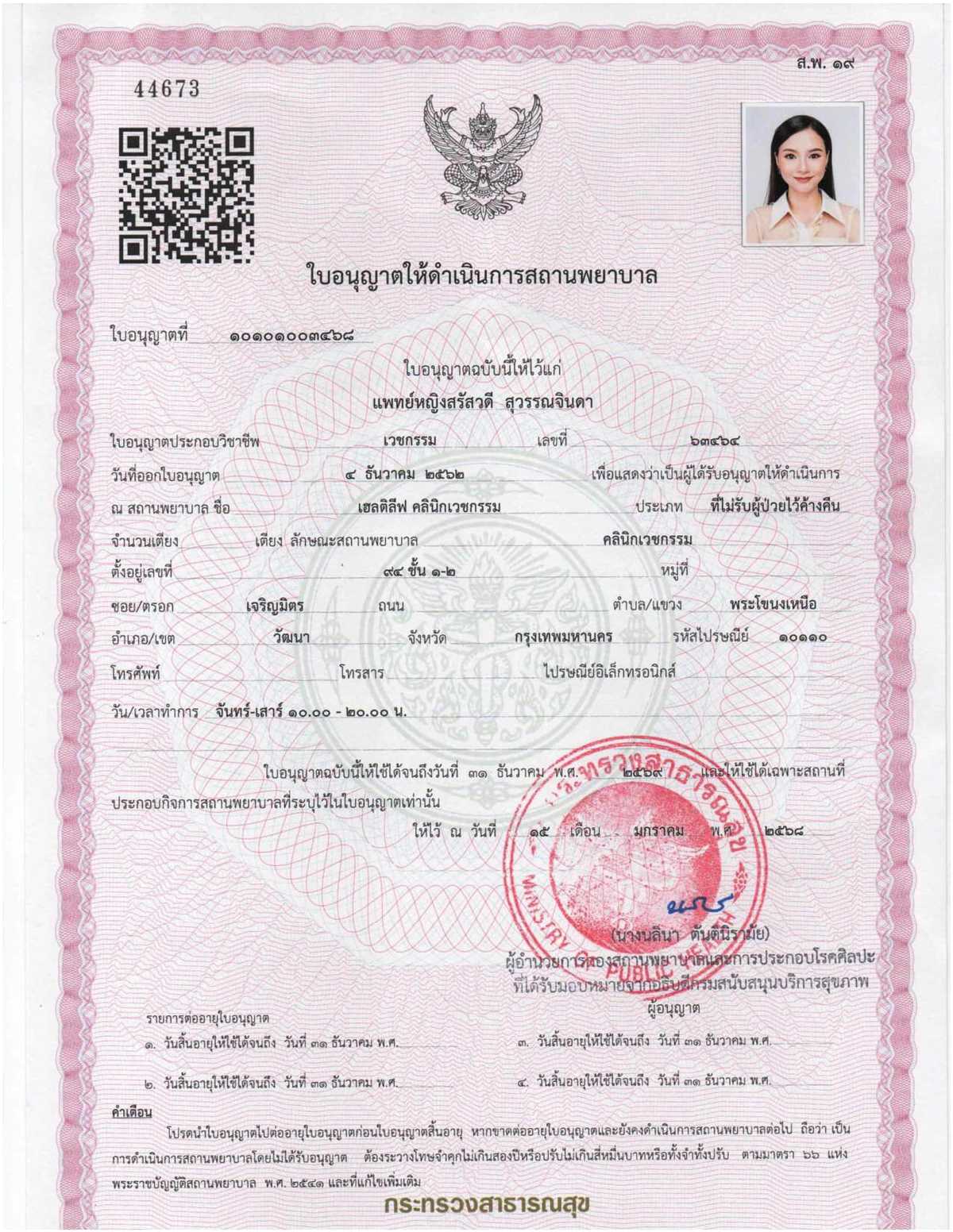
Healthi Life Longevity Center Certificate
09 / Frequently Asked Questions
FAQ
What are the first signs of low testosterone in men? View Answer +
The earliest and most specific signs are lower sexual desire, fewer morning erections and erectile difficulty. Tiredness, low mood and weight gain are also reported but are not specific. The European Male Ageing Study linked the three sexual symptoms most closely to a low blood level (NEJM, 2010).
Can a 30-year-old have low testosterone? View Answer +
Yes, but it is uncommon and doctors look for a cause. Opioid use, anabolic steroid use, pituitary or testicular problems, severe obesity and chronic illness are checked first. The Healthi Life menu says every protocol begins with a hormone panel and physician review, so a younger man's result is read with his symptoms and medicines.
Do I need a blood test to know? View Answer +
Yes. Symptoms alone cannot confirm low testosterone because they overlap with sleep apnea, thyroid disease and depression. Guidelines call for a morning blood sample, repeated on a second day if the first is low. A physician then reads the result together with symptoms and other markers.
How long does a testosterone blood panel take at Healthi Life? View Answer +
The Healthi Life menu states that results for the Male Performance and Testosterone Mapping panel arrive in about 5 days after a morning fasting blood draw. A physician consultation follows. International visitors to Bangkok can ask the clinic how a review consultation works after they return home.
Is low testosterone the same as andropause? View Answer +
No single medical diagnosis called andropause exists in the guidelines. The related condition is late-onset hypogonadism, which needs both symptoms and a consistently low morning testosterone level. In the European cohort, it affected 2.1% of men aged 40 to 79, so most men with symptoms have another explanation.
Can low testosterone be fixed with lifestyle changes? View Answer +
Sometimes. Weight loss, better sleep, less alcohol and treating sleep apnea can raise testosterone in men whose low level is linked to those factors. The Endocrine Society guideline names these as part of the first step. A physician decides whether further treatment is needed after repeat testing.
References
1. Wu FC, Tajar A, Beynon JM, et al. Identification of late-onset hypogonadism in middle-aged and elderly men. N Engl J Med 2010;363:123-135. https://doi.org/10.1056/NEJMoa0911101
2. Bhasin S, Brito JP, Cunningham GR, et al. Testosterone therapy in men with hypogonadism: an Endocrine Society clinical practice guideline. J Clin Endocrinol Metab 2018;103:1715-1744. https://doi.org/10.1210/jc.2018-00229
3. Mulhall JP, Trost LW, Brannigan RE, et al. Evaluation and management of testosterone deficiency: AUA guideline. J Urol 2018;200:423-432. https://doi.org/10.1016/j.juro.2018.03.115
4. Snyder PJ, Bhasin S, Cunningham GR, et al. Effects of testosterone treatment in older men. N Engl J Med 2016;374:611-624. https://doi.org/10.1056/NEJMoa1506119
5. Lincoff AM, Bhasin S, Flevaris P, et al. Cardiovascular safety of testosterone-replacement therapy. N Engl J Med 2023;389:107-117. https://doi.org/10.1056/NEJMoa2215025
This article is for information only and does not replace a medical consultation.



























Share this listing