
Bangkok Scalp & Hair Care Overview
PRP Hair Treatment: How It Is Done and What Studies Report
PRP Hair Treatment in Bangkok, Thailand applies platelet-rich plasma, made from a small sample of your own blood, to the scalp. One PRP Hair session at Healthi Life in Bangkok is THB 10,000. Studies report a possible benefit in pattern hair loss, but protocols differ and results vary between people. No result is promised.
At a glance
Key facts
Before diving into preparation steps, clinical evidence, and clinic pricing, the table below summarizes core details from the Healthi Life aesthetics menu and published scientific literature so you can review the baseline facts side by side.
| Item | Fact | Source |
|---|---|---|
| What it is | Platelet-rich plasma applied to the scalp to support dormant follicles | Healthi Life aesthetics menu |
| Price at Healthi Life | THB 10,000 per session | Healthi Life aesthetics menu |
| Plasma source | Your own blood, concentrated by spinning in a centrifuge | Alves and Grimalt 2018 |
| Evidence | Promising but inconsistent, with no single standard protocol | Gupta et al. 2019 |
| Most studied condition | Androgenetic alopecia (pattern hair loss) | MedlinePlus Genetics |
| Who decides suitability | A physician, after assessment | Healthi Life |
Mechanism & terminology
What is PRP hair treatment?
PRP hair treatment is a procedure in which a concentrate of your own platelets is placed in the scalp, with the aim of supporting hair follicles that are still alive but producing thin hair. At Healthi Life in Bangkok, the menu describes PRP Hair as platelet-rich plasma to the scalp to support dormant follicles.
Platelets are the small blood cells known mainly for clotting. They also store growth factors, which are signaling proteins. When platelets are activated, they release those factors. The working idea behind PRP is that this local release may influence the hair growth cycle. Alves and Grimalt, in Skin Appendage Disorders, review the history and biology of PRP and explain why different preparations are hard to compare.
The word "dormant" matters. PRP is not presented as a way to regrow follicles that have disappeared. A scalp that is smooth and shiny, with no visible follicle openings, is a different clinical situation, and the physician explains the options.
Procedure overview
How is PRP hair treatment done?
In the published literature, PRP hair treatment follows four steps: a blood draw, spinning the blood to separate plasma, preparing the platelet-rich layer, and delivering it to the scalp. The clinic confirms how it performs PRP at the consultation.
Steps 1 & 2 · Draw & Spin
First, a small amount of blood is drawn from the arm, much like a routine blood test. Second, the tubes go into a centrifuge, a machine that spins the blood so its parts separate by density.
Steps 3 & 4 · Concentrate & Apply
Third, the platelet-rich plasma layer is collected. Fourth, in the studies the plasma is delivered to the scalp, most often by fine needles in the areas of thinning.
Marx, in Implant Dentistry in 2001, argued that PRP should be defined by its platelet concentration, which is why the kit and spin settings matter. Clinics use different systems, so two treatments called PRP can differ.
After a session, reports describe the scalp feeling tender, with mild redness or swelling for a short time. Ask your physician what to avoid in the first days.
Clinical evidence
What do studies report about PRP for hair?
Studies report that PRP may help some people with pattern hair loss, but the evidence is mixed in design and size. Gupta and colleagues reviewed PRP as a treatment for androgenetic alopecia in Dermatologic Surgery in 2019. They describe wide variation in how plasma is prepared, how many sessions are given and how hair growth is measured.
That variation is the main problem for anyone trying to read the literature. One study may give three sessions a month apart, another may give a different schedule. One may measure hair count in a small scalp area, another may use photographs or patient ratings. These differences make direct comparison difficult, and many trials are small.
The honest summary is that PRP has a plausible mechanism and some positive reports, but no standard protocol and no guarantee for an individual. Trial averages; individual results vary and are not guaranteed.
Pattern hair loss itself is common and progressive. MedlinePlus Genetics describes androgenetic alopecia as a condition with a strong genetic component. Because it can continue over time, any treatment is judged over months, and a benefit may fade if sessions stop.
Comparing protocols
Is PRP the same as stem cell treatment for hair?
No. PRP uses components of your own blood, mainly platelets. Stem cell therapy at Healthi Life uses mesenchymal stem cells from donated umbilical cord tissue, given by a physician in a protocol the menu describes as investigational.
The two are priced and described differently in the clinic's menu. The scalp stem cell program, named Hair Density Renewal, is offered at three cell doses. Its description says it supports hair density and scalp quality, and the menu states that several applications are investigational and outcomes vary. PRP is the lower-cost, locally applied option. The stem cell program is a larger protocol. Neither is presented as better for everyone. A physician recommends one, both or neither after assessing your hair loss.
Candidacy & underlying causes
Who should not have PRP hair treatment?
A physician decides. General examples; the clinic confirms at the consultation which conditions apply: people with a blood disorder or low platelet count, people taking blood-thinning medicines, and people with an active scalp infection or skin disease need a specific discussion before PRP.
Hair loss has causes other than pattern loss. Thyroid problems, iron deficiency, hormonal change, stress, some medicines and scalp conditions can all thin the hair. PRP does not address those causes. This is why the clinic lists a Hair Health Program, a blood panel plus scalp assessment, as a diagnostic option.
Clinic menu & budgeting
Published prices at Healthi Life
Reviewing individual session fees alongside diagnostic and related scalp options helps clarify how initial visits and ongoing care plans are structured before booking a consultation.
| Service | Price | Note from the menu |
|---|---|---|
| PRP Hair | THB 10,000 | Per session, platelet-rich plasma to the scalp |
| Hair Health Program | THB 10,000 | Diagnostic program: blood panel plus scalp assessment |
| Hair Nutrition Mesotherapy | THB 8,000 | Per session, VitaLight included |
| Hair Density Renewal, 5M cells | THB 59,000 | Stem cell program, investigational |
| Hair Density Renewal, 10M cells | THB 89,000 | Stem cell program, investigational |
| Hair Density Renewal, 15M cells | THB 119,000 | Stem cell program, investigational |
Figures are Thai baht from the clinic menu. The final price is set at the consultation. The number of PRP sessions is set by the physician, so ask how many sessions the plan assumes and what the total would be.
Safety & realistic expectations
Risks and limits
Because PRP is made from your own blood, the risks come mainly from the procedure. Reported ones include pain at the injection sites, bruising, swelling, headache, infection and, rarely, scarring. Needle-based procedures need sterile technique.
The larger limit is expectation. In some studies PRP was associated with less thinning or thicker existing hair, and in others with little change. It is not described as restoring follicles that have closed. Cost also adds up when treatment is given as a series.
Consultation checklist
Questions to ask any clinic offering PRP
Bringing clear questions to your initial evaluation helps clarify preparation methods, total series costs, physician involvement, and how outcomes are tracked over time.
- Which system prepares the plasma, and what platelet concentration does it produce?
- How many sessions does the plan assume, and what is the total price?
- Who performs the procedure, and is a physician present?
- How will progress be measured, with photographs or hair counts?
- What conditions would make PRP unsuitable for me?
- What is the plan if I see no change after the planned sessions?
Center & credentials overview
Healthi Life Longevity Center, Physicians & Certificate

Healthi Life Longevity Center
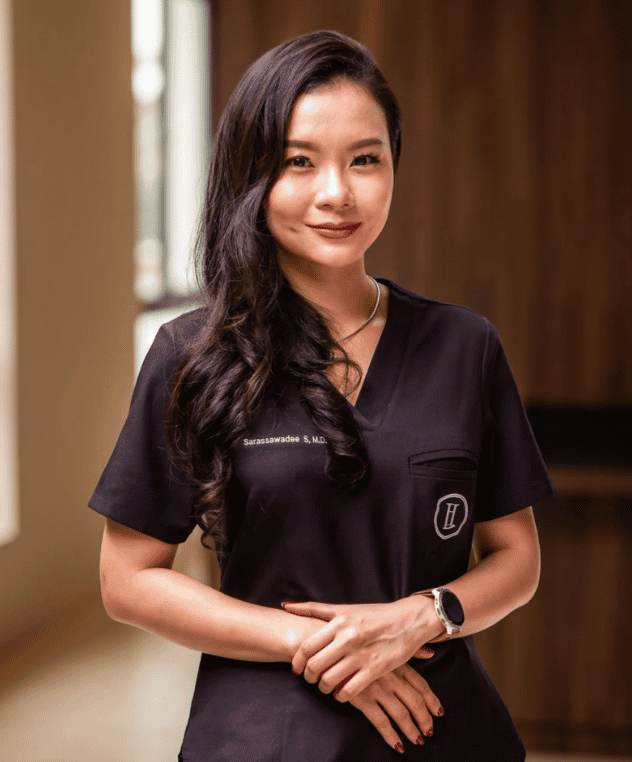
Dr. Sarassawadee Suwanjinda, MD (Dr. Petch)
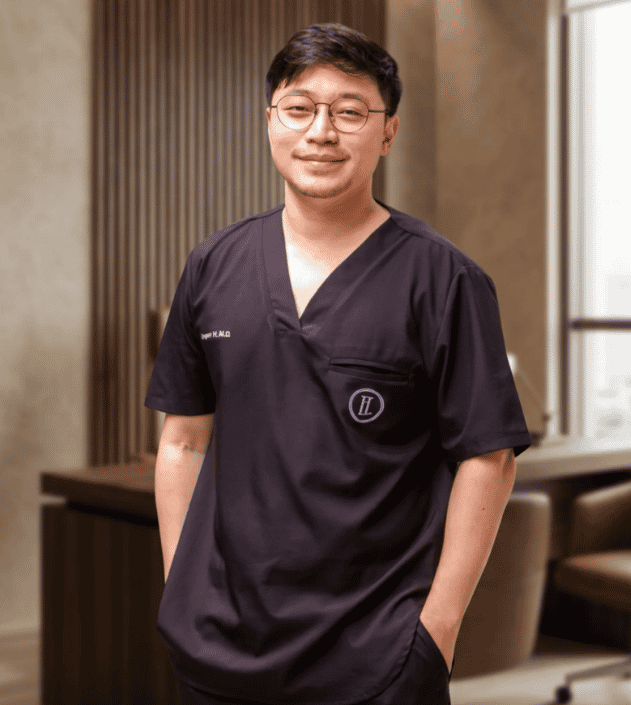
Dr. Napat Hunsajarupan, MD (Dr. First)
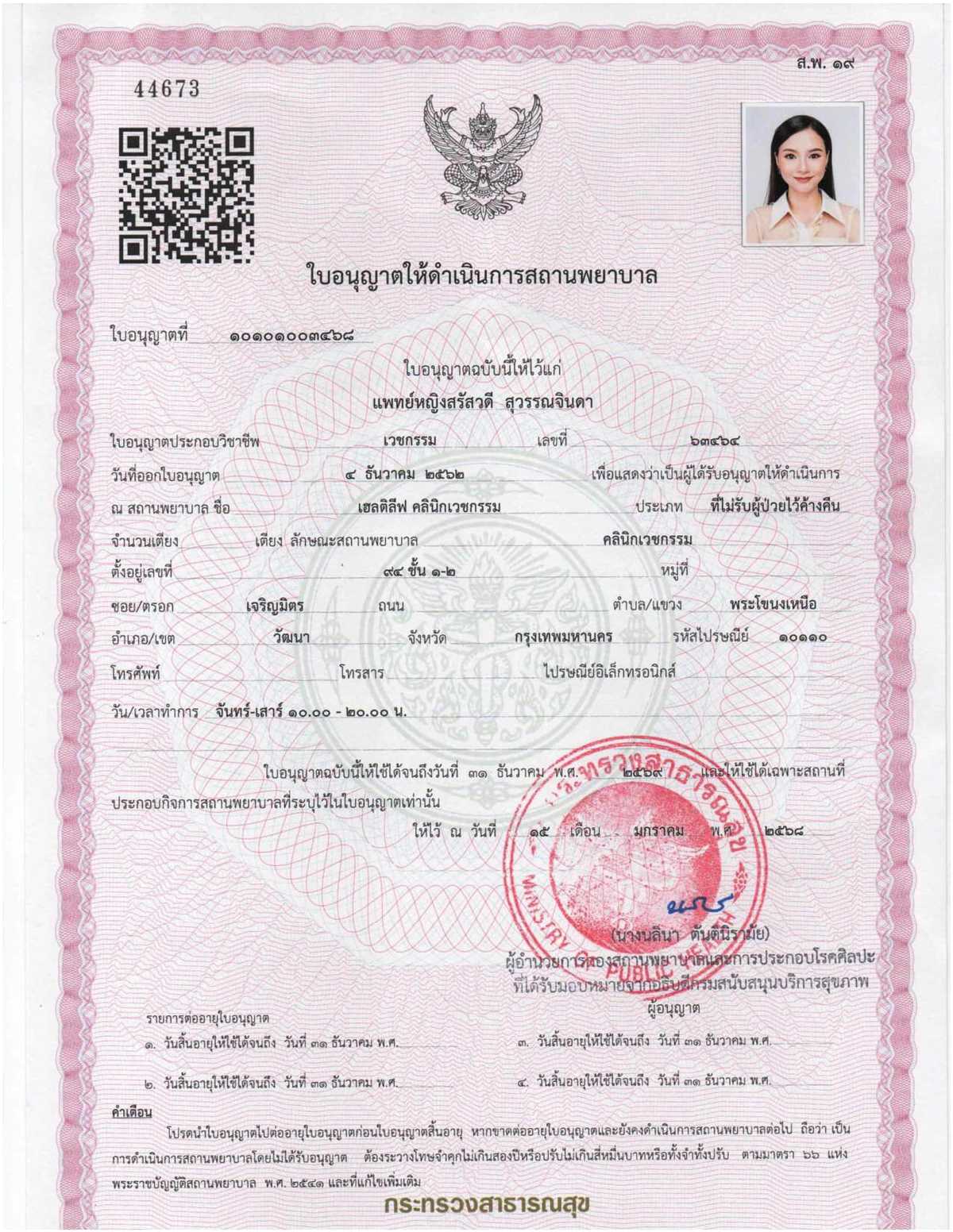
Healthi Life Longevity Center Certificate
Common questions






















Share this listing