
Evidence, approaches, and clinical context
Regenerative Medicine: Definition, Approaches, Evidence
Regenerative Medicine in Bangkok, Thailand aims to replace, repair or regrow damaged cells and tissues (Mason and Dunnill, 2008). Evidence ranges from established transplant medicine to early research. At Healthi Life in Bangkok, the published stem cell programs start at THB 59,000, and several uses are investigational.
01 / Key facts
Overview at a glance
Before comparing protocols, pricing, or travel timelines, it helps to review how definitions, clinical categories, and published program details align across research and practice. The summary below brings together the core reference points for evaluating regenerative medicine options.
| Item | Fact | Source |
|---|---|---|
| Definition | Replacing or regenerating human cells, tissues or organs to restore function | Mason and Dunnill 2008 |
| Main approaches | Cell therapy, tissue engineering, biomaterials, gene-based methods | Mason and Dunnill 2008 |
| Evidence range | From long-established transplant medicine to early research | Galipeau and Sensebe 2018 |
| Healthi Life programs | Fresh umbilical-cord mesenchymal stem cells, physician-led | Healthi Life stem cell menu |
| Status of several uses | Investigational, outcomes vary and are not guaranteed | Healthi Life stem cell menu |
| Face and hair programs | THB 59,000 / THB 89,000 / THB 119,000 by cell dose | Healthi Life stem cell menu |
02 / Scope of the field
What is regenerative medicine?
Regenerative medicine is a branch of medicine that tries to restore the structure or function of tissue that has been damaged, worn or lost. Mason and Dunnill, writing in Regenerative Medicine in 2008, defined it as an approach that replaces or regenerates human cells, tissues or organs to restore normal function.
The term covers a wide span. At one end is work that clinicians have done for decades, such as transplanting blood-forming stem cells for certain blood diseases and growing skin for burns. At the other end are early studies of cells, signaling molecules and materials that may support repair. The label "regenerative" on a clinic menu does not tell you where on that span a treatment sits, which is why evidence level is the question to ask first.
For a traveler comparing clinics in Bangkok, the practical point is that the same word covers very different things. Ask what exactly is being given, to treat what, and what published data supports that use.
Core question one
“What exactly is being given, and to treat what specific condition or goal?”
Core question two
“Where does this specific use sit along the evidence spectrum from established care to early study?”
03 / Modalities and cell sources
What are the main approaches?
The main approaches are cell therapy, tissue engineering, biomaterials and gene-based methods. Each tries to help the body repair itself, or to supply the part that is missing.
Cell therapy gives living cells, such as stem cells, to a person. Tissue engineering builds tissue outside the body, often on a scaffold, and then places it. Biomaterials are scaffolds or matrices that support the body's own cells as they repair an area. Gene-based methods change how cells read genetic instructions.
Platelet-rich plasma is sometimes grouped here as well. It concentrates platelets from your own blood and applies them to a target area. It is a blood-derived product, not a cell therapy in the stem cell sense.
At Healthi Life, the stem cell programs belong to the cell therapy group. The clinic uses fresh, never-frozen mesenchymal stem cells from donated umbilical cord tissue, prepared by accredited partner laboratories. The menu describes the programs as complementary wellness programs for aesthetic and anti-aging goals, joint and cartilage comfort and fertility support. They are not described as a treatment or cure for any disease.
04 / Scientific maturity
How strong is the evidence?
Evidence in regenerative medicine runs from well established to experimental, and the strength depends on the exact product and the exact use. A useful way to read a claim is to sort it into three levels.
The first level is established medicine: uses approved by regulators and supported by controlled trials and long clinical experience. Blood stem cell transplantation for some blood diseases belongs here. The second level is approved or studied in narrow uses, such as specific cell products for a defined condition. The third level is investigational: promising laboratory or early clinical findings that have not yet been confirmed in large controlled trials.
Turner and Knoepfler, in Cell Stem Cell in 2016, described the large number of US businesses selling stem cell products outside regulated trials, which is one reason patients are urged to ask for evidence. Galipeau and Sensebe (Cell Stem Cell, 2018) add that donor, tissue-source and manufacturing differences make trial results hard to compare.
At Healthi Life, the menu itself says that several applications are investigational, that individual results vary, and that outcomes cannot be guaranteed. It also states that the programs are not a treatment or cure for any disease. A reader should hold the clinic to that wording and to the evidence level it implies.
05 / Clinical workflow and pricing in Bangkok
How does Healthi Life apply regenerative medicine?
At Healthi Life in Bangkok, the stem cell programs are physician-led and start with a consultation and a blood panel. The clinic confirms the sessions, tests and schedule at the consultation.
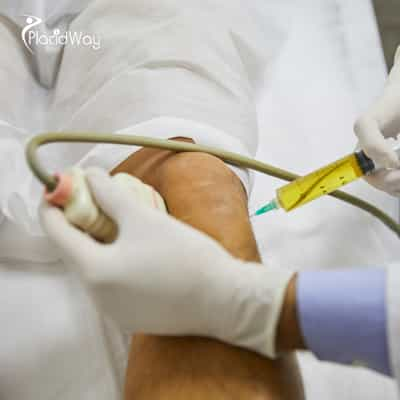
The cells are allogeneic, meaning they come from a donor rather than from you. The menu states that donors are screened for major infectious diseases and that cells are quality-tested for viability, purity, identity and sterility before release. Joint programs use an intra-articular injection, which places cells directly into the joint under physician supervision. The physician decides eligibility and checks for contraindications before any program.
Programs cover face, hair, body, fertility support, joints (knee, shoulder, hand and finger) and an Energy & Recovery Restoration protocol decided case by case after physician evaluation. The clinic does not offer a stem cell program for serious medical conditions.
Published stem cell prices at Healthi Life
Reviewing published menu figures alongside prescribed cell counts helps clarify how initial program tiers are structured prior to an in-person clinical assessment.
| Program | Price | Note from the menu |
|---|---|---|
| Facial Skin Renewal | THB 59,000 / THB 89,000 / THB 119,000 | By cell dose (5M / 10M / 15M) |
| Hair Density Renewal | THB 59,000 / THB 89,000 / THB 119,000 | By cell dose (5M / 10M / 15M) |
These are menu prices in Thai baht, confirmed again at the consultation. Cell dose is prescribed by the physician for each program.
Center, physicians & credential
Healthi Life Longevity Center
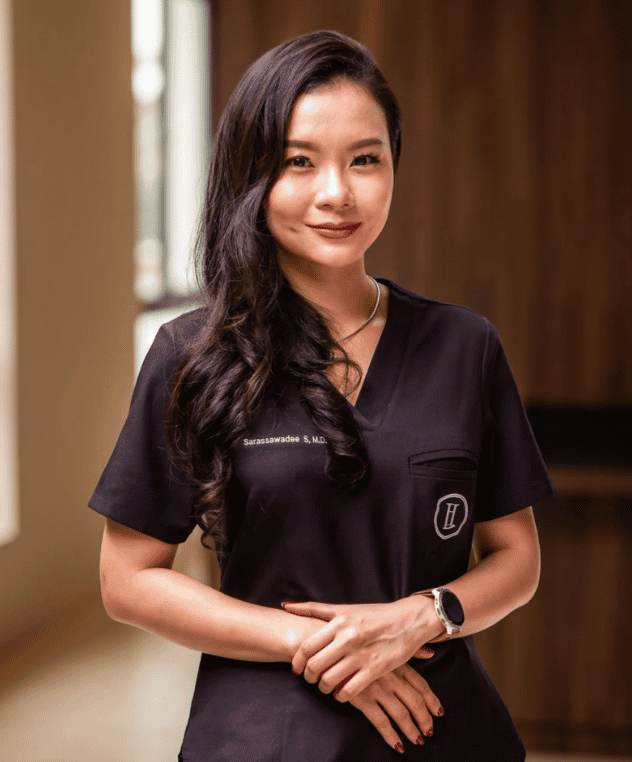
Dr. Sarassawadee Suwanjinda, MD (Dr. Petch)
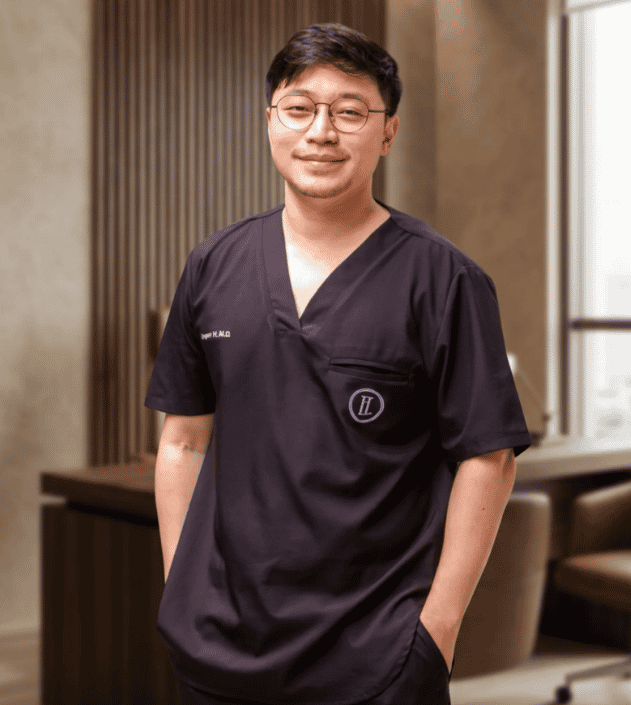
Dr. Napat Hunsajarupan, MD (Dr. First)
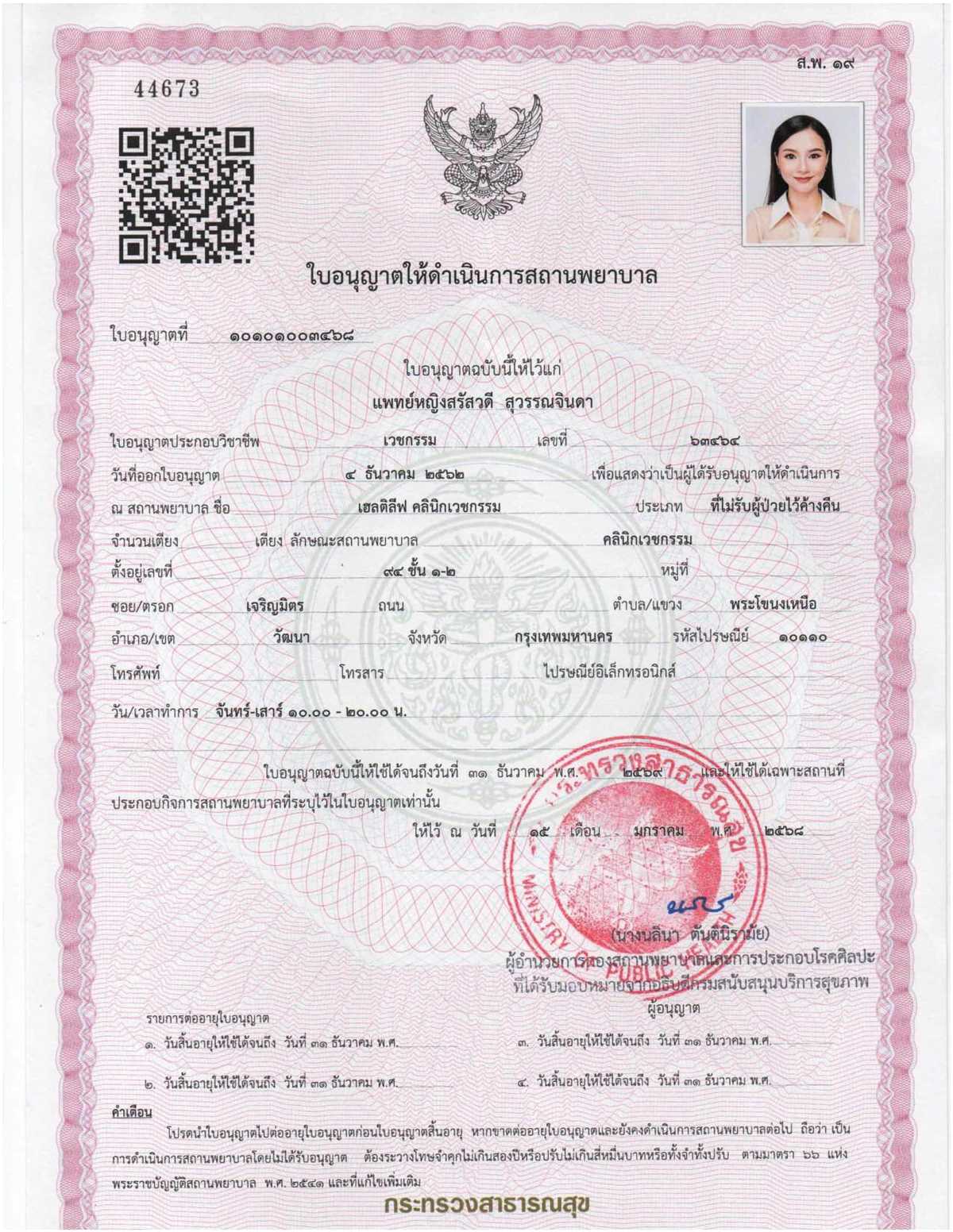
Healthi Life Longevity Center Certificate
06 / Medical screening and boundaries
Who should not have a regenerative treatment?
Eligibility is a physician decision, and the Healthi Life menu says suitability requires individual consultation and medical screening before any treatment. General examples; the clinic confirms at the consultation which conditions apply: pregnancy, an active infection or a cancer history. Bring your full medical history, current medicines and recent test results.
Anyone who hopes to replace conventional care should be careful. The clinic states that its programs are not a substitute for care prescribed by your primary physicians.
07 / Safety and evidence boundaries
Risks and limits
Cell-based approaches carry risks that depend on the product. Allogeneic cells can in principle cause an immune reaction. The menu notes that mild fatigue or warmth in the first 24 to 48 hours can occur. Infusions and injections also carry the usual risks of needles and sterile technique, such as pain, bruising and infection.
The larger limit is evidence. For many cosmetic, joint and anti-aging uses, controlled trial data are limited, and published results come from specific products and doses that may not match what a clinic gives. Cost is also a factor, so ask for the full price in writing.
Practical evaluation takeaway
Match every claim to the specific product, prescribed dose, and published evidence level before proceeding.
08 / Consultation checklist
Questions to ask any clinic offering regenerative treatment
Preparing focused questions ahead of a consultation helps clarify clinical scope, laboratory oversight, regulatory status, and total cost before any procedure is scheduled.
- What exactly is the product, and where do the cells or materials come from?
- Which laboratory prepares it, and under what quality standards?
- Is this use approved, studied in trials or investigational?
- What published data supports this dose for my condition?
- What are the known risks, and how are side effects handled?
- What does the total price include, and what follow-up is planned?
09 / Frequently asked questions
FAQ
Select any question below to expand the answer.
What is regenerative medicine in simple terms?
Regenerative medicine is the field that tries to repair or replace damaged cells and tissues so they work better. It includes cell therapy, tissue engineering, biomaterials and gene-based methods. Some of it is established medicine, such as blood stem cell transplantation, and some is still experimental, so ask which applies.
Is regenerative medicine the same as stem cell therapy?
No. Stem cell therapy is one part of regenerative medicine. The field also includes tissue engineering, biomaterials, gene-based approaches and blood-derived products such as platelet-rich plasma. At Healthi Life in Bangkok, the stem cell programs use fresh umbilical-cord mesenchymal stem cells under physician supervision.
How much does regenerative treatment cost in Bangkok?
At Healthi Life, the facial skin and hair density stem cell programs are THB 59,000 at 5M cells, THB 89,000 at 10M cells and THB 119,000 at 15M cells. The physician prescribes the dose, and the clinic confirms the final price at the consultation.
Does regenerative medicine work?
It depends on the approach. Some uses, such as blood stem cell transplantation for certain blood diseases, are established. Many other uses are investigational. Healthi Life states that outcomes vary by individual and are not guaranteed, and that several applications are investigational. Ask for the published evidence for your specific use.
Is regenerative medicine safe?
Safety depends on the product, the dose, the laboratory and the patient. Allogeneic cells can cause an immune reaction in principle, and needle procedures carry infection and bruising risks. At Healthi Life, a physician screens eligibility and contraindications first. Ask about known risks and how side effects are managed.
Can foreigners have regenerative treatment in Bangkok?
A visitor comparing regenerative options should bring the history, medicines and recent test results the physician needs to judge eligibility, and expect the stem cell programs to include follow-up reviews at 30 and 90 days. The clinic confirms scheduling and how follow-up works from abroad at the consultation.
References
1. Mason C, Dunnill P. A brief definition of regenerative medicine. Regenerative Medicine, 2008. https://doi.org/10.2217/17460751.3.1.1
2. Turner L, Knoepfler P. Selling stem cells in the USA: assessing the direct-to-consumer industry. Cell Stem Cell, 2016. https://doi.org/10.1016/j.stem.2016.06.007
3. Galipeau J, Sensebe L. Mesenchymal stromal cells: clinical challenges and therapeutic opportunities. Cell Stem Cell, 2018. https://doi.org/10.1016/j.stem.2018.05.004
This article is for information only and does not replace a medical consultation.




















Share this listing