
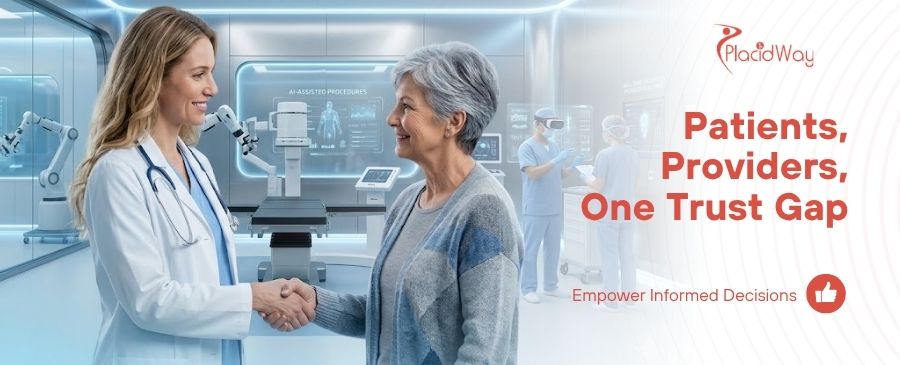
The Next Era of Medical Tourism Will Be Built on Trust, Not Just Access
For more than two decades, Medical Tourism has grown because patients are searching for something their local healthcare system may not provide easily: affordability, accessibility, specialized expertise, advanced procedures, shorter waiting times, or personalized care.
Today, patients can find thousands of healthcare providers across hundreds of destinations with a simple online search.
But this abundance of choice has created a new challenge.
Patients no longer struggle to find healthcare options. They struggle to know which options they can trust.
This is the new reality of global healthcare.
The biggest challenge facing medical tourism is no longer only connecting patients with providers.
It is bridging The Trust Gap.
The Global Healthcare Opportunity Has Never Been Greater
International healthcare demand continues to expand as patients become more aware of treatment options beyond their borders.
Patients travel internationally for:
-
Complex surgeries
-
Cancer treatments
-
Orthopedic procedures
-
Dental care
-
Cosmetic and reconstructive procedures
-
Fertility treatments
-
Regenerative medicine
-
Addiction treatment
-
Longevity and wellness programs
-
Specialized diagnostics and second opinions
The reasons behind medical travel are changing.
Historically, many patients considered medical tourism primarily because of cost savings.
Today, the decision is more complex.
Patients are asking:
-
Who is the right doctor for my condition?
-
Which hospital has experience with my procedure?
-
Is this treatment supported by evidence?
-
How safe is the destination?
-
What happens if something goes wrong?
-
Can I trust online reviews?
-
Is this provider genuinely qualified?
-
Will I receive support after returning home?
The modern medical traveler is not simply looking for a cheaper option.
They are looking for confidence in a life-changing decision.
The Problem: More Choices Have Created More Uncertainty
The digital transformation of healthcare has created a paradox.
Patients have access to more information than ever before, but they often have less clarity.
A patient searching for Treatment Abroad may encounter:
-
Thousands of clinics
-
Multiple countries offering the same procedure
-
Different price ranges
-
Conflicting medical information
-
Unverified testimonials
-
Aggressive marketing claims
-
AI-generated healthcare content
-
Providers with limited online transparency
The result is information overload.
Instead of making decisions easier, excessive information can create fear and hesitation.
Healthcare is different from purchasing a product.
A patient is not choosing a hotel or a vacation package.
They are choosing who will perform a medical procedure, manage their health, and potentially influence the quality of their future.
That decision requires a higher level of trust.
The Trust Gap Between Patients and Providers
The trust gap exists because patients and providers often see the marketplace differently.
Providers See Their Expertise
A medical center may have:
-
Experienced physicians
-
Advanced technology
-
International certifications
-
Excellent patient outcomes
-
Modern facilities
-
Dedicated teams
From the provider perspective, these qualities should naturally create confidence.
However, international patients cannot always see or verify these advantages.
Patients See Uncertainty
Patients often see:
-
A website
-
A few photos
-
Marketing statements
-
Price information
-
Reviews
-
Limited clinical details
They may not understand:
-
Why one surgeon is different from another
-
Why one technology is preferable
-
What questions to ask
-
How to evaluate credentials
-
What risks exist
-
Whether a treatment is appropriate for their situation
The gap between provider capability and patient understanding is where trust is lost.
Why Traditional Medical Tourism Marketing Is No Longer Enough
For many years, medical tourism growth was driven by:
-
Search engine rankings
-
Destination marketing
-
Price comparisons
-
Procedure pages
-
Promotional campaigns
These strategies helped patients discover international care.
But the decision-making process has changed.
Patients now research deeply before contacting a provider.
They may spend weeks or months:
-
Reading articles
-
Comparing countries
-
Asking AI tools questions
-
Reviewing physician profiles
-
Watching videos
-
Looking for patient experiences
-
Searching for evidence
The first provider conversation often happens after the patient has already formed an opinion.
This means credibility must be built before the inquiry.
The Rise of AI Has Changed Healthcare Discovery
Artificial intelligence is transforming how patients search for medical information.
Patients increasingly ask questions such as:
-
"What is the best country for knee replacement?"
-
"Who are the top surgeons for rhinoplasty in Turkey?"
-
"Is stem cell therapy effective for my condition?"
-
"What should I know before traveling abroad for cancer treatment?"
AI systems evaluate information differently from traditional search engines.
They look for:
-
Clear expertise
-
Reliable sources
-
Comprehensive explanations
-
Consistent information
-
Evidence-based content
-
Authoritative healthcare profiles
A provider that only promotes services may struggle to appear trustworthy.
A provider that educates patients, explains treatments, demonstrates expertise, and provides transparent information has a stronger foundation.
The E-E-A-T and YMYL Challenge in Healthcare
Healthcare belongs to the highest level of responsibility online because information can directly affect a person's health, safety, and financial decisions.
This is why healthcare content is evaluated through principles commonly described as:
Experience
Does the provider demonstrate real-world experience?
Patients want to understand:
-
How many years the doctor has practiced
-
Which procedures are performed regularly
-
What types of patients are treated
Expertise
Are qualified professionals behind the information?
Patients want:
-
Physician credentials
-
Medical team profiles
-
Training background
-
Clinical specialization
Authority
Does the provider demonstrate recognition and credibility?
Patients look for:
-
Accreditations
-
Certifications
-
Institutional partnerships
-
Professional memberships
-
Published expertise
Trustworthiness
Is the provider transparent?
Patients need:
-
Clear treatment descriptions
-
Honest expectations
-
Risk information
-
Transparent pricing
-
Realistic outcomes
-
Privacy policies
The Future of Medical Tourism depends on making these elements visible.
The Opportunity for Healthcare Providers
The global medical tourism market is not only an opportunity for providers with lower costs.
It is an opportunity for providers who can communicate value clearly.
Successful international providers will move from:
Selling Procedures
"Get your surgery abroad."
to:
Educating Patients
"Understand your options, evaluate your choices, and make an informed healthcare decision."
The providers who win will be those that answer the questions patients are already asking.
What Patients Expect From Modern Medical Tourism Providers
The international patient journey has evolved.
Patients expect:
1. Education Before Consultation
Before contacting a provider, patients want to understand:
-
Their condition
-
Available treatments
-
Alternatives
-
Recovery expectations
-
Questions to ask their doctor
Educational content builds confidence.
2. Provider Transparency
Patients want to see:
-
Doctor credentials
-
Facility information
-
Technology details
-
Treatment protocols
-
Safety standards
Trust grows when information is accessible.
3. Personalized Guidance
Patients do not want generic recommendations.
They want help understanding:
-
Is this treatment appropriate?
-
Is this provider experienced with my condition?
-
What factors should influence my decision?
4. Complete Patient Journey Support
Medical travel involves more than treatment.
Patients consider:
-
Medical records
-
Travel coordination
-
Accommodation
-
Communication
-
Recovery
-
Follow-up care
The best providers understand the entire journey.
How Providers Can Bridge The Trust Gap
The solution is not simply increasing marketing.
The solution is building a stronger trust ecosystem.
Healthcare providers should focus on:
Building Authority Through Education
Create content that answers real patient questions.
Examples:
Instead of:
"Advanced Knee Replacement Surgery"
Explain:
"How to Choose the Right Knee Replacement Surgeon: Questions Every International Patient Should Ask"
Making Expertise Visible
A physician's experience should not remain hidden.
Show:
-
Professional background
-
Clinical focus
-
Experience
-
Treatment philosophy
-
Patient approach
Communicating Realistic Expectations
Trust increases when providers discuss:
-
Benefits
-
Limitations
-
Risks
-
Recovery
-
Alternatives
Transparency creates confidence.
Creating a Consistent Digital Reputation
Patients evaluate providers across multiple channels:
-
Search engines
-
AI platforms
-
Social media
-
Reviews
-
Healthcare marketplaces
The information must be consistent everywhere.
The Role of PlacidWay: Building the Trust Infrastructure for Global Healthcare
PlacidWay was created around a simple reality:
Patients need guidance, and providers need a trusted way to communicate their value internationally.
The role of PlacidWay is not simply to create another list of healthcare providers.
The goal is to bridge the information gap between patients seeking care and providers delivering care.
Helping Patients Navigate Complexity
Medical decisions are complicated.
PlacidWay helps patients understand:
-
Treatment options
-
Destinations
-
Procedures
-
Provider capabilities
-
Important questions to ask
Better-informed patients make better healthcare decisions.
Helping Providers Demonstrate Credibility
Many excellent healthcare providers struggle because their expertise is not clearly communicated.
PlacidWay helps organize and present:
-
Provider information
-
Medical expertise
-
Treatment capabilities
-
Patient education
-
Healthcare experiences
Connecting Patients With Appropriate Providers
Successful medical tourism is not about sending every patient to every provider.
It is about creating better matches based on:
-
Medical needs
-
Treatment goals
-
Provider expertise
-
Patient expectations
Supporting The Future of Healthcare Discovery
As search engines and AI platforms continue changing how patients find information, healthcare organizations must become more transparent, educational, and authoritative.
PlacidWay helps providers participate in this new healthcare ecosystem.
The Future of Medical Tourism: From Choice to Confidence
The future of medical tourism will not be defined by how many healthcare options exist.
The world already has thousands of choices.
The future will be defined by how confidently patients can choose the right one.
The winning providers will not simply be the ones with the biggest marketing budgets.
They will be the providers who demonstrate:
-
Expertise
-
Transparency
-
Safety
-
Patient-centered care
-
Meaningful education
Because in global healthcare, the most valuable service is not only treatment.
It is trust.
PlacidWay exists to bridge The Trust Gap between patients searching for care and providers capable of delivering it.
