
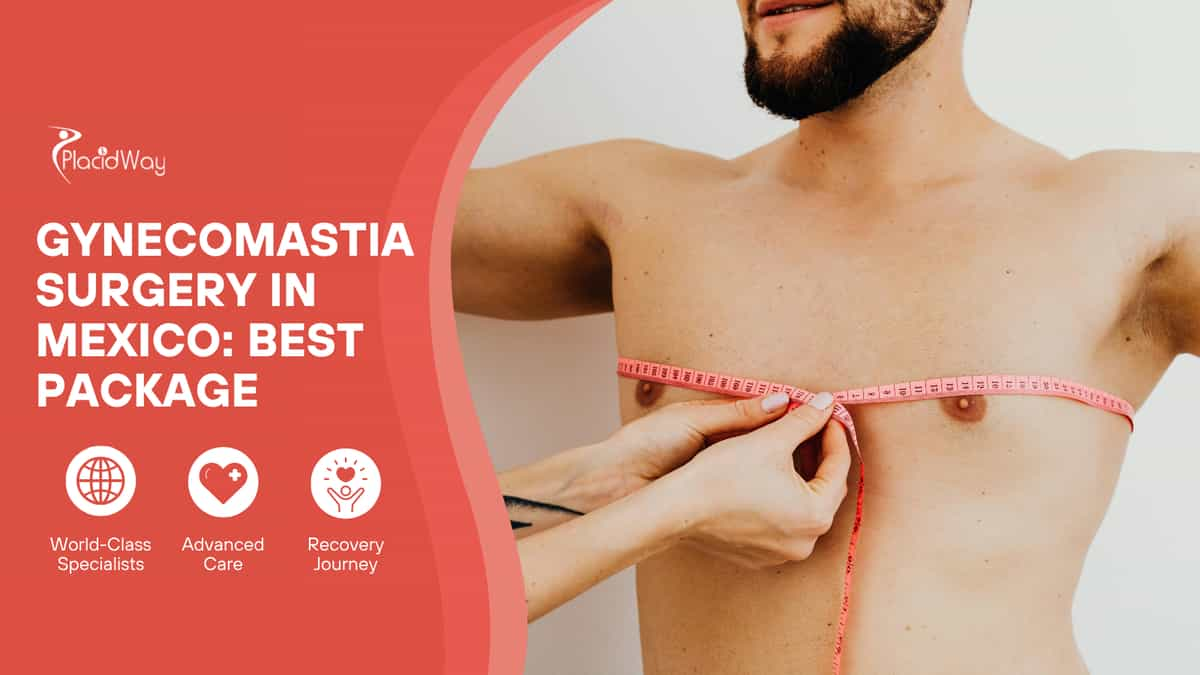
Are you tired of letting your wardrobe choices be dictated by chest contour concerns, or feeling self-conscious when the summer heat demands a t-shirt? Gynecomastia surgery in Mexico City provides a permanent, medically advanced solution for enlarged male breasts, combining the expertise of board-certified plastic surgeons with accessible healthcare pricing. This comprehensive medical tourism package starts at an estimated $2,500, offering a tailored approach that utilizes both liposuction and tissue excision to restore a firmer, flatter, and more masculine chest contour.
Ideal for healthy adult men experiencing stubborn glandular tissue or chest fat resistant to diet and exercise, this outpatient procedure requires a brief 4 to 6-day stay in Mexico's vibrant capital to ensure safe medical clearance before flying. Please note that exact overall pricing and final surgical eligibility will depend entirely on a personalized, virtual medical evaluation of your unique anatomy and health history.
Key Program Insights
- Estimated Starting Cost: Packages begin at approximately $2,500 USD, offering significant savings compared to US or European healthcare systems.
- Facility Standards: Surgeries are performed at internationally accredited medical facilities maintaining rigorous safety protocols.
- Patient Qualifications: Suitable for healthy males with stable weight experiencing glandular overgrowth or stubborn localized chest fat.
- Expected Experience: A 1 to 2-hour outpatient procedure utilizing general or local anesthesia with sedation, yielding immediate contour changes.
- Travel Planning: International patients must commit to a minimum 4 to 6-day stay in Mexico City for post-operative monitoring and safe travel clearance.
Global Financial Comparison for Chest Contouring
Medical tourism in Mexico City allows patients to access top-tier surgical expertise without the heavily inflated administrative costs common in domestic healthcare. The table below illustrates the financial advantage of choosing Mexico City for male breast reduction compared to other major medical hubs.
| Country / Location | Average Estimated Cost (USD) |
|---|---|
| United States | $6,500 - $8,500+ |
| Canada | $5,500 - $7,000+ |
| United Kingdom | $5,000 - $6,500+ |
| Mexico City, Mexico | Starting from $2,500 |
Detailed Breakdown of Your Surgical Investment
*Note: The following table provides an estimated breakdown of costs. Final pricing is pending a thorough medical assessment, the specific technique required, and individual anatomical needs.
| Procedure Item | Estimated Cost | Item Description |
|---|---|---|
| Surgeon & Medical Team Fees | Included | Compensation for the board-certified surgeon and assisting staff. |
| Anesthesia Services | Included | Fees for the anesthesiologist and safe medication administration. |
| Operating Facility Costs | Included | Use of a fully equipped, sterile operating theater. |
| Pre & Post-Op Consultations | Included | Initial planning session and follow-up examinations before departure. |
| Compression Garment | Included | One specialized vest required to reduce swelling and shape the chest. |
| Total Estimated Package Price | $2,500 USD | Baseline estimate pending medical review. |
What Is Included in Your Package?
- • All primary surgeon and assisting medical staff fees.
- • Operating room access and required surgical supplies.
- • Anesthesiologist fees and procedural medications.
- • Pre-surgical in-person consultation and chest marking.
- • Post-operative follow-up visits before you fly home.
- • One post-surgical medical-grade compression vest.
- • Basic prescribed pain relievers and antibiotics for initial recovery.
Services and Expenses Not Included
- x Round-trip international flights to Mexico City.
- x Hotel accommodations for the duration of your stay.
- x Ground transportation (airport transfers and clinic commutes).
- x Pre-operative laboratory tests (must be done prior to travel).
- x Additional compression garments if a backup is desired.
- x Treatment for unrelated medical conditions or highly unusual complications.
Identifying the Ideal Candidate for Male Breast Reduction
While gynecomastia is incredibly common, surgery is a specialized medical intervention. The best surgical outcomes are achieved when patients meet specific physical and psychological criteria. You may be a highly suitable candidate for this procedure if you align with the following traits:
- You are physically healthy with no life-threatening illnesses or medical conditions that impair healing (e.g., uncontrolled diabetes).
- Your condition cannot be corrected through alternative treatments, diet, or rigorous exercise regimes.
- You have maintained a relatively stable weight, as future significant weight fluctuations can alter results.
- Your breast development has stabilized (the condition is no longer actively growing).
- You do not heavily consume alcohol, use illicit drugs, or smoke, as nicotine severely restricts blood flow and increases risks.
- You have realistic expectations regarding chest contouring and understand that surgical scars, while minimized, are permanent.
Medical Documents Needed for Preliminary Assessment
To provide you with an accurate surgical estimate and confirm your safety for international travel, the medical team will require a preliminary file before you book your trip. Required records typically include:
- A comprehensive medical history detailing past surgeries, medications, allergies, and chronic conditions.
- High-quality, well-lit photographs of your chest from the front and both sides (submitted securely).
- Recent standard blood work (Complete Blood Count, Clotting profile) to ensure you are fit for anesthesia.
- An EKG (electrocardiogram) if you meet certain age criteria determined by the anesthesiologist.
- In some specific cases, a chest ultrasound to confirm the ratio of glandular tissue to fatty tissue.
How Your Gynecomastia Surgery is Performed in Mexico City?
Male breast reduction is tailored to your specific anatomy. Depending on whether your chest enlargement is due to excess fatty tissue, dense glandular tissue, or a combination of both, the surgeon will utilize different techniques to sculpt a masculine chest wall. The process generally follows these standardized steps:
Step 1: Anesthesia Administration
To ensure your absolute comfort and safety, medications will be administered before the procedure begins. You will receive either intravenous sedation or general anesthesia. You will feel no pain during the operation.
Step 2: Liposuction Technique (For Fatty Tissue)
If your condition is largely excess fatty tissue (pseudogynecomastia), the surgeon utilizes advanced liposuction. Small incisions are made, and a cannula is inserted to loosen and gently vacuum out excess fat, instantly reducing volume.
Step 3: Surgical Excision (For Glandular Tissue)
If true gynecomastia is present—meaning dense glandular tissue must be removed—excision techniques are necessary. An incision is typically made along the edge of the areola. The tough glandular tissue is then meticulously cut away.
Step 4: Reshaping and Nipple Repositioning
In more severe cases where substantial tissue has been removed, the remaining skin must be tightened. The areola and nipple may also need to be reduced in size or repositioned to look proportional to your new contour.
Step 5: Incision Closure and Bandaging
Once the chest is sculpted, incisions are closed using fine sutures. Small temporary drainage tubes may be placed to prevent fluid accumulation. Your chest is then bandaged, and you are placed into your compression garment.
Your Step-by-Step Medical Tourism Itinerary
Traveling abroad for surgery requires a slightly different approach than a local hospital visit. Here is a general timeline of what to expect from the moment you land to the day you depart:
Day 1: Arrival and Consultation
You arrive in Mexico City and settle into your hotel. You attend an in-person consultation where the surgeon examines you, makes surgical markings, and answers final questions.
Day 2: Surgery Day
You arrive at the clinic fasting. The procedure typically takes 1 to 2 hours. After resting in the recovery room, you are discharged to your hotel with a companion.
Days 3 to 5: Initial Recovery
You spend these days resting in your hotel. You must wear your compression garment 24/7. Light walking around your room is encouraged to promote blood circulation.
Day 6+: Post-Op Check and Departure
You return to the clinic for a final post-operative check. The doctor assesses healing, removes any drains, and provides clearance for you to fly back home safely.
Mandatory Length of Stay for Safe Travel
While gynecomastia surgery is usually an outpatient procedure, you cannot safely fly home the next day.
- Minimum Stay: A 4 to 6-day stay in Mexico City is generally mandatory.
- Air Travel Safety: Flying immediately after surgery severely increases the risk of blood clots (DVT) and causes discomfort due to cabin pressure acting on fresh incisions.
- Clearance: Final travel clearance depends entirely on the treating physician's assessment of your individual recovery progress.
Recovery and Aftercare Protocol
Healing from chest contouring surgery happens in progressive stages. Your strict adherence to post-operative instructions directly impacts the quality of your final aesthetic result.
- The First Week: Expect noticeable swelling, bruising, and tightness, manageable with prescribed medication. You must sleep on your back, slightly elevated.
- The Compression Garment: You will wear a specialized compression garment around the clock for three to four weeks to minimize fluid buildup and support skin retraction.
- Weeks 2 and 3: Bruising fades and swelling decreases. Most patients return to desk work or light daily activities within 7 to 10 days.
- Long-Term Healing: Heavy weightlifting (especially chest exercises) must be avoided for 4 to 6 weeks. It may take 3 to 6 months for all residual swelling to resolve completely.
Understanding Potential Surgical Risks
Every surgical procedure carries inherent risks. While generally safe when performed by qualified professionals, it is vital to make an informed decision. Your physician will discuss individual risks thoroughly. Potential complications may include, but are not limited to:
- Hematoma: A collection of blood beneath the skin that may require draining.
- Infection: Mitigated by sterile environments and post-operative antibiotics.
- Asymmetry: The two sides of the chest may not heal perfectly symmetrically.
- Changes in Sensation: Temporary or, rarely, permanent numbness in the nipple area.
- Unfavorable Scarring: Some scars may become widened or raised depending on genetics.
- Seroma: Pockets of clear fluid under the skin that may need to be drawn out.
Realistic Expectations and Outcomes
The primary goal is to create a flatter, more traditionally masculine chest appearance. Patients typically experience a significant boost in confidence, though perfection cannot be guaranteed.
- Permanence: The excised glandular tissue and extracted fat cells are permanently removed.
- Weight Maintenance: Significant future weight gain or major hormonal shifts may cause remaining fat cells to expand, potentially reversing results.
- Satisfaction: Satisfaction is generally very high. Studies cited by the NIH indicate high long-term satisfaction rates when patient selection is appropriate and realistic goals are established.
Frequently Asked Questions
Will the surgery leave highly visible scars on my chest?
While all surgery results in scarring, surgeons minimize their appearance. Liposuction scars are a few millimeters wide and hidden in natural shadows. Excision incisions are typically made along the areola border, allowing the scar to blend naturally with the pigment change.
Is male breast reduction a painful procedure?
You will not feel pain during surgery due to anesthesia. During the first few days of recovery, patients typically experience soreness, tightness, and a dull ache rather than severe pain, which is well-managed with standard prescribed pain medications.
Can the chest tissue grow back after I have the surgery?
In most cases, results are permanent as excised tissues do not regenerate. However, significant weight gain, the use of testosterone-altering drugs (like anabolic steroids), or certain medical conditions can cause remaining tissues to enlarge, mimicking a return of the condition.
When is it safe to return to weightlifting and chest exercises?
Light cardio is encouraged immediately. However, heavy lifting and specifically chest exercises (bench presses, push-ups) must be strictly avoided for at least 4 to 6 weeks. Engaging chest muscles too early can stretch incisions and increase bleeding risks.
How do I know if I have glandular gynecomastia or just chest fat?
True gynecomastia feels like a firm, rubbery mass concentrated directly behind the nipple. Pseudogynecomastia (chest fat) feels softer and is spread evenly. A medical professional provides a definitive diagnosis, often via physical exam or ultrasound.
Why must I wear a compression vest, and for how long?
The vest applies constant pressure, drastically reducing fluid buildup, controlling swelling, and forcing the skin to heal tightly against your new chest contour. You typically wear it 24/7 (except when showering) for 3 to 4 weeks.
Is it safe to fly back home a few days after surgery?
It is not safe to fly immediately due to risks of deep vein thrombosis (DVT) and cabin pressure affecting fresh incisions. You must stay 4 to 6 days in Mexico City and fly only after receiving explicit travel clearance from your surgeon.
Are surgical drains always necessary?
Not always. Drains depend on the surgical technique and amount of tissue removed. If significant excision was required, thin tubes may be placed to prevent fluid pooling. If used, they are usually removed during a follow-up within 2 to 4 days.
Will the procedure fix puffy nipples?
Yes, "puffy nipples" are frequently caused by dense glandular tissue pushing the nipple outward. The surgical excision step directly removes this specific tissue, resolving the puffiness and allowing the areola to lay flat.
How soon will I see the final results of my surgery?
While you will notice a significantly flatter chest immediately after surgery, the final contoured result takes time. Initial swelling subsides over the first month, but it can take 3 to 6 months for all residual micro-swelling to completely resolve and tissues to settle.
Ready to Reclaim Your Confidence?
Take the first step toward a flatter, firmer chest. Contact our team today to schedule your secure medical review and receive a personalized, no-obligation itinerary and exact pricing for your procedure in Mexico City.
Medical Disclaimer: The information provided on this page is for general educational and informational purposes only and does not constitute professional medical advice, diagnosis, or treatment. Always seek the advice of your physician or other qualified healthcare provider regarding a medical condition, surgical risks, and eligibility for treatment.
References
- National Institutes of Health (NIH): Gynecomastia: Etiology, Diagnosis, and Treatment
- American Society of Plastic Surgeons (ASPS): Gynecomastia Surgery Safety and Risks
- Mayo Clinic: Diagnosis and Treatment Options for Gynecomastia
- PubMed Central (PMC): Surgical Management of Gynecomastia: An Update
- MedlinePlus (National Library of Medicine): Medical Encyclopedia - Gynecomastia























Share this listing