
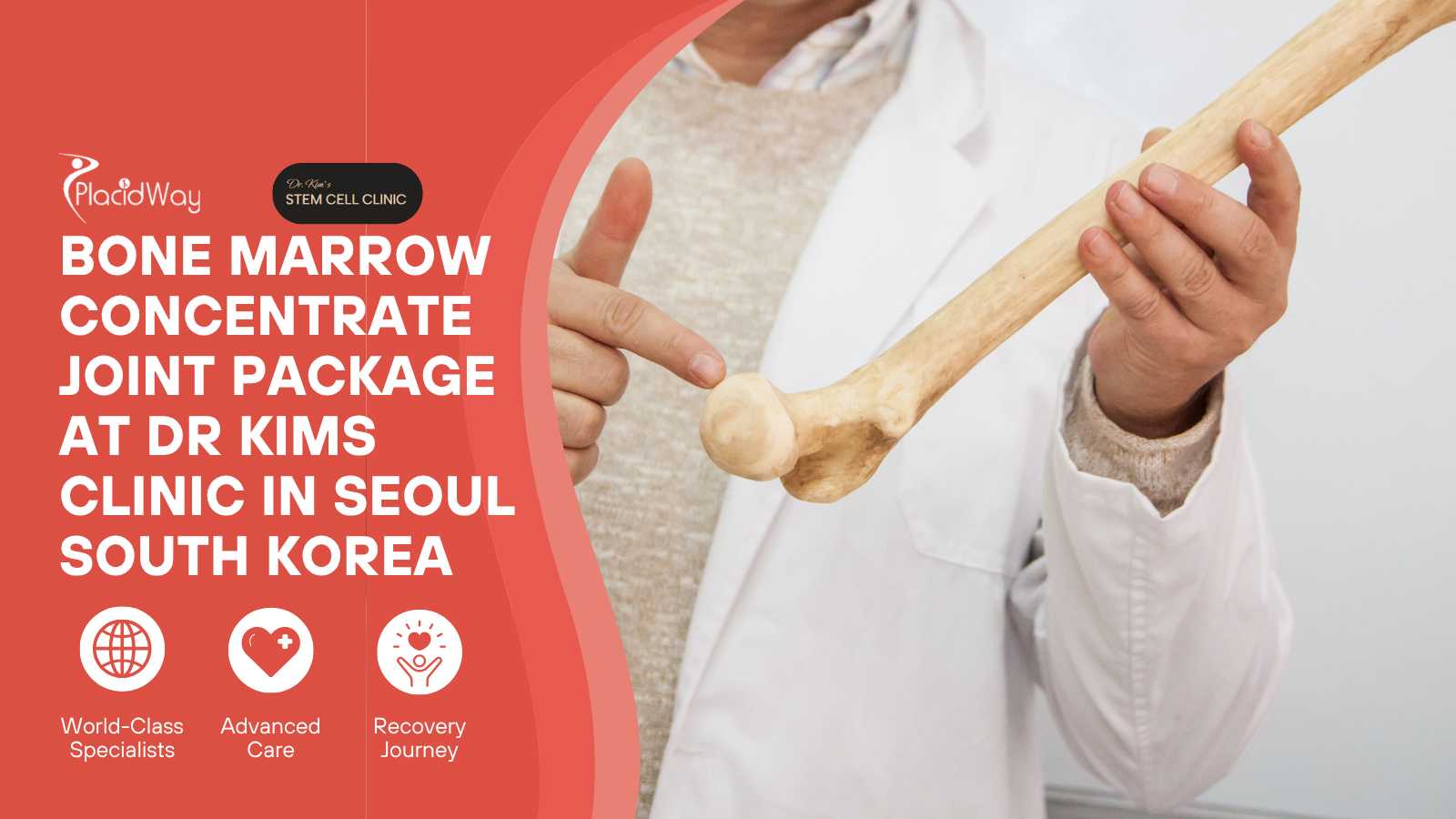
Dealing with chronic joint pain feels like an endless cycle of temporary fixes. Our bone marrow concentrate joint package in Seoul South Korea offers a biological approach to mobility. Starting around $3,271 this treatment leverages your own cellular tissue under expert clinical guidance. Eligibility and final pricing always depend on your personalized medical assessment.
Key Insights at a Glance
- Primary Target: Designed for individuals facing moderate osteoarthritis, cartilage defects, or chronic tendon issues.
- Procedure Type: Autologous treatment meaning your own biological material is harvested and reinjected.
- Location Benefit: South Korea is globally recognized for strict regenerative medicine regulations and advanced processing technology.
- Estimated Timeline: Patients typically need to stay in Seoul for five to seven days to accommodate the procedure and immediate follow up.
- Medical Clearance: All international patients must submit recent imaging and medical records for evaluation before travel is approved.
How Does the Cost of Bone Marrow Concentrate Compare Globally?
Understanding the financial commitment is vital when planning international medical travel for joint therapies. Because cellular therapies are rarely covered by standard insurance networks, patients often look across borders for more accessible options. South Korea provides highly regulated medical care at price points that often fall well below North American or European averages.
The table below illustrates typical market averages for single-joint bone marrow concentrate therapies across major medical tourism destinations. Keep in mind that individual clinic fees and doctor experience levels can alter these baseline estimates significantly.
| Destination | Estimated Starting Cost USD | Market Context |
|---|---|---|
| United States | $7,500 to $10,000+ | High clinic overhead and strict private pricing models. |
| United Kingdom | $6,000 to $8,500+ | Private sector pricing driven by specialized consultant fees. |
| Mexico | $4,000 to $6,000 | Popular for North American proximity and resort recovery. |
| Seoul South Korea | $3,271 approx | Advanced processing technology with government-regulated healthcare pricing structures. |
Detailed Breakdown of Your Package Estimate
| Procedure Item | Estimated Cost Allocation | Description |
|---|---|---|
| Initial Consultation and Imaging Review | Included in Base | In-person joint assessment and review of existing MRI or X-ray data. |
| Bone Marrow Aspiration Process | Included in Base | Minimally invasive extraction of marrow under local anesthesia. |
| Laboratory Cell Processing | Included in Base | Centrifugation and isolation of biological cells in a sterile environment. |
| Image Guided Injection | Included in Base | Precise delivery of the concentrate into the targeted joint capsule. |
| Total Estimated Package Start | $3,271 USD | Final costs fluctuate based on currency exchange rates and specific patient needs. |
Disclaimer: The prices above are estimates. Final pricing requires a full medical evaluation to determine if this therapy is safe and appropriate for your specific condition.
What Does This Joint Therapy Package Actually Include?
Transparent medical planning means knowing exactly what your payment covers before you board a flight to South Korea. Unexpected out-of-pocket expenses can disrupt your recovery and cause unnecessary stress. We advise all patients to review these lists carefully and request written confirmation of their specific inclusions during the final booking phase.
The items below reflect standard provisions for international patients traveling to Seoul for this specific joint therapy. Because individual anatomies require customized approaches, your personal coordinator will map out any additional required services.
Included Services
- Pre-procedure specialist consultation
- Local anesthesia for the extraction site
- Complete bone marrow aspiration procedure
- Closed-system laboratory processing
- Ultrasound-guided joint reinjection
- English-speaking translation support
- Standard post-procedure checkup
Not Included
- International airfare and visa fees
- Hotel accommodation during your stay
- Extensive new diagnostic imaging (if required)
- Long-term physical therapy sessions
- General anesthesia or deep sedation
- Specialized orthopedic braces or mobility aids
- Treatment for unrelated medical conditions
Why Should I Choose Dr Kim Hyun Soo For My Joint Treatment?
When evaluating regenerative treatments abroad, the expertise of the presiding physician is the most critical factor for safety. Dr Kim Hyun Soo operates one of the leading dedicated cell therapy clinics in Seoul. His background heavily emphasizes the strict adherence to South Korean medical laws governing biological material manipulation.
By establishing Dr Kims Stem Cell Clinic, he has created an environment entirely focused on the safe extraction, processing, and application of autologous tissues. This specialization means the facility is fully equipped with the sterile laboratory equipment necessary for advanced joint care.
- Dedicated Infrastructure: Operates a facility built specifically around cell therapy rather than general orthopedics.
- Regulatory Compliance: Adheres strictly to guidelines regarding minimal manipulation of biological tissues in Korea.
- Targeted Experience: Focuses heavily on the nuances of marrow aspiration to maximize cell yield while minimizing patient discomfort.
- Comprehensive Oversight: Manages the entire process from the initial physical extraction to the final ultrasound-guided joint injection.
What Actually Happens During the Bone Marrow Aspiration Process?
Many patients feel anxiety about the biological harvesting phase, assuming it will be highly invasive or overwhelmingly painful. In reality, modern aspiration techniques performed in specialized clinics are highly controlled outpatient procedures. The doctor typically targets the posterior iliac crest which is located near the back of the pelvis.
Local anesthesia is applied generously to numb the skin, the underlying tissue, and the surface of the pelvic bone itself. Once the area is completely numb, a specialized needle is used to draw a small volume of liquid marrow containing the vital cellular components. While you will feel pressure during the draw, acute pain is generally well managed.
| Aspiration Phase | Patient Experience |
|---|---|
| Site Preparation | You will lie face down comfortably while the pelvic area is sterilized and draped to maintain total infection control. |
| Anesthetic Application | A series of small injections deliver lidocaine deep into the tissues, causing brief stinging followed by profound numbness. |
| Marrow Extraction | A specialized hollow needle is introduced. You will feel a deep ache or strong pressure for several seconds as the liquid is pulled. |
| Immediate Aftercare | Pressure is applied to the site followed by a standard bandage. You can typically walk comfortably within minutes. |
How Does the Seoul Clinic Process My Cells Before Reinjection?
The gap between drawing your marrow and injecting it into your joint is where crucial laboratory science happens. The extracted liquid contains red blood cells, white blood cells, plasma, and various regenerative cells. The goal of processing is to remove the unnecessary elements and hyper-concentrate the beneficial cells that aid in joint recovery.
Top-tier facilities utilize specialized, automated centrifugation systems designed to keep the biological material entirely enclosed. This closed-loop protocol prevents ambient air contamination and ensures your tissue remains perfectly sterile from the moment it leaves your body until it is placed into your joint.
Step One
The raw marrow is immediately transferred directly into an FDA or KFDA cleared separation centrifuge within the sterile clinical environment.
Step Two
Rapid spinning utilizes specific gravity to separate the heavy red blood cells from the lighter cellular layer containing growth factors.
Step Three
The hyper-concentrated "buffy coat" layer is meticulously extracted, resulting in a small volume of highly potent biological fluid ready for injection.
Why Might My Doctor Recommend Bone Marrow Over Standard PRP?
Patients researching joint therapy frequently encounter both Platelet-Rich Plasma and Bone Marrow Concentrate as potential options. While both therapies leverage your own biology, they harness fundamentally different types of cellular power. Understanding this distinction helps clarify why older patients or those with more advanced joint degeneration might be directed toward marrow.
Platelet-Rich Plasma relies purely on blood drawn from your arm, concentrating platelets to release healing growth factors. Bone Marrow Concentrate, however, goes a step further by extracting deeper tissue that contains distinct biological building blocks capable of communicating directly with damaged joint environments.
- Source Material Differences PRP comes from a simple peripheral blood draw. BMAC requires accessing the pelvic bone to reach deeper regenerative tissues.
- Cellular Composition While PRP is rich in signaling proteins, BMAC contains hematopoietic cells, specialized proteins, and a broader spectrum of regenerative factors.
- Severity of Condition Clinicians often favor PRP for mild tendinopathies or early inflammation, but frequently reserve BMAC for moderate osteoarthritis or complex joint wear.
What Kind of Physical Limitations Will I Face During Early Healing?
The success of a biological joint injection relies heavily on how well you protect the joint during the first few weeks of healing. Your body requires a stable, low-stress environment to allow the newly introduced cells to integrate and begin the repair cascade. Pushing your joint too hard too soon can physically flush the concentrate out of the targeted area.
If you receive therapy in a weight-bearing joint like the knee or hip, you must plan for modified movement. While you will not be bedridden, you will be placed on strict protocols to minimize mechanical shear forces inside the joint capsule.
| Post-Therapy Phase | Expected Physical Limitations |
|---|---|
| Days 1 to 3 | Joint stiffness and profound aching are common. You will likely use crutches or a brace to completely unload the joint. Keep movement restricted to basic household navigation. |
| Days 4 to 14 | Pain subsides to a dull ache. You may begin gentle range-of-motion exercises, but heavy lifting, twisting, or prolonged standing remains strictly prohibited. |
| Weeks 3 to 6 | Transition into focused physical therapy. Low-impact activities like stationary biking may be introduced, but high-impact running or sports are still off-limits. |
How Soon Can I Fly Home After Receiving Joint Therapy?
Navigating international air travel immediately following an orthopedic procedure requires careful logistical planning. The combination of pressurized cabins, prolonged sitting, and navigating massive transit hubs like Incheon International Airport presents specific challenges. Your primary risk factors include deep vein thrombosis and increased joint inflammation.
Because the treated joint will be swollen and potentially stiff, confining it to a cramped airplane seat for ten or more hours can exacerbate pain. Medical teams generally enforce a strict waiting period before clearing you for international departure to ensure the joint capsule stabilizes.
Critical Travel Protocols
- The Mandatory Rest Window: Clinics universally require patients to stay in Seoul for at least 48 to 72 hours post-injection before attempting to fly.
- Airport Navigation: You must arrange for wheelchair assistance through the airport terminals, as carrying heavy luggage or walking long concourses can damage the treatment site.
- In-Flight Management: Wear specialized compression garments if advised by your doctor, and plan to perform seated ankle pumps hourly to promote blood flow.
- Pain Management: Ensure you have your prescribed non-NSAID pain medications easily accessible in your carry-on luggage during the flight.
Frequently Asked Questions
Does the marrow extraction process damage my pelvic bone
No. The extraction uses a very fine needle to pull liquid marrow from the spongy interior of the bone. The bone itself heals rapidly, and the marrow replenishes its cellular volume completely within a few weeks.
Will I need general anesthesia to be put to sleep
General anesthesia is rarely used or recommended. The procedure is safely performed using robust local anesthetics to numb the specific extraction and injection sites, allowing you to remain awake and avoid the risks of deep sedation.
Can I take my standard ibuprofen after the joint injection
Medical consensus strictly advises against using NSAIDs like ibuprofen or naproxen for several weeks post-procedure. These medications reduce inflammation, which is actually a necessary phase of the biological healing process initiated by the marrow cells.
How long does the entire clinic visit take on procedure day
You should plan to be at the clinic for roughly three to four hours. This window accounts for final consultations, site preparation, the aspiration, laboratory processing time, the joint injection, and brief clinical observation before discharge.
Is this treatment considered a permanent cure for arthritis
No biological treatment offers a permanent cure for degenerative joint disease. Bone marrow concentrate is utilized to manage pain, improve functional mobility, and potentially delay the progression of joint wear, but results vary based on individual biology.
Will my home insurance cover this procedure in South Korea
Standard health insurance policies in the US and Europe largely classify orthobiologic injections as experimental and generally do not provide coverage, especially for treatments conducted across international borders.
Can bone marrow concentrate fix a completely torn ligament
Complete, full-thickness ligament tears typically require surgical reconstruction. Biological therapies are generally utilized for partial tears, chronic tendinopathies, or mild to moderate osteoarthritis where structural integrity remains intact.
Are there age limits for receiving cellular joint therapy
While there is no strict chronological age cutoff, cellular vitality decreases as we age. Doctors evaluate a patient's overall health, bone density, and severity of joint degeneration to determine if the biological yield will be sufficient to produce meaningful results.
What happens if my joint gets infected after returning home
Though rare due to strict sterile protocols, joint infections represent a medical emergency. You must establish a relationship with a local orthopedic physician prior to traveling so you have a contact point for immediate intervention if severe swelling or fever occurs.
How long does it take to feel results in the treated joint
Unlike cortisone which provides immediate but temporary masking of pain, cellular therapies take time to orchestrate a healing response. Most patients do not begin noticing functional improvements until four to eight weeks post-injection.
Ready to Explore Your Joint Treatment Options
If you are tired of living with chronic joint restrictions, a thorough medical review is the first step. Reach out today to share your imaging results and discover if this autologous therapy aligns with your unique health goals.
Medical Disclaimer: The content provided on this page is for general educational and informational purposes only and does not constitute medical advice, diagnosis, or treatment planning. Always consult with a licensed orthopedic specialist or primary care physician to verify if cellular joint therapy is appropriate for your specific physical condition before making international travel arrangements.
References
- National Institutes of Health (NIH): Bone Marrow Aspirate Concentrate in Orthopedics
- American Academy of Orthopaedic Surgeons (OrthoInfo): Orthobiologics and Bone Marrow Aspirate
- Mayo Clinic: Understanding Bone Marrow Aspiration Procedures
- U.S. Food and Drug Administration (FDA): Cellular and Gene Therapy Regulatory Frameworks
- PubMed Central: Comparative Analysis of PRP versus BMAC in Joint Osteoarthritis















Share this listing