


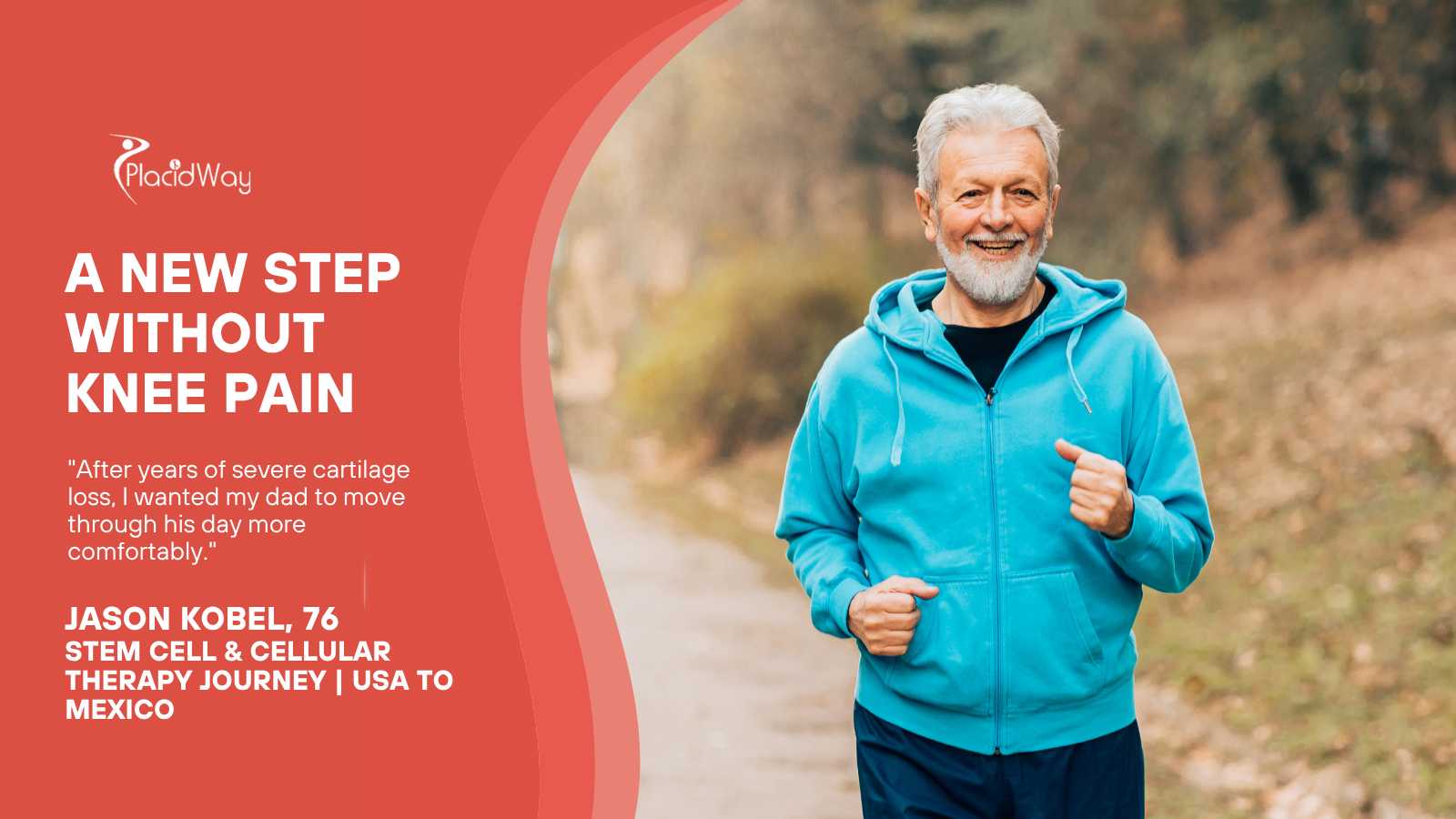
Patient Profile
Name: Jason Kobel
Age: 76
City, Country: San Diego, USA
Treatment: Cellular Therapy & Stem Cells
Destination: Mexico City, Mexico
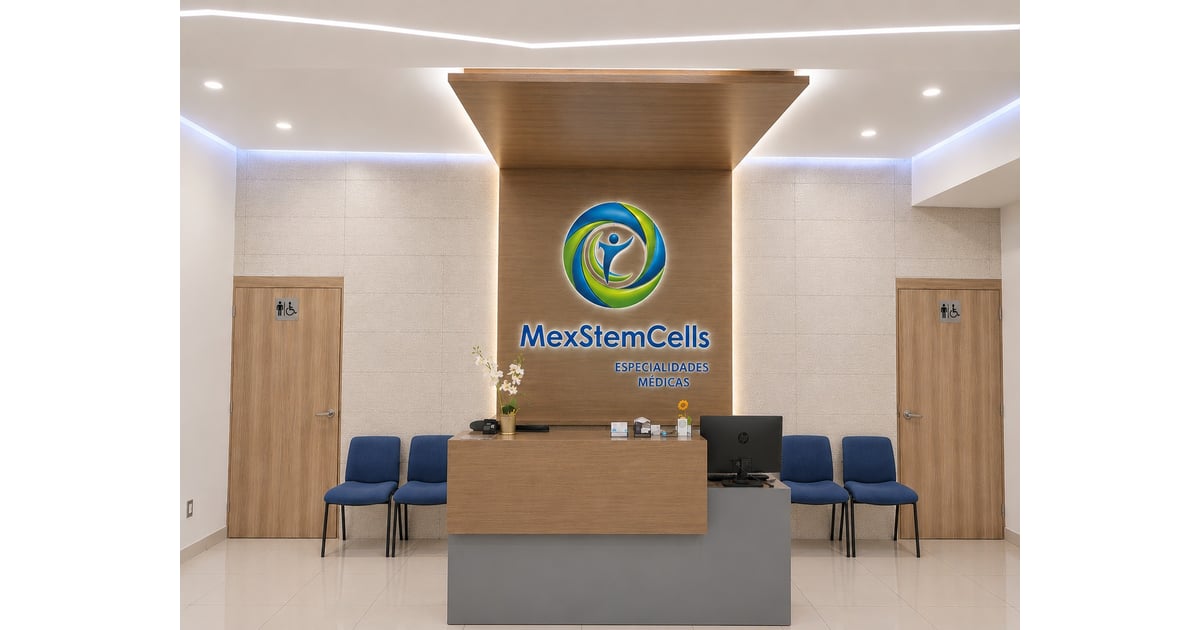
Provider: MexStemCells Clinic
Journey at a Glance
◉ Condition: Severe cartilage loss in both knees with an indication for knee replacement surgery
◉ Local treatment: Adipose tissue extraction, ozone application and 40M umbilical cord stem cells in both knees
◉ IV treatment: 100M umbilical cord stem cells
◉ Provider: MexStemCells Clinic, Mexico City
◉ Follow-up findings: Increased joint space in the right knee and restoration of left knee joint space
◉ Patient outcome: Improved mobility in both knees and reported pain-free status
I noticed the little things before my dad said much about them
My dad has never been the kind of person who likes to make a big deal out of pain. If something hurts, he'll usually say he's fine and keep going.
But there are some things you notice when you know somebody well.
I noticed how carefully he started moving. I noticed the extra pause before standing up. I noticed that anything involving more walking seemed to require a little more thought than it used to.
At 76, he had severe cartilage loss in both knees, and knee replacement surgery had been indicated as a treatment option. Once we understood how advanced the problem was, the conversation in our family became less about whether his knees were bothering him and more about what he wanted to do next.
My dad wasn't asking to feel young again. He wanted to move around without every ordinary part of the day becoming about his knees.
Knee replacement was on the table, but we wanted to understand the options
When knee replacement enters the conversation, it gets your attention very quickly.
We weren't pretending that his knee problem was minor. The cartilage loss affected both knees, and surgery had been indicated. At the same time, we wanted to understand what other approaches were being offered before making such a major decision.
A lot of the research fell to me because Dad wasn't interested in spending hours going through clinic websites and trying to separate useful information from big promises. I started reading about regenerative treatment options in Mexico and eventually found PlacidWay while comparing international providers.
Instead of jumping between unrelated websites, I used PlacidWay to look through provider profiles and narrow down clinics that were actually relevant to knee and joint conditions. That was how I came across MexStemCells Clinic in Mexico City.
Finding the clinic wasn't an instant decision for us. If anything, it gave us something more concrete to investigate. We could stop talking vaguely about “stem-cell treatment” and start asking what Dad's actual protocol would include, how the treatment would be given and what kind of changes could realistically be evaluated afterward.
What mattered to us was understanding exactly what was included rather than relying on vague promises about “fixing” the knees.
The treatment plan we reviewed
Adipose tissue extraction as part of the local treatment for both knees
Local ozone application to both knees
100 million umbilical cord stem cells administered intravenously
40 million umbilical cord stem cells administered locally to both knees
The treatment itself was only one part of what we were watching
When you're helping a parent through something medical, you pay attention to different things.
Once Dad was at MexStemCells in Mexico City, of course I wanted to understand the treatments themselves. But I was also watching him. Was he moving differently? Was he still thinking about every step? Was pain still deciding what he felt comfortable doing?
The treatment included local procedures in both knees as well as the intravenous stem cell infusion. Afterward, there wasn't one dramatic moment where everything suddenly changed.
We simply started paying attention to what daily life looked like afterward.
His mobility was the first thing that felt different
Over time, his movement became easier.
He was getting around more comfortably, and the improvement wasn't limited to one knee. His mobility had improved in both knees.
The other change was even more important to him: he reported being pain-free.
For somebody who had been dealing with severe cartilage loss, that meant more than being able to say a treatment had been completed. It meant daily movement wasn't carrying the same burden for him anymore.
Then we had the follow-up findings to look at
We were encouraged by how he felt, but we also wanted to understand what the follow-up evaluation showed.
The findings noted an increase in knee joint space in his right knee. In the left knee, restoration of the joint space was noted.
Those findings lined up with what we were seeing at home: better mobility in both knees and no reported pain.
At the same time, we didn't look at that as proof that one particular part of the treatment caused every change. We understood that follow-up findings need to be considered as part of the bigger clinical picture.
RIGHT KNEE
Increase in knee joint space was noted
LEFT KNEE
Restoration of knee joint space was noted
DAILY FUNCTION
Improved mobility in both knees and reported pain-free status
For me, the result was seeing my dad move like himself again
Medical results matter, but when it's your parent, you notice something else first.
You notice when they stop talking about the thing that used to bother them constantly.
You notice when getting up and walking somewhere becomes just that — getting up and walking somewhere.
That was the change I cared about most with my dad. His knees weren't dominating his day in the same way.
I didn't need him to prove anything by walking farther or doing something impressive. Seeing him comfortable and pain-free in his normal routine was enough.
What our family took away from the experience
As his daughter, I know Dad's experience can't tell another family what decision they should make. Severe knee problems are different for every person, and regenerative treatments are still being studied. We never wanted one treatment experience to become a promise about somebody else's outcome.
The medical findings mattered to us: increased joint space was noted in his right knee, restoration of joint space was noted in his left, his mobility improved in both knees, and he reported being pain-free.
But those aren't the moments I think about first. I think about watching my dad get up and walk somewhere without pausing to prepare himself. At 76, independence doesn't have to look dramatic. Sometimes it is simply moving through your own day without your knees deciding what you can and cannot do.
Researching Treatment Options for Severe Knee Cartilage Loss?
If you are exploring regenerative treatment abroad, compare treatment plans carefully and discuss the available evidence, potential risks and established alternatives with a qualified healthcare professional.
Request InformationExplore treatment and provider information so you and your family can compare options and ask informed questions before making a medical travel decision.




.png)
.png)






.png)












Share this listing