


IPP Surgery for ED Cures Peyronie's Disease and Erectile Dysfunction for 68 Years Old in South Korea
Dealing with severe urological conditions can feel incredibly isolating, but advanced medical solutions offer renewed hope. For many men facing the dual challenges of severe penile curvature and impotence, finding the right treatment is life-changing. This comprehensive guide explores how IPP Surgery for ED Cures Peyronie's Disease and Erectile Dysfunction for 68 Years Old in South Korea. By combining world-class urological expertise with state-of-the-art prosthetic technology, aging men can fully reclaim their intimate health, confidence, and overall quality of life without facing exorbitant local healthcare costs.
Video Chapters & Quick Navigation
- The Dual Challenge: ED and Peyronie's
- Mechanics of Penile Prosthesis
- Why South Korea Leads in Urology
- Patient Case: A 68-Year-Old's Journey
- The IPP Surgical Procedure Explained
- Cost Comparison: South Korea vs West
- Pre-Operative Diagnostics and Planning
- Post-Surgical Recovery Protocol
- Comparing Top Penile Implant Devices
- Long-Term Patient Satisfaction Rates
For decades, men suffering from complex urological conditions have silently endured physical and psychological distress due to limited local treatment options and prohibitive healthcare costs. Today, the landscape of men's sexual health has drastically transformed through the advent of global medical tourism. South Korea has emerged as a premier destination for advanced urological surgeries, particularly for older adults seeking permanent, reliable solutions to deeply impactful conditions.
The Dual Challenge: Erectile Dysfunction and Peyronie's Disease
Erectile dysfunction (ED) and Peyronie's disease frequently coexist, creating a compounded challenge for aging men. As highlighted in the video at , Peyronie's disease is characterized by the formation of fibrous scar tissue, known as plaques, beneath the skin of the penis. This scar tissue causes painful, significant curvature during erections, making intimate relationships difficult or entirely impossible.
Simultaneously, severe erectile dysfunction often accompanies this condition due to vascular insufficiency or structural damage to the tunica albuginea. When oral medications like PDE5 inhibitors fail, and injection therapies become painful or ineffective, patients are left seeking a more definitive surgical intervention. The psychological toll of this dual diagnosis is immense, often leading to depression, anxiety, and a severe reduction in self-esteem for men in their golden years.
Understanding the physiological mechanics of these intertwined conditions is crucial for determining the right treatment path. The fibrous plaques associated with Peyronie's disease do not resolve on their own in the chronic phase. Therefore, medical professionals must utilize advanced surgical techniques to not only bypass the erectile dysfunction but also physically correct the penile curvature to restore normal anatomy and function.
Understanding the Mechanics of Inflatable Penile Prosthesis (IPP)
The Inflatable Penile Prosthesis (IPP) is widely considered the gold standard in urology for treating refractory erectile dysfunction and severe Peyronie's disease. This highly sophisticated medical device is entirely concealed within the body, providing a natural appearance and feel. The most common and effective variation is the three-piece inflatable implant, which consists of two cylinders, a fluid reservoir, and a discrete control pump.
The Three Core Components
The Cylinders: During the surgical procedure, two flexible cylinders are custom-measured and inserted into the corpora cavernosa, the twin erectile chambers of the penis. These cylinders act as the structural foundation that will simulate a natural erection when filled with saline fluid.
The Reservoir: A small balloon-like reservoir filled with sterile saline solution is strategically placed behind the abdominal muscle wall. This hidden placement ensures the device remains completely invisible to the naked eye while storing the necessary fluid for activation.
The Control Pump: A small, tactile pump is surgically positioned inside the scrotum, nestled between the testicles. When the patient desires an erection, they simply squeeze the pump a few times. This action transfers fluid from the abdominal reservoir directly into the penile cylinders, creating a firm, rigid erection that lasts as long as desired.
Why South Korea Leads in Complex Urological Care
When considering surgical treatments for Peyronie's disease and erectile dysfunction, patients are increasingly looking beyond their domestic borders. South Korea has rapidly ascended as a global powerhouse in medical tourism, specifically within the highly specialized field of urology. The country offers a unique confluence of cutting-edge medical technology, highly experienced surgeons, and unparalleled patient care protocols.
As noted at in the video, South Korean urology clinics are equipped with state-of-the-art diagnostic imaging tools and sterile operating environments that exceed rigorous international standards. Surgeons in Seoul routinely perform high volumes of complex prosthetic surgeries, granting them a level of refined expertise that translates to lower complication rates and superior aesthetic outcomes.
Furthermore, the medical culture in South Korea places a heavy emphasis on patient privacy, comfort, and comprehensive aftercare. International patients benefit from dedicated medical concierges, multi-lingual translation services, and expedited surgical scheduling. This seamless, highly organized approach removes the stress of navigating a foreign medical system, allowing the patient to focus entirely on their treatment and recovery journey.
Patient Case Study: A 68-Year-Old's Journey to Restoration
The decision to undergo inflatable penile implant surgery abroad is deeply personal. For the 68-year-old patient featured in our comprehensive breakdown, the journey began after years of profound frustration. He had exhausted conservative treatments, from traction devices to specialized injections, none of which successfully mitigated his severe 45-degree penile curvature or his declining erectile function.
Facing quotes in his home country that exceeded his financial comfort zone, he turned his attention to medical tourism in South Korea. His primary goals were clear: to permanently cure his erectile dysfunction, mechanically straighten the curvature caused by Peyronie's disease, and achieve these results through a safe, globally accredited medical facility. The comprehensive care package offered in Seoul presented an undeniable opportunity for life-altering restoration.
Upon arriving in South Korea, his experience was characterized by meticulous medical attention. From the initial airport greeting to the extensive pre-operative consultations, every detail was orchestrated to alleviate his anxiety. This personalized, empathetic approach is a hallmark of the South Korean medical tourism model, proving that advanced age is no barrier to seeking out high-quality, transformative intimate healthcare.
The IPP Surgical Procedure Explained Step-by-Step
The surgical integration of an inflatable penile prosthesis to concurrently treat erectile dysfunction and Peyronie's disease is a masterclass in modern urological engineering. The procedure is typically performed under general or spinal anesthesia and generally takes between one to two hours to complete. The surgical approach is carefully selected by the urologist based on the patient's specific anatomical needs.
Incision and Dilation
The surgeon usually makes a small, discrete incision either at the penoscrotal junction (where the penis meets the scrotum) or infrapubicly (just above the base of the penis). Through this single incision, the surgeon accesses the corpora cavernosa. The erectile chambers are then carefully dilated to create the exact space required to accommodate the custom-sized prosthetic cylinders.
Surgical Modeling for Curvature
For patients with Peyronie's disease, simply inserting the implant is not enough. The surgeon must perform a technique known as "surgical modeling." As referenced at , once the cylinders are in place, they are fully inflated. The surgeon then forcefully bends the penis in the opposite direction of the curvature to physically snap the fibrous plaques. This vital step straightens the penis, utilizing the rigid cylinders as an internal splint to maintain the new, corrected alignment.
Component Placement and Closure
After successful modeling, the fluid reservoir is gently routed behind the abdominal wall, and the activation pump is secured within the scrotum. The surgeon meticulously connects the surgical tubing, ensuring a flawless, leak-proof system. The surgical team then utilizes a rigorous "no-touch" technique and antibiotic washes to absolutely minimize any risk of post-operative infection before closing the incision with dissolvable sutures.
Cost Comparison: IPP Surgery in South Korea vs. The West
One of the primary driving forces behind the surge in medical tourism for urological procedures is the dramatic cost disparity between Western nations and Asian medical hubs. In the United States, patients can face astronomical out-of-pocket expenses for penile implant surgery, especially since many insurance providers categorize treatments for erectile dysfunction and Peyronie's disease as elective or non-essential.
By contrast, South Korea offers highly transparent, all-inclusive pricing structures. These international patient packages frequently bundle the cost of the premium prosthetic device, the surgeon's fees, anesthesia, hospital stays, and comprehensive pre-and post-operative consultations into one manageable sum. This allows patients to plan their finances accurately without the fear of hidden medical bills.
| Location | Average Cost (USD) | Typical Inclusions |
|---|---|---|
| United States | $20,000 - $30,000+ | Surgery only, device fees separate, high out-of-pocket facility fees. |
| United Kingdom | $18,000 - $25,000 | Private clinic fees, limited post-op support included. |
| South Korea | $12,000 - $16,000 | Premium implant, surgeon fees, hospital stay, VIP concierge, airport transfers. |
Pre-Operative Diagnostics and Surgical Planning
Success in treating severe erectile dysfunction and Peyronie's disease relies heavily on meticulous pre-operative planning. Upon arriving at their chosen South Korean urology center, patients undergo an exhaustive battery of diagnostic tests. This ensures that the surgical team has a complete understanding of the patient's unique pelvic anatomy and cardiovascular health.
Standard protocols include a penile duplex Doppler ultrasound. This advanced imaging technique measures the blood flow through the penile arteries and veins, definitively confirming the vascular nature of the erectile dysfunction. Additionally, the ultrasound helps map out the exact location, density, and size of the calcified Peyronie's plaques. This mapping is critical for the surgeon to plan the intraoperative modeling techniques.
Furthermore, comprehensive blood panels, electrocardiograms (ECG), and detailed medical history reviews are conducted to ensure the 68-year-old patient is a safe candidate for general anesthesia. The urologist will also engage in an in-depth discussion regarding the patient's lifestyle, manual dexterity, and expectations, which directly influences the selection of the specific penile implant model.
Post-Surgical Recovery and Rehabilitation Guidelines
The immediate post-operative phase is a critical window for ensuring the long-term success of the inflatable penile prosthesis. South Korean medical teams provide exceptional, closely monitored care during the initial days following surgery. Patients typically remain in the hospital or a nearby partnered recovery hotel for close observation. Pain management is prioritized, utilizing a combination of oral analgesics and localized icing protocols.
The Healing Timeline
During the first two weeks, patients will experience moderate swelling and bruising around the surgical site. The medical team will initially leave the implant partially inflated to act as an internal splint, which prevents the formation of new scar tissue and maintains the corrected penile alignment achieved during surgery. Patients are strongly advised to limit physical exertion, avoid heavy lifting, and wear supportive undergarments.
Device Cycling and Activation
Around the four-to-six-week mark, under the strict guidance of their urologist, the patient will begin the "cycling" process. This involves manually inflating and deflating the device daily. Cycling is essential for familiarizing the patient with the pump mechanism, stretching the surrounding tissues safely, and preventing the internal capsule from contracting around the cylinders. Full sexual activity can typically be resumed after six weeks of successful healing.
Comparing Top Penile Implant Devices Used in South Korea
Top-tier urology clinics in South Korea exclusively utilize FDA-approved, globally recognized prosthetic devices. The choice of implant is a collaborative decision between the surgeon and the patient, factoring in anatomical constraints, the severity of the Peyronie's disease, and the patient's physical capabilities. The two dominant manufacturers in this highly specialized space are Coloplast and Boston Scientific (AMS).
- Coloplast Titan: Renowned for its Bioflex material, the Coloplast Titan is exceptionally durable and offers significant girth expansion. Its one-touch release pump mechanism is particularly beneficial for older patients who may suffer from arthritis or limited manual dexterity, making deflation effortless.
- Boston Scientific AMS 700: The AMS 700 series is famous for its InhibiZone antibiotic surface treatment, which dramatically reduces the risk of post-operative device infection. Additionally, the AMS 700 CX model features controlled expansion cylinders, which are highly effective for patients requiring structural stabilization due to severe Peyronie's plaques.
Both devices offer remarkable reliability and are designed to function flawlessly for 10 to 15 years, or often longer, before requiring any mechanical revision. The skilled South Korean surgeons have extensive experience handling both systems, ensuring optimal sizing and placement for maximum comfort and functionality.
Long-Term Patient Satisfaction and Psychological Restoration
The statistical success rates associated with inflatable penile prosthesis surgery are among the highest in modern urology. Clinical studies consistently demonstrate that over 90% of men report high satisfaction with their penile implant. When utilized to treat the complex combination of erectile dysfunction and Peyronie's disease, the transformative impact on a patient's life cannot be overstated.
Beyond the undeniable physical restoration, the psychological benefits are profound. Men who have felt emasculated or isolated by their condition experience a dramatic resurgence in self-confidence and mental well-being. The spontaneity of sexual intimacy is completely restored, as the implant can be activated in seconds and maintained indefinitely, eliminating the anxiety of performance failure.
For a 68-year-old patient traveling to South Korea, the successful culmination of this journey represents a vibrant new chapter. By leveraging international medical expertise, advanced prosthetic engineering, and cost-effective care models, aging men are no longer bound by the limitations of severe urological disease. They are empowered to embrace their golden years with restored vitality, enduring confidence, and renewed physical connection.
Ready to Reclaim Your Health and Confidence?
PlacidWay Medical Tourism connects you with top-rated urology clinics and highly skilled surgeons in South Korea. Access world-class IPP surgery packages at competitive prices. Let us guide you towards a permanent solution.
GET A FREE QUOTE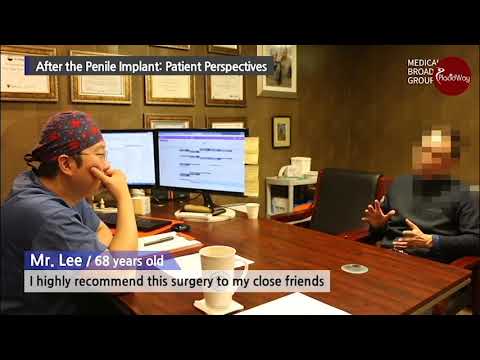





.jpg)










Share this listing