


Avoid Sagging with a Korea Facelift After Your Double Jaw Procedure by VG Clinic
Undergoing facial bone contouring can dramatically transform your facial profile, but many patients are left dealing with a frustrating and unexpected side effect. If you want to completely avoid sagging with a Korea facelift after your double jaw procedure by VG Clinic, you are in the right place. Removing or altering dense bone structure often leaves excess soft tissue without adequate framework support, leading to premature jowls and drooping skin. Fortunately, advanced South Korean aesthetic techniques offer the ultimate solution. Discover how specialized lifting procedures can seamlessly harmonize your rejuvenated bone structure with perfectly tightened skin.
Video Chapters & Quick Navigation
Understanding Facial Sagging After Double Jaw Surgery
Double jaw surgery, medically known as orthognathic surgery, is a highly complex procedure designed to correct severe malocclusion, facial asymmetry, and protruding jawlines. While the structural and functional results of altering the maxilla and mandible are profoundly life-changing, the procedure fundamentally changes the foundation of your face. When bone is pushed back, reduced, or realigned, the overlying soft tissue, muscle, and skin do not magically shrink to fit the new, smaller skeletal framework.
This biological reality leaves patients with a common post-operative aesthetic dilemma: significant skin laxity. Gravity takes hold of the unsupported soft tissues, causing the cheeks to descend, nasolabial folds to deepen, and jowls to form along the newly sculpted jawline. The psychological impact of this can be distressing for patients who invested heavy emotional and financial resources into achieving a refined facial contour, only to look prematurely aged.
The severity of post-surgical sagging depends on several crucial biological factors. A patient's age, baseline skin elasticity, genetics, and the exact amount of bone volume removed all dictate how dramatically the skin will drape over the new bone structure. Younger patients with high collagen production may see some natural skin retraction, but for many, surgical intervention is the only viable path to achieve the tight, V-line contour they originally envisioned.
The Biomechanics of Soft Tissue Redraping
To fully grasp why sagging occurs, one must look at the facial retaining ligaments. These fibrous bands act like anchor points, attaching the skin and the SMAS (Superficial Musculoaponeurotic System) to the underlying facial bones. During extensive facial bone contouring in South Korea, these ligaments must often be carefully detached and manipulated to access the bone.
Once the bone is reshaped and the surgical site is closed, these ligaments must heal and reattach. However, because the underlying bone volume has decreased, the distance between the skin surface and the bone has changed. This results in a loss of structural tension. Without a targeted surgical lift to pull the SMAS layer taut and remove the excess skin, the face will inevitably appear heavier in the lower third.
Why South Korea is the Global Authority on Facial Contouring
South Korea has firmly established itself as the undisputed global capital of facial bone contouring and advanced anti-aging procedures. The sheer volume of orthognathic surgeries performed in Seoul provides local surgeons with unparalleled, hyper-specialized experience. Western plastic surgeons often perform double jaw surgeries primarily for medical necessity, such as sleep apnea or severe bite issues, paying secondary attention to the aesthetic outcome.
In contrast, Korean facial plastic surgeons approach double jaw surgery with a dual mandate: flawless dental occlusion combined with maximum aesthetic harmony. Because facial bone reduction is so popular in Korea, the complication of post-operative skin sagging is widely recognized and systematically treated. Korean medical institutions have pioneered proprietary lifting techniques specifically engineered for patients who have undergone previous bone alterations.
This high level of specialization means that traveling to South Korea for your post-jaw surgery facelift ensures you are in the hands of experts who understand the altered anatomy. Surgeons in Seoul know exactly how orthognathic plates and screws are placed, how scar tissue forms after bone reduction, and how to navigate these challenges safely during a facelift procedure.
Inside VG Clinic: Pioneering Post-Surgical Soft Tissue Management
When discussing top-tier facilities for corrective aesthetic surgery, VG Clinic in Seoul consistently emerges as a premier destination for international patients. VG Clinic has built a formidable reputation specifically around resolving the complex soft tissue issues that arise after aggressive facial bone contouring. Their diagnostic approach is heavily reliant on state-of-the-art 3D imaging technology.
Before a scalpel ever touches the skin, the surgical team at VG Clinic utilizes 3D CT scans and high-resolution ultrasound to map the exact location of titanium hardware from your previous jaw surgery. This prevents surgical complications and allows the surgeon to visualize the exact thickness of the SMAS layer and subcutaneous fat pads. By analyzing the unique biomechanics of your altered face, they create a highly individualized lifting strategy.
What sets VG Clinic apart is their commitment to customized vectors of pull. A standard, Western-style facelift often pulls the skin laterally, which can result in a wide, unnatural, or "windblown" appearance. VG Clinic utilizes specialized vertical lifting vectors that pull the drooping tissues upward, fighting the exact gravitational pull that causes jowls after jaw surgery. This restores a youthful, heart-shaped face and a sharply defined jawline.
The VG Clinic Comprehensive Consultation Process
International medical tourists visiting VG Clinic benefit from a rigorously structured consultation process designed to bridge any language or cultural gaps. The clinic employs dedicated, fluent in-house medical translators who ensure that your aesthetic goals are perfectly understood by the surgical team.
- Step 1: Digital Facial Mapping: Assessing bone structure versus soft tissue volume.
- Step 2: Skin Elasticity Testing: Determining if a surgical lift or minimally invasive thread lift is required.
- Step 3: Hardware Evaluation: Ensuring previous orthognathic plates will not interfere with SMAS manipulation.
- Step 4: Vector Planning: Designing the exact angle of tissue elevation for a natural look.
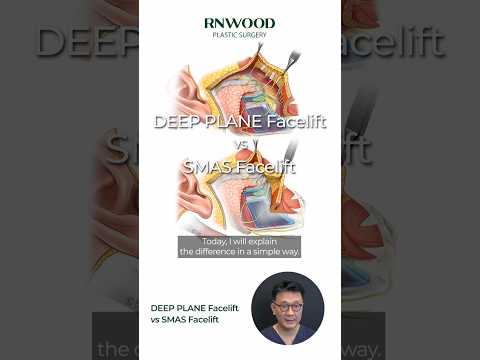
SMAS Facelift vs. Deep Plane: Choosing the Right Technique
Addressing sagging skin after a double jaw procedure requires moving beyond simple "skin-only" lifts, which are notorious for yielding short-lived and unnatural results. The heavy lifting—literally and figuratively—must be done at the deeper muscular levels. The two most effective techniques utilized by top Korean plastic surgeons are the SMAS Facelift and the Deep Plane Facelift.
The SMAS (Superficial Musculoaponeurotic System) is a layer of tissue deep within the skin and subcutaneous tissue. It is one of the most critical support structures of the face. In a classic Korean SMAS facelift, the surgeon separates the skin from the SMAS layer, tightens the SMAS layer by pulling it upward, removes the excess skin, and sutures it seamlessly. This technique is highly effective for moderate post-jaw surgery sagging.
The Deep Plane Facelift is an even more advanced technique where the skin and the SMAS layer are left attached to each other, and the entire unit is lifted together from an even deeper anatomical plane. This method releases specific facial ligaments, allowing for a more profound and tension-free repositioning of the midface and jowls. For patients who have had massive amounts of bone removed during two-jaw surgery, the Deep Plane method often provides the most transformative and long-lasting results.
| Feature | Korean SMAS Facelift | Deep Plane Facelift | Minimally Invasive Thread Lift |
|---|---|---|---|
| Best Suited For | Moderate sagging, jowl formation | Severe sagging, midface drooping | Mild laxity, younger patients |
| Tissue Manipulation | Skin and SMAS lifted separately | Skin and SMAS lifted as one unit | PDO threads grip subcutaneous fat |
| Longevity | 10 to 12 years | 12 to 15+ years | 1 to 2 years |
| Downtime | 2 to 3 weeks | 3 to 4 weeks | 3 to 5 days |
Timing Your Procedures: When is the Best Time to Lift?
One of the most frequent questions from prospective medical tourists is whether a facelift can be performed simultaneously with double jaw surgery. While combining procedures is common in plastic surgery, pairing orthognathic surgery with a surgical facelift is generally strongly discouraged by top specialists. The facial swelling (edema) associated with cutting facial bones is immense and unpredictable.
Attempting to drape and suture skin over a highly swollen facial structure will inevitably lead to an over-tightened or asymmetrical result once the swelling finally subsides. Therefore, patience is an absolute necessity. Most board-certified Korean facial plastic surgeons require patients to wait a minimum of six to twelve months after their double jaw procedure before undergoing a surgical facelift.
This waiting period allows the skeletal swelling to resolve entirely, the bone to fuse securely, and the soft tissues to settle into their final, gravity-induced resting state. Only then can a surgeon at VG Clinic accurately assess the true extent of the skin laxity and design a lifting protocol that will deliver a permanent, natural-looking V-line contour.
What to Expect During Your Recovery Journey in Seoul
Recovering from a Korea facelift requires adherence to strict post-operative protocols to ensure invisible scarring and rapid healing. South Korean clinics are famous for their intensive, technologically advanced aftercare programs, which are often included in your surgical package. Unlike Western clinics where patients are sent home with basic instructions, clinics like VG Clinic provide comprehensive healing treatments.
Immediately following the surgery, you will experience tightness, bruising, and moderate swelling, though significantly less than what you experienced during your jaw surgery. Your head will be wrapped in a specialized compression garment that must be worn continuously to support the newly repositioned SMAS layer and prevent hematomas. Patients are advised to sleep with their heads elevated at a 45-degree angle to promote lymphatic drainage.
During your stay in Seoul, you will likely return to the clinic for specialized deswelling treatments. These cutting-edge therapies often include hyperbaric oxygen chambers to speed up cellular repair, high-frequency radio waves to stimulate blood flow, and specialized LED light therapy to reduce bruising. Stitches are typically removed within 7 to 10 days, after which most international patients are cleared to fly back to their home countries.
Scar Management and Invisible Incisions
A primary concern for any facelift patient is the visibility of scars. Korean surgeons are renowned for their meticulous suturing techniques. The incisions are strategically hidden within the hairline, starting from the temporal region, continuing down into the natural crease in front of the ear (the tragus), and wrapping around behind the earlobe.
Because the actual tension of the lift is placed on the underlying deep tissue layers rather than the surface skin, the incisions heal without widening or thickening. This tension-free closure ensures that even when your hair is pulled back, the surgical marks remain virtually undetectable to the naked eye.
Complementary Treatments: Perfecting the Final Result
Addressing post-surgical sagging often requires a multi-dimensional approach. While a facelift effectively removes excess skin and tightens the lower face, it does not restore lost volume. Double jaw surgery can sometimes alter the distribution of facial fat, leaving the midface looking hollow or flat.
To achieve the coveted youthful, three-dimensional volume associated with Korean beauty standards, surgeons frequently combine a SMAS facelift with micro-fat grafting. In this procedure, the surgeon harvests a small amount of fat from the patient's thighs or abdomen, purifies it, and strategically injects it into areas like the cheeks, under-eyes, or nasolabial folds.
Additionally, specialized neck liposuction is often performed concurrently. If excess submental fat (a double chin) has pooled below the jawline following the orthognathic procedure, removing this fat while lifting the skin creates an ultra-crisp, defined cervicomental angle, perfectly highlighting your newly contoured jaw bone.
The Financial Advantage of Medical Tourism in Seoul
Beyond the undeniable superiority in surgical skill regarding Asian facial contouring and post-jaw surgery corrections, South Korea offers significant financial incentives. In the United States or the United Kingdom, a highly specialized deep plane or SMAS facelift performed by a top-tier facial plastic surgeon can easily range from $15,000 to over $30,000, excluding facility fees and anesthesia.
In Seoul, owing to the highly competitive medical landscape and government-subsidized medical tourism infrastructure, the exact same premium procedure—often utilizing superior technology and including extensive aftercare—can cost between $6,000 and $12,000. This dramatic price difference allows international patients to factor in the cost of premium flights and luxury hotel accommodations while still saving a substantial amount of money.
Organizations that facilitate medical tourism understand the complexities of traveling abroad for surgery. They help bridge the gap by arranging airport transfers, negotiating inclusive surgical packages that cover post-op medications and deswelling treatments, and ensuring that your journey to achieve a flawless, youthful facial contour is completely stress-free.
Ready to Perfect Your Facial Contour in South Korea?
PlacidWay Medical Tourism connects you with elite, board-certified plastic surgeons at VG Clinic in Seoul. Don't let post-surgery sagging hide your beautiful new jawline. Let us help you plan your customized Korea facelift journey safely and affordably.
GET A FREE CONSULTATION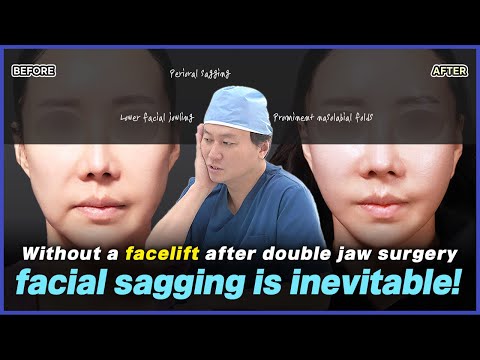



.jpg)
.jpg)
.jpg)
.jpg)
.png)









Share this listing