
Overcoming Paralysis: Intensive Pediatric Guillain-Barré Syndrome Rehabilitation and Roberto’s Journey
Imagine waking up one morning to find that your legs no longer obey your commands. Within hours, the simple act of standing becomes an impossible dream, and the very breath in your lungs feels heavy and labored. This is the terrifying reality of Guillain-Barré Syndrome (GBS), a rare autoimmune disorder where the body’s immune system mistakenly attacks its peripheral nerves. For 12-year-old Roberto Manuel Encinas Ayala, this nightmare began on a quiet July morning, transforming an active childhood into a desperate fight for mobility.
Today, we explore the incredible intersection of medical resilience and specialized neurorehabilitation. Through the dedicated efforts of the physiotherapy team at Hospital San José in Navojoa, Sonora, Roberto is proving that paralysis does not have to be permanent. Watch as we detail the 10-month intensive journey from a stretcher to the first independent steps, highlighting why specialized pediatric physical therapy is the cornerstone of GBS recovery.
Video Chapters & Quick Navigation
Understanding Guillain-Barré Syndrome in Pediatric Patients
Guillain-Barré Syndrome (GBS) is often described as a "rapidly progressive" condition. While most common in adults, when it strikes children, the clinical course can be particularly distressing for families. In Roberto's case, he represents the typical progression where the syndrome follows a minor infection, triggering the immune system to attack the myelin sheath—the protective covering of the nerves.
When the myelin is damaged, nerve signals are delayed or stopped entirely, leading to muscle weakness, loss of reflexes, and eventually, total paralysis. [00:50] As Roberto's father explains, the diagnosis came quickly but left the family in a state of shock, as they watched their son transition from a healthy boy to being confined to a hospital bed.
The Onset: The Fateful Morning of July 2nd
The transition from health to critical illness occurred in a matter of hours. [00:29] Roberto recalls being at home, sleeping, and realizing upon waking that his body simply wouldn't move. This "ascending paralysis" is a hallmark of GBS, typically starting in the feet and moving upward toward the trunk and arms.
For a 12-year-old, the psychological impact of losing control over one's body is profound. Roberto was rushed to Hermosillo for acute care, which often involves intravenous immunoglobulin (IVIG) or plasmapheresis to stop the immune attack. However, as the video shows, the medical intervention is only the beginning; the real battle for recovery happens in the rehabilitation center.
Addressing Respiratory Challenges and the Tracheostomy
One of the most dangerous complications of GBS is the paralysis of the respiratory muscles. When the diaphragm and intercostal muscles weaken, the patient cannot breathe independently. [02:40] Archival footage reveals that Roberto required a tracheostomy—a surgical opening in the neck to allow a breathing tube to reach the lungs.
Lic. Roxana Lopez, Roberto's lead physiotherapist, notes that early rehab was fraught with fear. [03:00] The build-up of phlegm and the sensation of "drowning" are common for patients with weakened cough reflexes. Effective neurorehabilitation must include respiratory therapy to clear the airways and strengthen the muscles involved in breathing, ensuring the patient can eventually be decannulated (the removal of the tracheostomy tube).
| Rehab Stage | Clinical Focus | Roberto's Progress |
|---|---|---|
| Acute Phase | Stabilization & Respiratory Support | Tracheostomy and stretcher-bound. |
| Early Rehab | Passive Range of Motion & Core Stability | Learning to sit and move arms again. |
| Intermediate Phase | Gait Training & Weight Bearing | Walking in parallel bars with assistance. |
| Advanced Phase | Strength & Cardiovascular Conditioning | Using the elliptical and stationary bike. |
The Intensive Physiotherapy Approach at Hospital San José
Physiotherapy for GBS is not a passive process. It requires high-intensity, repetitive movements to "re-map" the brain’s connection to the muscles. [01:34] The video showcases Roberto working on mat exercises, focusing on trunk control and upper extremity strength.
Because GBS causes "denervation," the muscles atrophy very quickly. The clinical team at Hospital San José utilizes a variety of tools, from resistance bands to proprioceptive training. [03:59] As the patient recovers, the focus shifts to cardiovascular endurance, often using machines like the elliptical to rebuild the stamina lost during months of bedrest.
Gait Training: From Parallel Bars to Independent Steps
Walking is one of the most complex human movements, involving balance, timing, and strength. [00:06] Early in his therapy at CEFIS (the rehabilitation wing of Hospital San José), Roberto had to be supported entirely. By using parallel bars, he began to practice "weight-shifting"—the first step in relearning how to walk.
Progress was measured in inches. [00:13] Stepping over cones helps a patient improve "proprioception"—the body’s ability to sense its position in space. For a GBS survivor, this sense is often distorted, making it feel like they are walking on air. The intensive repetitions help the nerves regenerate and the muscles regain their "memory."
The Crucial Power of Family Support in Rehabilitation
Recovery from a devastating illness like GBS is rarely a solo journey. Roberto's sister and father were constant fixtures in his rehabilitation. [01:17] His sister speaks candidly about the difficulty of seeing her brother in a state of helplessness, emphasizing that the family must remain strong even when the patient feels like giving up.
This emotional support acts as a catalyst for physical progress. [02:07] Whether it's helping him with his shoes or encouraging him during a particularly grueling session, the presence of loved ones reduces the anxiety associated with therapy. In pediatric neurorehabilitation, family involvement is considered a "best practice" that significantly improves long-term outcomes.
The Role of Clinical Expertise and Personalized Care
Lic. Roxana Lopez represents the highly trained physiotherapy workforce in Mexico. Her approach with Roberto was holistic, addressing not just his physical weakness but his overall independence. [02:35] She describes the experience as "one of the most beautiful in my life," illustrating the deep bond that forms between therapists and long-term GBS patients.
The facility at Hospital San José / CEFIS is equipped with modern neurorehabilitation technology, allowing for a multidisciplinary approach. This includes specialized equipment for pediatric patients, ensuring that the exercises are age-appropriate and engaging. The success seen in Roberto—moving from 0% to 90% recovery—is a testament to the quality of healthcare available in Navojoa.
Future Outlook: Roberto’s Dreams and Life After GBS
After 10 months of intensive work, Roberto’s outlook on life has shifted from survival to ambition. [05:30] He expresses his desire to study automotive engineering, a field that requires the very mobility and precision he has fought so hard to reclaim. His love for Dragon Ball and playing with his sister remains, but now with a new appreciation for the strength of his own body.
Guillain-Barré Syndrome is a reminder of human fragility, but Roberto’s recovery is a reminder of human resilience. As he continues his exercises and works toward 100% independence, his story serves as a beacon of hope for other families facing the sudden onset of paralysis. With the right medical team, a dedicated family, and a warrior spirit, the path from a hospital bed to a bright future is always possible.
Ready to Restore Your Mobility?
PlacidWay Medical Tourism connects you with top-rated rehabilitation centers and specialists in Mexico, offering world-class neurorehabilitation at affordable prices. Let us help you find the right path to recovery.
GET A FREE QUOTE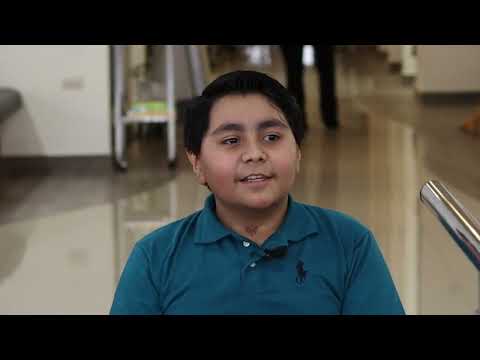

.png)













Share this listing