
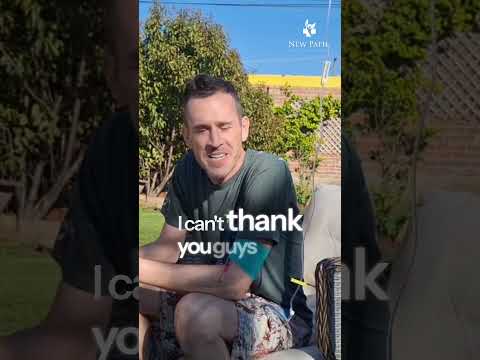
Stephanie’s story follows a long and difficult experience with substance use, relapse, rehabilitation, and her decision to seek medically supervised ibogaine treatment at New Path Specialized Clinic in Tijuana, Mexico. After struggling with addiction from a young age and later becoming dependent on several substances and prescription medications, she began exploring a different approach to recovery.
In this video testimonial, Stephanie describes her physical condition before treatment, how her mother discovered ibogaine, her first and second experiences with the therapy, her relapse after returning home, the medications she received during traditional rehabilitation, and the emotional and spiritual changes she personally associates with her recovery journey.
Her experience is personal and should not be interpreted as evidence that ibogaine will produce the same result for every person with substance use disorder. Treatment decisions should be based on individual medical history, current substance use, medications, and professional medical evaluation.
Video Chapters & Quick Navigation
- Stephanie’s Early Addiction and Declining Health
- Her Mother’s Search for Ibogaine Treatment
- Stephanie’s First Ibogaine Experience
- Relapse and Traditional Rehabilitation
- A Turning Point in Her Addiction
- Returning for a Second Ibogaine Treatment
- Self-Worth, Boundaries and Spirituality
- Her Experience at New Path Clinic
How Stephanie’s Substance Use Began and Progressed
Stephanie explains that her problems with substance use began when she was approximately 15 years old [00:17]. Over the years, her substance use became increasingly severe and eventually affected nearly every part of her physical and emotional well-being.
By age 33, Stephanie describes being in an extremely difficult condition. She says she was smoking crack and had reached a point where she struggled even to get out of bed.
The Physical Effects She Experienced
At [00:27], Stephanie describes the physical state she had reached. She says she was eating mainly ice cream and remembers feeling bloated despite not properly nourishing herself.
She was also worried that her body was beginning to fail. In her testimonial, she describes fearing that her internal organs were shutting down. These comments reflect how medically and emotionally serious she believed her condition had become.
How Stephanie’s Mother Found Ibogaine Treatment
Stephanie’s mother played an important role in searching for another treatment option as her daughter’s condition worsened. According to Stephanie, her mother researched treatment centers and different approaches because she wanted to find a program that might help her daughter move away from the cycle of substance dependence.
Discovering Ibogaine as an Addiction Treatment Option
At [00:35], Stephanie explains that her mother’s research eventually led her to ibogaine treatment.
Ibogaine was presented to Stephanie and her family as an alternative approach to addiction treatment. Because it is a psychoactive treatment and Stephanie’s substance use was medically complex, the clinic setting and medical supervision were important parts of their decision.
At [00:40], Stephanie recalls her mother believing that Armando’s clinic was the place where she felt her daughter would be safe.
Stephanie’s First Ibogaine Treatment Experience
By the time Stephanie arrived for treatment, she describes being physically debilitated and needing significant support. Her substance use was also complicated by dependence on more than one substance.
She says she was using prescription Xanax as well as very large amounts of kratom. Stephanie explains that she had started using kratom after stopping heroin about a month earlier, but that her kratom consumption then became excessive [01:08].
Her account illustrates how attempts to manage withdrawal independently can sometimes develop into another pattern of substance dependence.
How She Felt After Her First Treatment
At [01:15], Stephanie describes an emotional reaction after her first ibogaine experience. She recalls dropping to her knees and feeling deeply grateful.
Stephanie says she experienced a significant change in how she felt about substances after treatment. She describes feeling less interested in returning to drug use and motivated to rebuild parts of her life.
After returning to Los Angeles, she incorporated other recovery activities into her routine, including yoga, going to the gym, and attending Alcoholics Anonymous meetings. She also began working on relationships within her family.
These changes represent Stephanie’s personal experience following treatment and should not be treated as a guaranteed response to ibogaine.
Relapse and Stephanie’s Experience With Traditional Rehabilitation
Stephanie’s recovery did not follow a straight path. After undergoing a medical procedure, she says she experienced a relapse and later entered a traditional rehabilitation program in the United States.
At [01:57], she discusses her frustration with the treatment approach she experienced during that period.
The Medications She Says She Was Prescribed
Stephanie reports being placed on approximately 13 medications while in rehabilitation. She specifically mentions medications including Suboxone, gabapentin, antidepressants, and medication used for bipolar disorder.
She felt overwhelmed by the number of medications and believed the approach did not address the underlying problems she associated with her substance use.
Stephanie also makes clear that she does not personally blame the individual healthcare workers who treated her. Her criticism is directed toward what she perceived as an overly medication-focused treatment system.
| Treatment Element | Stephanie’s Traditional Rehab Experience | Stephanie’s Ibogaine Clinic Experience |
|---|---|---|
| Treatment Approach | She describes receiving medication-assisted and psychiatric treatment. | She received medically supervised ibogaine treatment together with supportive care. |
| Medications | Stephanie says she was prescribed multiple medications, including Suboxone, gabapentin and psychiatric medications. | Her testimonial focuses on ibogaine and the surrounding recovery environment. |
| Emotional Experience | She describes feeling dissatisfied with the number of medications she was taking. | She describes the experience as emotionally and spiritually meaningful. |
The Turning Point That Led Stephanie Back to Treatment
Stephanie says that despite completing another rehabilitation program, she eventually returned to using Xanax and Adderall. She feared that continuing on the same path could lead her back to OxyContin and heroin.
At [02:32], Stephanie describes addiction in deeply personal terms. She says a person can die physically from an overdose or feel as though they have lost themselves spiritually while still alive.
For Stephanie, this realization became another major turning point in her recovery journey.
Choosing to Return to New Path
Stephanie says she felt frightened by the direction her life was taking and decided to contact Armando again. She wanted to move away from the substances and medications she had become dependent on and return to the type of life she remembered after her earlier treatment.
Her story also illustrates an important reality of addiction recovery: relapse can occur even after a period of improvement. A relapse does not necessarily mean that earlier progress had no value, but it may signal the need for renewed treatment, stronger ongoing support, or changes to the recovery plan.
Stephanie’s Second Ibogaine Treatment Experience
Stephanie later returned for a second ibogaine treatment.
At [03:12], she describes her experience by saying that the treatment “flipped the switch again.”
In her account, this phrase represents the noticeable change she felt in her thinking, motivation, and relationship with substances following treatment.
She also describes becoming more productive after returning home. Stephanie says she increased the amount of time she was working and began taking on more responsibility.
Rebuilding Relationships and Personal Boundaries
Stephanie explains that addiction had damaged several relationships in her life. During recovery, she began noticing friends and family reconnecting with her as they saw changes in her lifestyle.
She also began setting stronger personal boundaries. One example she discusses is removing dating apps from her life so she could focus more attention on her own emotional well-being and recovery.
Self-Worth, Independence and Spirituality During Recovery
Stephanie describes the emotional and spiritual aspects of her recovery as being just as important to her as the physical changes.
At [03:35], she explains that she began developing a stronger sense of personal security and self-respect.
She describes telling herself: “I am a woman, I am an adult, I can take care of myself, and I love myself.”
For Stephanie, these ideas became part of rebuilding her identity after years in which substance use had heavily influenced her decisions and relationships.
Emotional Themes Stephanie Associates With Her Recovery
- Perspective: Stephanie describes being able to look differently at previous experiences and behaviors.
- Spiritual Faith: She discusses developing a stronger belief that she could move forward and that her life could improve.
- Self-Acceptance: She describes working through shame associated with her past substance use and learning to see herself differently.
These are Stephanie’s interpretations of her own experience and should not be considered predictable psychological effects of ibogaine treatment for every patient.
Stephanie’s Experience at New Path Specialized Clinic
Stephanie makes an important distinction when discussing ibogaine and her treatment environment.
At [04:00], she explains that she does not believe the medicine by itself is the entire answer. She places significant importance on the environment, support, and people surrounding the treatment.
Stephanie describes New Path Specialized Clinic as different from other treatment facilities she had previously experienced. She emphasizes the empathy, personal attention, and lack of judgment she felt from Armando and the staff.
In her view, being treated as a person rather than simply as someone with an addiction made the experience particularly meaningful.
A Birthday Celebration Stephanie Still Remembers
Stephanie also shares a personal example of the care she received during her stay.
She was at the facility on her 38th birthday, June 6. At [04:24], she describes Armando bringing her a birthday cake while the staff sang to her.
Stephanie remembers the moment emotionally and says, “No one’s gonna do that. You’re not gonna find that anywhere else.”
For her, this experience represented the supportive and personal environment she valued during addiction treatment.
What Stephanie’s Story Shows About Addiction Recovery
Stephanie’s story includes severe substance use, an initial period of improvement, relapse, traditional rehabilitation, medication use, a return to ibogaine treatment, and continued work on her relationships and emotional health.
Her experience demonstrates that recovery can involve multiple stages rather than a single treatment event. Detoxification may be one part of the process, while ongoing psychological support, behavioral changes, relationships, boundaries, and long-term recovery planning can also play important roles.
Anyone considering ibogaine or another alternative addiction treatment should provide the treatment team with complete information about current drug use, prescription medications, previous detoxification attempts, physical health, and mental health history so that the medical team can determine whether a proposed treatment is appropriate.
Stephanie’s testimonial should be understood as her personal recovery story rather than proof that ibogaine can cure addiction or eliminate the possibility of relapse.
Explore Medically Supervised Ibogaine Treatment in Tijuana
If you are researching alternative addiction treatment, review your current substance use, medications, previous treatment history, and overall medical condition with qualified professionals before considering an ibogaine program.
Request Addiction Treatment Information






















Share this listing