
This video overview presents Cells Time Clinique’s approach to providing regenerative medicine and stem cell therapies specifically targeted toward veterans, highlighting their facilities in Guadalajara and Puerto Vallarta.
Quick Takeaway: Cells Time Clinique promotes regenerative therapies—including intravenous and localized stem cell applications—for complex service-related conditions such as PTSD, phantom limb syndrome, and chronic joint injuries. While the clinic highlights specialized care and Mexican regulatory (COFEPRIS) licensing, many of these applications remain highly experimental and are not currently recognized as standard-of-care treatments by major global health authorities.
- 0:00 - Introduction: Ethics and Professionalism at Cells Time
- 0:03 - Clinical Focus: Regenerative Medicine in Veterans
- 0:13 - Treatment Administration: Intravenous and Localized Applications
- 0:23 - Scientific Literature: Reviews on Stem Cell Therapy
- 0:29 - Treated Conditions: Phantom Limb, PTSD, and War Injuries
- 0:34 - Clinic Locations: Facilities in Guadalajara and Puerto Vallarta
- 0:55 - Regulatory Standards: COFEPRIS Certified Laboratory
Addressing Complex Combat and Service-Related Conditions
Veterans often face complex, multi-systemic health challenges resulting from their service, ranging from chronic musculoskeletal injuries to profound neurological and psychological trauma. The Cells Time Clinique video specifically highlights a focus on this demographic, presenting regenerative medicine as a potential avenue for addressing conditions that are often notoriously difficult to manage with conventional medicine.
The presentation explicitly lists several severe conditions: phantom limb syndrome, post-traumatic stress disorder (PTSD), war lung injury, and trench foot. It is crucial for patients to understand that within established global medical frameworks, the application of stem cell therapy for conditions like PTSD and phantom limb syndrome is highly investigational. While researchers are continually exploring how cellular therapies might affect the central nervous system or modulate systemic inflammation, these treatments are not standard clinical protocols for psychiatric or complex neuropathic conditions.
Patients exploring these options are usually those who have found limited relief from standard therapies—such as prolonged physical rehabilitation, established pain management protocols, or traditional psychiatric care. However, the pursuit of experimental treatments requires careful navigation of the distinction between ongoing scientific research and proven clinical efficacy.
Treatment Modalities: Systemic Versus Localized Application
The footage demonstrates two distinct methods of administering regenerative products, reflecting different therapeutic goals within the clinic's protocols.
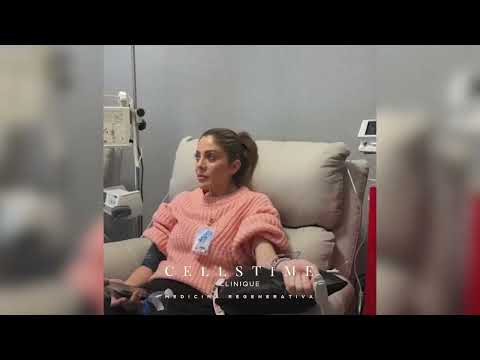
- Intravenous (IV) Application: The video shows a patient receiving therapy via an IV drip. In regenerative medicine clinics, intravenous infusion is typically utilized with the intention of achieving a systemic effect. Providers often theorize that IV administration allows cellular products or exosomes to circulate through the bloodstream, potentially homing in on areas of chronic inflammation or systemic damage. This is often the delivery method suggested by clinics for generalized neurological conditions, systemic autoimmune issues, or generalized recovery.
- Localized Intra-Articular Injections: The footage also clearly illustrates localized injections being administered directly into specific joints, namely the shoulder, knee, and hip. This targeted approach is generally used for orthopedic conditions, such as osteoarthritis, tendon injuries, or localized trauma. The goal here is to deliver concentrated biologics directly to the site of tissue damage to potentially modulate the local inflammatory response and support joint function.
While localized injections for joint pain have a larger body of emerging clinical data (particularly regarding temporary pain relief and reduced inflammation), systemic IV applications for complex neurological or psychological disorders remain deeply experimental and carry a different risk profile.
The Significance of Laboratory Certification and Regulatory Oversight
A critical component of any clinical facility offering cellular therapies is the standard of its laboratory infrastructure. The Cells Time Clinique video emphasizes the "safety and confidence of a certified laboratory" and briefly displays documentation from COFEPRIS (Comisión Federal para la Protección contra Riesgos Sanitarios), which is the Mexican federal health regulatory agency equivalent to the FDA in the United States.
Treatments involving live cells require rigorous sterile processing to prevent dangerous bacterial or fungal contamination before the product is introduced to the patient's body.
A COFEPRIS license indicates that a facility has met certain governmental standards for operating a blood bank or regenerative medicine laboratory. However, patients must understand that a general facility license does not automatically mean that every specific off-label treatment (such as stem cells for PTSD) has undergone extensive clinical trials proving its efficacy.
Advanced laboratories must be able to verify the viability, count, and specific type of cells (e.g., mesenchymal stem cells) being administered, ensuring the patient receives the intended biological product.
For international patients evaluating clinics in Mexico, verifying the exact scope of a clinic's COFEPRIS licensing is a crucial due-diligence step before committing to advanced biological treatments.
Medical Infrastructure: Guadalajara and Puerto Vallarta
The video showcases operations in two prominent Mexican destinations: Guadalajara and Puerto Vallarta. The choice of these locations reflects a common model in international medical care, combining major urban medical infrastructure with accessible recovery destinations.
Guadalajara is widely recognized as one of Mexico's primary technological and healthcare hubs. It hosts major universities, advanced hospital systems, and specialized research laboratories, making it a logical center for complex medical operations like cell culturing and processing. Puerto Vallarta, conversely, is a well-established coastal destination that caters heavily to international visitors. Clinics often utilize such locations to provide patients with a more relaxed environment for their treatment and immediate recovery phases, supported by established travel and hospitality infrastructure.
Clinical Evidence and Patient Safety Context
Because this provider video discusses the use of regenerative medicine for complex, multi-systemic, and psychological conditions, it is essential to evaluate these claims against current global medical evidence. Stem cell therapies for many of the conditions mentioned remain highly experimental.
| Claimed Application (From Source) | Current Evidence Strength | What Medical Evidence Actually Shows |
|---|---|---|
| Stem Cells for Post-Traumatic Stress Disorder (PTSD) | Experimental / Uncertain | There are no FDA-approved stem cell therapies for psychiatric or psychological conditions. Research into how stem cells might affect neuroinflammation related to trauma is in extremely early, theoretical, or pre-clinical stages. |
| Stem Cells for Phantom Limb Syndrome | Uncertain | Phantom limb is a complex neuropathic phenomenon. While regenerative medicine is studied for nerve repair, systemic or localized stem cells are not an established treatment for resolving phantom limb pain. |
| Reducing General Neurological Damage | Emerging / Limited | Mesenchymal stem cells (MSCs) are under heavy investigation in clinical trials for conditions like MS or TBI due to their potential immunomodulatory effects. However, broad claims of reversing or reducing established neurological damage are not clinically proven outside of trial settings. |
| Localized Orthopedic Injury Recovery (Knee, Shoulder) | Mixed / Moderate | There is a moderate body of evidence suggesting localized injections (like PRP or certain cell therapies) may temporarily reduce pain and inflammation in osteoarthritic joints, though evidence for actual cartilage regrowth remains highly mixed. |
- Known Risks: Experimental cellular therapies carry risks including injection site infections, adverse immune reactions, and the theoretical risk of off-target cell multiplication. Systemic (IV) administration carries different cardiovascular and pulmonary risks compared to localized joint injections.
- Standard Alternatives: For PTSD and phantom limb, standard evidence-based alternatives include cognitive behavioral therapies, specialized neuromodulation, targeted pharmacological management, and comprehensive physical rehabilitation.
- Candidacy Issues: Patients with active systemic infections, certain active malignancies, or severe bleeding disorders are generally contraindicated for advanced biological injections.
Frequently Asked Questions About This Provider's Claims
No. While Cells Time Clinique lists PTSD as a condition they treat, stem cell therapies are not approved by the FDA or equivalent major global regulators for the treatment of psychiatric or trauma-related mental health disorders. Such applications are strictly experimental.
COFEPRIS is Mexico's federal health regulator. A COFEPRIS license for a regenerative medicine laboratory indicates the facility has met Mexican standards for sterile processing, handling, and storing human tissue or blood products. It does not mean COFEPRIS has validated the clinical effectiveness of treating specific conditions like phantom limb syndrome with those cells.
The clinic uses different delivery methods for different goals. Localized injections (like those shown in the knee and shoulder) are typically intended to address localized joint degeneration or orthopedic injuries. IV applications are used when providers intend for the biologics to have a systemic or full-body effect, which is the theoretical delivery method for neurological or generalized inflammatory conditions.
While many veterans seek out alternative therapies due to the complex nature of combat injuries (like war lung injury or complex neuropathies), these treatments remain outside standard military or VA clinical protocols. They are considered elective, out-of-pocket, and investigational alternatives.
- Exactly which type of cells (e.g., autologous bone marrow, umbilical cord-derived MSCs) are used for my specific condition, and how are they sourced?
- Can you provide the specific COFEPRIS license number, and does it authorize the application of these cells for my exact diagnosis?
- What independent clinical data or published studies support the use of IV stem cells for PTSD or phantom limb syndrome?
- What is your facility's protocol if an adverse immune reaction occurs during an intravenous infusion?
- How does this treatment interact with my current standard medications for pain or psychiatric management?
This content is strictly for educational and informational purposes and does not constitute medical advice, a diagnosis, or a treatment recommendation. The regenerative therapies discussed in connection with psychological and systemic neurological conditions are investigational, and clinical outcomes are not guaranteed. Readers should always consult with a qualified, licensed healthcare provider before discontinuing standard care or pursuing experimental treatments abroad.
Evaluate Your Regenerative Medicine Options Carefully
Navigating experimental treatments for complex health conditions requires thorough research and clear clinical information. PlacidWay helps patients organize inquiries, securely transfer relevant medical records for review, and connect with specialized international facilities so you can understand the real limitations, requirements, and evidence before making a healthcare decision.
Request Objective Treatment InformationView Video Transcript
0:00 - At Cells Time you will find ethics and professionalism.
0:03 - Regenerative medicine in veterans.
0:06 - Improves recovery from injuries.
0:08 - Reduces neurological damage.
0:10 - And improves your quality of life.
0:13 - Intravenous application.
0:15 - Localized application on shoulder,
0:18 - on knee,
0:20 - and hips.
0:23 - [On-screen scientific literature titles displayed]
0:29 - Phantom limb syndrome. Post traumatic stress. War lung injury. Trench foot.
0:37 - Guadalajara.
0:47 - Puerto Vallarta.
0:55 - Safety and confidence of a certified laboratory.























Share this listing